just now


Liquidity Finder Ltd is incorporated in England and Wales, company number 10610740, registered address 167-169 Great Portland Street, Fifth Floor, London W1W 5PF, United Kingdom.
Published: just now

The U.S. economy’s pulse just went silent.
As the government shutdown stretches into its third week, the data flow that anchors global markets is grinding to a halt.
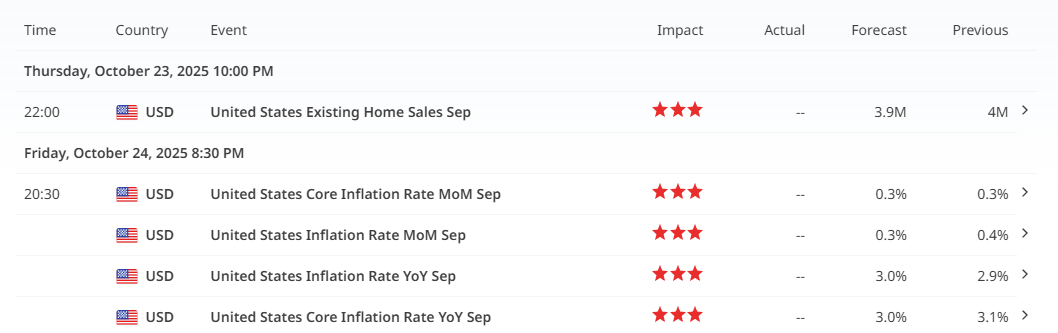
The September CPI report - originally due this week - has now been rescheduled for October 24 at 8:30 AM ET, according to the Bureau of Labor Statistics (BLS). Only a skeleton crew has been called back to publish this single, critical report, ensuring the Social Security Administration can calculate its 2026 Cost-of-Living Adjustment (COLA) on time.
Beyond that, everything remains in limbo.
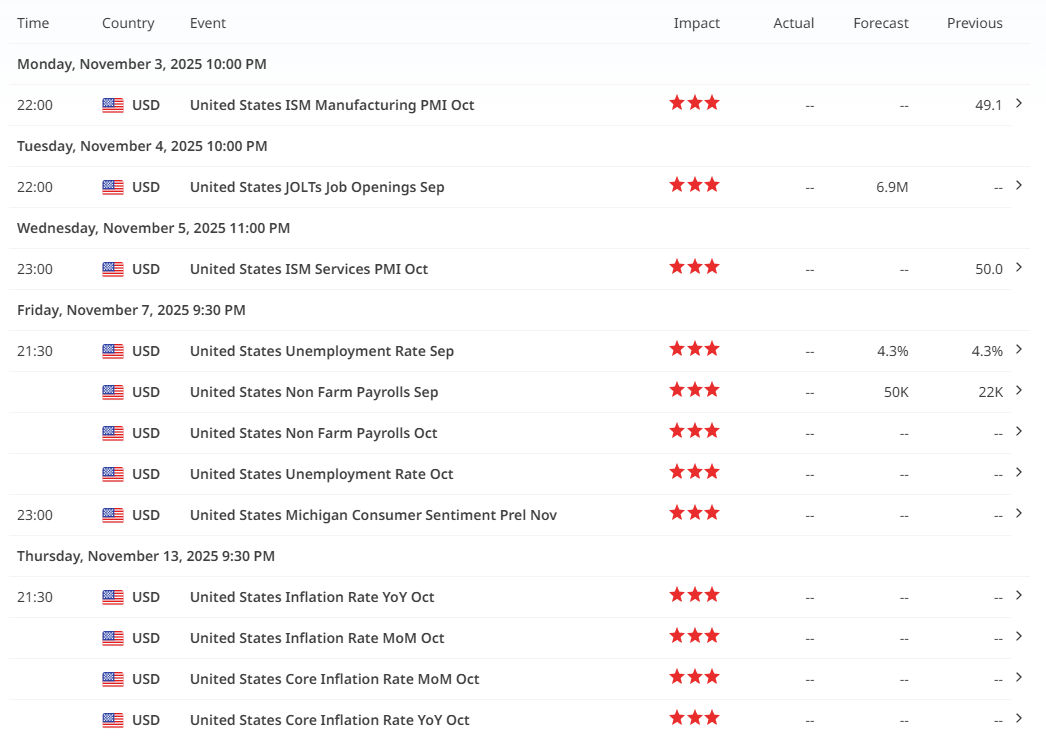
The Nonfarm Payrolls (NFP) report is now pushed to November 7, while the Producer Price Index (PPI), Retail Sales, and Housing Starts are still flagged as “tentative.”
If the shutdown drags further, even the October 24 CPI release could slip again.
That uncertainty is weighing heavily on the markets.
With no official inflation, jobs, or growth data, investors are navigating in the dark - pricing moves based purely on expectations, not evidence.
The U.S. government shutdown isn’t just a political standoff - it’s a systemic blackout of information.
Federal agencies like the BLS, Census Bureau, and Bureau of Economic Analysis have furloughed most of their staff, leaving critical reports stalled.
That means traders no longer have access to real-time updates on:
Without these metrics, forecasting inflation or Fed policy becomes an exercise in guesswork.
It also reduces liquidity and amplifies volatility, as traders hedge uncertainty with gold, reduce risk in equities, and seek safety in the U.S. dollar - even if fundamentals are unclear.
This is why October 24’s CPI release now carries so much weight.
It won’t just show where inflation stands - it will decide whether the Fed’s 2025 rate path remains on track, or if the market must reprice everything from scratch.
The effects of this data freeze extend far beyond Washington.
When the U.S. stops publishing data, the entire global financial system loses its most important reference point.
From Tokyo to Frankfurt, central banks, investors, and multinational corporations rely on U.S. data to assess risk, adjust exposure, and calibrate decisions.
The absence of reliable data has three major implications:
In short, this isn’t just a domestic data issue - it’s a temporary blindfold on global risk assessment.
Every central bank, fund manager, and retail trader is waiting for the same number: CPI.
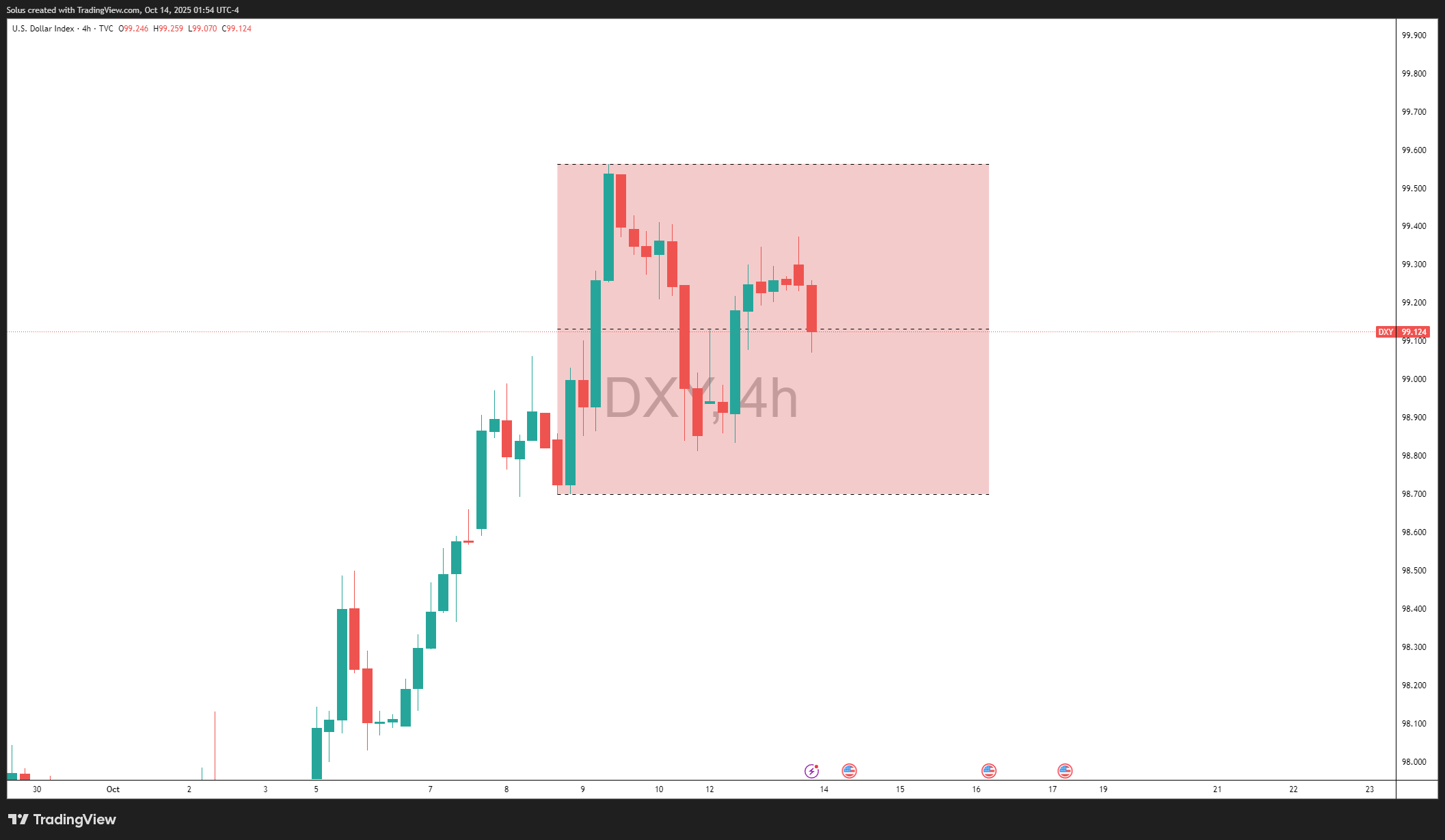
The U.S. Dollar Index (DXY) remains locked in a narrow H4 range, reflecting the broader uncertainty gripping global markets. With CPI delayed and NFP off the calendar, volatility has compressed into a coiling structure. Gold, meanwhile, continues to attract defensive inflows, staying firm above $4,200 amid fading real yields.
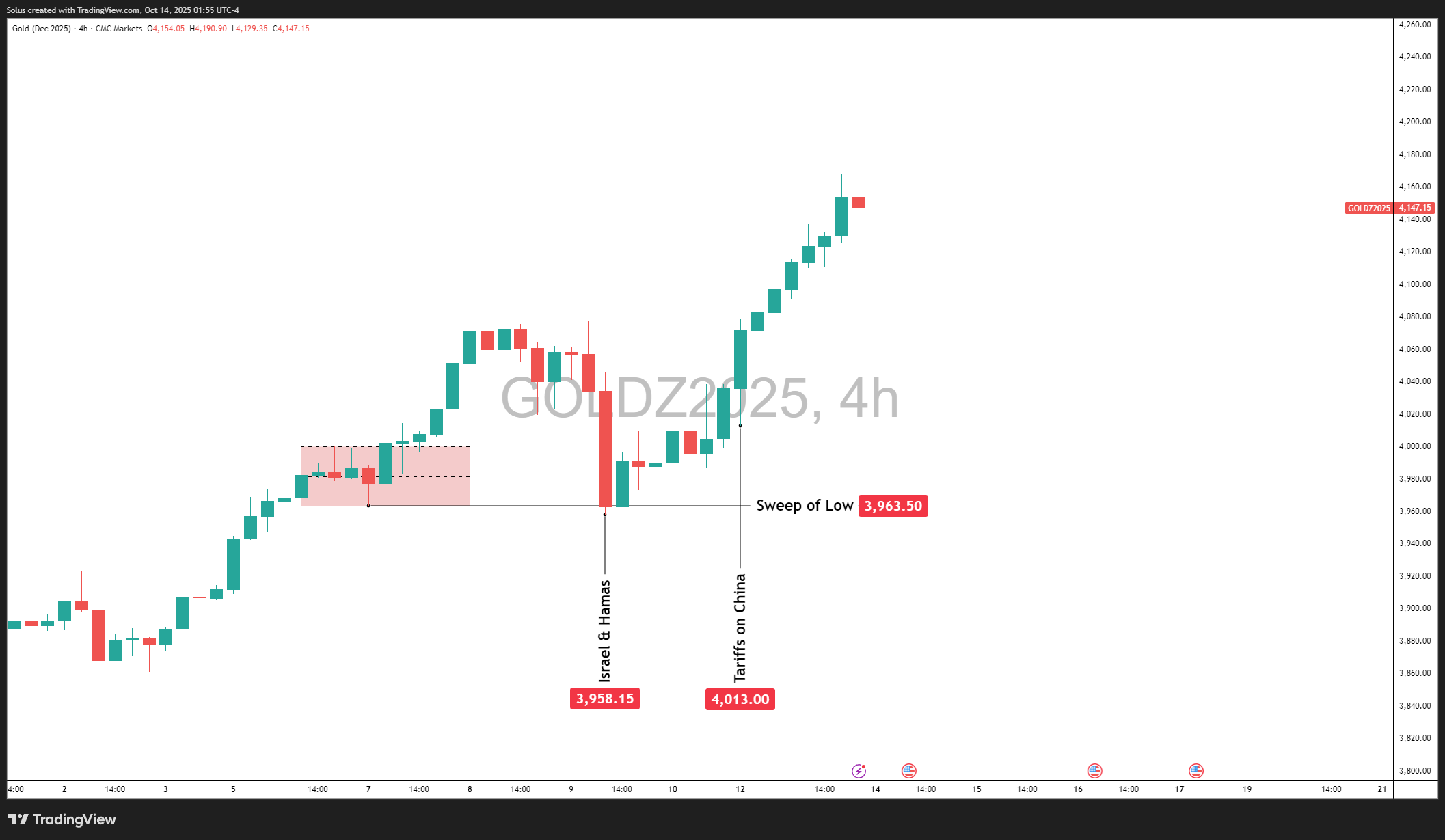
Gold remains buoyed by data uncertainty and real yield stagnation.
The market isn’t just quiet - it’s tense.
Every day without data builds more pressure beneath the surface.
Liquidity is thinning, traders are waiting, and the longer the shutdown persists, the sharper the eventual reaction will be when the lights come back on.
CPI on October 24 now represents far more than an inflation report - it’s the reset button for confidence, volatility, and direction.
And if the shutdown continues? Even that date could fade into uncertainty.
It’s time to go from theory to execution - risk-free.
Create an Account. Start Your Free Demo!
Looking for step-by-step approaches you can plug straight into the charts? Start here:
Sharpen your edge with proven tools and frameworks:
News moves markets fast. Learn how to keep pace with SMC-based playbooks:
From NASDAQ opens to DAX trends, here’s how to approach indices like a pro:
Gold remains one of the most traded assets - - here’s how to approach it with confidence:
Candlesticks are the building blocks of price action. Master the most powerful ones:
Ready to go intraday? Here’s how to build consistency step by step:
Markets swing between calm and chaos. Learn to read risk-on vs risk-off like a pro:
Step inside the playbook of institutional traders with SMC concepts explained:
Forex pairs aren’t created equal - - some are stable, some are volatile, others tied to commodities or sessions.
If you’ve ever been stopped out right before the market reverses - - this is why:
Mindset is the deciding factor between growth and blowups. Explore these essentials:
The real edge in trading isn’t strategy - it’s how you protect your capital:
If you’re not sure where to start, follow this roadmap:
This way, you’ll grow from foundation → application → mastery, instead of jumping around randomly.
Follow me for more daily market insights!
Jasper Osita - LinkedIn - FXStreet - YouTube
This content may have been written by a third party. ACY makes no representation or warranty and assumes no liability as to the accuracy or completeness of the information provided, nor any loss arising from any investment based on a recommendation, forecast or other information supplies by any third-party. This content is information only, and does not constitute financial, investment or other advice on which you can rely.
ACY Securities is one of Australia's fastest growing multi-asset online trading providers, offering ultra-low-cost trading, rock-solid execution, technologically superior account management and premium market analysis.

Select the categories and companies you wish to follow directly to your person rss feed.
Create Custom RSS Feed
just now
Sign up and join over 5,000 professional members who receive personalized news alerts, curated professional connections, and more for free!
Multi-asset trading broker AvaTrade has agreed to acquire the majority of FXCM Group’s business and brand, in a transaction that would bring a longstanding retail FX franchise into the AvaTrade Group.
LSEG and CMC Markets have signed a multi-year strategic data agreement expanding CMC's access to LSEG's real-time and delayed pricing, reference and corporate actions data, news and analytics, plus AI-ready content, to support new products, entry into new markets and the growth of CMC's institutional and B2B partnerships.
The Tel Aviv Stock Exchange is considering a bid for the Cyprus Stock Exchange, with Israeli media citing its EU licence, trading platform and clearing house. Euronext’s Athens exchange and India’s National Stock Exchange are also seen as contenders, and Cyprus aims to sign a sale agreement by the end of this year.
CME Group will launch baseball futures on 12 October, pending regulatory review, tracking CME FutureSports Performance Indexes built on Official League Data. Standard and micro contracts will start with the 2026 Postseason and the four clubs in the League Championship Series, trading around the clock.
ESMA has published an opinion stating that MiCA-authorised crypto-asset service providers should cease services tied to non-MiCA-compliant stablecoins for EU clients across MiCA crypto-asset services. National authorities should require remediation of existing exposures within three months, by early January 2027.
Nasdaq Ventures has made a strategic investment in Amsterdam-based derivatives and crypto exchange One Trading, with both firms to explore 24/7 trading of equity futures. The undisclosed investment follows Nasdaq's US$100 million investment in Payward, the parent of Kraken, and CME Group's move to 24/7 trading.
cTrader has opened multi-platform plugins to brokers and prop firms, which can pre-install their own tools for clients or list them in cTrader Store. The plugins run across Mobile, Web, Windows and Mac, and can be built and launched independently of core-platform releases, including trading journals and calculators.
Institutional brokerage and financial infrastructure provider Clear Street has joined TradingView’s broker network, allowing its clients to trade US stocks, exchange-traded funds and options directly through the charting and analysis platform.
Learn how to improve trading psychology, manage fear and greed, avoid revenge trading, and follow your trading strategy with discipline and a trading journal.
GTC Prime has announced a strategic partnership with Centroid Solutions to manage and distribute its liquidity through CS 360 Bridge, Centroid's multi-asset connectivity and execution engine, giving brokers and institutional clients access to tailor-made pricing, low-latency execution and real-time risk management.