just now

Liquidity Finder Ltd is incorporated in England and Wales, company number 10610740, registered address 167-169 Great Portland Street, Fifth Floor, London W1W 5PF, United Kingdom.
Published: just now
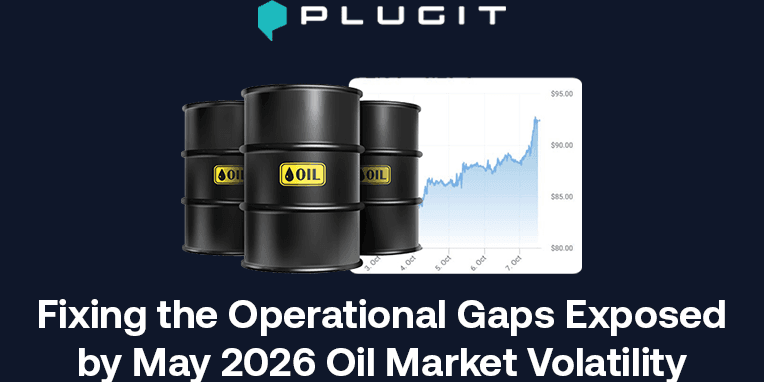
The first week of May 2026 delivered the kind of market conditions brokers cannot ignore. Oil volatility following geopolitical disruption, shifting rate expectations, and cross-asset instability created a high-pressure trading environment.
For brokers and prop firms, this is not just market movement. It is where operational weaknesses become visible.
Client flow becomes directional. Margin pressure builds quickly. Copy trading strategies face sudden reversals. Affiliate campaigns bring traffic that is harder to convert and retain. Internal teams are pushed to respond faster, often with tools that were not designed for this level of activity.
The result is familiar: inefficiency, delayed decision-making, and increased risk exposure. This is exactly where infrastructure becomes the difference.
The market conditions of May 2026 are not exceptional. Geopolitical tension, oil volatility, rate uncertainty, and cross-asset risk-off moves are increasingly the norm. The US-Iran conflict, Strait of Hormuz disruptions, Fed policy uncertainty, and elevated VIX readings are the operating environment brokers must plan for, not the exception they hope to avoid.
Brokers operating with disconnected systems, manual risk management, and static margin rules navigate these conditions reactively. Every market event becomes a crisis response. Every volatility spike requires manual intervention. Every campaign surge creates an onboarding bottleneck.
Brokers operating on unified infrastructure, where Dynamic Margin adjusts automatically, CRM routes and qualifies traffic in real time, Copy Trade environments have full exposure visibility, and IB commissions execute without manual reconciliation, operate with structural advantage.
The market creates the same conditions for every broker. Infrastructure determines who handles them with stability and who handles them with strain.
All six pain points share a common root. Most brokers operate with disconnected systems, manual processes, delayed data visibility, and limited integration between departments. When markets move, this fragmentation becomes the bottleneck.
YOONIT is not a collection of tools. It is built as connected infrastructure where CRM manages client flow, Dynamic Margin controls risk, IB systems manage acquisition quality, Bonus Automation structures incentives, and Copy Trade and MAM provide trading visibility. Each module solves a specific problem. Together, they create operational stability.
Market volatility is not the problem. It is the moment where operational gaps are exposed. Brokers who rely on manual processes and fragmented systems will continue to experience delays, inefficiencies, and increased risk.
Brokers who operate with structured, connected infrastructure will respond faster, maintain control, and scale with confidence. The market creates pressure. Infrastructure determines who performs under it.
Ready to build operational advantage?
Speak with a PLUGIT specialist to see how YOONIT Trading Solution can support your operations.
Schedule a CallSelect the categories and companies you wish to follow directly to your person rss feed.
Create Custom RSS FeedSign up and join over 5,000 professional members who receive personalized news alerts, curated professional connections, and more for free!
WTI crude oil price forecast: A confirmed breakout above $94.765 could open the way toward $100.305, while weekly support remains at $87.360–$90.830.
NAS100 price forecast recap: Explore the Nasdaq 100 rally to 31,401.3, with technical analysis of the breakout and key support and resistance levels.
Learn how to identify, draw and trade XAUUSD supply and demand zones using Gold market structure, price action confirmation and clear risk management.
cTrader has been named Best Trading Platform at UF Awards APAC 2026 during iFX EXPO Asia in Hong Kong.
AUD/CHF reached last week’s 0.57732 bearish target. Learn how resistance, market structure and a neckline retest shaped the original price action forecast.
Businesses eventually reach a point where basic tools are not enough basic tools.
Multi-asset trading broker AvaTrade has agreed to acquire the majority of FXCM Group’s business and brand, in a transaction that would bring a longstanding retail FX franchise into the AvaTrade Group.
LSEG and CMC Markets have signed a multi-year strategic data agreement expanding CMC's access to LSEG's real-time and delayed pricing, reference and corporate actions data, news and analytics, plus AI-ready content, to support new products, entry into new markets and the growth of CMC's institutional and B2B partnerships.
The Tel Aviv Stock Exchange is considering a bid for the Cyprus Stock Exchange, with Israeli media citing its EU licence, trading platform and clearing house. Euronext’s Athens exchange and India’s National Stock Exchange are also seen as contenders, and Cyprus aims to sign a sale agreement by the end of this year.
CME Group will launch baseball futures on 12 October, pending regulatory review, tracking CME FutureSports Performance Indexes built on Official League Data. Standard and micro contracts will start with the 2026 Postseason and the four clubs in the League Championship Series, trading around the clock.