just now


Liquidity Finder Ltd is incorporated in England and Wales, company number 10610740, registered address 167-169 Great Portland Street, Fifth Floor, London W1W 5PF, United Kingdom.
Published: just now
In a market characterised by liquidity fragmentation, tougher rules, developing market structures, and increased automation, funds, brokers, and intermediaries must make quick, safe, and smart trading decisions.
This includes having the necessary skills, tools, and strategies in place to eliminate bottlenecks, boost efficiency, and provide client satisfaction.
Ben Cross, Senior Operation Analyst at AlpFin, shares some insights into a few strategies that can help navigate this dynamic landscape and ensure your business’ success.
One of the most crucial functions of eFX trading platforms is to lower operational risks.
E-venues can assist in reducing market friction by introducing automatic responses to customers across constrained emerging market (EM) pairs. They can also assist market players in trading EM currencies by streaming customised two-way pricing from a variety of risk-warehousing market platforms to provide continuous pricing during periods of higher volatility.
Another way to manage operational risks is utilising electronic systems,as they have a lower mistake rate throughout the trade execution, clearing, and settlement lifecycle.
As the financial world continues to evolve, staying stagnant is not an option. To thrive in the eFX trading environment, diversification is crucial.
Multi-asset trading is in high demand, and offering this capability can help you attract more clients and boost trading activity. This not only differentiates your platform but also tightens spreads and improves pricing.
According to a 2021 JP Morgan survey, workflow efficiency is institutional traders’ second most urgent concern, right behind access to liquidity. This makes sense given that workflow is such a crucial lever for achieving efficiency gains and raising trader productivity.
As a result, FX trading platforms are differentiating themselves more and more based on the quality of their workflow. In eFX trading, this includes automation in all pre-trade, execution, and post-trade operations necessary to provide clients with a seamless end-to-end experience.
At AlpFin, we utilise industry-specific knowledge and technology infrastructure that combines high-end trading system components combined with skilled personnel to provide institutions and retail traders with highly tailored solutions. This allows them to establish a successful workflow that is simplified and well-optimised for their clientele.
The eFX trading environment is subject to strict regulatory oversight, with numerous regulations governing different aspects of the market. It is imperative for institutions to stay updated with the latest regulatory developments and adhere to all applicable rules.
This includes robust anti-money laundering (AML) and know-your-customer (KYC) procedures, as well as complying with market-specific regulations. Failing to comply with regulations can result in severe penalties and reputational damage.
The principles of efficiency and success apply equally in eFX trading, whether you are in charge of managing billions of dollars or are just getting started with a modest portfolio. This is where the future of trading unfolds, and those who are prepared and resilient will find themselves not just participants but true masters of this digital domain.
Market-leading forex brokerage liquidity solutions at your fingertips.
Select the categories and companies you wish to follow directly to your person rss feed.
Create Custom RSS FeedSign up and join over 5,000 professional members who receive personalized news alerts, curated professional connections, and more for free!
ESMA has published an opinion stating that MiCA-authorised crypto-asset service providers should cease services tied to non-MiCA-compliant stablecoins for EU clients across MiCA crypto-asset services. National authorities should require remediation of existing exposures within three months, by early January 2027.
Nasdaq Ventures has made a strategic investment in Amsterdam-based derivatives and crypto exchange One Trading, with both firms to explore 24/7 trading of equity futures. The undisclosed investment follows Nasdaq's US$100 million investment in Payward, the parent of Kraken, and CME Group's move to 24/7 trading.
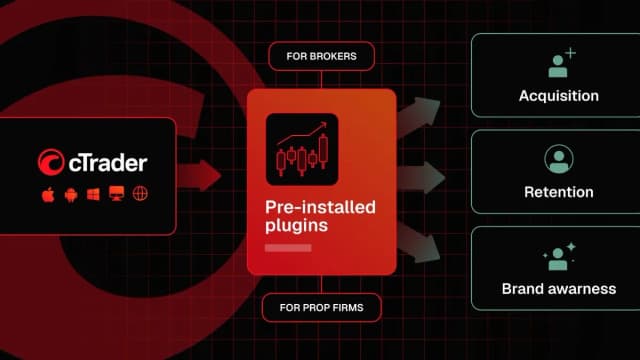
cTrader has opened multi-platform plugins to brokers and prop firms, which can pre-install their own tools for clients or list them in cTrader Store. The plugins run across Mobile, Web, Windows and Mac, and can be built and launched independently of core-platform releases, including trading journals and calculators.
Institutional brokerage and financial infrastructure provider Clear Street has joined TradingView’s broker network, allowing its clients to trade US stocks, exchange-traded funds and options directly through the charting and analysis platform.
Learn how to improve trading psychology, manage fear and greed, avoid revenge trading, and follow your trading strategy with discipline and a trading journal.
GTC Prime has announced a strategic partnership with Centroid Solutions to manage and distribute its liquidity through CS 360 Bridge, Centroid's multi-asset connectivity and execution engine, giving brokers and institutional clients access to tailor-made pricing, low-latency execution and real-time risk management.
CMC Markets Founder and CEO, Lord Peter Cruddas, discusses the structural evolution of the Group, the accelerating opportunity across B2B and institutional markets, major global partnerships including Revolut, Westpac, and ASB, and his outlook for the remainder of the financial year ahead.
Clear Street has announced an exclusive partnership with Seawolf Capital to bring market commentary from Danny Moses, Vincent Daniel and Porter Collins to its clients and the wider investing community, including live market calls, digital content and events. New programming will sit alongside Seawolf's podcast.
Yields are surging. But is inflation really the reason? This week’s BitDelta Pro Weekly Outlook looks beyond the headline explanation to examine what is actually driving the move in rates, and what that could mean across equities, credit and commodities. We also explore the growing importance of balance-sheet quality, the signals emerging from the AI infrastructure cycle, and what oil and gold may be telling markets about the current macro regime. Read the full Weekly Outlook. BitDelta Securities Financial Services LLC, regulated by the Capital Market Authority under Category 5 (Introduction Only), acts solely as an introducer and does not provide trading, execution, dealing, advisory, portfolio management, or custody services. All trading, execution, and investment-related services are provided by BitDelta Limited, Mauritius, a licensed Investment Dealer. All trading and investments involve risk. The value of investments may fluctuate, and you may receive less than your initial investment.
Devexperts has appointed Rainer Fuchsluger as Global Group Chief Executive Officer, effective immediately. His career spans LSEG, Wolters Kluwer, SS&C and Thomson Reuters, and he follows Ben Hurley, who was CEO for two years. His mandate covers international growth, cloud computing and AI across the portfolio.