
just now

Liquidity Finder Ltd is incorporated in England and Wales, company number 10610740, registered address 167-169 Great Portland Street, Fifth Floor, London W1W 5PF, United Kingdom.
Published: just now


The U.S. dollar's trajectory remains uncertain, as lower yields in the U.S. continue to limit its gains. While trade policy developments, particularly President Trump's aggressive tariff plans, could introduce volatility, the broader economic landscape suggests that the dollar might struggle to sustain strength in the coming months.
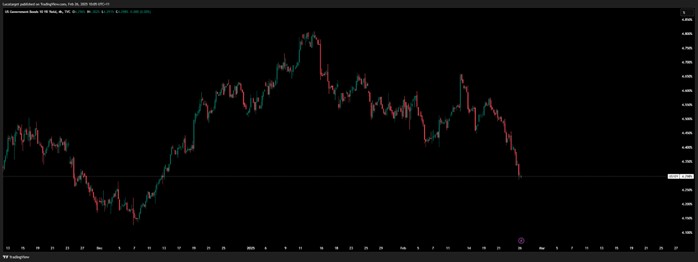
The recent confirmation from President Trump that 25% tariffs on Canada and Mexico are "moving along very rapidly" has yet to generate a significant response from the respective currencies. However, with additional tariffs on steel, aluminium, semiconductors, and pharmaceuticals scheduled over the next two months, the risk of heightened financial market turbulence remains. Historically, Trump’s previous term saw the dollar weaken due to a lack of actual tariff implementation. This time, however, the administration has already enacted a 10% tariff on Chinese imports, with further increases on the horizon.
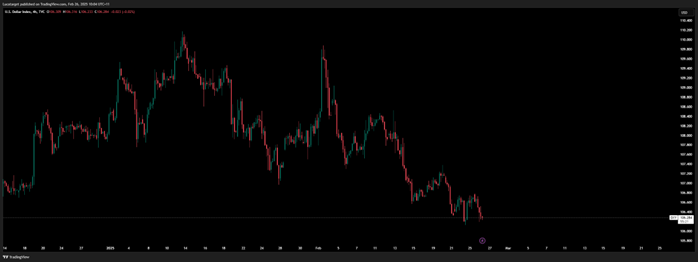
From a macroeconomic perspective, the U.S. is likely at the peak of its current economic cycle. Growth in the past two years has hovered around 2.8%-2.9%, and the Federal Reserve has eased interest rates slightly from its most restrictive stance since the Global Financial Crisis. The key risk here is that slowing growth could pave the way for further monetary easing, a scenario that typically pressures the dollar downward. Additionally, rising consumer credit delinquencies—now at levels not seen since 2011—signal growing strain on U.S. households. As such, weaker economic data is driving down front-end yields, with the 2-year U.S. Treasury yield hitting a new year-to-date low.
The euro experienced an initial surge following Germany’s election results, with EUR/USD reaching an intra-day high of 1.052 before retracing. While Friedrich Merz’s CDU-CSU victory offers potential for pro-growth policies, optimism faded as traders considered the hurdles ahead. A CDU-SPD coalition now appears likely, potentially paving the way for corporate tax cuts and relaxed fiscal rules—factors that could bolster German economic sentiment in the medium term.
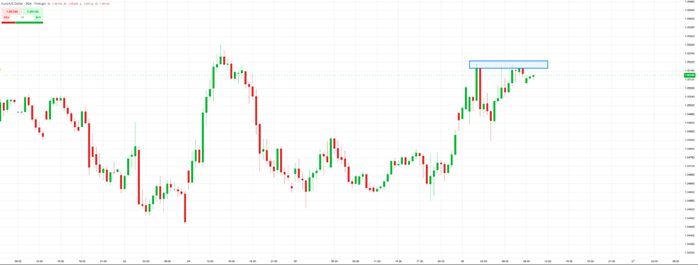
Despite these potential structural benefits, near-term euro strength may remain limited. The European Central Bank is weighing its options regarding its rate-cutting cycle, with recent statements suggesting some policymakers favour an earlier pause. This could provide a slight tailwind for the euro, particularly if U.S. yields continue to decline. However, geopolitical risks and uncertainty around fiscal policy agreements within Germany could temper bullish sentiment.
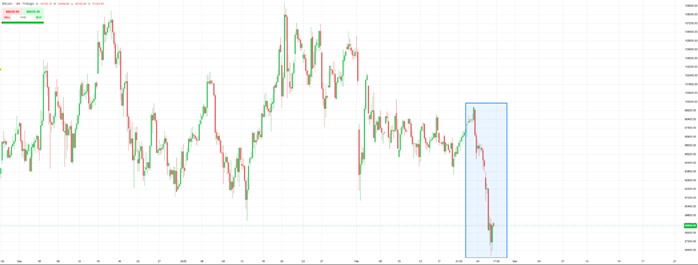
Bitcoin has experienced a dramatic drop of over 10% in less than two days, driven by a combination of profit-taking, concerns over regulatory crackdowns, and broader risk-off sentiment in financial markets. A wave of liquidations in leveraged positions further exacerbated the selloff, as traders rushed to exit amid heightened volatility. While long-term adoption trends remain intact, near-term pressures could keep Bitcoin volatile as investors reassess risk appetite.
One of the standout dynamics in FX markets right now is the Japanese yen’s relative strength. Given the heightened risk environment, characterized by trade policy uncertainty and potential economic slowdown, the yen stands out as the G10 currency with the most room for appreciation.
Looking ahead, key economic indicators—such as U.S. consumer confidence data and European fiscal policy updates—will help shape currency movements. With the Federal Reserve maintaining a cautious stance and geopolitical tensions simmering, volatility remains a defining feature of the FX market. The dollar may remain under pressure, especially if the Fed signals a more accommodative stance in response to weaker growth data.
The next few months are set to be pivotal for the U.S. dollar and euro. While U.S. trade policy and economic headwinds could weigh on the dollar, potential shifts in European fiscal policy may provide support for the euro in the medium term. As always, FX traders will need to navigate a complex landscape of macroeconomic data, policy decisions, and geopolitical developments.
This content may have been written by a third party. ACY makes no representation or warranty and assumes no liability as to the accuracy or completeness of the information provided, nor any loss arising from any investment based on a recommendation, forecast or other information supplies by any third-party. This content is information only, and does not constitute financial, investment or other advice on which you can rely.
ACY Securities is one of Australia's fastest growing multi-asset online trading providers, offering ultra-low-cost trading, rock-solid execution, technologically superior account management and premium market analysis.

Select the categories and companies you wish to follow directly to your person rss feed.
Create Custom RSS FeedSign up and join over 5,000 professional members who receive personalized news alerts, curated professional connections, and more for free!
Bybit has launched Perp Options, described as the first options contracts built on TradFi perpetuals, giving traders round-the-clock access to US equity options. SpaceX and Nvidia are the first underlying assets, with USDT settlement and integration into Bybit's Unified Trading Account.
Use this trading preparation checklist to plan your session, define entry rules, manage risk, and build a disciplined trading routine in seven steps.
Your Bourse expands its crypto liquidity ecosystem with Caladan, giving brokers access to broader market coverage, institutional execution capacity and streamlined settlement.
Scope Markets, the retail brokerage part of Rostro Group, has appointed Ibrahim Hossny as Head of Research and Marketing for the Middle East and North Africa.
Hantec Prime, the institutional division of Hantec Markets, has reported trading volume up more than 300% year-to-date, alongside the addition of 42 new institutional clients since December, capping one of its strongest years of growth to date.
Learn how to refine XAUUSD support and resistance on the daily chart using candle bodies, market structure and weekly gold levels for swing trading. A slug alone cannot guarantee a top Google ranking. Keep it focused rather than adding every supporting keyword.
The week in Dubai will be focused on connecting directly with the industry and discussing how technology can help modern brokerages simplify operations, automate workflows, strengthen operational control, and scale efficiently.
Devexperts has launched a turnkey solution giving brokers in South Korea access to US equity markets, combining its DXtrade trading platform, dxFeed market data, and execution services. The offering targets South Korea's growing retail demand for US stocks, worth several billion USD monthly.
Assess why WTI crude oil surged past $105 per barrel amid Saudi pipeline disruptions, record tanker charter rates, and escalating geopolitical tensions.
Bitcoin price forecast: BTC/USD retests $78,460–$80,215 resistance. Watch bearish confirmation toward $72,480 or a bullish breakout toward $86,150.