
just now


Liquidity Finder Ltd is incorporated in England and Wales, company number 10610740, registered address 167-169 Great Portland Street, Fifth Floor, London W1W 5PF, United Kingdom.
Published: just now

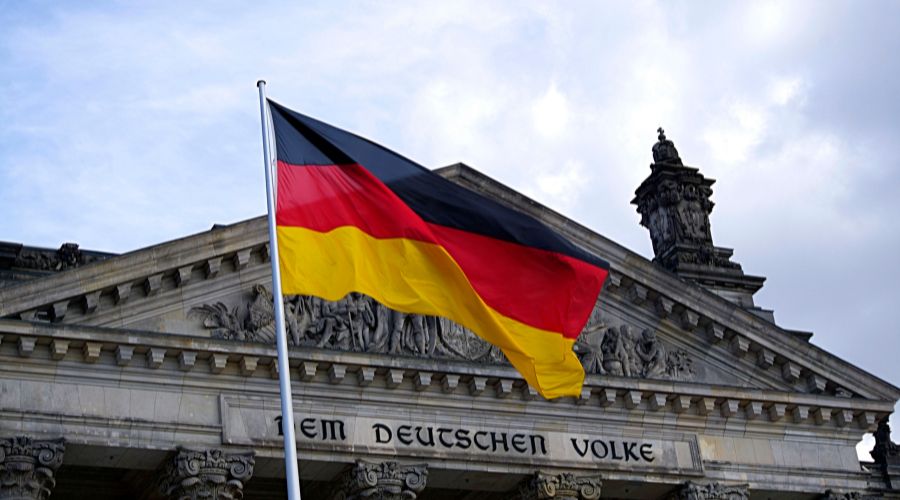
Germany, long hailed as Europe’s industrial powerhouse, faces a pivotal moment as it struggles to emerge from a prolonged slump. Industrial production, a critical barometer of economic health, continues to falter. In October 2024, output fell by 1% from the previous month, adding to a nearly 5% year-on-year decline. While the numbers alone are troubling, the underlying dynamics tell a more nuanced story of structural challenges and shifting global realities.
Germany’s industrial engine has historically relied on two key pillars: cheap energy and robust export markets. Yet, these foundations are increasingly unstable. Energy costs, driven by geopolitical tensions and a shift toward greener sources, have surged. Simultaneously, global trade patterns are evolving, with protectionist policies and economic disruptions creating barriers for German exports. These structural headwinds have left industrial production over 10% below pre-pandemic levels—an alarming figure for a nation synonymous with manufacturing excellence.
Amid the gloom, there are glimmers of hope. Monthly production data suggests a potential bottoming out, hinting at a short-term rebound. Elevated inventory levels, though historically a drag, could translate into production gains as demand stabilizes. However, these are tentative prospects, overshadowed by deeper issues such as weak capacity utilization. In most sectors, utilization remains at its lowest levels since 2020, with only food and apparel production reaching historical norms.
External forces are adding to Germany's industrial woes. The U.S. has adopted aggressive economic policies that incentivize companies to relocate production, threatening Germany’s export-oriented model. Meanwhile, political challenges in France, Germany’s second-largest trading partner, amplify the uncertainty. These developments exacerbate existing vulnerabilities, leaving little room for complacency.
The road to recovery for Germany’s industrial sector will require more than a cyclical upturn. It demands bold structural reforms, innovation, and strategic diversification. Investments in sustainable energy, advanced manufacturing technologies, and new trade partnerships could pave the way for renewed competitiveness. Without such initiatives, Germany risks losing its industrial edge in an increasingly dynamic global economy.
While the current outlook is challenging, Germany’s history of resilience and adaptability offers a reason for cautious optimism. By embracing change and addressing its economic vulnerabilities head-on, the nation can turn this industrial slump into an opportunity for reinvention.
China’s corn prices have fallen to their lowest levels in four years due to poor weather damaging harvests and flooding the market with lower-grade grain. Farmers have struggled to find buyers, intensifying price declines. Despite government interventions like stockpiling, sluggish demand and weak economic conditions have limited recovery, highlighting the broader challenges facing global agricultural markets.
While the current outlook is challenging, Germany’s history of resilience and adaptability offers a reason for cautious optimism. By embracing change and addressing its economic vulnerabilities head-on, the nation can turn this industrial slump into an opportunity for reinvention.
This content may have been written by a third party. ACY makes no representation or warranty and assumes no liability as to the accuracy or completeness of the information provided, nor any loss arising from any investment based on a recommendation, forecast or other information supplies by any third-party. This content is information only, and does not constitute financial, investment or other advice on which you can rely.
Why Is Forex Trading So Difficult?
How To Master MT4 & MT5 - Tips And Tricks For Traders
The Importance Of Fundamental Analysis In Forex Trading
Forex Leverage Explained: Mastering Forex Leverage In Trading & Controlling Margin
The Importance Of Liquidity In Forex: A Beginner's Guide
Close All Metatrader Script: Maximise Your Trading Efficiency And Reduce Stress
Best Currency Pairs To Trade In 2024
Forex Trading Hours: Finding The Best Times To Trade FX
MetaTrader Expert Advisor - The Benefits Of Algorithmic Trading And Forex EAs
ACY Securities is one of Australia's fastest growing multi-asset online trading providers, offering ultra-low-cost trading, rock-solid execution, technologically superior account management and premium market analysis.

Select the categories and companies you wish to follow directly to your person rss feed.
Create Custom RSS FeedSign up and join over 5,000 professional members who receive personalized news alerts, curated professional connections, and more for free!
CMC Markets has retired the CMC Connect name and will now present its institutional business as CMC Markets Institutional.
The SEC has approved Cboe's binary options tied to key performance indicators reported by 23 companies, covering more than 100 metrics such as iPhone revenue. The cash-settled contracts pay a fixed $1, Robinhood plans to be the first retail broker to offer them, and trading awaits clearing registration.
Gold is trading around $4,150, recovering sharply after falling to a recent low of $4,073.

Global semiconductor and technology stocks sold off sharply on Thursday, with South Korea’s SK Hynix plunging over 10% and Samsung Electronics falling more than 8%.
Learn gold market structure to identify bullish, bearish and ranging XAUUSD trends using higher highs, higher lows, lower highs and lower lows, support and resistance.
Axi has launched an MCP integration connecting eligible MT5 accounts to Claude, allowing clients to access live market data, track positions, execute trades and update risk parameters through the AI assistant developed by Anthropic. Available to eligible Axi clients with an active MT5 account. Setup runs via Claude.ai.
Movantis has selected Integral to extend its FX liquidity offering for institutional clients including banks, payment networks and digital asset operators, adding an institutional trading platform, direct-to-client API trading and API connectivity into a third-party multi-dealer venue, supporting regional expansion.
Running a venue around the clock is the easy part. Pricing risk when the market underneath it is shut is not. Lars Holst, CEO of GCEX explains how to manage risk in 24/7 markets.
ATFX has released its Q4 2026 Trader Magazine, offering a closer look at the macroeconomic and market forces that could shape trading conditions in the final quarter of the year.
LSEG has announced a collaboration with NVIDIA that lets financial institutions analyse years of LSEG Tick History data in seconds using NVIDIA cuDF on GPUs, without creating another full copy of the dataset. Tick History holds 110 trillion rows across 100 million instruments and more than 580 venues and contributors.