
just now


Liquidity Finder Ltd is incorporated in England and Wales, company number 10610740, registered address 167-169 Great Portland Street, Fifth Floor, London W1W 5PF, United Kingdom.
Published: just now


Overview
USD - Fed Holds Rates Steady, Dollar Weakens
JPY - Yen Gains as Risk Sentiment Shifts
AUD - Aussie Struggles Amid Economic Weakness
NZD - New Zealand Exits Recession, Kiwi Holds Firm
EUR - Euro Finds Support as Geopolitical Risks Ease
GBP - Sterling Faces Headwinds as UK Growth Slows
CAD - Oil Prices Support Loonie Despite Rate Pause
CHF - Swiss Franc Gains on Safe-Haven Demand
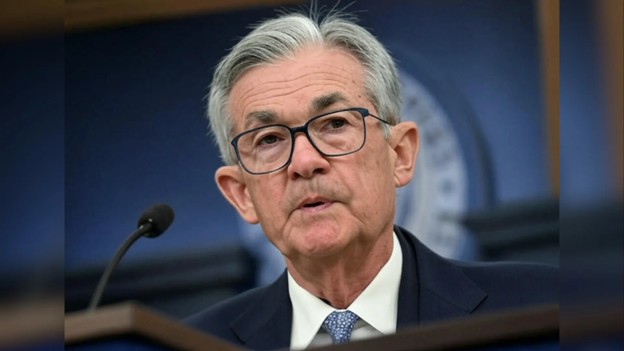
The Federal Reserve just wrapped up its March 19, 2025, meeting, and if you were hoping for a rate cut, you might need to wait a little longer. The central bank is holding the federal funds rate steady at 4.25% to 4.50%, signaling a cautious approach to the economy’s next moves.

Growth is Slowing: While the Fed describes economic activity as “solid,” recent indicators show signs of a slowdown in consumer spending and business investments. The economy isn’t crashing, but it’s not roaring ahead either.
Inflation is Still Sticky: Prices aren’t coming down as fast as expected. The Fed’s latest projection puts 2025 inflation at 2.7%, slightly above its previous estimate of 2.5%. This is worrying because higher inflation with slowing growth is a classic stagflation warning sign.
The Job Market is Holding—for Now: Unemployment is still low, but companies are starting to slow hiring, and some industries are seeing increased layoffs. If inflation remains high while job losses increase, stagflation could become a reality.
What’s the Fed Doing?
No Rate Cuts Yet – With inflation still above target, the Fed isn’t budging. Holding rates high helps keep prices in check, but it also risks further slowing the economy.

If stagflation becomes a reality, it won’t be pretty. Here’s what could happen:
The U.S. Dollar Could Weaken – In a stagflation scenario, the dollar could lose value as investors lose confidence in U.S. economic stability. If global markets sense weakness, they may shift toward other currencies or assets like gold and commodities.
Stock Markets Could Struggle – Historically, stagflation has been bad for stocks because high inflation cuts into corporate profits while slow growth reduces demand. Tech and consumer stocks are especially vulnerable, while defensive sectors like utilities and healthcare might hold up better.
Borrowing Could Stay Expensive – If the Fed keeps interest rates high to fight inflation, mortgage rates and loan costs will remain elevated. This could make homeownership harder and slow down the housing market.
The Fed’s Dilemma – The central bank faces a tough decision:
Dollar Sell-Off on Rate Pause
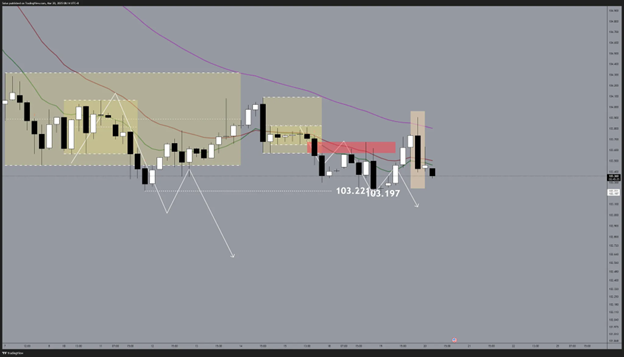
After the release of the Fed’s rate policy and projections, the U.S. dollar weakened as markets reacted negatively to the lack of a rate cut timeline. With the Fed opting to hold rates steady, investor sentiment shifted, signaling concerns that stagnant policy amid persistent inflation could erode the dollar’s strength in the near term.
Technical Outlook
Break and Retest of Liquidity Zones
Upside Rejection
Moving Averages Acting as Resistance
Momentum and Structure Breakdown
Bearish Outlook and Key Levels to Watch
🟥 Bearish Scenario:
🟩 Bullish Reversal (Low Probability for Now):
With the U.S. Dollar Index (DXY) selling off, key USD majors are experiencing shifts in momentum. A weaker dollar generally means stronger counterparts, but each pair reacts differently based on fundamentals and technical positioning.
Daily
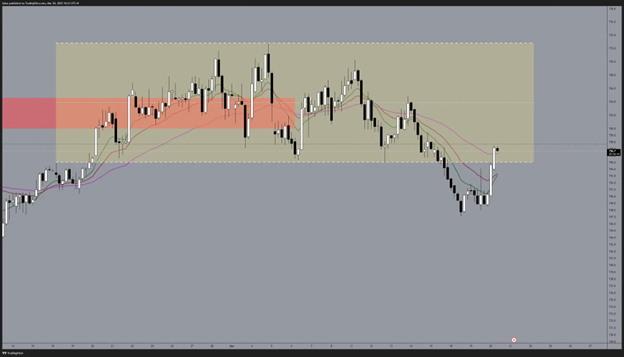
With Yen gaining traction, we are now getting back inside the previous range.
4-Hour
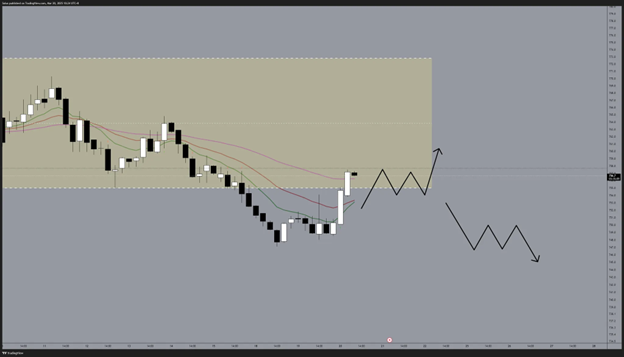
If Yen creates a structure inside the range, we are looking for a breakout for an upside potential.
4-Hour
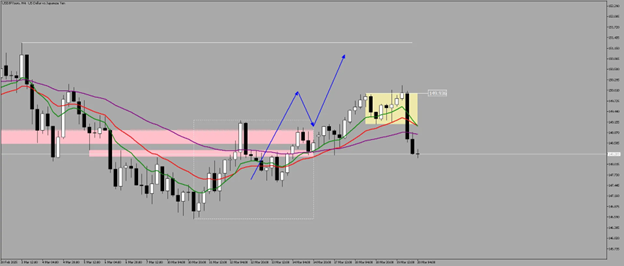
After the release of Fed rate policy decision, USDJPY went down in favor of the Yen.
We are looking for further downside as we already broke down the previous range.
Why Is the Australian Dollar Lagging Behind the New Zealand Dollar?

Despite New Zealand's economic rebound and the Kiwi dollar's relative strength, the Australian dollar (AUD) has been struggling to keep pace. While both economies share similarities, key differences in economic data, central bank policies, and global market sentiment have diverged the performance of AUD and NZD.
Key Reasons Behind AUD’s Underperformance
Slower Economic Growth – Australia’s GDP growth has been weaker compared to New Zealand’s recent rebound, keeping AUD under pressure.
RBA’s Dovish Stance – The Reserve Bank of Australia (RBA) has maintained a cautious stance, signaling that rate hikes may be over, unlike the Reserve Bank of New Zealand (RBNZ), which remains relatively hawkish.
Housing Market & Consumer Spending Concerns – High mortgage rates and falling household savings are dampening Australian consumer confidence.
Commodities & China’s Slowdown – While New Zealand benefits from dairy exports, Australia’s reliance on iron ore and coal exports to China has made the AUD vulnerable to China’s economic struggles.
Yield Differentials – New Zealand’s higher interest rates (5.50%) compared to Australia’s (4.35%) have made the NZD a more attractive carry trade option.
4-Hour
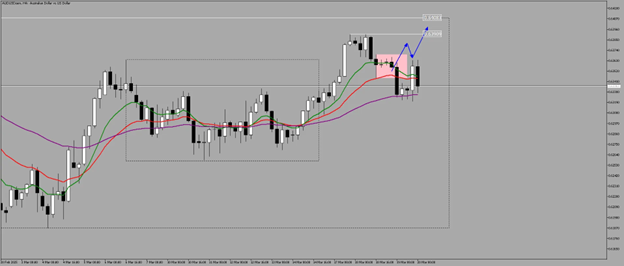
The Aussie Dollar is shaken after a fall on employment. Despite Dollar weakness, AUD is trying to hold its ground.
As long as 0.63200 level remains intact, we could still see Australian Dollar to hold its ground for an upside potential.
If Aussie falls, 0.631 to 0.629 level could be a potential downside target.
New Zealand Exits Recession: What’s Next for the Kiwi Dollar?

After months of economic contraction, New Zealand has officially exited recession, providing a much-needed boost to investor sentiment. The country’s latest GDP data showed positive growth, signaling a rebound from the technical recession seen in previous quarters. But what does this mean for the New Zealand dollar (NZD) and the broader economic outlook?
Key Factors Behind the Recovery
Stronger Consumer Spending – Increased household consumption has helped lift economic activity.
Resilient Labor Market – Unemployment remains low, supporting domestic demand.
Improved Business Confidence – Firms are gradually regaining optimism amid stabilizing conditions.
China’s Economic Outlook – As New Zealand’s largest trade partner, signs of recovery in China have supported export demand.
Impact on the New Zealand Dollar
Kiwi Dollar Strength: A stronger economy fuels expectations that the Reserve Bank of New Zealand (RBNZ) might delay rate cuts, supporting NZD.
Inflation Still a Concern: While the economy is recovering, inflation pressures persist, which could keep the RBNZ cautious.
Daily
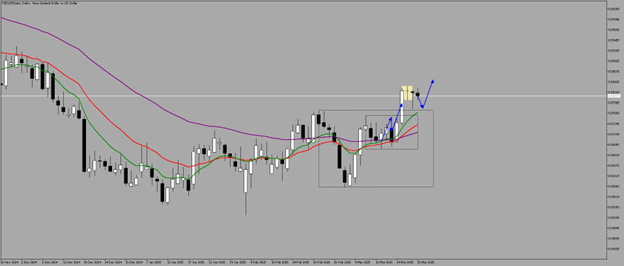
Daily is still going strong and currently testing the previous turned support.
4-Hour
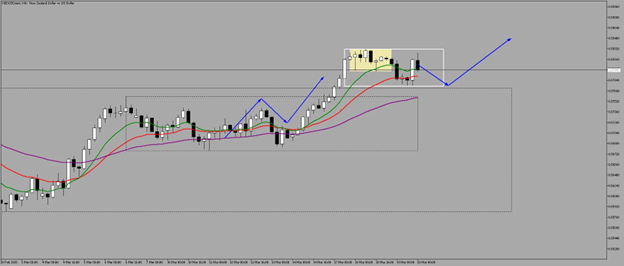
Upside potential remains intact as long as the price holds above the range low targeting the top of the range for momentum catalyst.
Euro Finds Temporary Relief as Geopolitical Tensions Ease

The proposed 30-day ceasefire between Russia and Ukraine brings short-term stability to the eurozone, easing risk sentiment and supporting investor confidence. With energy disruptions subsiding, inflationary pressures could ease, allowing the ECB to take a more measured approach to policy. However, if Russia regroups for further aggression, uncertainty could return, keeping euro volatility in play.
EU Enforces Digital Markets Act Against Tech Giants

The European Commission has initiated enforcement actions under the Digital Markets Act (DMA) against major tech companies, including Google and Apple. Google is accused of favoring its own services in search results and restricting competitor access on its Play Store, while Apple has been ordered to open its iOS operating system to rival developers. Non-compliance could result in fines up to 20% of global revenue. These measures aim to promote fair competition within the digital market. The enforcement has heightened tensions with the U.S., with President Donald Trump threatening retaliatory tariffs, viewing the EU's actions as unfairly targeting American companies.
4-Hour
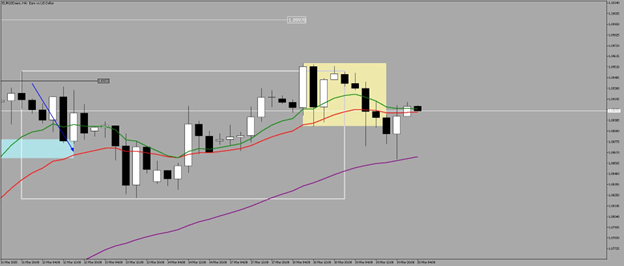
Euro is still in-tact and held its ground despite the short term rally of the US dollar. A break of the 1.091 level could be trigger for EUR to go to the upside.
Right now, we are still hovering near the 50 MA and looking for a sustained support.
4-Hour
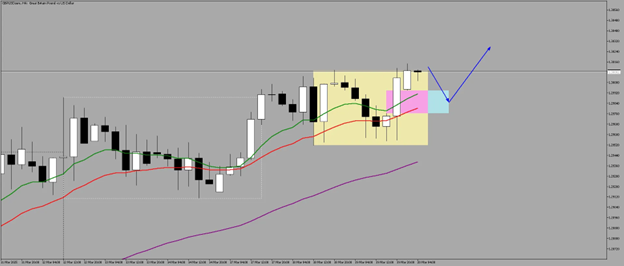
Pound continues to gain traction with imminent new highs on the horizon.
Potential pullback levels for long oppotunity could be set at 1.29762 - 1.29938.
Possible scenarios from our previous post are still intact: https://acy.com/en/market-news/market-analysis/trumpcession-dollar-markets-lows-j-o-03192025-131825/
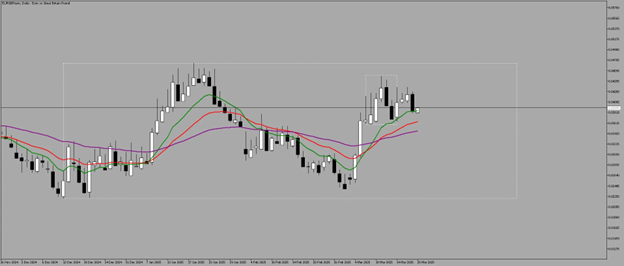
Daily
4-Hour
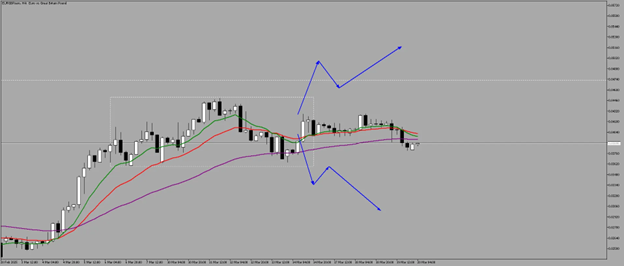
EURGBP is still on a bullish zone of the overall range with signs strength on EUR. Currently, we are also on a range-bound market on 4-hour.
A break of the high could give EUR a push to the upside.
Daily
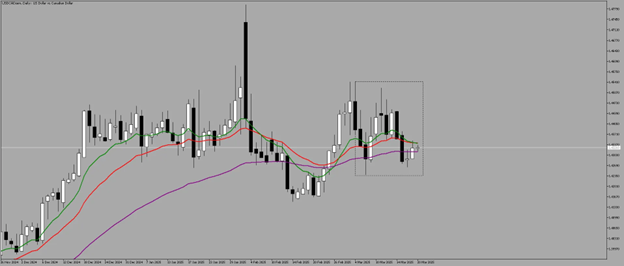
Loonie remains laggard and we are not seeing strength yet for a confirmed direction.
Wait for:
Daily
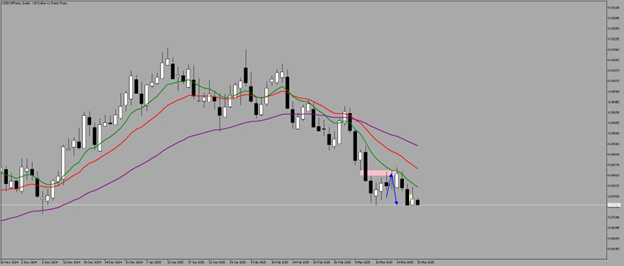
Swiss is on an imminent breakdown with further downside ahead. We are not seeing any signs of recovery.
4-Hour
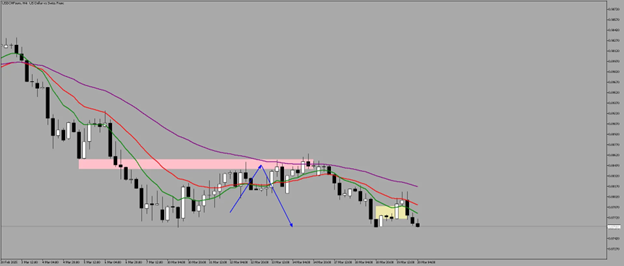
4-Hour suggests that we are still in a strong downtrend with:
This content may have been written by a third party. ACY makes no representation or warranty and assumes no liability as to the accuracy or completeness of the information provided, nor any loss arising from any investment based on a recommendation, forecast or other information supplies by any third-party. This content is information only, and does not constitute financial, investment or other advice on which you can rely.
ACY Securities is one of Australia's fastest growing multi-asset online trading providers, offering ultra-low-cost trading, rock-solid execution, technologically superior account management and premium market analysis.

Select the categories and companies you wish to follow directly to your person rss feed.
Create Custom RSS FeedSign up and join over 5,000 professional members who receive personalized news alerts, curated professional connections, and more for free!
Bybit has launched Perp Options, described as the first options contracts built on TradFi perpetuals, giving traders round-the-clock access to US equity options. SpaceX and Nvidia are the first underlying assets, with USDT settlement and integration into Bybit's Unified Trading Account.
Use this trading preparation checklist to plan your session, define entry rules, manage risk, and build a disciplined trading routine in seven steps.
Your Bourse expands its crypto liquidity ecosystem with Caladan, giving brokers access to broader market coverage, institutional execution capacity and streamlined settlement.
Scope Markets, the retail brokerage part of Rostro Group, has appointed Ibrahim Hossny as Head of Research and Marketing for the Middle East and North Africa.
Hantec Prime, the institutional division of Hantec Markets, has reported trading volume up more than 300% year-to-date, alongside the addition of 42 new institutional clients since December, capping one of its strongest years of growth to date.
Learn how to refine XAUUSD support and resistance on the daily chart using candle bodies, market structure and weekly gold levels for swing trading. A slug alone cannot guarantee a top Google ranking. Keep it focused rather than adding every supporting keyword.
The week in Dubai will be focused on connecting directly with the industry and discussing how technology can help modern brokerages simplify operations, automate workflows, strengthen operational control, and scale efficiently.
Devexperts has launched a turnkey solution giving brokers in South Korea access to US equity markets, combining its DXtrade trading platform, dxFeed market data, and execution services. The offering targets South Korea's growing retail demand for US stocks, worth several billion USD monthly.
Assess why WTI crude oil surged past $105 per barrel amid Saudi pipeline disruptions, record tanker charter rates, and escalating geopolitical tensions.
Bitcoin price forecast: BTC/USD retests $78,460–$80,215 resistance. Watch bearish confirmation toward $72,480 or a bullish breakout toward $86,150.