

Tariff Uncertainty, Fed Policy, and the Dollar’s Weakness
 ACY Securities - Luca Santos
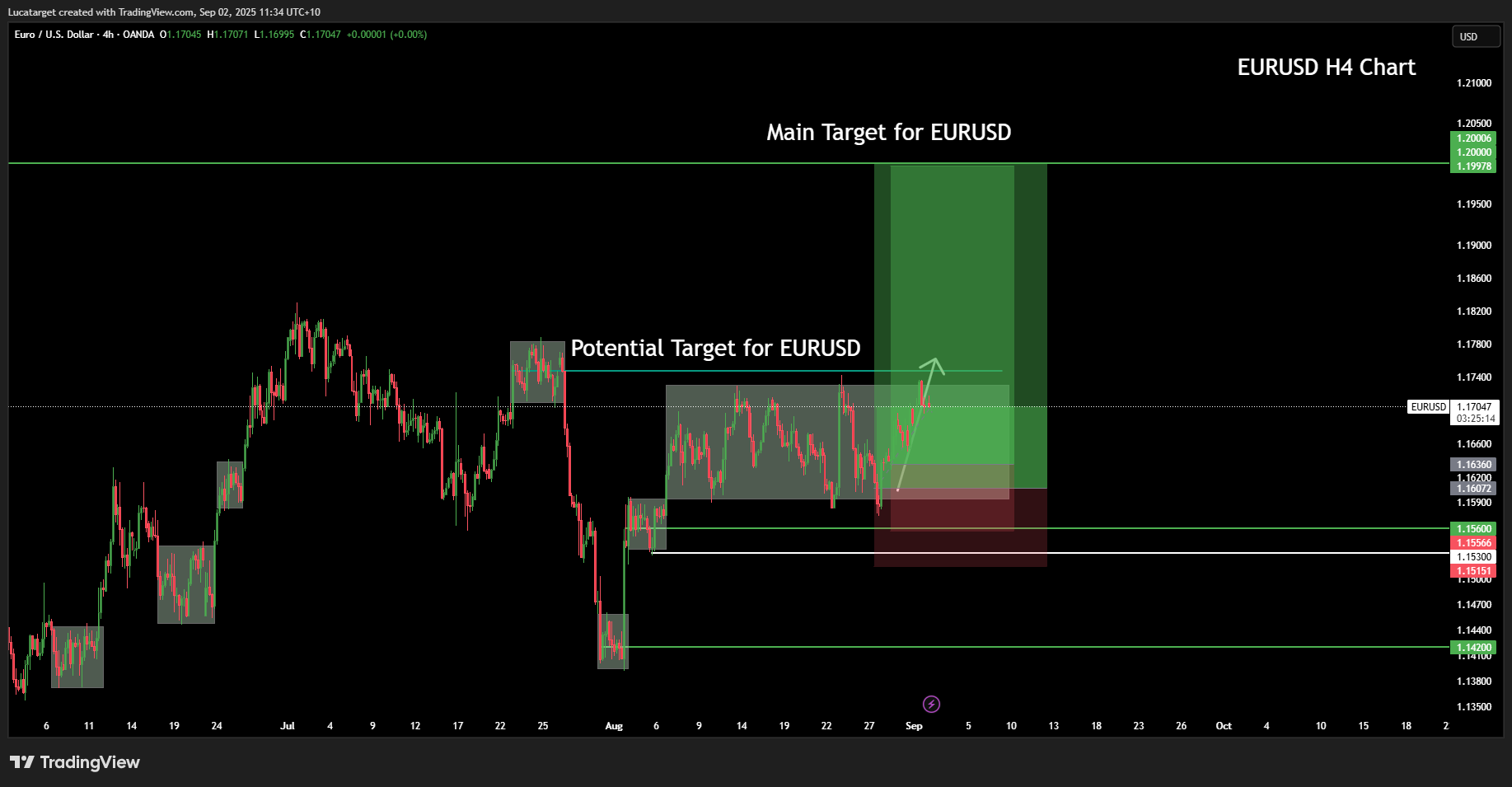
At the start of this week, I’ve been closely monitoring the U.S. dollar, and the tone in markets is one of persistent caution. The greenback has been losing ground, with EUR/USD trading above 1.17 and edging closer to its July highs.
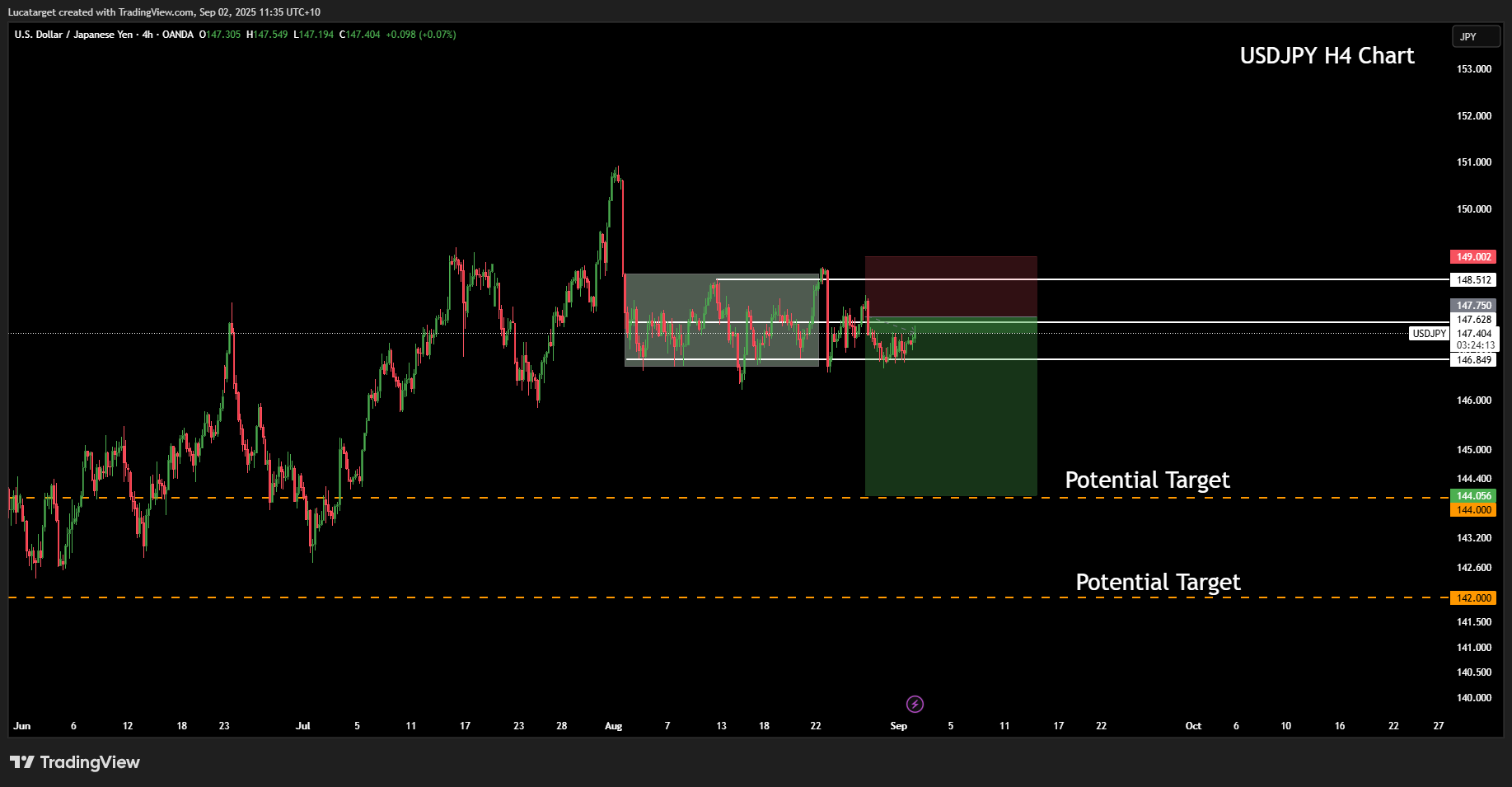
Meanwhile, USD/JPY is testing the 147.00 level, which has acted as a reliable floor for the past month.
The narrative is being shaped less by data and more by politics. President Trump’s decision to dismiss Fed Governor Cook has not only unsettled investors but also raised serious questions about the Fed’s independence.
Short-term yields are declining, reflecting growing confidence that the Federal Reserve will resume its rate-cutting cycle this month. At present, markets are pricing in almost a full 25-basis-point cut, and expectations extend to more than 125bps of easing by September next year.
What could shift this picture? Friday’s non-farm payrolls report. The consensus is for 75k new jobs, a number that sits just above recent averages.
A stronger-than-expected print could briefly challenge the easing narrative, but a weaker outcome would amplify calls for a deeper 50bps cut, adding further pressure on the dollar.
The Legal Cloud Over Tariffs
Another factor weighing on the greenback is the mounting legal challenge to President Trump’s tariff powers under the International Economic Emergency Powers Act (IEEPA). Last week’s appeals court ruling casts doubt on nearly half of all tariff revenues collected so far this year, with implications that could extend into 2026.
Although the administration is expected to take this case to the Supreme Court, the risk of tariffs being overturned has heightened uncertainty.
Even if some measures are struck down, the White House could pivot to other tools, such as Section 232 of the Trade Expansion Act, which remain legally intact. This dynamic underscores how legal and political battles are increasingly influencing financial markets, a theme I expect to dominate through the autumn.
China’s Currency Strategy
At the same time, USD/CNY has been steadily grinding lower. The renminbi has strengthened over six consecutive sessions, aided by the PBoC’s decision to set daily fixes at lower levels. This signals that Beijing is more comfortable allowing its currency to appreciate modestly, especially after months of prioritizing stability.
Why the shift? Economic growth has held up better than anticipated in the first half of the year, and the August PMI data offered a rare sign of improved confidence. A stronger CNY ahead of trade discussions with Washington may also serve as a goodwill gesture, creating a slightly more constructive backdrop for negotiations.
Looking Ahead
The coming days will be critical. All eyes are on the U.S. labor market release, but I’m equally attentive to whether legal challenges to U.S. tariffs escalate toward the Supreme Court. In parallel, China’s willingness to let the renminbi strengthen could reshape regional flows and sentiment.
In my view, we are in a market defined less by fundamentals and more by shifting power dynamics — between politics and policy, between courts and executive authority, and between Washington and Beijing. As an investor, I remain focused on these intersections, because they are increasingly where the real price action is born.
Q1: Why is the U.S. dollar weakening right now?
The dollar has been undermined by two main forces: declining short-term U.S. yields and political uncertainty. Markets are pricing in fresh Fed rate cuts, while President Trump’s dismissal of a Fed Governor has fueled concerns over the central bank’s independence. Both factors are pressuring the greenback.
Q2: How important is the upcoming non-farm payrolls report?
It’s crucial. The consensus is for around 75k jobs. A stronger result could challenge expectations for aggressive rate cuts, but a weaker number might accelerate calls for a 50bps cut. In short, the labor data has the power to shift Fed policy bets, and therefore the dollar.
Q3: What’s happening with U.S. tariffs and the courts?
A recent appeals court ruling questioned the legality of tariffs imposed under the International Economic Emergency Powers Act (IEEPA). Since those tariffs account for nearly half of revenues collected this year, the implications are significant. The case may head to the Supreme Court, keeping uncertainty alive.
Q4: Why is China letting the renminbi strengthen?
For most of the year, Beijing prioritized stability in USD/CNY, but now the PBoC is guiding the pair lower through its daily fix. This shift reflects confidence in China’s near-term growth outlook and could also be a strategic move ahead of trade talks with the U.S.
Q5: What should investors focus on in the near term?
I’m watching three things: Friday’s U.S. jobs report, developments in the Supreme Court’s stance on tariffs, and how far China is willing to let the renminbi appreciate. Together, these factors will shape the path of global FX in the weeks ahead.
This content may have been written by a third party. ACY makes no representation or warranty and assumes no liability as to the accuracy or completeness of the information provided, nor any loss arising from any investment based on a recommendation, forecast or other information supplies by any third-party. This content is information only, and does not constitute financial, investment or other advice on which you can rely.
LiquidityFinder
LiquidityFinder was created to take the friction out of the process of sourcing Business to Business (B2B) liquidity; to become the central reference point for liquidity in OTC electronic markets, and the means to access them. Our mission is to provide streamlined modern solutions and share valuable insight and knowledge that benefit our users.
If you would like to contribute to our website or wish to contact us, please click here or you can email us directly at press@liquidityfinder.com.