Daily Fundamental Analysis: Global stocks under pressure following hot inflation reading from the US
just now

Liquidity Finder Ltd is incorporated in England and Wales, company number 10610740, registered address 167-169 Great Portland Street, Fifth Floor, London W1W 5PF, United Kingdom.
Published: just now


The latest developments in global markets have been significantly shaped by the ongoing discussions surrounding trade policies, particularly with the renewed focus on tariffs imposed by the Trump administration. While these policies are not new, their potential resurgence is stirring fresh concerns across financial markets.
Markets have been reacting to signals that the U.S. could reintroduce a broader set of tariffs as part of its economic strategy. This potential policy shift has reignited fears of global trade disruptions, particularly in sectors that had previously seen some relief following the initial trade wars of the last decade. While investors have become somewhat accustomed to political volatility, the implications for trade relationships with China and other key partners are once again a focal point.
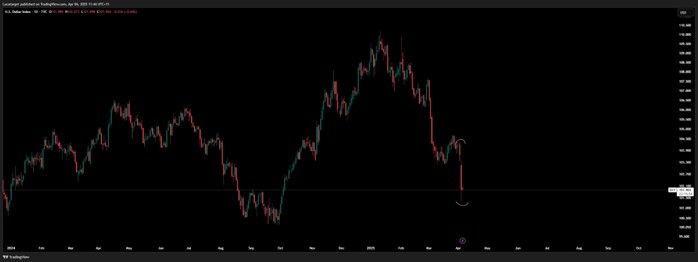
The FX market has reflected this uncertainty, with the U.S. dollar experiencing fluctuations in response to shifting sentiment. The potential for a more protectionist trade stance is being weighed against recent economic data, with market participants assessing the likelihood of retaliatory measures from major trading partners. The yen, traditionally seen as a safe haven, has shown some strength as investors seek risk-off positions considering these developments. Meanwhile, the euro remains under pressure amid weaker-than-expected growth signals in the eurozone.
A resurgence of tariffs could have direct consequences on inflationary pressures, particularly if supply chains are once again disrupted. Higher import costs may translate into elevated consumer prices, which would pose challenges for central banks that are already balancing inflation control with growth concerns. The Federal Reserve remains cautious, signalling a data-dependent approach as policymakers assess the broader economic impact of potential trade disruptions.
Broader Market Implications
Beyond FX markets, equity investors are closely watching sectors that are most exposed to trade policy shifts. The technology sector, which has significant exposure to global supply chains, could face renewed volatility if tensions escalate. Similarly, commodity markets are also sensitive to these developments, with industrial metals particularly vulnerable to any potential slowdown in trade flows.
With U.S. elections on the horizon, trade policy is likely to remain a key theme influencing market sentiment. While some degree of market uncertainty is already priced in, any concrete policy moves could trigger fresh volatility. Investors will be closely monitoring policy announcements and economic indicators to gauge the potential trajectory of trade relationships and their broader impact on global markets.
For now, the focus remains on how key economies will respond to these developments and whether a more protectionist stance will indeed materialize. As always, staying ahead of policy shifts and maintaining a flexible strategy will be essential in navigating these evolving market dynamics.
This content may have been written by a third party. ACY makes no representation or warranty and assumes no liability as to the accuracy or completeness of the information provided, nor any loss arising from any investment based on a recommendation, forecast or other information supplies by any third-party. This content is information only, and does not constitute financial, investment or other advice on which you can rely.
ACY Securities is one of Australia's fastest growing multi-asset online trading providers, offering ultra-low-cost trading, rock-solid execution, technologically superior account management and premium market analysis.

Select the categories and companies you wish to follow directly to your person rss feed.
Create Custom RSS FeedSign up and join over 5,000 professional members who receive personalized news alerts, curated professional connections, and more for free!
The AI trade has always been a supply chain story. For the past two years, the narrative has been simple: insatiable demand for compute infrastructure, constrained supply at every choke point, and the companies that own the bottlenecks collect the toll. NVIDIA on GPUs. ASML on lithography. Samsung, SK Hynix, and Micron on memory. The entire semiconductor complex has traded on scarcity, and scarcity has delivered historic margins.
Interactive Brokers reported customer equity of USD 964.7 billion at the end of the third quarter, up 27% year on year, as customer accounts increased 35% to 5.58 million.
Crypto exchange BingX has secured a Markets in Crypto-Assets Regulation (MiCA) licence for its European arm from Austria's Financial Market Authority (FMA).
CXM Group has agreed to acquire TD Markets (Pty) Ltd, a Johannesburg-headquartered broker authorised by South Africa’s FSCA. TD Markets keeps its brand, team and licence, and Amar Ramith stays as CEO. Financial terms were not disclosed. The deal gives CXM a regulated base in South Africa. Clients need take no action.
Global equities under pressure: Hotter than expected US inflation and rising yields weighed on stocks, particularly technology and semiconductor shares.
Understand trading psychology and learn how a clear strategy, risk management and a trading journal help build discipline and day trading consistency.
Ripple Prime has launched support for real-world asset perpetual swaps, giving institutional clients including Virtu exposure to more than 100 reference markets across equities, indices, ETFs, metals, energy and FX. The swaps reference Trade.xyz perpetual futures on Hyperliquid and trade and settle around the clock.
iSAM Securities Apex has integrated with Crossover Markets, connecting brokers to CROSSx, its institutional digital asset ECN, through Apex’s ultra-low-latency technology stack.
Your Bourse and 4XPORTAL highlight their existing partnership, combining client onboarding, CRM and payment solutions with liquidity, execution and risk-management infrastructure for brokers.
The partnership brings together 4XPORTAL’s brokerage technology capabilities with Your Bourse’s connectivity, liquidity aggregation, and risk-management infrastructure.