
just now


Liquidity Finder Ltd is incorporated in England and Wales, company number 10610740, registered address 167-169 Great Portland Street, Fifth Floor, London W1W 5PF, United Kingdom.
Published: just now


The recent retreat in USD/JPY, which erased the pair’s earlier gains this week, underscores how sensitive global FX markets remain to fleeting shifts in sentiment. Monday’s optimism around easing trade tensions fizzled quickly, taking with it the short-lived surge in front-end US yields. Meanwhile, U.S. retail control group sales came in softer than expected, and producer prices fell short of forecasts a sequence that pressured Treasury yields and gave the yen a chance to stabilize.
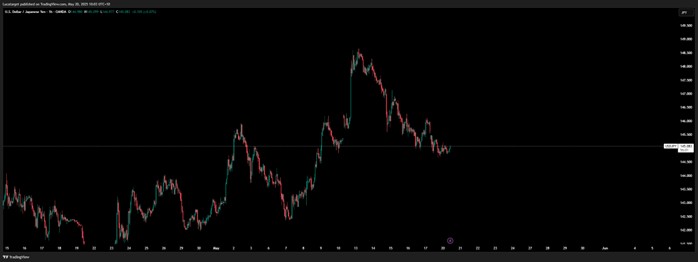
But make no mistake: this rebound in the yen isn’t being powered by domestic strength. Quite the opposite. Japan’s Q1 GDP data, showing a 0.7% contraction (SAAR), confirms the country remains deeply exposed to external fragilities and internal inertia. Export activity shrank despite tariff concerns, while household consumption stagnated. Inflation might be off its highs, but the underlying cost-of-living crisis continues to dampen domestic demand.

This context puts the Bank of Japan in a tricky corner. Even as the rest of the G10 tilts toward easing cycles, the BoJ is reluctant to normalize not because it’s confident, but because it simply doesn’t have room to move. Recent remarks from board member Nakamura, one of the more dovish voices on the policy board, reinforce this point. As his term nears its end, his opposition to rate hikes remains firm, and judging by OIS market pricing (with rate hike expectations by year-end slashed to just 16bps), investors aren’t expecting much from his successor either.
In this environment, the yen's direction will be tethered more closely to external forces especially U.S. yields and global risk appetite. Interestingly, the correlation between the yen and broader market volatility is showing signs of life again, a dynamic worth watching as macro uncertainty builds heading into H2.
On the U.S. side, the Fed is preparing for another evolution of its policy framework. Chair Powell’s participation in this week’s conference signals an intent to address the structural blind spots exposed by the past five years from COVID-19 and supply-chain breakdowns to the inflation super-cycle and geopolitical disruptions. The 2020 framework, which emphasized average inflation targeting, now feels outdated. A reorientation is clearly coming, and Powell has already hinted at removing the average inflation reference altogether.
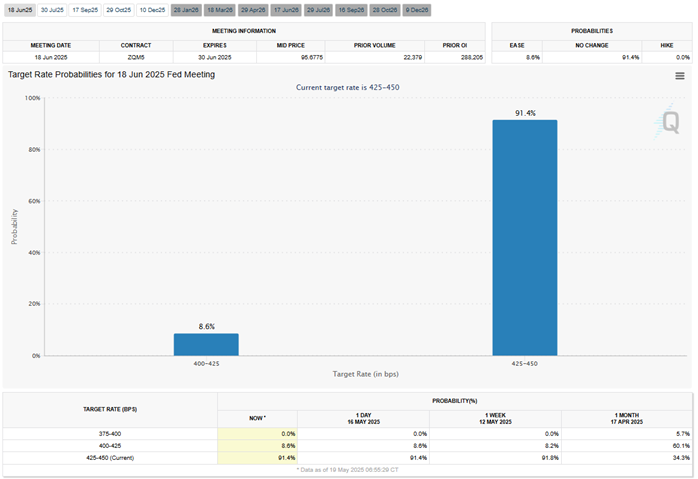
This may seem academic, but it matters for forward guidance. In a world increasingly shaped by supply-side shocks not just demand shortfalls monetary policy needs to adapt with a different toolkit and tone. The Fed’s next framework will likely strike a more balanced stance between inflation control and growth risk, particularly as labour market softness continues to develop quietly in the background. Jobless claims have been climbing, and anecdotal evidence from sectors like tech and logistics suggests the cooling may be deeper than the NFP headline suggests.
From an FX perspective, this strategic shift will be slow burning but meaningful. The dollar remains vulnerable in the medium term, especially if July or September bring the first cut. While markets have currently priced in September as the more likely turning point, I still think July remains viable if the data deteriorates quickly enough.
In summary, the yen’s recent strength is less a vote of confidence and more a reflection of temporary dollar weakness and risk on repricing. Japan’s own economic backdrop remains too fragile to generate lasting currency appreciation. As global central banks reassess their roles in this new post-pandemic, geo-fragmented world, the Fed’s structural pivot and the BoJ’s inertial caution will continue to define the USD/JPY trajectory.
The broader takeaway? Expect policy divergence to persist, but with diminishing returns. And for the yen as always keep your eyes not just on Tokyo, but on what’s happening in Washington and Wall Street.
This content may have been written by a third party. ACY makes no representation or warranty and assumes no liability as to the accuracy or completeness of the information provided, nor any loss arising from any investment based on a recommendation, forecast or other information supplies by any third-party. This content is information only, and does not constitute financial, investment or other advice on which you can rely.
ACY Securities is one of Australia's fastest growing multi-asset online trading providers, offering ultra-low-cost trading, rock-solid execution, technologically superior account management and premium market analysis.

Select the categories and companies you wish to follow directly to your person rss feed.
Create Custom RSS FeedSign up and join over 5,000 professional members who receive personalized news alerts, curated professional connections, and more for free!
Multi-asset trading broker AvaTrade has agreed to acquire the majority of FXCM Group’s business and brand, in a transaction that would bring a longstanding retail FX franchise into the AvaTrade Group.
LSEG and CMC Markets have signed a multi-year strategic data agreement expanding CMC's access to LSEG's real-time and delayed pricing, reference and corporate actions data, news and analytics, plus AI-ready content, to support new products, entry into new markets and the growth of CMC's institutional and B2B partnerships.
The Tel Aviv Stock Exchange is considering a bid for the Cyprus Stock Exchange, with Israeli media citing its EU licence, trading platform and clearing house. Euronext’s Athens exchange and India’s National Stock Exchange are also seen as contenders, and Cyprus aims to sign a sale agreement by the end of this year.
CME Group will launch baseball futures on 12 October, pending regulatory review, tracking CME FutureSports Performance Indexes built on Official League Data. Standard and micro contracts will start with the 2026 Postseason and the four clubs in the League Championship Series, trading around the clock.
ESMA has published an opinion stating that MiCA-authorised crypto-asset service providers should cease services tied to non-MiCA-compliant stablecoins for EU clients across MiCA crypto-asset services. National authorities should require remediation of existing exposures within three months, by early January 2027.
Nasdaq Ventures has made a strategic investment in Amsterdam-based derivatives and crypto exchange One Trading, with both firms to explore 24/7 trading of equity futures. The undisclosed investment follows Nasdaq's US$100 million investment in Payward, the parent of Kraken, and CME Group's move to 24/7 trading.
cTrader has opened multi-platform plugins to brokers and prop firms, which can pre-install their own tools for clients or list them in cTrader Store. The plugins run across Mobile, Web, Windows and Mac, and can be built and launched independently of core-platform releases, including trading journals and calculators.
Institutional brokerage and financial infrastructure provider Clear Street has joined TradingView’s broker network, allowing its clients to trade US stocks, exchange-traded funds and options directly through the charting and analysis platform.
Learn how to improve trading psychology, manage fear and greed, avoid revenge trading, and follow your trading strategy with discipline and a trading journal.
GTC Prime has announced a strategic partnership with Centroid Solutions to manage and distribute its liquidity through CS 360 Bridge, Centroid's multi-asset connectivity and execution engine, giving brokers and institutional clients access to tailor-made pricing, low-latency execution and real-time risk management.