just now


Liquidity Finder Ltd is incorporated in England and Wales, company number 10610740, registered address 167-169 Great Portland Street, Fifth Floor, London W1W 5PF, United Kingdom.
Published: just now


The latest market developments have been largely dictated by geopolitical tensions and trade policy shifts, creating a backdrop of heightened uncertainty for major currency pairs. The US dollar has shown resilience, gaining around 0.5% from recent lows, as concerns over trade war escalation momentarily eased following a partial policy reversal by the US administration. President Trump’s decision to halt the doubling of tariffs on Canadian steel and aluminium provided temporary relief; however, the broader 25% tariffs on these goods remain in place. With key tariff implementations still looming, including additional measures set for April 2nd, the risk of further escalation remains high.
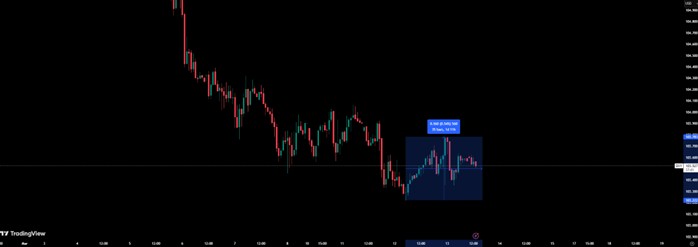
In response, the European Union has moved swiftly, imposing tariffs on $26 billion worth of US exports, with further measures scheduled for mid-April. These moves, coupled with increased tariffs covering 289 downstream products valued at $150 billion, signal a prolonged and intensified trade dispute. Notably, the automotive sector, particularly the supply chains for cars, trucks, and heavy machinery, stands to bear the brunt of these policies. Canada and Mexico remain among the most affected economies, with the broader uncertainty placing additional pressure on both currencies. Despite this, positioning in the Canadian dollar suggests that significant short interest among leveraged funds may be providing a temporary cushion against deeper depreciation.
Meanwhile, the euro’s performance remains closely tied to geopolitical factors, particularly developments in Ukraine. A potential ceasefire agreement, backed by US-led negotiations, could lead to a temporary de-escalation in the region. While the direct economic impact remains uncertain, a reduction in geopolitical risk could offer some support to the euro. Energy markets, however, remain relatively unmoved, with natural gas prices holding steady and crude oil showing only modest gains following revisions by the IEA, which lowered its forecast for excess crude supply.
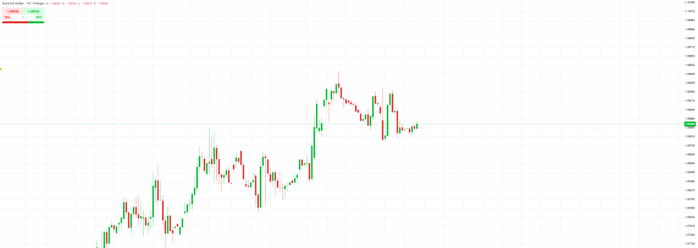
In the UK, the focus has shifted to securing exemptions from US-imposed steel tariffs. The government is actively negotiating a carve-out, leveraging the argument that UK-US trade is largely balanced. However, success is far from guaranteed. While UK steel exports to the US have declined since the 2018 tariff measures, the sector remains a focal point for policymakers. Failure to secure an exemption could weigh on the British pound, particularly given current market expectations that some form of relief will be granted.
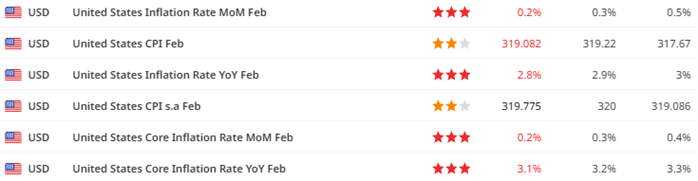
Looking ahead, the dollar’s trajectory will likely hinge on incoming economic data, particularly inflation metrics. The latest US CPI release came in lower than expected, with core inflation slowing to 3.2% year-over-year versus forecasts of 3.3%. This marks a continued downward trend in inflation, reinforcing the market’s expectations that the Federal Reserve could shift toward a more dovish stance. While the Fed has maintained a cautious approach, further evidence of easing price pressures could solidify bets on rate cuts later in the year. As a result, the USD has seen some softening, with investors recalibrating their expectations for future monetary policy adjustments. Meanwhile, the Bank of Canada is widely expected to implement a 25bp rate cut, reflecting growing concerns over economic momentum. With market sentiment heavily driven by shifting policy expectations and geopolitical risks, volatility is likely to remain elevated in the near term.
Overall, while the USD remains supported by relative economic resilience, the broader uncertainty tied to trade tensions and global policy shifts suggests that caution remains warranted. Market participants should remain vigilant as April’s tariff deadlines approach, with potential retaliatory actions set to further influence currency markets.
This content may have been written by a third party. ACY makes no representation or warranty and assumes no liability as to the accuracy or completeness of the information provided, nor any loss arising from any investment based on a recommendation, forecast or other information supplies by any third-party. This content is information only, and does not constitute financial, investment or other advice on which you can rely.
ACY Securities is one of Australia's fastest growing multi-asset online trading providers, offering ultra-low-cost trading, rock-solid execution, technologically superior account management and premium market analysis.

Select the categories and companies you wish to follow directly to your person rss feed.
Create Custom RSS Feed
just now
Sign up and join over 5,000 professional members who receive personalized news alerts, curated professional connections, and more for free!
The AI trade has always been a supply chain story. For the past two years, the narrative has been simple: insatiable demand for compute infrastructure, constrained supply at every choke point, and the companies that own the bottlenecks collect the toll. NVIDIA on GPUs. ASML on lithography. Samsung, SK Hynix, and Micron on memory. The entire semiconductor complex has traded on scarcity, and scarcity has delivered historic margins.
Interactive Brokers reported customer equity of USD 964.7 billion at the end of the third quarter, up 27% year on year, as customer accounts increased 35% to 5.58 million.
Crypto exchange BingX has secured a Markets in Crypto-Assets Regulation (MiCA) licence for its European arm from Austria's Financial Market Authority (FMA).
CXM Group has agreed to acquire TD Markets (Pty) Ltd, a Johannesburg-headquartered broker authorised by South Africa’s FSCA. TD Markets keeps its brand, team and licence, and Amar Ramith stays as CEO. Financial terms were not disclosed. The deal gives CXM a regulated base in South Africa. Clients need take no action.
Global equities under pressure: Hotter than expected US inflation and rising yields weighed on stocks, particularly technology and semiconductor shares.
Understand trading psychology and learn how a clear strategy, risk management and a trading journal help build discipline and day trading consistency.
Ripple Prime has launched support for real-world asset perpetual swaps, giving institutional clients including Virtu exposure to more than 100 reference markets across equities, indices, ETFs, metals, energy and FX. The swaps reference Trade.xyz perpetual futures on Hyperliquid and trade and settle around the clock.
iSAM Securities Apex has integrated with Crossover Markets, connecting brokers to CROSSx, its institutional digital asset ECN, through Apex’s ultra-low-latency technology stack.
Your Bourse and 4XPORTAL highlight their existing partnership, combining client onboarding, CRM and payment solutions with liquidity, execution and risk-management infrastructure for brokers.
The partnership brings together 4XPORTAL’s brokerage technology capabilities with Your Bourse’s connectivity, liquidity aggregation, and risk-management infrastructure.