
just now


Liquidity Finder Ltd is incorporated in England and Wales, company number 10610740, registered address 167-169 Great Portland Street, Fifth Floor, London W1W 5PF, United Kingdom.
Published: just now

The current FX landscape feels like it’s grasping for clarity in a fog of contradiction. The overarching sentiment, at least from where I stand, remains tilted toward broad USD weakness. But the journey there is anything but linear. The erosion of U.S. policy credibility, combined with the global trend toward capital repatriation and diminishing U.S. exceptionalism, continues to pressure the dollar over the medium term. Yet, in the day-to-day, price action feels dislocated less a reflection of data and more of positioning quirks, intraday flows, and fleeting headlines.
This week’s action has been a textbook case. Dollar softness remains the prevailing theme, yet there’s no consistent catalyst. U.S. PMI data beat expectations, and jobless claims dipped again, but the relief rally in U.S. yields was short-lived. The market is trading momentum over macro, and in that environment, conviction can fray quickly.
Sterling has quietly clawed background, helped along by surprisingly resilient domestic data. UK flash PMIs posted a meaningful upside, and while borrowing figures missed the mark again raising questions about future tax hikes markets didn’t flinch. Investors are looking through the fiscal smog, at least for now, focusing instead on incremental economic improvement and a fading inflation impulse.
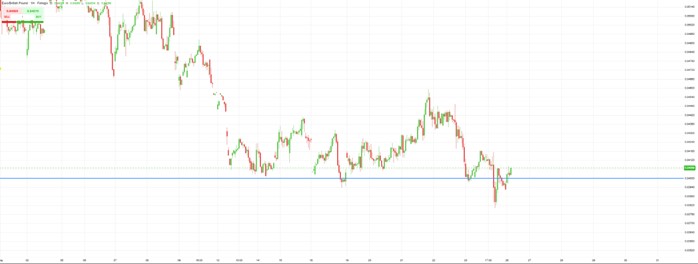
Flows have favoured the pound in recent sessions, and while I’m not seeing a stampede of new shorts being built, positioning seems more constructive. EUR/GBP appears to be consolidating, but a break below 0.84 could reignite downside momentum. Crosses like EUR/GBP remain compelling here, as long as the narrative of UK fiscal divergence stays dormant.
The yen’s story has been twofold: classic risk-off demand mixed with a growing belief in Japan’s return to policy normality. Moody’s U.S. downgrade last week added to JPY's allure as a haven, but there’s also a deeper structural shift brewing. Japan’s yields especially at the long end have surged, and the BoJ isn’t standing in the way. In fact, officials are signalling growing comfort with the trend.
Inflation is doing much of the heavy lifting. April CPI came in hot again, with food and energy doing most of the damage. Strip those out, and core readings still point to persistent domestic price pressures. Tokyo’s political class continues resisting populist measures like VAT cuts or blanket subsidies, reinforcing the BoJ’s path toward higher rates. If the current trend in JGB yields holds, the yen may be building the foundation for a more sustainable rally not just as a safety trade, but as a policy convergence story.
The euro remains difficult to read. May flash PMIs disappointed modestly, but the timing likely missed the impact of recent U.S.-China trade thaw headlines. ECB minutes struck a slightly dovish tone, pointing to continued debate beyond the widely expected June cut. Despite all this, EUR/USD has been firm, underpinned by USD softness more than any euro-specific story.
Positioning is cautious, and intraday flows offer little direction. The pair continues to flirt with the 1.1250 zone a level that’s become a psychological magnet for traders. Unless we break lower, the bias remains for a grind higher. Near-term dips are still being bought, but without a trigger to accelerate the move, the rally risks feeling stale.
Both the Aussie and Kiwi remain in familiar ranges, and while neither currency has sparked any headlines, they continue to benefit from relative growth momentum and the broader USD drift. In Australia’s case, the outlook remains constructive particularly as China stimulus rumours begin to circulate again but strength in U.S. data is raising eyebrows. If the Fed stays hawkish for longer, AUD could come under pressure later in the year.
In the short run, however, the low volatility environment favours carry trades, and AUD’s yield advantage is helping to cushion downside. NZD is riding coattails here, but unless we see a catalyst (RBNZ rate repricing, commodity shock), it’s likely to remain a follower rather than a leader.
The Loonie is caught between two narratives. On one hand, Canadian data is beginning to show signs of fatigue, and a softening consumer could tip the country toward a mild recession. On the other hand, a recent upside surprise in core CPI has taken some of the urgency out of rate cut bets for June. The Bank of Canada may still want to ease, but inflation’s persistence complicates the story.
Retail sales will be key. A meaningful miss could tilt expectations decisively toward easing, while another resilient print may extend CAD’s defensive support.
This content may have been written by a third party. ACY makes no representation or warranty and assumes no liability as to the accuracy or completeness of the information provided, nor any loss arising from any investment based on a recommendation, forecast or other information supplies by any third-party. This content is information only, and does not constitute financial, investment or other advice on which you can rely.
ACY Securities is one of Australia's fastest growing multi-asset online trading providers, offering ultra-low-cost trading, rock-solid execution, technologically superior account management and premium market analysis.

Select the categories and companies you wish to follow directly to your person rss feed.
Create Custom RSS FeedSign up and join over 5,000 professional members who receive personalized news alerts, curated professional connections, and more for free!
The AI trade has always been a supply chain story. For the past two years, the narrative has been simple: insatiable demand for compute infrastructure, constrained supply at every choke point, and the companies that own the bottlenecks collect the toll. NVIDIA on GPUs. ASML on lithography. Samsung, SK Hynix, and Micron on memory. The entire semiconductor complex has traded on scarcity, and scarcity has delivered historic margins.
Interactive Brokers reported customer equity of USD 964.7 billion at the end of the third quarter, up 27% year on year, as customer accounts increased 35% to 5.58 million.
Crypto exchange BingX has secured a Markets in Crypto-Assets Regulation (MiCA) licence for its European arm from Austria's Financial Market Authority (FMA).
CXM Group has agreed to acquire TD Markets (Pty) Ltd, a Johannesburg-headquartered broker authorised by South Africa’s FSCA. TD Markets keeps its brand, team and licence, and Amar Ramith stays as CEO. Financial terms were not disclosed. The deal gives CXM a regulated base in South Africa. Clients need take no action.
Global equities under pressure: Hotter than expected US inflation and rising yields weighed on stocks, particularly technology and semiconductor shares.
Understand trading psychology and learn how a clear strategy, risk management and a trading journal help build discipline and day trading consistency.
Ripple Prime has launched support for real-world asset perpetual swaps, giving institutional clients including Virtu exposure to more than 100 reference markets across equities, indices, ETFs, metals, energy and FX. The swaps reference Trade.xyz perpetual futures on Hyperliquid and trade and settle around the clock.
iSAM Securities Apex has integrated with Crossover Markets, connecting brokers to CROSSx, its institutional digital asset ECN, through Apex’s ultra-low-latency technology stack.
Your Bourse and 4XPORTAL highlight their existing partnership, combining client onboarding, CRM and payment solutions with liquidity, execution and risk-management infrastructure for brokers.
The partnership brings together 4XPORTAL’s brokerage technology capabilities with Your Bourse’s connectivity, liquidity aggregation, and risk-management infrastructure.