just now


Liquidity Finder Ltd is incorporated in England and Wales, company number 10610740, registered address 167-169 Great Portland Street, Fifth Floor, London W1W 5PF, United Kingdom.
Published: just now

The U.S. dollar is doing something counterintuitive it’s getting stronger in the face of growing uncertainty.
After nine consecutive days of gains, the greenback is sending a loud signal to the markets: risk may be rising, but liquidity still has a home.
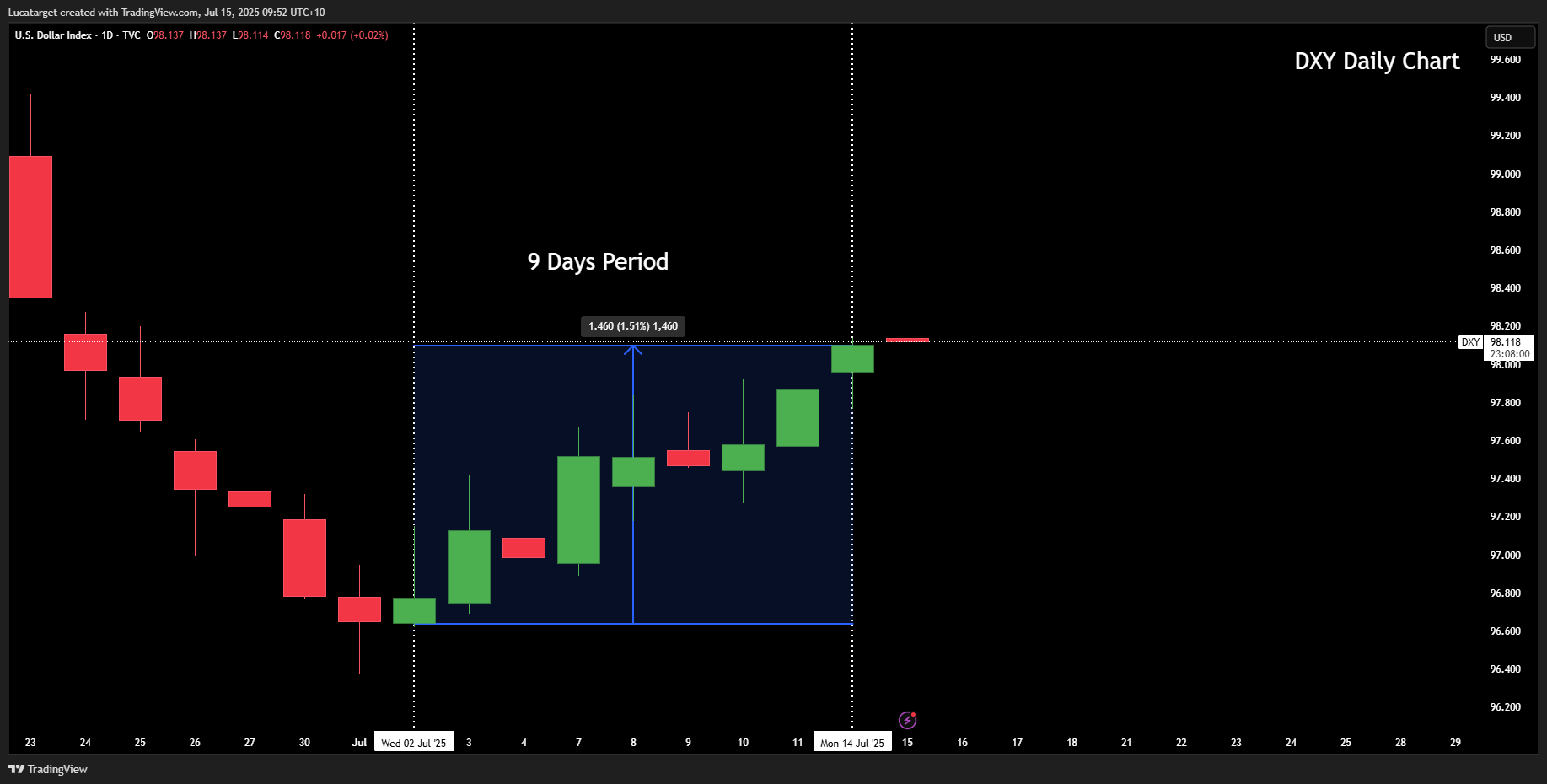
The latest surge in the dollar stems from geopolitical friction. President Trump has revived his aggressive trade rhetoric, threatening 30% tariffs on European and Mexican goods.
The impact on Mexico may be muted thanks to compliance with USMCA (United States-Mexico-Canada Agreement) standards but Europe’s export-heavy economies are in the crosshairs.
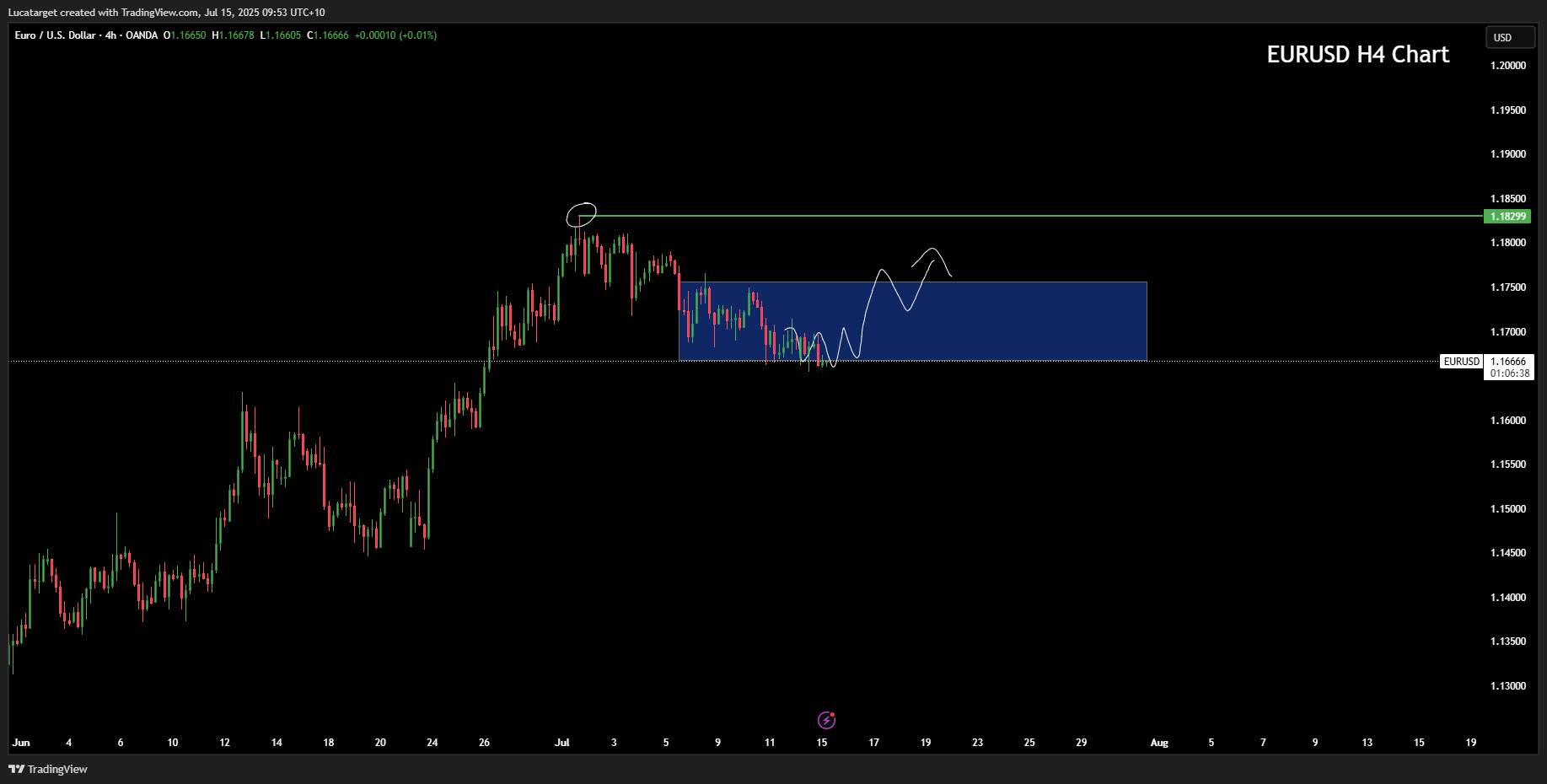
What’s keeping the euro from collapsing? The EU is stalling retaliation, aiming to negotiate before the August 1 deadline.
If diplomacy prevails, the euro might find relief. But if talks collapse, prepare for a shockwave in EUR/USD and broader risk assets. But I still believe that we may have a stronger up move on EURUSD above the 1.18300 soon.
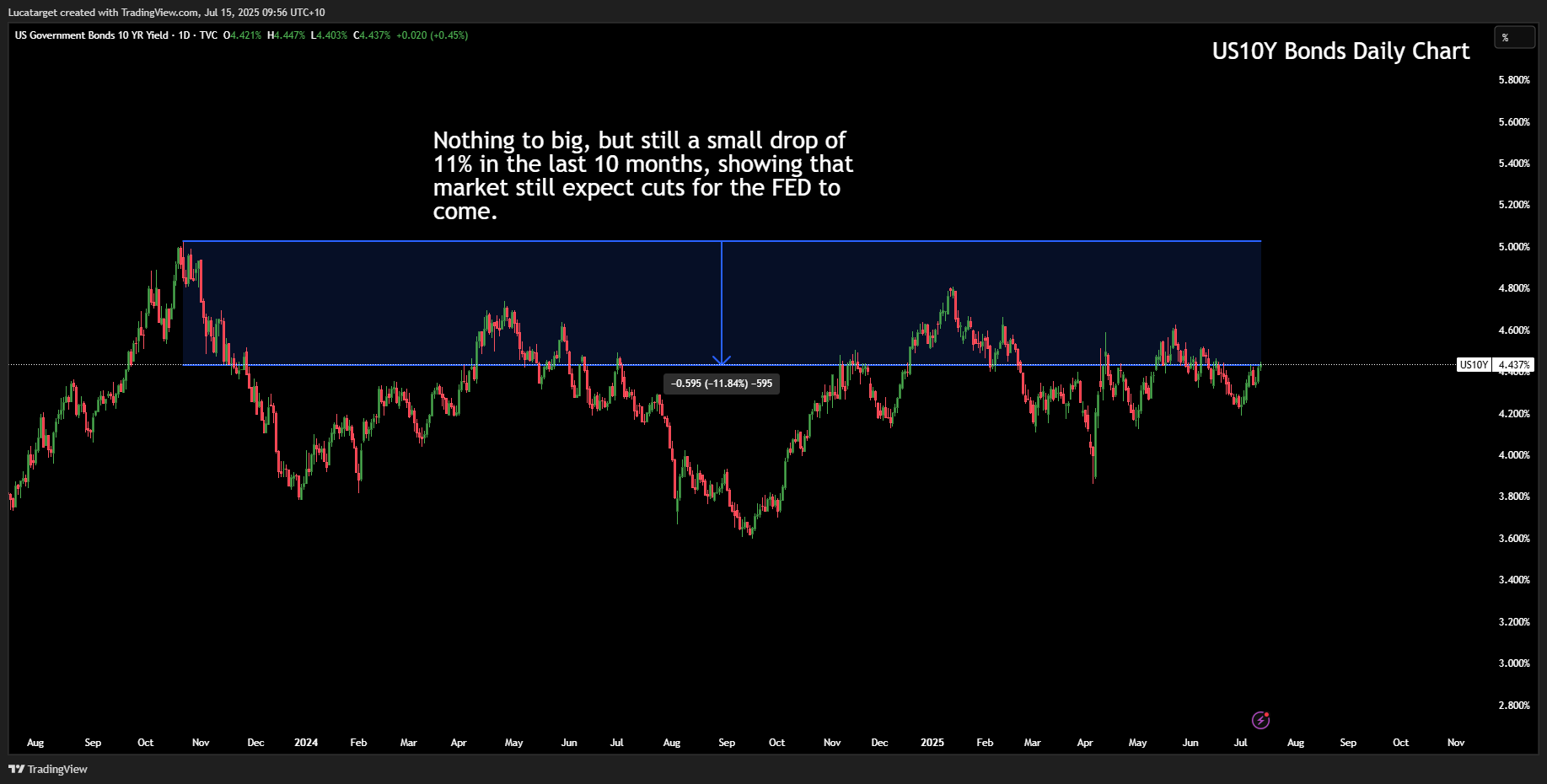
Fueling the USD’s resilience is an escalating war of words between Trump and Fed Chair Jerome Powell. Trump’s criticism ranging from renovation expenses to monetary policy missteps has turned personal.
Yet markets remain calm. Why?
Because traders don’t believe Powell is going anywhere at least not yet. However, this introduces a simmering risk: if Powell were forced out, it would spark institutional uncertainty and raise questions about the Fed’s independence, which could jolt both bonds and the dollar.
What Should Traders Watch:
USD could remain supported in the short term.
Keep an eye on Powell’s public appearances any slip could be catalytic.
A surprise resignation or Trump-appointed replacement may spike volatility across USD crosses and Treasuries.
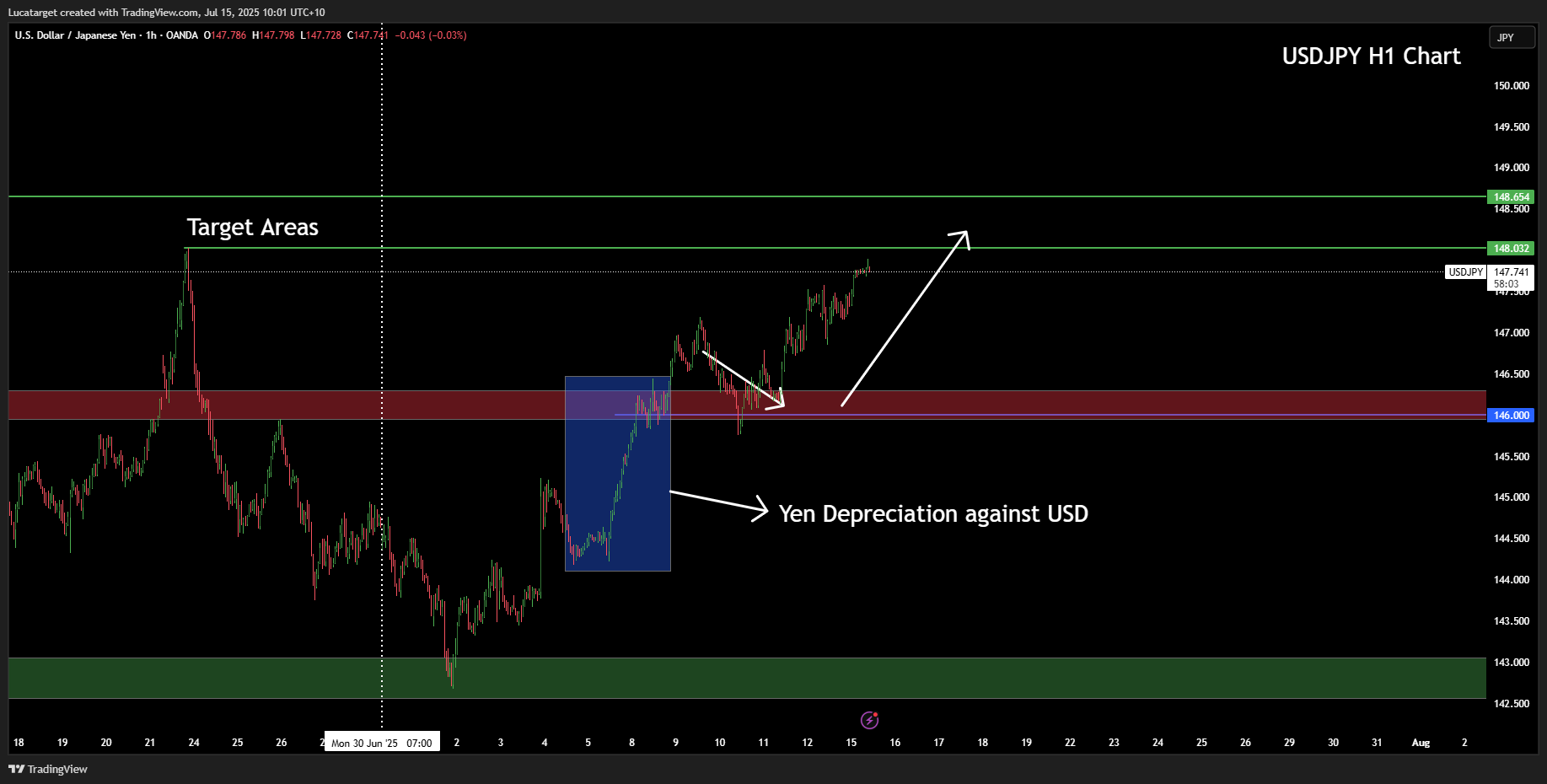
The Japanese yen, traditionally a safe haven, is underperforming. USD/JPY broke above 147.50, and it’s not just a dollar story. Japanese long-dated bond yields are rising hinting at inflation risks but the BoJ is holding the line.
Why? The upcoming Upper House election on July 20 could shift fiscal policy (I've done a blog on how to trade forex around major elections, you can check it out HERE).
If the ruling coalition loses ground, markets may price in looser policies, including stimulus or rate suppression. On top of that, Trump’s 25% tariff threat on Japanese goods adds external pressure.
Not a guarantee, but here’s a scenario matrix:
| Trigger | Impact on Carry Trade | USD/JPY Effect | Stock Market Effect |
|---|---|---|---|
| Trump shocks tariffs or FX war | Massive unwind | JPY strengthens sharply | Risk assets drop fast |
| Japanese election surprises with fiscal shift | Mixed (initial unwind) | Depends on yield curve steepening | Mild risk-off |
| Fed signals more dovish than expected | Carry unwinds slowly | USD weakens; JPY may strengthen | Stocks may rise short-term |
| No surprises; low volatility | Carry persists | JPY stays weak or flat | Stocks grind higher |
Trade Implication:
Traders are betting against the yen. But if election outcomes surprise or the BoJ tweaks inflation forecasts aggressively later this month, we could see sharp reversals.
Volatility is quietly building under the surface of USD/JPY.
Markets are stuck in a limbo of diplomacy and political noise. The dollar’s strength is a function of positioning and relative resilience but that can flip fast.
The closer we get to August 1 without a trade resolution, the more fragile this stability becomes.
In this environment, flexibility beats conviction. Traders should consider:
Hedging USD longs into potential resolution headlines.
Watching EUR/USD for breakout potential around 1.165 to the down side or 1.17600 to the upside if tariffs are avoided.
Monitoring JPY as an asymmetric play around the Upper House elections.
Q1: Why is the U.S. dollar strengthening despite rising geopolitical risks?
A1: The dollar is benefiting from safe-haven flows as policy uncertainty grows, particularly due to Trump’s tariff threats and political pressure on the Fed. While risks are high, global liquidity still favors USD assets, especially amid weak alternatives.
Q2: What are the key risks surrounding Trump’s latest trade threats?
A2: Trump’s proposed 30% tariffs on EU and Mexican goods could disrupt trade if implemented. While Mexico is largely shielded via USMCA compliance, Europe faces a bigger threat. A failure to reach a deal by August 1 could severely impact the euro and broader sentiment.
Q3: How is political pressure on Jerome Powell affecting markets?
A3: Although Trump’s verbal attacks on Fed Chair Powell have intensified, markets aren’t pricing in his removal yet. If Powell were forced to resign, it would introduce institutional instability and likely spike volatility in both bonds and the U.S. dollar.
Q4: Why is the Japanese yen weakening even as yields in Japan rise?
A4: The yen is under pressure due to a mix of domestic election risk, cautious BoJ policy, and external tariff threats from the U.S. Even though long-term yields are rising, political uncertainty and dovish central bank signals are deterring yen demand.
Q5: What trades make sense in this macro environment?
A5: Consider hedging long USD positions ahead of the August 1 deadline. Monitor EUR/USD for a potential relief rally if a deal is struck, and watch JPY as a contrarian play around the Japanese Upper House election and BoJ inflation guidance later this month.
This content may have been written by a third party. ACY makes no representation or warranty and assumes no liability as to the accuracy or completeness of the information provided, nor any loss arising from any investment based on a recommendation, forecast or other information supplies by any third-party. This content is information only, and does not constitute financial, investment or other advice on which you can rely.
ACY Securities is one of Australia's fastest growing multi-asset online trading providers, offering ultra-low-cost trading, rock-solid execution, technologically superior account management and premium market analysis.

Select the categories and companies you wish to follow directly to your person rss feed.
Create Custom RSS FeedSign up and join over 5,000 professional members who receive personalized news alerts, curated professional connections, and more for free!
Bybit has launched Perp Options, described as the first options contracts built on TradFi perpetuals, giving traders round-the-clock access to US equity options. SpaceX and Nvidia are the first underlying assets, with USDT settlement and integration into Bybit's Unified Trading Account.
Use this trading preparation checklist to plan your session, define entry rules, manage risk, and build a disciplined trading routine in seven steps.
Your Bourse expands its crypto liquidity ecosystem with Caladan, giving brokers access to broader market coverage, institutional execution capacity and streamlined settlement.
Scope Markets, the retail brokerage part of Rostro Group, has appointed Ibrahim Hossny as Head of Research and Marketing for the Middle East and North Africa.
Hantec Prime, the institutional division of Hantec Markets, has reported trading volume up more than 300% year-to-date, alongside the addition of 42 new institutional clients since December, capping one of its strongest years of growth to date.
Learn how to refine XAUUSD support and resistance on the daily chart using candle bodies, market structure and weekly gold levels for swing trading. A slug alone cannot guarantee a top Google ranking. Keep it focused rather than adding every supporting keyword.
The week in Dubai will be focused on connecting directly with the industry and discussing how technology can help modern brokerages simplify operations, automate workflows, strengthen operational control, and scale efficiently.
Devexperts has launched a turnkey solution giving brokers in South Korea access to US equity markets, combining its DXtrade trading platform, dxFeed market data, and execution services. The offering targets South Korea's growing retail demand for US stocks, worth several billion USD monthly.
Assess why WTI crude oil surged past $105 per barrel amid Saudi pipeline disruptions, record tanker charter rates, and escalating geopolitical tensions.
Bitcoin price forecast: BTC/USD retests $78,460–$80,215 resistance. Watch bearish confirmation toward $72,480 or a bullish breakout toward $86,150.