
Search Companies, News, Members & more
Terms of ServicePrivacy PolicySecurity PolicyLegal InformationCommunity GuidelinesSitemapsCookie Settings
2026 Copyright © Liquidity Finder Ltd. All rights reserved.
Liquidity Finder Ltd is incorporated in England and Wales, company number 10610740, registered address 167-169 Great Portland Street, Fifth Floor, London W1W 5PF, United Kingdom.
The Trump Effect on Digital Assets and Stablecoins - Olaf Ransome
Published on Feb 1, 2025
Updated on Mar 7, 2026
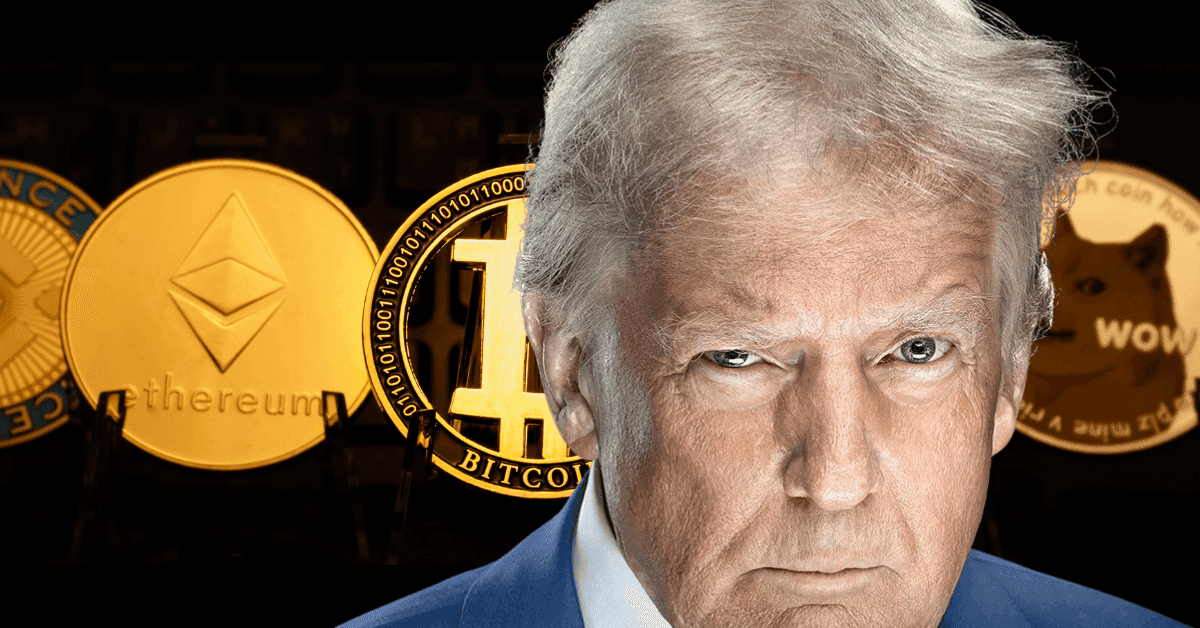
In his first week back in office, the Donald has been signing Executive Orders (EOs) like Mo Salah scores goals for Liverpool; one after another. Executive Orders have various flavours; banning things, stopping things and shaping things. The interesting one for those of us in finance is from Jan 23rd titled: “Strengthening American Leadership in Digital Financial Technology”, which is intended to “shape things”.
Why is this an important topic?
The clue is in the title of the order. To misquote the 1992 Clinton campaign: “It’s the dollar, stupid.”
My sense is that that you can break down the intent of the incoming administration into three component parts:
1) Assuming digital assets will happen.
2) Ensuring that the US dollar’s role as the world’s major currency is not diminished by the change in the technology.
3) Focussing on building the foundations and the guard rails whilst letting the private sector figure out what product offerings there should be.
What’s new or changing?
The Administration wants to be pro-Digital Assets and the technology which underpins them. And it wants both retail and institutional access to be enabled, up to and including self-custody.
This resonates with me; my belief is that going forward our “banking assets”, cash, securities, funds, end up in individual Web 3 wallets which are sponsored by a Financial Institution (FI). The FI will sort out all the must do compliance stuff of KYC, sanctions screening, transaction monitoring etc., but in the background. Services will look like mobile phones; I have my number, you call me, and you don’t care whether my provider is Swisscom, Sunrise or Salt. If I change provider, you don’t need to know. Compare this to the problems of moving a securities depot of say 25 securities from one bank or broker to another. It sucks and it is odds-on certain to go wrong over month end. Or in the wholesale / institutional space, having to tell everybody your new SSIs, Standing Settlement Instructions; maintaining all that so-called reference data is a resource sink.
Next on the to do list is: “promote the development and growth of lawful and legitimate dollar-backed stablecoins worldwide”.
This gets us right back to my point #2 above. It’s a derivative of MAGA: KAG, Keep America Great, i.e. make sure the US dollar is Top Dog. I have done a lot of thinking on Stablecoins and new means of payment in the last 8 years or so, adapting my thinking as I learn more. The well known FinTech guru Simon Taylor captured the spirit of the opportunity in one of his recent Blog posts: “Stablecoins aren't cheaper; They're better.” If we can have programmability and interoperability we can do things with the new technology which we cannot do today.
How might this look? First, for my thinking, there are just two flavours of how to solve for a digital means of payment that is not issued by a central bank (more on CBDC after this). You can create a vehicle that collects cash and invests it, i.e. holds more than just cash at a central bank. This is what Tether and Circle do. That is a Money Market Fund by any other name. Investor protection is important; we want to be sure about the investments. Tether has been opaque on its holdings where Circle hasn’t. Transparency is good. The other way to solve for this is to create a “settlement asset”; something which has the credit quality of central bank money without necessarily only being issued by a central bank.
“Central bank money” is important and underlies the way we settle trades and make payments in the institutional space today. When Goldman Sachs pays UBS some USD, that money moves at the Fed; UBS then has a balance at the Fed and not an IOU from Goldman Sachs. The folks at Fnality International are building a network to offer digtal settlement in a new payment system, with a new settlement asset based on funds held at a central bank. With currency balances in Fnality systems, institutions would have a SpooL, a single pool of funds with which to make payments, settle trades DvP, delivery versus payment, or settle FX, payment vs. payment. A capability to instantly exchange “what they have now for what they need now”.
More detail: With Professor Alistair Milne from Loughborough University, I co-authored a paper for SWIFT titled: "Payment ‘Tokens’: A route to optimising liquidity management."
So that’s the techicalities part. What about the politics?
At least in theory an entity in any country could create a USD denominated Stablecoin and make any kind of promise about offering redemption at par, i.e. 100 cents on the US dollar. If that fund, think Facebook / Libra / Diem, were to get big, it would be systemic and, if something went wrong, as much as a threat to the world as a leak of a virus from a laboratory in China.
As a first step, if some entity in some far off country wants to issue something it labels as a “USD denominated Stablecoin”, if local laws permit, it could. And there would not be anything Uncle Sam could do about that. But at the next level, it does have the power of the US dollar and the US securities markets. A possible outcome of this Executive Order is that the US sets things up so that any non-US entity issuing anything that looks like a USD Stablecoin, a derivative of the “Howey test” if you will, will be subject to US regulation. And they can do this easily enough; they can simply put non-compliers on the sanctions list, which will make it impossible to operate a USD bank or brokerage account. With no access to USD or US securities, any Stablecoin denominated in USD will be dead.
The third part which is of interest is that the Donald has been clear he does not want his Administration to create and or operate a CBDC, a central bank digital currency. For me, this makes sense for any central bank; their remit should end at setting the rules. Those rules should allow for competition and take bureaucrats out of any role involved in running a day-to-day business.
Why might these new things matter?
With the Executive Order comes a “homework mandate” or some “marching orders”: the bureaucrats have 30 days to identify where any form of rule, regulation or order touches or might touch digital assets, 60 days to recommend changes, including nota bene rescinding rules, and new rules. They have 180 days to come up with a list of proposals to make the future great.
In conclusion
For the digital asset sector this is “what do you want for Christmas?” or to use a term from our learned friends in legal, it is “an invitation to treat”: “Give me your wish list, I am not guaranteeing to fulfil any or all of it, but if you don’t ask, you won’t get”.
Financial services today is generally effective, but far from efficient. In wholesale banking, we have a once in a generation opportunity to get the rules right to enable tomorrow’s infrastructure. Infrastructure and foundations aka the plumbing are the enablers of both effectiveness and efficiency. Carpe diem.
Thanks for reading. Please do let me know what you think of these notes. Feedback via the comments would be great.
Please feel free to get in contact via LiquidityFinder here.
Author
 |
Olaf Ransome is a liquidity and financial services expert. He is the founder of 3C Advisory You can message Olaf directly here. |
Share this article
Comments
Most Recent
Find The Right Partners for
Your Trading Business
Sign up and join over 5,000 professional members who receive personalized news alerts, curated professional connections, and more for free!
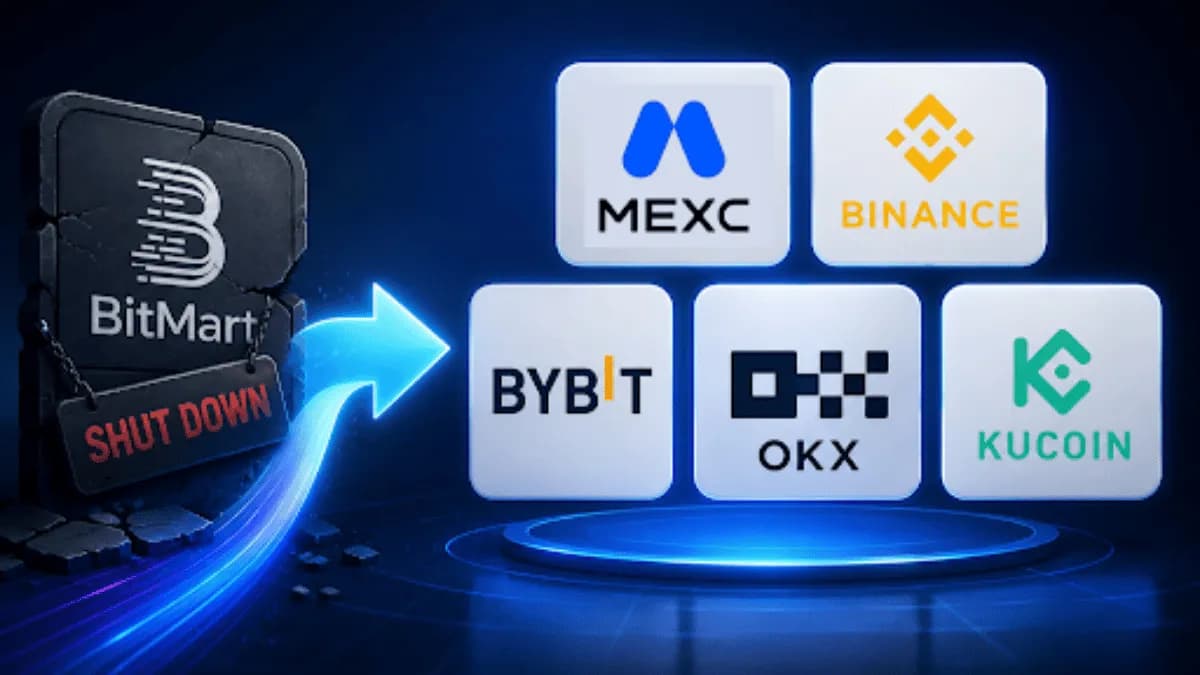
BitMart announced on July 26, 2026 that it is winding down its trading platform: new registrations and deposits stopped immediately, spot and futures trading ends August 26, 2026, and operations fully close by January 31, 2027. Anyone still holding funds on BitMart needs a reliable replacement exchange immediately.
A new stablecoin backed by 140+ firms, from Visa to BlackRock. Can Open USD challenge USDT and USDC, and will it clear MiCA? Olaf Ransome weighs in.
SoFi's SoFiUSD is the first stablecoin issued by a US national bank. But do holders actually have the protection they think?

As tokenisation and digital assets move from niche curiosity to mainstream expectation, banks and financial institutions face an uncomfortable truth: their legacy core banking systems were never built for this. From order execution and pre-funding to custody, portfolio management and gas fees, Olaf Ransome explores the key infrastructure challenges FIs must navigate and asks whether to re-use, buy or build their way to a solution that actually scales.

LSEG's DiSH promises atomic settlement and 24/7 PvP and DvP capability using tokenised commercial bank deposits. But when the balances move and the banks don't, who actually owns what? Olaf Ransome examines the mechanics - and the risks.
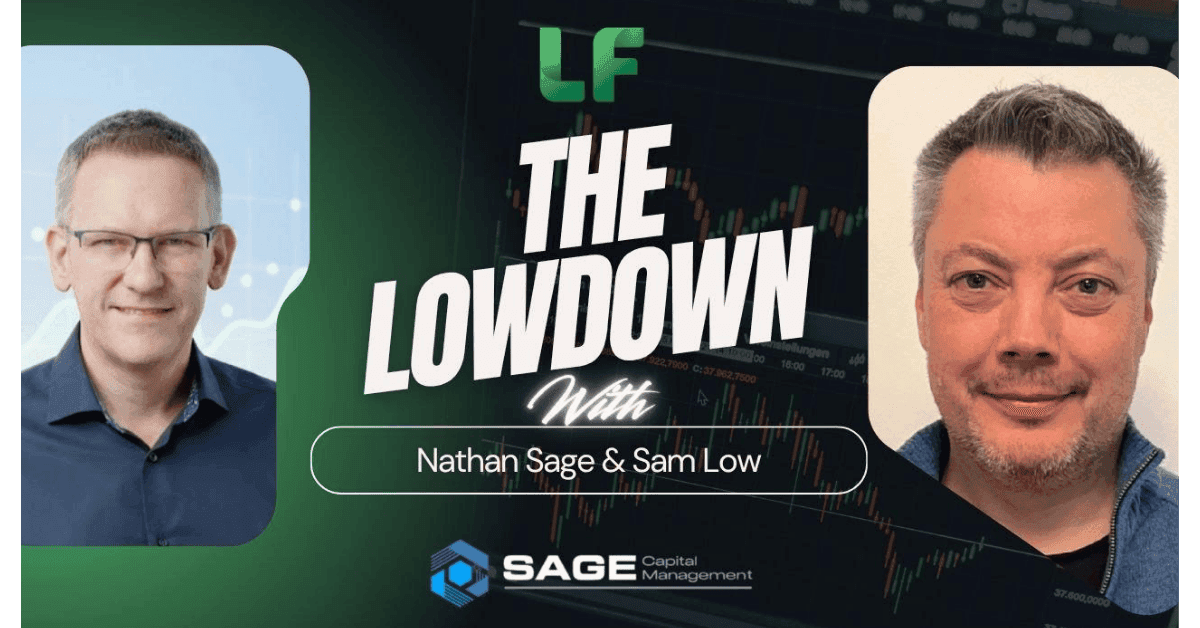
LiquidityFinder's Sam Low sits down with Nathan Sage, founder and CEO of Sage Capital Management, to trace his journey from FX fund manager to running a Bitcoin fund doing $1BN a day in 2016 — and how that experience of pain built one of the most connected prime brokerages in the digital assets market today.

Klarna is partnering with Coinbase, raising stablecoin-denominated funding and launching KlarnaUSD. We break down the treasury logic, merchant incentives and agentic AI payments angle — and what other CFOs should take from it.

Olaf Ransome’s latest article on liquidity management explores PORTS (Perpetual Overnight Rate Treasury Securities) and how they could expand the supply of on-chain high-quality liquid assets (HQLA) for treasury and cash management. He explains why long cash balances create risk, how stablecoins and tokenised money market funds need safe short-duration assets, and what PORTS could mean for reverse repo, liquidity management and wholesale banking.
Create Your FREE Account
Get access to latest news, updates, real-time data, brokerage and trading firm insights and customized information feeds.


The AI trade has always been a supply chain story. For the past two years, the narrative has been simple: insatiable demand for compute infrastructure, constrained supply at every choke point, and the companies that own the bottlenecks collect the toll. NVIDIA on GPUs. ASML on lithography. Samsung, SK Hynix, and Micron on memory. The entire semiconductor complex has traded on scarcity, and scarcity has delivered historic margins.


CXM Group has agreed to acquire TD Markets (Pty) Ltd, a Johannesburg-headquartered broker authorised by South Africa’s FSCA. TD Markets keeps its brand, team and licence, and Amar Ramith stays as CEO. Financial terms were not disclosed. The deal gives CXM a regulated base in South Africa. Clients need take no action.


Global equities under pressure: Hotter than expected US inflation and rising yields weighed on stocks, particularly technology and semiconductor shares.


Understand trading psychology and learn how a clear strategy, risk management and a trading journal help build discipline and day trading consistency.

Ripple Prime has launched support for real-world asset perpetual swaps, giving institutional clients including Virtu exposure to more than 100 reference markets across equities, indices, ETFs, metals, energy and FX. The swaps reference Trade.xyz perpetual futures on Hyperliquid and trade and settle around the clock.


iSAM Securities Apex has integrated with Crossover Markets, connecting brokers to CROSSx, its institutional digital asset ECN, through Apex’s ultra-low-latency technology stack.


Your Bourse and 4XPORTAL highlight their existing partnership, combining client onboarding, CRM and payment solutions with liquidity, execution and risk-management infrastructure for brokers.


The partnership brings together 4XPORTAL’s brokerage technology capabilities with Your Bourse’s connectivity, liquidity aggregation, and risk-management infrastructure.

Clearstream has appointed Philippe Mueller as Head of Digital Products and Transformation for Clearstream Fund Services, succeeding Olivier Portenseigne. He will lead digital fund distribution, DLT-enabled fund processing and transfer agency innovation. He has over 25 years at Clearstream and Deutsche Börse Group.

Learn how to detach from trading outcomes by focusing on entry, exit, and risk. Build trading discipline with clear rules and a repeatable process.
Feed