
Search Companies, News, Members & more
Terms of ServicePrivacy PolicySecurity PolicyLegal InformationCommunity GuidelinesSitemapsCookie Settings
2026 Copyright © Liquidity Finder Ltd. All rights reserved.
Liquidity Finder Ltd is incorporated in England and Wales, company number 10610740, registered address 167-169 Great Portland Street, Fifth Floor, London W1W 5PF, United Kingdom.
What Exchanges Must Do to Win Institutional Crypto – Insights from Gold-i’s Tom Higgins

Published on Dec 5, 2025
Updated on Mar 7, 2026

What Exchanges Must Do to Win Institutional Crypto – Insights from Gold-i’s Tom Higgins
The major crypto exchanges are competing fiercely to capture institutional business. If they are to do this successfully, they might want to listen to the experience of Tom Higgnis, CEO of Gold-i. Tom has nearly 20 years building connectivity for FX and seven years applying the same principles to digital assets. Speaking exclusively to LiquidityFinder, Higgins offers some blunt advice to exchanges looking to increase their institutional volumes.
Higgins shares his thoughts on what crypto exchanges keep getting wrong about institutional adoption, why major venues are losing flow to competitors, and how infrastructure providers like Gold-i are quietly solving the biggest challenges in the market.
From FX bridges to the plumbing of institutional crypto
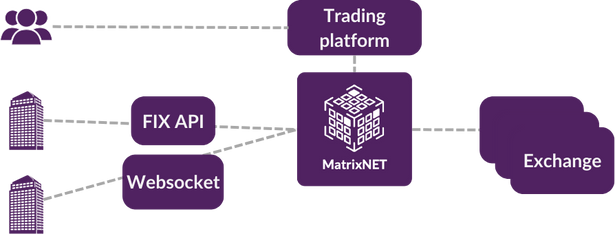
Gold-i’s MatrixNET began life as an FX aggregation and routing engine. Today, it sits at the centre of the digital asset liquidity ecosystem, connecting:
▪️ Centralised exchanges
▪️ Market makers
▪️ ECNs such as Crossover
▪️ Institutional DeFi venues like HyperLiquid
These venues use wildly different APIs — FIX, REST, WebSocket, bespoke blockchain protocols — and Gold-i’s core value is normalising them into a single institutional-grade interface.
“You’re normalizing all of these different liquidity sources that all have different APIs… into a single API. From that, you can choose any of 30 or so venues and create aggregated pools or individual pools.”
For institutional desks who expect FIX, stable streams and transparent counterparty models, this normalisation is the gateway into digital assets.
Why DeFi is still off-limits — and why CEX structure matters
Higgins is clear about the practical divide between centralised and decentralised exchanges.
🔹 On a centralised exchange, the counterparty is the venue.
🔹 On a decentralised exchange, the counterparty is anyone, with no KYC, no supervision, and no guaranteed behaviour.
“Banks can almost never use a decentralized exchange because there cannot be any KYC. The chances of you dealing with a criminal are pretty high because you have no idea who is on the other side.”
For institutions — whose compliance departments demand known counterparties, operational predictability and separation of functions — CEXs are the only logical path for now.
But even CEXs are failing to meet institutional expectations in critical areas.
The structural gaps exchanges must address
Higgins points to several deep-rooted issues holding back institutional adoption — all of which originate from exchanges’ retail-first mindset.
1) Liquidity fragmentation and inconsistent venue behaviour
Outside the top coins, liquidity varies dramatically. Market makers may disappear in volatile moments; exchanges update at different speeds; order book behaviour is unpredictable.
As Higgins says, “In FX, liquidity is generally pretty good quality and consistent. It isn’t in crypto… sometimes it will behave in a different way than you would expect.”
Institutions need stability, depth and predictability, not retail-style patchwork liquidity.
2) Cloud-based architectures, not institutional data centres
FX and equities venues live in LD4, NY4, TY3 — with decades of ultra-low-latency engineering behind them. Most crypto exchanges live in AWS.
That’s fine for retail trading, but not for HFT firms or institution-grade routing logic. Institutions need exchanges to:
▪️ Improve determinism and update rates
▪️ Standardise infrastructure
▪️ Offer predictable latency environments
3) Lack of separation between custody, execution and clearing
This is arguably the single biggest blocker.
In TradFi, these functions are separate by design. In crypto, exchanges historically did all three.
“Custody, clearing and settlement, execution – these things are separate entities in the institutional world… [Institutions] are not comfortable putting their money with one exchange.”
This is why institutional custodians like Zodia and Copper have emerged — and why exchanges that fail to plug into them will fall behind.
Case study: Binance’s VIP pricing misstep — and how OKX won institutional flow
The best demonstration of how exchanges misunderstand institutions is Binance’s change to its VIP pricing tiers.
Historically, prime brokers and aggregators could combine the trading volume of thousands of underlying clients under one master account and achieve a top-tier VIP level. Everyone benefited.
“If you were Hidden Road, you would have one account, you could have a million sub-accounts and all those sub-accounts’ volumes would add up together.”
Then Binance changed the rules.
Instead of aggregating sub-accounts, Binance applied VIP tiers per sub-account. That meant:
🔸 Every small fund lost its institutional discount
🔸 Aggregators could no longer mutualise client volume
🔸 Costs went up sharply
🔸 Flow shifted to competitors within weeks
“All of these thousands of small ones are now on a very poor VIP rate… and the fact they aggregate together to be big, they don’t care.”
OKX immediately benefited.
“OKX gained a lot of market share when Binance changed their institutional charging… OKX didn’t do that, because they thought that was stupid.”
The lesson is simple:
👉 Institutions operate through aggregators. Exchanges must design pricing and infrastructure that respects aggregation — not penalises it.
Where technology fits: making crypto behave like any other asset
Institutions don’t want bespoke crypto workflows. They want crypto to fit into the systems they already trust.
Higgins explains: “Their systems probably talk FIX… Suddenly, their systems can receive streaming prices in any of these assets just like they can in anything else, and they can send orders and get executions back in them like they can in anything else.”
MatrixNET enables this by:
🔹 Standardising CEX, MM and DeFi liquidity into one FIX/WebSocket stream
🔹 Mixing exchange and market-maker books to stabilise pricing
🔹 Allowing exchanges to offer FIX-native institutional connectivity instantly
🔹 Supporting cross-asset flows (FX, indices, equities and digital assets in one stream)
This is exactly what institutions expect — and what most exchanges fail to provide natively.
Who relies on MatrixNET?
Gold-i serves two main groups:
1) Liquidity sellers
Prime brokers, prime-of-primes, and institutional aggregators using MatrixNET as their execution layer.
2) Liquidity buyers
Brokerages, prop firms, hedge funds, asset managers and exchanges themselves.
Many exchanges use MatrixNET to:
🔹 Deliver FIX connectivity
🔹 Create institutional pricing curves (VWAPs and multi-level ladders)
🔹 Integrate into taker networks like oneZero, PrimeXM or Centroid
🔹 Expand institutional distribution without building dozens of integrations
“If you have a new venue you want to work with… our client says, ‘off you go’, and we come back a couple of weeks later and say, ‘off you go’.”
This is how institutional crypto scales.
So what must exchanges do to win institutional crypto?
If the retail-first Crypto exchanges want to win the race to capture insitutional business, the following could be the principles to follow:
✔
1. Adopt institutional custody standards
No serious institution will leave hundreds of millions on an exchange wallet.
✔
2. Support FIX natively
Institutions will not rebuild their systems around retail-oriented WebSocket APIs.
✔
3. Provide institutional pricing that rewards aggregation
As the Binance example shows, misunderstanding aggregator flow is fatal.
✔
4. Separate functions like a traditional exchange
Execution, clearing and custody must be structurally independent.
✔
5. Build predictable, stable, transparent liquidity
Update speeds, timeout behaviour, and order book logic must meet professional norms.
✔
6. Partner with infrastructure providers rather than trying to do everything themselves
The future is multi-layered, just like FX and equities.
“We sit between traditional finance and digital assets… we link those two worlds and that’s where all the money is.”
The bottom line: exchanges must evolve — or institutions will trade elsewhere
Crypto exchanges want institutional capital.
Institutions want reliability, governance, separation of roles, FIX connectivity and fee structures aligned with how institutional markets work.
Right now, most exchanges are still retail platforms trying to look institutional, and institutions recognise the mismatch immediately.
The winners in the next phase of digital asset adoption will be:
✅ Exchanges that upgrade their market structure to institutional standards
✅ Custodians that specialise in safe asset storage
✅ Technology providers like Gold-i that connect the two worlds
Institutions will enter digital assets more deeply — but only once the market feels as robust, as safe and as operationally disciplined as the markets they already trade.
Author
 |
Sam Low is the Founder of LiquidityFinder. With over 18 years in working with FX trading technology, Sam has deep experience in the FX (forex) trading industry, working with brokers, liquidity providers and end traders themselves. You can message Sam directly here. |
How can crypto exchanges attract institutional investors?
Institutions scale meaningful volume when a venue looks and behaves like a mature market. That typically means FIX connectivity, predictable liquidity, robust governance, and credible custody choices that reduce concentrated exchange risk. Exchanges that also align pricing with professional flow models tend to earn stickier, repeatable institutional order flow.
What do institutional traders look for in a crypto exchange?
Most institutional checklists cover five practical areas: reliable market data, consistent order book behaviour, professional connectivity (especially FIX), transparent fee and VIP structures, and custody models that support risk separation. If any one of these is weak, institutions often limit size or treat the venue as opportunistic rather than core.
Why is FIX API support important for institutional crypto trading?
Many institutional desks already run their execution, risk and compliance environments using FIX. Without it, crypto onboarding can require custom builds against retail-style APIs. With FIX, digital assets can plug into existing workflows, reducing integration cost and operational risk while enabling cross-asset trading in familiar systems.
What is institutional custody in crypto and why does it matter?
Institutional custody refers to secure, specialist-grade storage and safeguarding of digital assets designed for regulated firms with strict risk, audit, and compliance requirements. It matters because many institutions prefer risk separation rather than keeping large balances directly on an exchange that may also control execution and settlement. The market’s history of custody-related failures has reinforced the institutional preference for independent or clearly segregated custody frameworks.
How do VIP tiers work on crypto exchanges for institutional clients?
VIP programmes are tiered fee and service frameworks usually based on rolling trading volume and sometimes balance thresholds. Benefits can include lower maker/taker fees, improved rebates, higher limits, and dedicated coverage. The most institutionally aligned VIP models reward durable, high-quality flow and recognise how professional firms structure trading across strategies, desks and client networks.
What is volume aggregation in VIP pricing and why is it important?
Volume aggregation is when an exchange recognises that an intermediary — such as a prime broker, broker, or institutional aggregator — may represent many underlying clients and strategies, and therefore combines that activity to determine VIP tiering and fees.
This matters because institutional markets are rarely “one trader, one account.” One master relationship often supports dozens, hundreds, or even thousands of underlying sub-accounts. Aggregation-friendly models reward that distribution and encourage intermediaries to concentrate flow over the long term.
The industry has seen situations where VIP methodology changes stopped recognising pooled volume and instead assessed sub-accounts individually. When that happens, smaller professional clients can lose institutional-level economics, the intermediary value proposition weakens, and aggregated flow tends to migrate to venues with more institutionally aligned pricing.
Share this article

Comments
Most Recent
Find The Right Partners for
Your Trading Business
Sign up and join over 5,000 professional members who receive personalized news alerts, curated professional connections, and more for free!
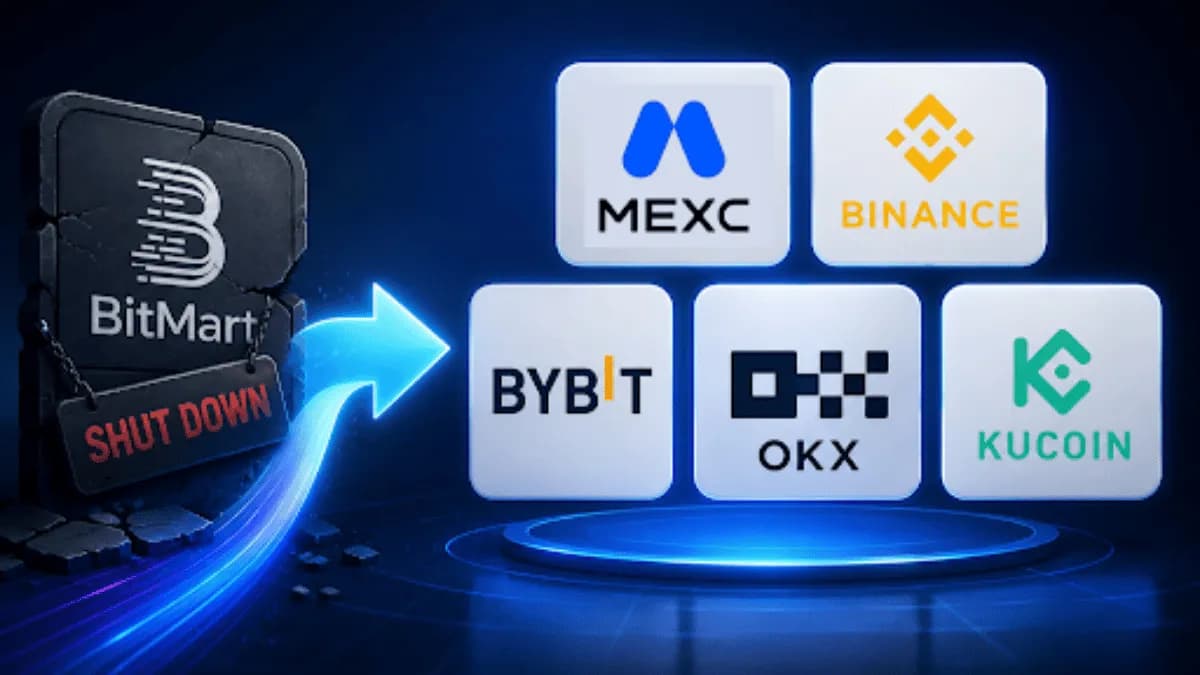
BitMart announced on July 26, 2026 that it is winding down its trading platform: new registrations and deposits stopped immediately, spot and futures trading ends August 26, 2026, and operations fully close by January 31, 2027. Anyone still holding funds on BitMart needs a reliable replacement exchange immediately.

A new stablecoin backed by 140+ firms, from Visa to BlackRock. Can Open USD challenge USDT and USDC, and will it clear MiCA? Olaf Ransome weighs in.

The Lowdown - newsletter. Something significant is happening in financial markets right now. Prediction markets are the new shiny object, and they are definitely now an institutional asset class. In the same way that brokers scrambled to add crypto to their offering a few years ago, the smartest operators in our space are already asking how they access prediction markets.

Fusion Capital is a specialist crypto liquidity provider offering brokers over 350 crypto CFD pairs with bespoke pricing, pure A-book execution, and access to decentralised exchange liquidity through Hyperliquid. In this broker profile, LiquidityFinder's Sam Low speaks with Head of Product Jasper Cooney about how Fusion's in-house trading bots monetise flow across centralised and decentralised venues, why crypto exchanges handle toxic flow differently to FX, and how brokers can now offer clients pre-IPO perpetual futures through their existing MT5 infrastructure.

Discover whether KuCoin is still “The People’s Exchange” in 2026. This in-depth KuCoin review breaks down fees, KYC, security, Proof of Reserves, supported coins, deposits/withdrawals, futures, margin, Earn and the platform’s standout free trading bots — plus who it’s best for (and who should avoid it).

Gas fees can be the most confusing part of using Ethereum and other blockchains. This guide explains what gas fees are, why they exist, how costs are calculated (including EIP-1559’s base fee and priority tip), and the key factors that drive price spikes. You’ll also learn practical ways to reduce fees using gas trackers, smarter timing, batching, and Layer 2 networks like Arbitrum, Optimism, Polygon and zkSync.

Generating and sustaining liquidity requires a strategic approach across centralized exchanges, decentralized pools, and market-making relationships. This guide covers every stage of the process for crypto projects.

This guide covers how proof-of-stake works, the best assets to stake, liquid staking protocols, and the risks you need to understand before committing funds.
Create Your FREE Account
Get access to latest news, updates, real-time data, brokerage and trading firm insights and customized information feeds.


Multi-asset trading broker AvaTrade has agreed to acquire the majority of FXCM Group’s business and brand, in a transaction that would bring a longstanding retail FX franchise into the AvaTrade Group.

LSEG and CMC Markets have signed a multi-year strategic data agreement expanding CMC's access to LSEG's real-time and delayed pricing, reference and corporate actions data, news and analytics, plus AI-ready content, to support new products, entry into new markets and the growth of CMC's institutional and B2B partnerships.

The Tel Aviv Stock Exchange is considering a bid for the Cyprus Stock Exchange, with Israeli media citing its EU licence, trading platform and clearing house. Euronext’s Athens exchange and India’s National Stock Exchange are also seen as contenders, and Cyprus aims to sign a sale agreement by the end of this year.

CME Group will launch baseball futures on 12 October, pending regulatory review, tracking CME FutureSports Performance Indexes built on Official League Data. Standard and micro contracts will start with the 2026 Postseason and the four clubs in the League Championship Series, trading around the clock.

ESMA has published an opinion stating that MiCA-authorised crypto-asset service providers should cease services tied to non-MiCA-compliant stablecoins for EU clients across MiCA crypto-asset services. National authorities should require remediation of existing exposures within three months, by early January 2027.

Nasdaq Ventures has made a strategic investment in Amsterdam-based derivatives and crypto exchange One Trading, with both firms to explore 24/7 trading of equity futures. The undisclosed investment follows Nasdaq's US$100 million investment in Payward, the parent of Kraken, and CME Group's move to 24/7 trading.

cTrader has opened multi-platform plugins to brokers and prop firms, which can pre-install their own tools for clients or list them in cTrader Store. The plugins run across Mobile, Web, Windows and Mac, and can be built and launched independently of core-platform releases, including trading journals and calculators.

Institutional brokerage and financial infrastructure provider Clear Street has joined TradingView’s broker network, allowing its clients to trade US stocks, exchange-traded funds and options directly through the charting and analysis platform.


Learn how to improve trading psychology, manage fear and greed, avoid revenge trading, and follow your trading strategy with discipline and a trading journal.

GTC Prime has announced a strategic partnership with Centroid Solutions to manage and distribute its liquidity through CS 360 Bridge, Centroid's multi-asset connectivity and execution engine, giving brokers and institutional clients access to tailor-made pricing, low-latency execution and real-time risk management.
Feed