
Search Companies, News, Members & more
Terms of ServicePrivacy PolicySecurity PolicyLegal InformationCommunity GuidelinesSitemapsCookie Settings
2026 Copyright © Liquidity Finder Ltd. All rights reserved.
Liquidity Finder Ltd is incorporated in England and Wales, company number 10610740, registered address 167-169 Great Portland Street, Fifth Floor, London W1W 5PF, United Kingdom.
What is Bancor and how does it work?
Published on Aug 8, 2024
Updated on Mar 7, 2026

Bancor is a blockchain protocol that acts as a decentralised liquidity network designed to exchange cryptocurrency. It operates through a system of smart contracts on the Ethereum blockchain.
In simple terms, Bancor is a crypto trading network that supports other crypto trading platforms.
Bancor is also a platform where users can list new cryptocurrencies, and also trade new currencies. One of the main issues for new cryptocurrencies is the lack of liquidity. As nobody is using the coin, or has bought it, trading is very difficult.
Using crypto liquidity pools, Bancor provides liquidity to these cryptocurrencies and allows traders to stake their money into these new cryptos using smart contracts, so the process is automated.
Bancor is a decentralised exchange (DEX), however, has a unique model and incentive which makes it slightly different to other DEXs such as Uniswap and Sushi.
What is Bancor?
Bancor was created in 2017, during a time of great innovation for decentralised exchanges and trading. It was founded by technology entrepreneurs Eyal Hertzog, Guy Benartzi, and Galia Benartzi on the 30th of May 2017 upon the release of the Bancor Protocol white paper.
For the initial coin offering (ICO), Bancor raised $153 million, which for the early days of decentralised exchanges, was a record amount.
The name ‘Bancor’ is a reference to John Maynard Keynes’ conceptual currency of the Bancor, which was Keynes’ proposed idea for an international unit of account to help regulate the world’s economy during and after the Second World War. Despite the soundness of this theory, it was rejected by the UK government at the Bretton Woods Conference in favour of pegging the US dollar to gold, and all other currencies to the US dollar – a system which only lasted until 1971.
Bancor has developed over the years into a full ecosystem of decentralised protocols and invented various trading tools such as bonding curves, and pool tokens, and helped to pioneer the automated market maker (AMM). Bancor’s core philosophy is decentralisation, and all its products and protocols are designed with this in mind.

What is BNT?
Bancor is run by the Bancor Network Token (BNT) which is the primary token within the network. BNT is important as this provides the foundation for all the protocols within the Bancor network.
As of August 2024, BNT has a value of $0.56 with a 24-hour trading volume of $4,249,966.
What is the Bancor DAO?
The Bancor DAO is the decentralised autonomous organisation that dictates how Bancor is run and how it moves forward. The Bancor Protocol has a democratic voting system where BNT holders can vote on various decisions, and even propose their own changes to the Bancor network, for which users will then vote.
Many decentralised exchanges will have a DAO and it allows the developers to be transparent but also encourages users to keep their assets within the network, thus increasing liquidity.
How does Bancor work?
Bancor is an ecosystem of decentralised protocols, rather than one exchange where users can trade. Bancor is essentially an umbrella for several products, listed under one banner of ‘Bancor’ and all based on the BNT.

Carbon DeFi
Carbon DeFi is the main protocol within the Bancor network and is a decentralised trading platform which allows users to automate their trading.
This can be done by using custom on-chain limit orders, range orders, and a novel form of trading known as recurring orders. Recurring orders are essentially a method of trading where the user will create two linked orders: a buy order and a sell order. When one order is filled, the other order will be immediately funded, compounding profits in the process.

The Arb Fast Lane
The Arb Fast Lane is another protocol by Bancor which is open source and facilitates arbitrage trades across automated market makers.
The system is designed to capture arbitrage opportunities across the network and fill them before external arbitrageurs can exploit them. This is not only profitable for traders, but it also helps to maintain liquidity in the market, as it will protect LPs from price inefficiencies and potential losses.
Bancor AMM
Bancor also has its own AMM trading platform, where users can stake their cryptocurrency into crypto liquidity pools and earn from them. Bancor makes the claim to be the first AMM ever created and continues to pioneer the DeFi sector today via the Bancor DAO.
Is Bancor a DEX?
Yes, Bancor is a DEX, but is much more than that, and supports a much wider range of functions. Bancor does not advertise itself explicitly as a DEX, although Bancor AMM by nature is a DEX, and Bancor as a brand is a foundation for other smaller brands.
Bancor differs from other classic DEXs like Sushi and Uniswap in a few ways. One way is that most other DEXs will require deposit pairs of tokens, whereas Bancor supports single-sided staking.
Another way is Bancor’s defence of potential runs with its Impermanent Loss Insurance. This unique feature is a protective measure against volatility and works by allocating around 15% of all trading fees into a unique pool that is there in the event of impermanent loss.
Bancor also supports the development of new cryptocurrencies that might not be listed on other exchanges. Users can submit their coin to the Bancor DAO, and if approved, they can begin trading that coin using the Bancor Network.
As Bancor has single-sided liquidity, it means that users or liquidity providers need to supply liquidity only with the new token, without needing to provide an equivalent amount of another token. This makes starting a new token a lot more accessible, as there is much less of an upfront cost.
Conclusion
Bancor was one of the pioneers of DeFi and continues to innovate in the DEX space. The use of smart contracts, AMMs and crypto liquidity pools is quickly becoming the norm for the crypto space, and as user adoption begins to increase, the clear democratic benefits of DEXs will be seen.
For more articles like this, make sure to stay up to date with our crypto insights.
Remember to register with LiquidityFinder and make a free account. We are a network of industry professionals, traders and providers, providing access to companies looking to accelerate their business.
You can use our crypto exchange provider as well as our Match Matrix to find the liquidity provider that is right for you.
Author
 | Caleb is a financial copywriter with a specialisation in fintech and forex. Former copywriter at Barclays and Paysafe. Contributing writer for LiquidityFinder. You can message Caleb here. |
Share this article
Comments
Most Recent
Find The Right Partners for
Your Trading Business
Sign up and join over 5,000 professional members who receive personalized news alerts, curated professional connections, and more for free!
BitMart announced on July 26, 2026 that it is winding down its trading platform: new registrations and deposits stopped immediately, spot and futures trading ends August 26, 2026, and operations fully close by January 31, 2027. Anyone still holding funds on BitMart needs a reliable replacement exchange immediately.
A new stablecoin backed by 140+ firms, from Visa to BlackRock. Can Open USD challenge USDT and USDC, and will it clear MiCA? Olaf Ransome weighs in.

Discover whether KuCoin is still “The People’s Exchange” in 2026. This in-depth KuCoin review breaks down fees, KYC, security, Proof of Reserves, supported coins, deposits/withdrawals, futures, margin, Earn and the platform’s standout free trading bots — plus who it’s best for (and who should avoid it).
Gas fees can be the most confusing part of using Ethereum and other blockchains. This guide explains what gas fees are, why they exist, how costs are calculated (including EIP-1559’s base fee and priority tip), and the key factors that drive price spikes. You’ll also learn practical ways to reduce fees using gas trackers, smarter timing, batching, and Layer 2 networks like Arbitrum, Optimism, Polygon and zkSync.

Generating and sustaining liquidity requires a strategic approach across centralized exchanges, decentralized pools, and market-making relationships. This guide covers every stage of the process for crypto projects.
This guide covers how proof-of-stake works, the best assets to stake, liquid staking protocols, and the risks you need to understand before committing funds.

S&P Global Ratings gave Tether (USDT) the weakest Stablecoin Stability Assessment. Olaf Ransome breaks down what drives stablecoin risk—asset backing, custody/correspondent chains, transparency and reporting.
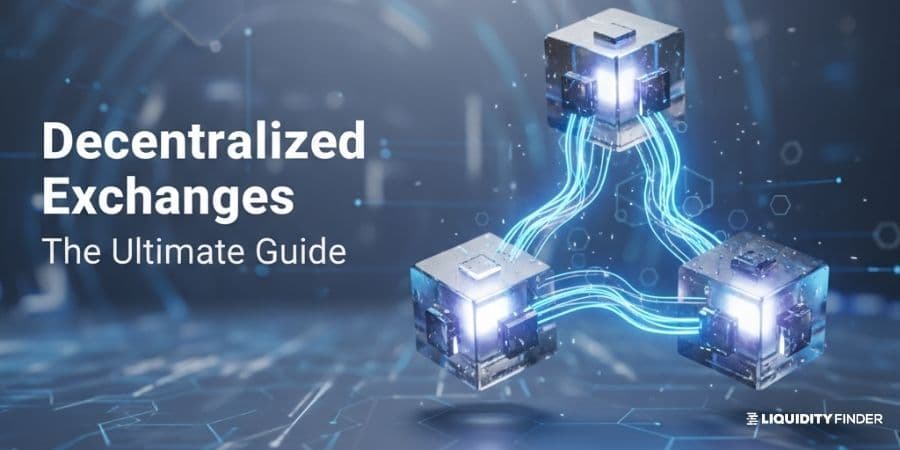
Decentralized exchanges (DEXs) allow peer-to-peer trading without intermediaries. This guide covers how AMMs work, how to connect a wallet, understand liquidity pools, manage slippage, and trade safely across Ethereum, BNB Chain, and Solana.
Create Your FREE Account
Get access to latest news, updates, real-time data, brokerage and trading firm insights and customized information feeds.


Webull Securities Co., Ltd., the Japanese subsidiary of Webull Corporation, has started handling US Treasury bonds, giving customers access to about 20,000 bonds as of 30 October 2026. The service lets users trade market-traded bonds like stocks, with real-time prices and yields, from $100.

Intercontinental Exchange and Trade[XYZ] have agreed to bring Trade[XYZ]’s perpetual markets onshore in the US through a new regulated market and clearing structure for round-the-clock retail trading built on Hyperliquid, operated separately from ICE’s institutional futures franchise, subject to regulatory approvals.

The Utah Attorney General's Office has filed 14 criminal charges against KalshiEX, LLC, the operator of US prediction market Kalshi, in a case that names co-founders Tarek Mansour, Chief Executive Officer, and Luana Lopes Lara, Chief Operating Officer, as co-defendants.

US blockchain payments company Ripple and US crypto exchange Coinbase have partnered to make Ripple's US dollar stablecoin, Ripple USD (RLUSD), available across Coinbase's platforms

The UK Financial Conduct Authority (FCA) has secured High Court undertakings to ensure that global crypto exchange HTX, formerly known as Huobi, will not knowingly promote cryptoasset services unlawfully to UK consumers.
US post-trade market infrastructure provider DTCC has launched its DTCC Tokenization Service (DTS) through its subsidiary The Depository Trust Company.
Warsaw-listed broker XTB has reported preliminary consolidated net profit of PLN 213.7 million for the third quarter of 2026, up 301.4% from PLN 53.2 million a year earlier.

Trading platform developer Spotware Systems, the company behind cTrader, has partnered with Dubai-based CRM and back-office technology provider Techysquad


The Federal Reserve held its policy rate at 3.75% to 4.00% on Wednesday, as almost everyone expected. What the market did not fully expect was the vote. Two members of the Committee, Governor Lisa Cook and Cleveland Fed President Beth Hammack, dissented in favor of an immediate quarter-point hike. It is the first time since October 1992 that a governor and a regional Fed president have dissented together on the same side.
B2BROKER Group has introduced Model Context Protocol support and an in-terminal AI Chat to B2TRADER. Traders can connect Claude, ChatGPT or custom AI agents to accounts, with brokers setting read-only or full access, while the chat requires explicit confirmation for trading actions proposed inside the web terminal.
Feed