
Search Companies, News, Members & more
Terms of ServicePrivacy PolicySecurity PolicyLegal InformationCommunity GuidelinesSitemapsCookie Settings
2026 Copyright © Liquidity Finder Ltd. All rights reserved.
Liquidity Finder Ltd is incorporated in England and Wales, company number 10610740, registered address 167-169 Great Portland Street, Fifth Floor, London W1W 5PF, United Kingdom.
Tokenised Money Market Funds (MMFs) – The Start of a Big Change
Published on May 23, 2024
Updated on Mar 7, 2026

22/05/2024
Tokenised MMFs will be even more important than I was thinking when I wrote last month’s column. Things have changed. I am one of those people with strong opinions which are loosely held; when the facts change, I’ll re-think. The world of financial services is moving at a very brisk pace. Taking some time to understand what is changing is essential; being able to seize opportunities requires some understanding, not being able to seize opportunities means potentially less alpha, lower return, both absolutely, which is bad for your investors and relativey versus your peers, which is bad for you.
On the MMF front, I’d like to share a couple of things. First, what I learnt watching a recent episode of the Security Token Show, which featured an interview with Archax CEO Graham Rodford and second what I think this means.
What’s new?
Archax has cooperated with BlackRock to tokenise their ICS US Treasury Money Market Fund. And, BlackRock has announced a cooperation with Circle, the issuer of USDC, to allow instant settlement of its USD Institutional Digital Liquidity Fund (BUIDL) vs. USDC. Ok, there is the obvious headline here: “BlackRock is doing something, so pay attention”. True enough. But, there’s more:
1) Instant off-ramp. Today, lots of financial institutions use MMFs as part of their end-of-day liquidity management routine. Nobody wants to sit long cash at a Nostro or correspondent bank because that is risky; those balances are unsecured receivables” in the balance sheet. Buying is good, but when you make an overnight investment, in today’s TradFi world, you don’t know exactly when tomorrow that the money is coming back. That gives rise to annoying, costly frictions. In my days at Credit Suisse, the overnight cash sweep to a BNY Mellon MMF was the standard routine. The next day, CS might well need USD to make payments to CLS Bank for FX settlement. Even if we had hundreds of millions of USD coming back from that overnight investment, BNY would charge us basis points for making the timed payments to CLS Bank for us. That felt unfair, and it was certainly costly. Paying for USD liquidity to meet CLS obligations is a major expense for all CLS Settlement Members.
2) The Hedera Blockchain controls. To make a transfer, the delivering party and the receiving party both need to instruct. I love this. This really matters. Think of it like the “spam mail stopper”. In one swoop, this type of control stops bad actors sending scammy tokens you never asked for to your wallet. This is a big thing; Blockchains do not have a “cancel / correct” function. Even if you didn’t ask for something, the transparency of blockchains means anybody can track how a bad token ended up in your wallet. That is essnetially damning DNA.
3) Easy connectivity and transferabilithy. Archax allows its clients to peer-to-peer transfers. This adds optionality for liquidity management; if you want to sell or do a repo and the other party is on the Archax network, you can have instant settlement. Archax has also worked with Ownera to allow institutions to connect easily to Archax. This lowers the barriers to entry.
What does all this mean?
If you are buying MMFs today as part of your end-of-day cash management routine, it is worth your time to study these new products, because they have the potential to make your cash flow much more predictable. More precisely, you can control the timing of tomorrow’s cash flow from the sale of the overnight investment. If you can control when you receive funds, that reduces any dependency on intra-day credit from your Nostro. That is a good thing; at the very least it reduces risk, and at best if you are a bank which makes less use of intra-day credit, then you can make the case to your regulator to reduce your intraday liquidity buffers and potentially save real money.
And by the way, if you are a Nostro whose clients invest in MMFs, you should be front and centre imploring your clients to use these products. If they have more predictable flows and are less reliant on intraday credit from you, then you have the same opportunity to look to have your intraday buffers reduced. That does not just make cents, it makes dollars, and lots of them. Intraday liquidity buffers are super expensive. Big banks have at least USD 100 billion in buffers, with 10 to 30% of that for intraday. At a cost of 100 bps, that is a cost of at least USD 100 million just to ensure you have the right money, in the right place, in the right currency and at the right time to settle trades and make payments.
If you are not using MMFs and are leaving yourself cash long with your Nostro or making unsecured money market placements, then you are taking a risk and you are missing the opportunity to make a return on your spare cash. You can skip the landline and go straight to mobile; look at these tokenised funds.
If you are an issuer of MMFs and have not yet thought about tokenisation, then you need to play catch up. Tokenisation will soon become table stakes. The foks at Archax have developed the tools to make this easily accessible. Can you wait and kick this can down the road? I say “at your peril”. Go back to the anecdote I quoted above from times at CS; if I am in a financial institution and have the choice between using two liquidity management products, where the old one has the unpredictability of setltement timing and the other is instant, I think we can agree which one wins in the end.
Thanks for reading. Please do let me know what you think of these notes. Feedback via the comments would be great.
Please feel free to get in contact via LiquidityFinder here
My thanks to Martin Watkins for sharing the details of the podcast. Martin is the CEO of Montis, which is part of the Archax Group.
 |
Olaf is a liquidity and financial services expert. He is the founder of 3C Advisory You can message Olaf directly here. |
Share this article
Comments
Most Recent
Find The Right Partners for
Your Trading Business
Sign up and join over 5,000 professional members who receive personalized news alerts, curated professional connections, and more for free!

GCC Brokers is a Dubai-based A-Book STP broker with FSC Mauritius and UAE SCA regulation, raw spreads from 0.0 pips, and an LBMA gold fix service. Here is an honest assessment of who it suits and who it does not.
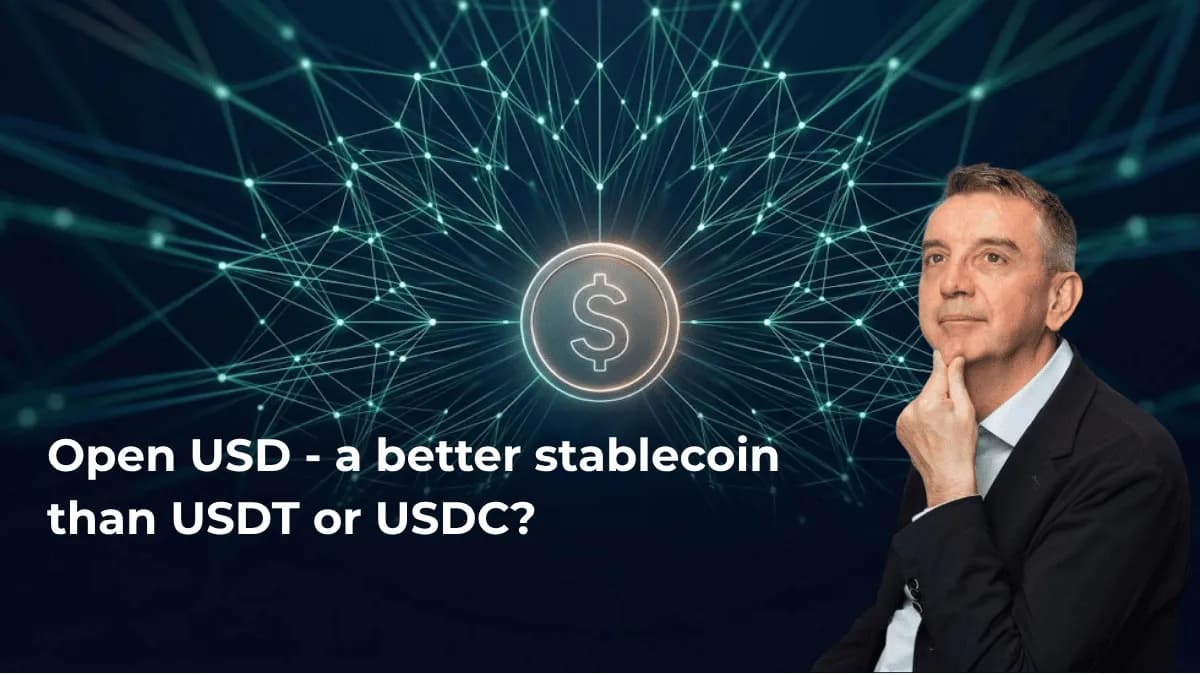
A new stablecoin backed by 140+ firms, from Visa to BlackRock. Can Open USD challenge USDT and USDC, and will it clear MiCA? Olaf Ransome weighs in.
Dark pool trading was once the preserve of institutional desks, but a new wave of AI tools is promising self-directed investors a look into non-displayed liquidity and where the big money sits. This article explains what dark pools actually are, why retail traders face an even bigger information gap in FX than in equities, and what AI-driven intelligence platforms like IUX24 can and cannot reveal about institutional positioning.

As tokenisation and digital assets move from niche curiosity to mainstream expectation, banks and financial institutions face an uncomfortable truth: their legacy core banking systems were never built for this. From order execution and pre-funding to custody, portfolio management and gas fees, Olaf Ransome explores the key infrastructure challenges FIs must navigate and asks whether to re-use, buy or build their way to a solution that actually scales.

LSEG's DiSH promises atomic settlement and 24/7 PvP and DvP capability using tokenised commercial bank deposits. But when the balances move and the banks don't, who actually owns what? Olaf Ransome examines the mechanics - and the risks.

Klarna is partnering with Coinbase, raising stablecoin-denominated funding and launching KlarnaUSD. We break down the treasury logic, merchant incentives and agentic AI payments angle — and what other CFOs should take from it.

Olaf Ransome’s latest article on liquidity management explores PORTS (Perpetual Overnight Rate Treasury Securities) and how they could expand the supply of on-chain high-quality liquid assets (HQLA) for treasury and cash management. He explains why long cash balances create risk, how stablecoins and tokenised money market funds need safe short-duration assets, and what PORTS could mean for reverse repo, liquidity management and wholesale banking.

African FX liquidity is shaped by hard-currency scarcity and capital controls. Roland Schilling, COO at Sika Financial, explains how interbank reference rates differ from parallel markets, and how Sika settles via CCP/PvP.
Create Your FREE Account
Get access to latest news, updates, real-time data, brokerage and trading firm insights and customized information feeds.


During Forex Expo Dubai 2026, Adnan Khan, CEO of 4XPORTAL, met with Sam Low, the founder of Liquidity Finder.

ATARIA CRM is a centralized platform designed for fintech teams to manage account operations, verification, fund management, and support in one place. With desktop and mobile access, it helps businesses stay connected, organized, and efficient.

EUR/AUD hits the 1.60500 target after rejecting 1.61715–1.62300 resistance. Review the bearish price action setup and why trade confirmation mattered.

Get an inside look at how rising Treasury yields and sector shifts into healthcare are impacting S&P 500 market dynamics, technical levels, and key economic drivers.

Understand XAUUSD support and resistance with simple gold chart examples. Learn to identify key zones, assess price reactions, and avoid beginner mistakes.

CMC Markets, a FTSE 250 multi-asset financial services firm, has launched a read-only ChatGPT integration for UK CFD clients, giving access to balances, positions, orders, pricing and historical market data through conversational prompts, as part of its ongoing investment in AI and cloud technology.
DXtrade, the multi-asset trading platform from Devexperts, has integrated Notofin's trading performance intelligence solution, adding behaviour-first analysis, structured journaling and pattern recognition tools. Brokers licensing DXtrade can now offer Notofin's services to clients as part of the platform's open integration framework.

KYC is essential for building trust, preventing fraud, and meeting regulatory requirements. A centralized system like ATARIA CRM helps compliance teams manage KYC requests, track pending documents, monitor approvals and rejections, and keep the entire verification process organized. By quickly identifying pending issues, businesses can reduce delays and provide customers with a smoother path from “Pending” to “Approved.”

Build better trading habits with a trading journal. Learn how a trading memory bank helps you review mistakes, manage emotions, and develop confidence.

GBP/USD has fallen to 3-month lows near 1.3200 due to strong US economic data and weakening UK consumer demand, though technical indicators like an RSI of 25.18 suggest the pair is now in oversold territory near key support at 1.3150.
Feed