
Search Companies, News, Members & more
Terms of ServicePrivacy PolicySecurity PolicyLegal InformationCommunity GuidelinesSitemapsCookie Settings
2026 Copyright © Liquidity Finder Ltd. All rights reserved.
Liquidity Finder Ltd is incorporated in England and Wales, company number 10610740, registered address 167-169 Great Portland Street, Fifth Floor, London W1W 5PF, United Kingdom.
Stablecoins and the Genius Act - Olaf Ransome
Published on Feb 18, 2025
Updated on Mar 7, 2026

Why is this an important topic?
Stablecoins are off to the races across the pond. The Donald and his team have been preparing a plan, and now with the help of the Senate are moving to making new laws to help and encourage things stablecoins.
What’s new or changing?
Hot on the heels of an Executive Order (see my last post) about Stablecoins comes a formal initiation of a proposed new law on them: the Genius Act of 2025 aka Guiding and Establishing National Innovation for U.S. Stablecoins (GENIUS) Act.
In his first stint at 1600 Pennsylvania Avenue, the Trump administration were apparently slow to get started and even completely failed to start in some areas. For more on that, Michael Lewis’s “The Fifth Risk” deserves a read.
It’s different this time. The team is ready with that bill which has been read in the Senate, kicking off its path to being a new law.
Say what you will of the toupe’d one; his flurry of activity is the exception to the old saw that the wheels of bureaucracy grind slowly. Given there is a republican majority in both the House and the Senate, it is worth understanding where this is all going.
Read on for my recap of this proposed Genius Act. I am not a genius, and the bill runs to 57 pages, and it is in that turgid prose that seems to be the default of lawmakers all over. So there is every chance I might have missed one or other nuance. That said, I hope my precis is useful.
In the old world of payments, securities, and financial services generally, the laws are pretty clear on what types of activities need permission to be offered. The Act does the same for “payment stablecoins” requiring them to be permitted aka licensed. It does only apply to activities in the United States. For a view on might happen to those outside the US who would like to issue USD denominated stablecoins, see my last post.
Permission is a two-tier structure. Anything under $10 billion is considered a State affair, anything over is a Federal one. All of this is clear and sensible.
The bill is both prescriptive and proscriptive. It prescribes what investment types a stablecoin issuer may invest in. It proscribes some activities, such as re-hypothecation, i.e. creating leverage, except in a very narrow set of circumstances. Also, the Act proposes limits to the business scope of a permitted stablecoin issuer. All of this is good.
There is also an eye to transparency and accountability. Month-end reporting of issuance vs. assets held, together with a validation from an outside accounting firm. On top of that the CEO and CFO must both sign-off that the reporting is accurate. This is mostly good, I would have gone a bit further, because I think the monthly part is too long. I would require a daily NAV and publishing of the NAV vs. the issuance on the company website.
If I read the text properly there is some provision for issuers to get Fed approval even if they are under the $10 billion level for state licensing should the wheels of state bureaucracy grind too slowly.
There is also some text on what I would call the SLA or service level agreement. The Act gives the Fed 120 days to evaluate a properly completed application, coupled with the obligation to issue details of any denied applications within 30 days. If the Fed does not act on time, approval is granted. I love this. There is a time for principle-based regulation and a time for rule based. This is one of the latter. Right now, I am involved in a license application for a FinTech in Switzerland. Even though we are in the Champions League of timetables and punctuality with our trains, that general Swiss virtuousness does not extend to there being a timetable for our regulator. So, permission to be jealous is in order here.
There is also a provision that I would put under the banner of “consumer protection”. The Act includes a clause with a novel bankruptcy provision for stablecoin issuers. Normally, if a bank goes bankrupt, customers’ securities are protected but cash positions beyond any insurance amount come down the order in the list of creditors, with tax men of all flavours, pension funds and employees’ wages ahead in the pecking order. Under the Genius Act proposals, stablecoin holders go straight to the top of the bankruptcy pecking order.
In Conclusion
Even if you don’t like Trump, there is a lot to admire here and a clear path to something decisive happening in the stablecoin space.
Back in private school, our term report had a grade for effort and another for achievement; “double A” being the holy grail with attendant bragging rights. Trump and his team get an A for effort; they are prepared, they have strong views, and they have a plan.
Bureaucrats are schooled in the fine art of delaying tactics, exemplified by the archetypal Sir Humphrey Appleby in Yes Minister and Yes, Prime Minister who when asked by his Minister how to reply to some request and delay it responded with something like: “In the fullness of time, in due course, and at the appropriate juncture, after consideration and deliberation and appointment of the usual committees.” I love the inclusion of an SLA to hold the Fed and the State Regulators to a fixed schedule. Wiggle room is very limited.
There will be new issuers, and I would expect stablecoins to become more and more used. Just maybe there is also some flexing of muscles internationally; US business says to European supplier “If you want to sell to me, I will pay you in USDC!” With the Donald back in the White House, some folks may want to imitate their leader and do a deal.
Thanks for reading. Please do let me know what you think of these notes. Feedback via the comments would be great.
Author
 |
Olaf Ransome is a liquidity and financial services expert. He is the founder of 3C Advisory You can message Olaf directly here. |
Share this article
Comments
Most Recent
Find The Right Partners for
Your Trading Business
Sign up and join over 5,000 professional members who receive personalized news alerts, curated professional connections, and more for free!
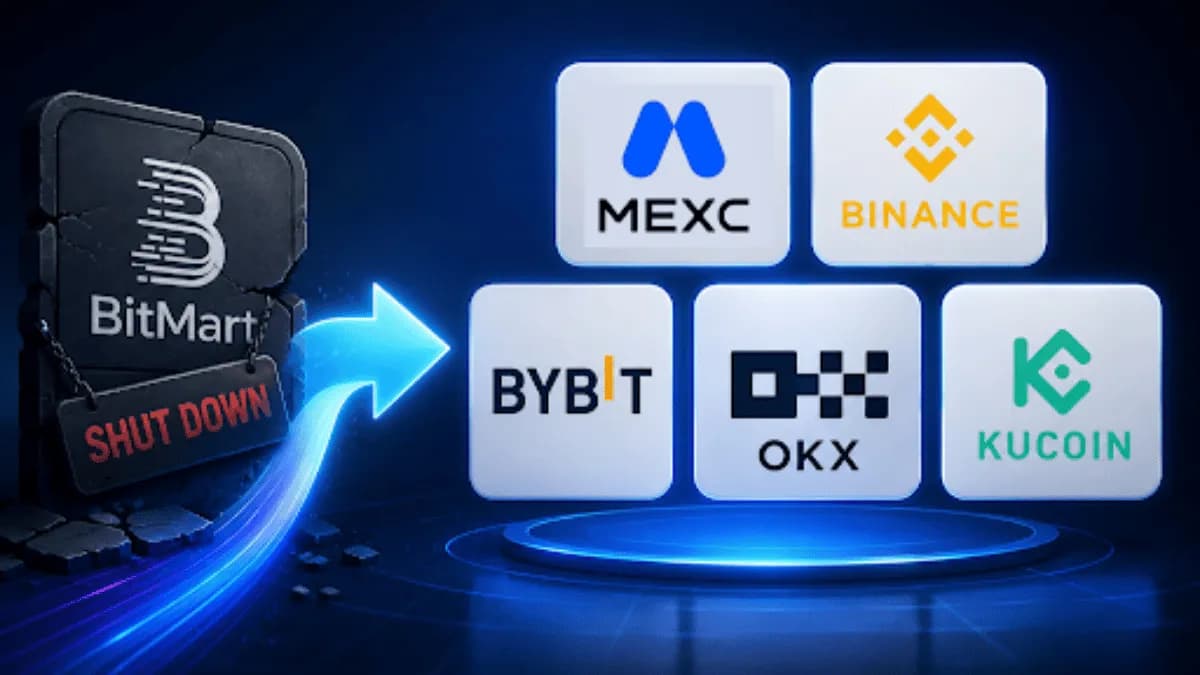
BitMart announced on July 26, 2026 that it is winding down its trading platform: new registrations and deposits stopped immediately, spot and futures trading ends August 26, 2026, and operations fully close by January 31, 2027. Anyone still holding funds on BitMart needs a reliable replacement exchange immediately.
A new stablecoin backed by 140+ firms, from Visa to BlackRock. Can Open USD challenge USDT and USDC, and will it clear MiCA? Olaf Ransome weighs in.
SoFi's SoFiUSD is the first stablecoin issued by a US national bank. But do holders actually have the protection they think?

As tokenisation and digital assets move from niche curiosity to mainstream expectation, banks and financial institutions face an uncomfortable truth: their legacy core banking systems were never built for this. From order execution and pre-funding to custody, portfolio management and gas fees, Olaf Ransome explores the key infrastructure challenges FIs must navigate and asks whether to re-use, buy or build their way to a solution that actually scales.

Klarna is partnering with Coinbase, raising stablecoin-denominated funding and launching KlarnaUSD. We break down the treasury logic, merchant incentives and agentic AI payments angle — and what other CFOs should take from it.

Olaf Ransome’s latest article on liquidity management explores PORTS (Perpetual Overnight Rate Treasury Securities) and how they could expand the supply of on-chain high-quality liquid assets (HQLA) for treasury and cash management. He explains why long cash balances create risk, how stablecoins and tokenised money market funds need safe short-duration assets, and what PORTS could mean for reverse repo, liquidity management and wholesale banking.

Discover whether KuCoin is still “The People’s Exchange” in 2026. This in-depth KuCoin review breaks down fees, KYC, security, Proof of Reserves, supported coins, deposits/withdrawals, futures, margin, Earn and the platform’s standout free trading bots — plus who it’s best for (and who should avoid it).

Gas fees can be the most confusing part of using Ethereum and other blockchains. This guide explains what gas fees are, why they exist, how costs are calculated (including EIP-1559’s base fee and priority tip), and the key factors that drive price spikes. You’ll also learn practical ways to reduce fees using gas trackers, smarter timing, batching, and Layer 2 networks like Arbitrum, Optimism, Polygon and zkSync.
Create Your FREE Account
Get access to latest news, updates, real-time data, brokerage and trading firm insights and customized information feeds.


The AI trade has always been a supply chain story. For the past two years, the narrative has been simple: insatiable demand for compute infrastructure, constrained supply at every choke point, and the companies that own the bottlenecks collect the toll. NVIDIA on GPUs. ASML on lithography. Samsung, SK Hynix, and Micron on memory. The entire semiconductor complex has traded on scarcity, and scarcity has delivered historic margins.


Interactive Brokers reported customer equity of USD 964.7 billion at the end of the third quarter, up 27% year on year, as customer accounts increased 35% to 5.58 million.

Crypto exchange BingX has secured a Markets in Crypto-Assets Regulation (MiCA) licence for its European arm from Austria's Financial Market Authority (FMA).

CXM Group has agreed to acquire TD Markets (Pty) Ltd, a Johannesburg-headquartered broker authorised by South Africa’s FSCA. TD Markets keeps its brand, team and licence, and Amar Ramith stays as CEO. Financial terms were not disclosed. The deal gives CXM a regulated base in South Africa. Clients need take no action.


Global equities under pressure: Hotter than expected US inflation and rising yields weighed on stocks, particularly technology and semiconductor shares.


Understand trading psychology and learn how a clear strategy, risk management and a trading journal help build discipline and day trading consistency.

Ripple Prime has launched support for real-world asset perpetual swaps, giving institutional clients including Virtu exposure to more than 100 reference markets across equities, indices, ETFs, metals, energy and FX. The swaps reference Trade.xyz perpetual futures on Hyperliquid and trade and settle around the clock.


iSAM Securities Apex has integrated with Crossover Markets, connecting brokers to CROSSx, its institutional digital asset ECN, through Apex’s ultra-low-latency technology stack.


Your Bourse and 4XPORTAL highlight their existing partnership, combining client onboarding, CRM and payment solutions with liquidity, execution and risk-management infrastructure for brokers.


The partnership brings together 4XPORTAL’s brokerage technology capabilities with Your Bourse’s connectivity, liquidity aggregation, and risk-management infrastructure.
Feed