just now


Liquidity Finder Ltd is incorporated in England and Wales, company number 10610740, registered address 167-169 Great Portland Street, Fifth Floor, London W1W 5PF, United Kingdom.
Published: just now

Nvidia was the week’s most important corporate story. The company reported Q3 revenue of $115.8 billion, roughly double the level from a year earlier and well above Wall Street expectations of around $108.9 billion. Data center revenue reached approximately $108 billion, highlighting the continued strength of AI infrastructure demand. Nvidia also raised its fiscal 2028 revenue-growth outlook to around 75%, from 70% previously.
The initial market reaction was positive, with Nvidia rising more than 4% after hours. However, the stock subsequently struggled to maintain those gains and fell for a sixth consecutive session on Thursday, declining 3.3%. Concerns surrounding CEO succession following Jensen Huang’s departure, China export restrictions, enormous capital expenditures and the broader valuation of AI stocks remain significant risks.
U.S. equities came under significant pressure this week. By Thursday’s close, the S&P 500 was down around 5.5% for the week, the Nasdaq Composite around 5.9%, and the Dow around 6.1%,
The key macro catalyst was the FOMC minutes. Although the Fed kept rates unchanged at 3.75%–4.00% in October, the minutes revealed broad support among policymakers for additional rate increases if inflation remains elevated. Some officials even discussed the possibility of a hike larger than 25 basis points. Markets are now pricing roughly a 90% probability of a 25bp December hike, with the debate increasingly shifting toward how aggressive the Fed may need to be rather than whether it will hike.
The combination of hawkish Fed expectations and concerns about AI capital expenditure therefore amplified this week’s technology sell-off.
Gold experienced one of the week’s most dramatic moves. It broke below $3,700 and touched its lowest level since September 2025. By Friday, spot gold was around $3,525 and was heading toward a roughly 9% weekly decline, its worst performance in eight months.
The sell-off was driven by a combination of higher rate expectations, elevated Treasury yields and a stronger U.S. dollar. The dollar index reached a 19-month high and was heading for its fourth consecutive weekly gain, making gold more expensive for international buyers while increasing the opportunity cost of holding a non-yielding asset.
The important change in the gold narrative is that geopolitical risk is no longer enough to offset monetary-policy pressure. Even with continued tensions surrounding Iran and the Middle East, investors have been prioritizing the dollar and higher expected returns from U.S. assets.
Anthropic provided another major test for investor appetite toward artificial intelligence. The company priced its IPO at $83 per share, above its original $70–$78 range, selling around 980 million shares and raising more than $81 billion. The offering became the largest IPO by value of shares sold, surpassing the initial pricing record set by SpaceX.
The shares opened at $111.50, briefly reached $115 and then closed at $97.17, still 17.1% above the IPO price. However, the broader market reaction was less impressive: U.S. stocks fell sharply on the same day, with the Nasdaq losing more than 2%.
That makes Anthropic’s debut particularly interesting. The strong IPO performance demonstrates that investors still have enormous appetite for leading AI companies, but the weak reaction from the broader AI complex suggests investors are becoming more selective.
Next week, the market is likely to remain highly sensitive to Fed expectations, Treasury yields, the dollar and developments in the AI sector.
The Fed remains the dominant macro risk. With markets already assigning a very high probability to a December rate hike, next week’s economic data will be judged primarily through the question of whether inflation is still too high to allow the Fed to ease its stance.
A further rise in Treasury yields and the dollar would create additional pressure on equities, gold and cryptocurrencies. Conversely, softer inflation or labor market data could trigger a decline in yields and provide some relief for growth stocks.
Gold’s technical and fundamental picture remains bearish. After falling roughly 9% this week and breaking below $3,700, the market is showing little evidence of a sustainable bottom. The combination of a strong dollar and expectations of higher rates remains unfavorable.
Oil remains caught between Middle East supply risks and expectations of a global surplus. Continued attacks involving Iran, the U.S. and shipping around the Strait of Hormuz could generate sharp short-term spikes, but recovering flows and expectations of excess supply are limiting the upside. The market will therefore remain highly sensitive to any developments affecting the Strait of Hormuz.
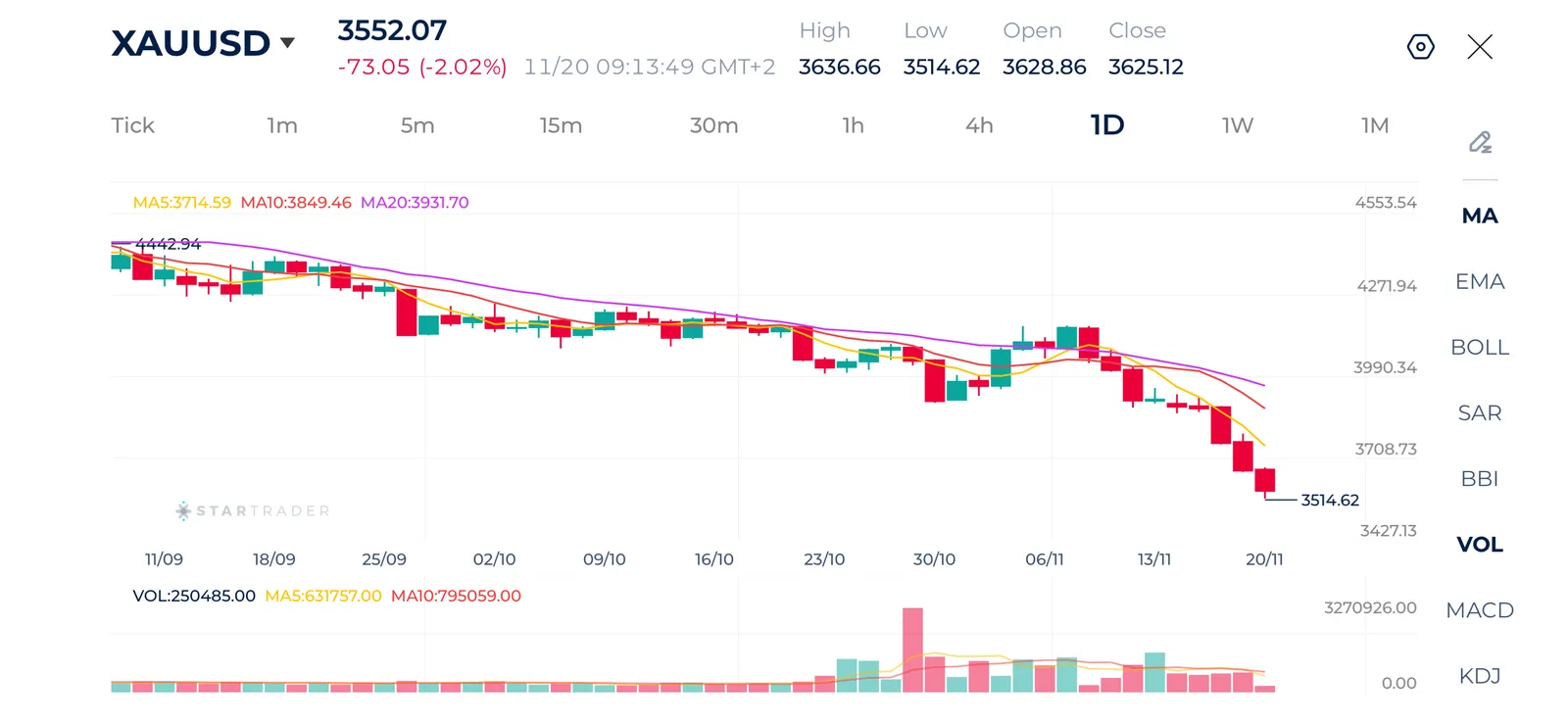
Gold is showing bearish technical deterioration on the daily chart. It has fallen from approximately $4,443 to around $3,552, with price trading well below the 5-day, 10-day, and 20-day moving averages. The moving averages are also clearly negatively aligned.
The recent break below the $3,710 area accelerated the decline, and the latest low around $3,515 is now the immediate support. A sustained break below this level could expose the $3,430–$3,450 area. Any recovery would initially face resistance around $3,630–$3,715, followed by the much stronger $3,850 - $3,930 region.
The chart therefore remains strongly bearish, although the magnitude and speed of the decline mean that a short-term corrective rebound is increasingly possible.
| Resistance | $3,690 - $3,700 | $3,800 - $3,821 | $3,874 - $3,900 |
| Support | $3,494 - $3,500 | $3,412 - $3,430 | $3,338 - $3,350 |
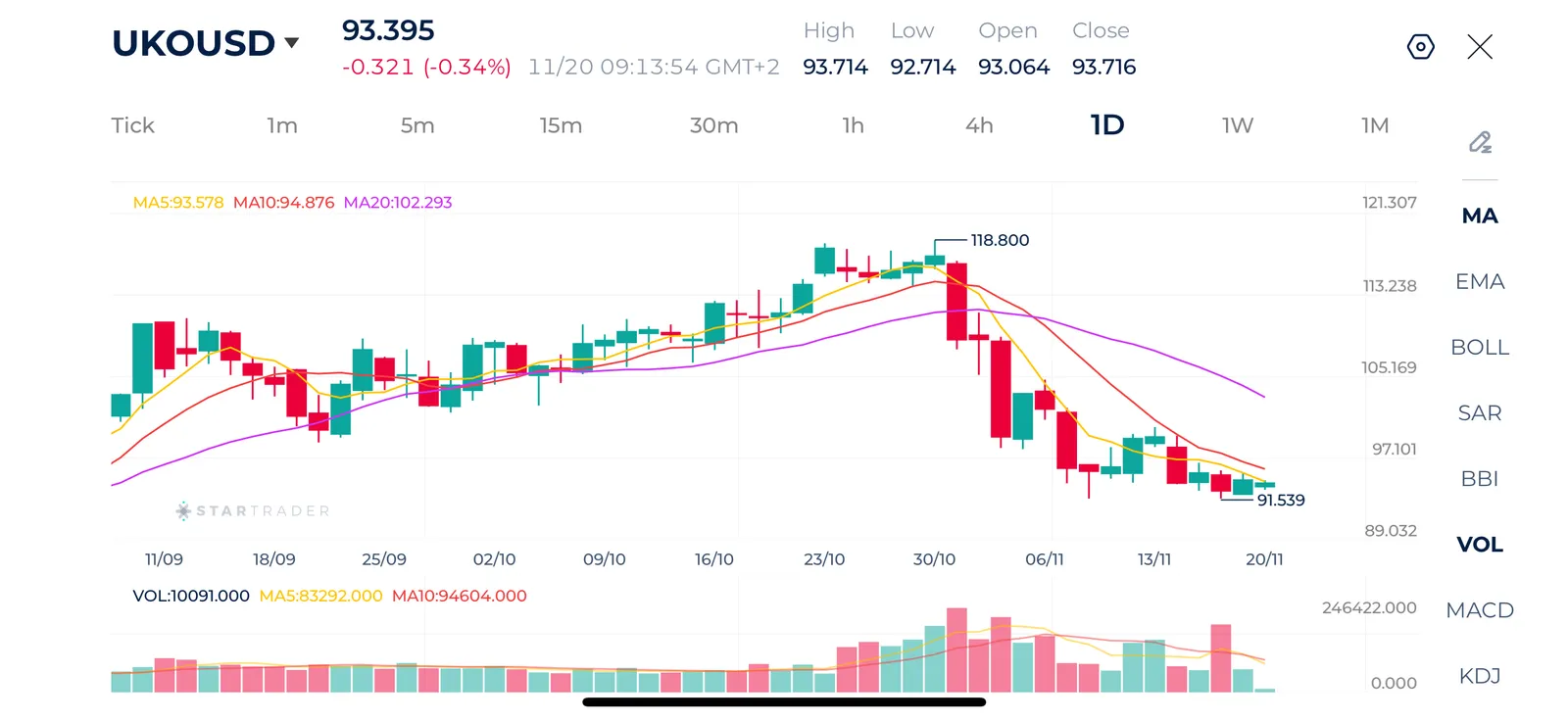
Brent is trading around $93.40, and it is recording lower highs and lower lows. Price remains below the 5-day, 10-day, and 20-day moving averages. This gives the market a strong bearish trend configuration. The recent low around $91.54 is the critical support. A break below that level would strengthen the downside case, with the next psychological area around $90.
On the upside, $94.80–$95.00 is the first resistance zone, while the much more important medium term resistance sits around $102–103. Overall bias is bearish, although the market is approaching an important support area where a short-term bounce could emerge.
| Resistance | $94.80 - $95.00 | $97.00 - $97.10 | $98.67 - $98.21 |
| Support | $91.40 - $91.53 | $90.22 - $90.35 | $89.11 - $89.25 |
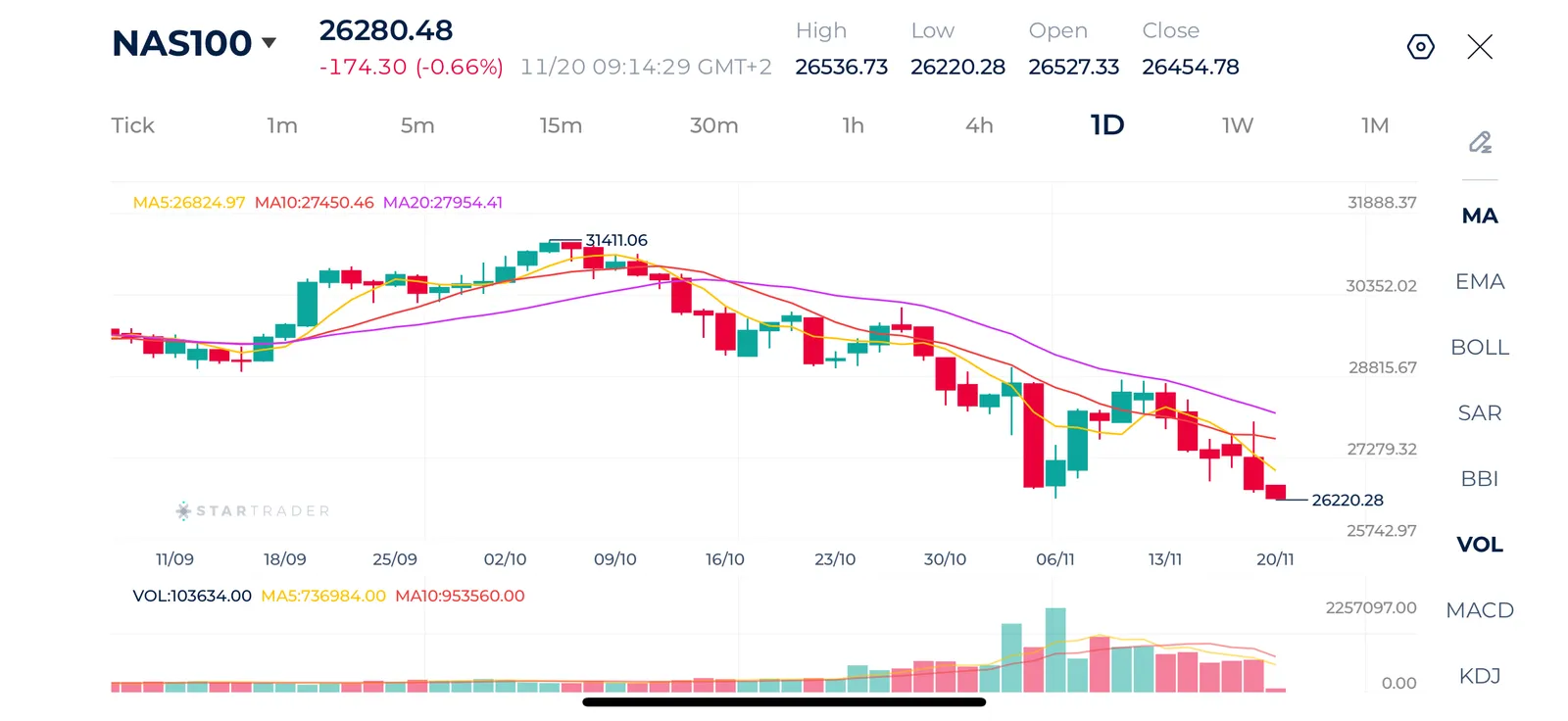
The Nasdaq 100 is around 26,280. The daily chart shows a well established corrective structure, with price below the 5-day, 10-day, and 20-day moving averages.
The latest decline has brought the index close to the recent low around 26,220, which is the key immediate support. A decisive break below that level would reinforce the bearish structure and potentially open the way toward the 25,750–25,500 area. On the upside, 27,250–27,450 represents the first meaningful resistance, followed by 27,950–28,000 around the 20-day moving average. The short-term bias is neutral to bearish, while the broader daily trend remains clearly bearish.
| Resistance | 27,250 - 27,273 | 27,450 - 27,462 | 27,661 - 27,680 |
| Support | 25,750 - 25,762 | 25,450 - 25,471 | 25,221 - 25,240 |
EURUSD is trading around 1.0986 and remains in a clear daily downtrend. The pair has been making lower highs and lower lows since the September peak around 1.1654, and price is currently below the 5-day, 10-day and 20-day moving averages.
The recent move below 1.1100–1.1095 accelerated the decline, and the latest low around 1.0953 is now the immediate support area. A sustained break below this level could expose the 1.0890–1.0900 region. On the upside, 1.1045–1.1100 is the first important resistance zone. The technical bias remains bearish, with any short term rebound potentially facing selling pressure around the moving averages.
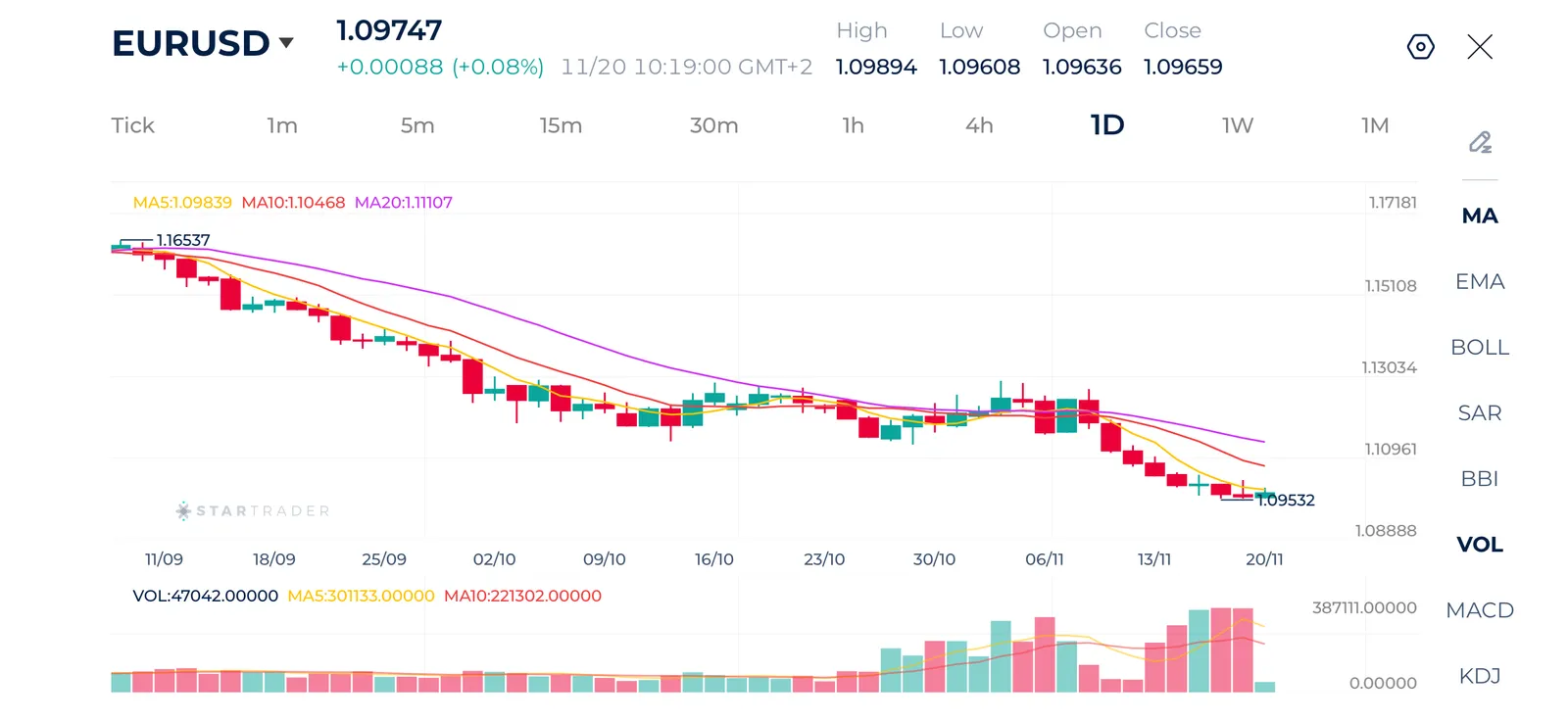
| Resistance | 1.1024 - 1.1030 | 1.1073 - 1.1080 | 1.1106 - 1.1118 |
| Support | 1.0914 - 1.0920 | 1.0845 - 1.0850 | 1.0779 - 1.0785 |
Risk Disclaimer: This material is provided for informational purposes only and does not constitute a recommendation or investment advice. Trading financial instruments on margin involves substantial risk and may not be appropriate for all investors.
STARTRADER is a global multi-asset broker empowering retail and institutional partners to access global markets through a range of platforms, including MetaTrader, STAR-APP, and STAR-COPY.

Select the categories and companies you wish to follow directly to your person rss feed.
Create Custom RSS FeedSign up and join over 5,000 professional members who receive personalized news alerts, curated professional connections, and more for free!
Nvidia beats expectations, reporting $115.8bn in revenue and raising its long-term growth outlook, but the stock still struggled to sustain its gains. AI remains fundamentally strong, but investor expectations are becoming more demanding, particularly around capex and profitability. Wall Street suffered a major sell-off, with the S&P 500 entering a six-session losing streak as rate concerns intensified.
iSAM Securities reviews the ris of weekend gold trading
Webull Corporation reported record third quarter 2026 revenue of $218.7 million, up 39% year-on-year, with customer assets reaching $32.4 billion and options contracts volume up 79%. Net income attributable to the company was $31.2 million, while margin debit balances passed $1 billion for the first time.
Anthropic, the company behind the Claude family of AI models, begins trading on the Nasdaq today under the ticker ANT. It priced its shares at $83 last night, above its marketed range of $70 to $78, and raised about $81.3 billion. That makes it the largest initial public offering on record, ahead of the roughly $75 billion SpaceX raised in June. This note covers what investors need to know: the terms, the business, how the company is governed, and what to watch.
Nvidia's first results without Jensen Huang answered the question that has hung over the AI trade since October. Revenue of $115.8 billion beat consensus by about $7 billion, fourth-quarter guidance of $130 billion came in roughly $5 billion above expectations, and the company raised its outlook for next fiscal year to around 75% growth. All of this assumes no data-centre sales to China.
Marex has entered the football financing market through a partnership with specialist sports investment and advisory firm Pinto Capital, targeting clubs in the Premier League and EFL Championship.
Around 110,000 UK retail investors have secured $300 million worth of Anthropic shares in its record-breaking $81 billion IPO. The heavily oversubscribed offer, coordinated by RetailBook, saw smaller investors prioritised, with 63% of applicants receiving their full allocation.
Clear Street has completed its acquisition of Boom Securities (H.K.) Limited, establishing its first licensed brokerage presence in Hong Kong
Sterling slips to its lowest against the dollar since October as markets trim Bank of England bets and Fed minutes point to further US rate rises, while the euro hits a fresh one-year low. Daily FX analysis from Equals.
JT Prime, the institutional Prime of Prime founded by Raj Sitlani, Jonathan Brewer and Jeff Wilkins, is set to become the new home for institutional client relationships currently serviced by FXCM Pro. Clients have been offered the same leverage, fees and connectivity, ensuring continuity of trading conditions.