
The U.S. Treasury just gave equity bulls something they badly needed: lower long-term yields.
The question is whether that relief can become a genuine change in market structure.
After the 30-year Treasury yield reached about 5.34% on Tuesday, its highest level since 2007, Washington announced that long-end liquidity-support buybacks would at least double from $2 billion to $4 billion per operation for 10- to 30-year nominal securities.
The reaction was immediate. The 30-year yield fell by almost 10 basis points towards 5.19%, while equities initially moved higher.
- The bullish part: Treasury is providing extra demand in the exact area of the bond market that has been hurting equity valuations.
- The less bullish part: it is doing so because the long end had become uncomfortable enough to matter.
Why Lower 30-year Yields Help Stocks
Bond prices and yields move in opposite directions.
Treasury buybacks give holders of older long-dated securities another source of demand and can improve market liquidity, raising bond prices, (and as they move in opposite directions) yields ease.
This is important because Treasury yields feed into mortgage rates, corporate borrowing costs and the discount rate investors use to value future profits.
So when long-term yields fall, borrowing costs ease, making it cheaper for companies to finance growth and more supportive for equity valuations.
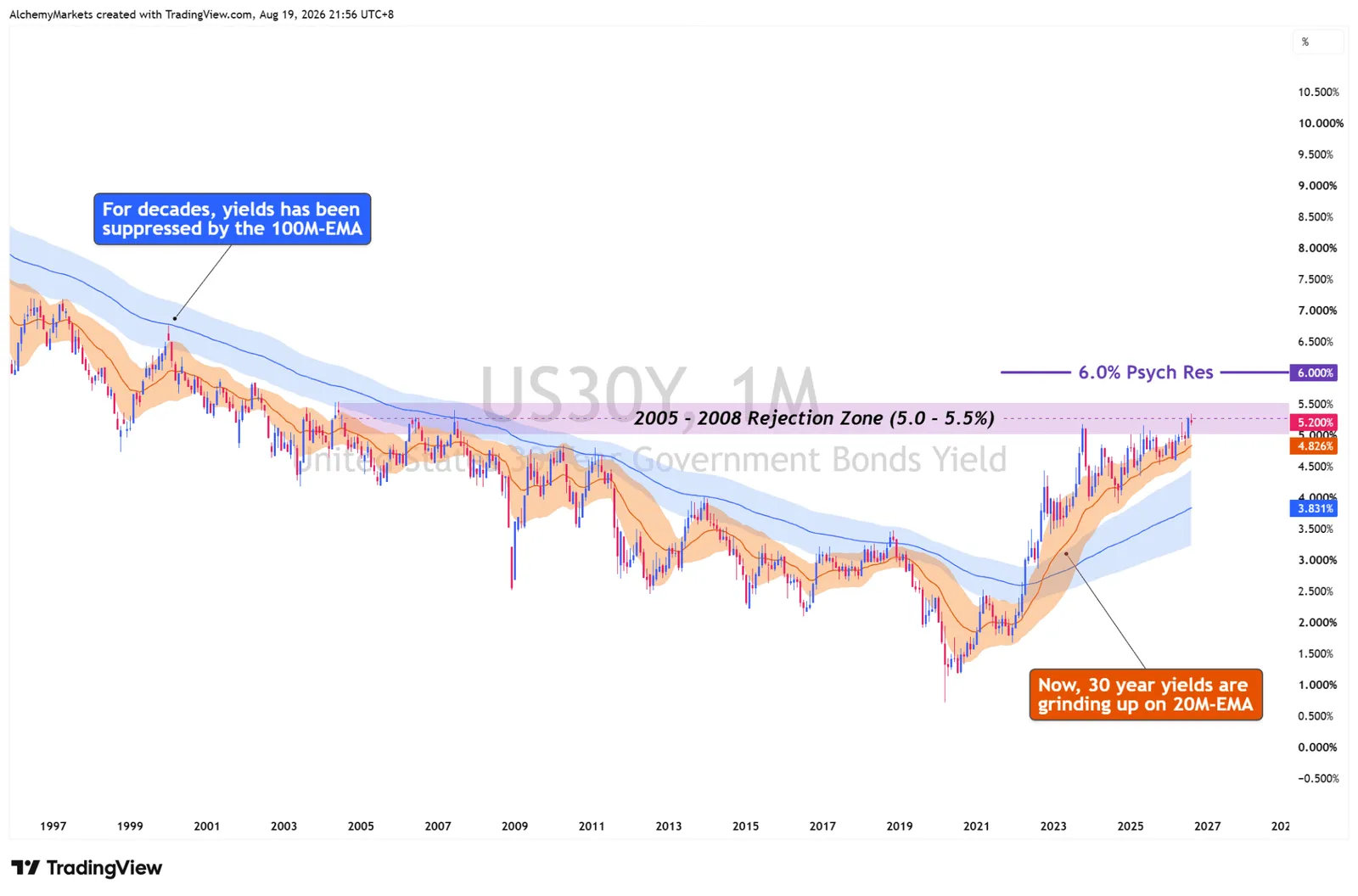
| US30Y monthly. The 30-year yield had pushed into the old 5.0% to 5.5% rejection area seen before the global financial crisis. The chart makes clear why 5.3% was becoming an uncomfortable level. |
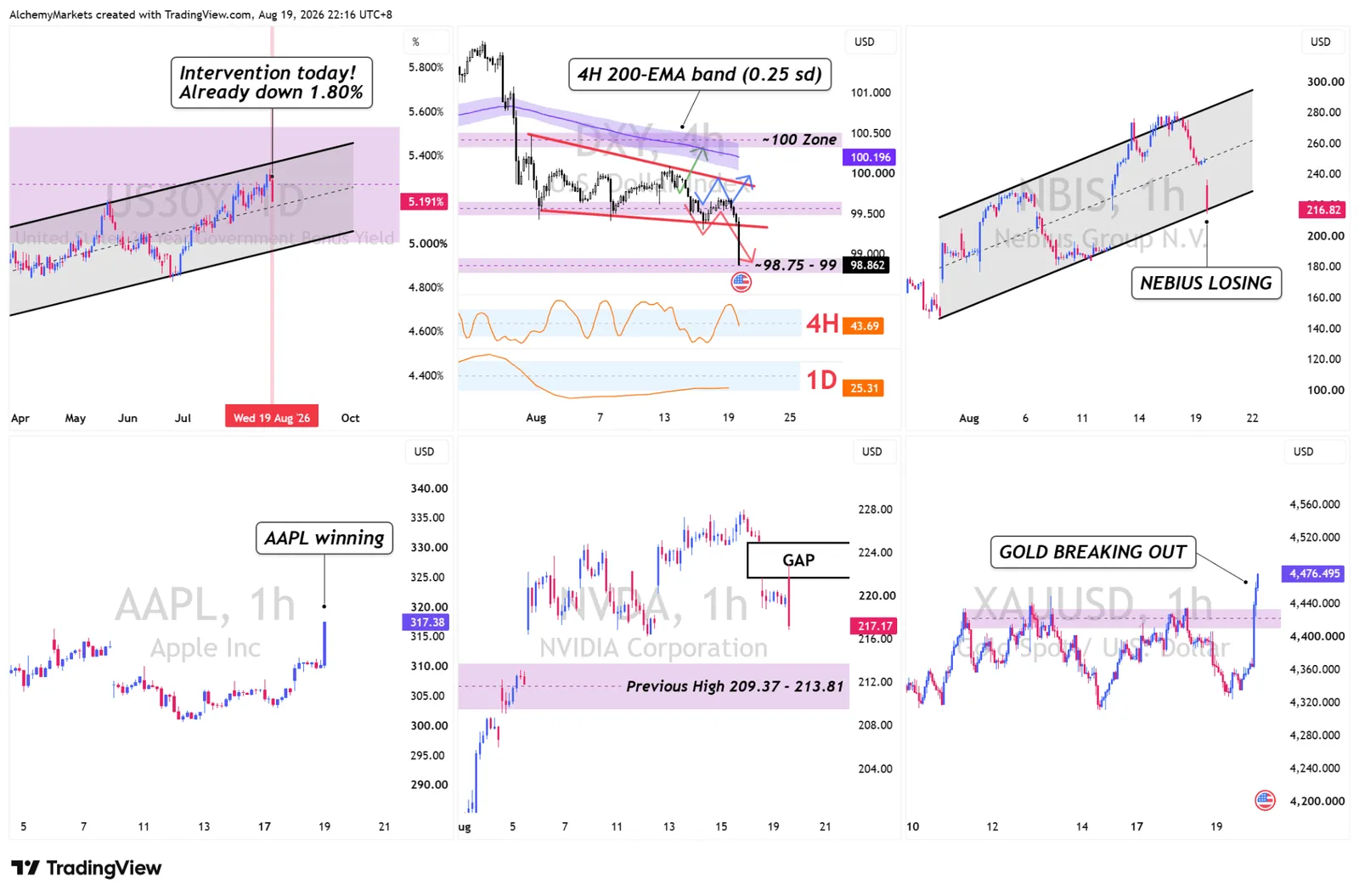
That is the main reason why some assets saw a tailwind today, such as Apple and Tesla.
Another big winner is Gold, which historically loves low yield conditions:
Still, the announcement should be treated as temporary liquidity relief, not a new easing regime.
And, as you can see from the chart above, the tailwind isn’t universal. Nvidia and Nebius are instead gapping down aggressively.
That’s why it’s important to not paint this event with a rose-colored brush; the market is not treating the announcement as a broad all-clear.