just now


Liquidity Finder Ltd is incorporated in England and Wales, company number 10610740, registered address 167-169 Great Portland Street, Fifth Floor, London W1W 5PF, United Kingdom.
Published: just now

Forex day trading can be a source of financial viability yet challenging venture, especially for beginners. The idea of making quick gains within a day sounds exciting, but without the right approach, most traders fail.
In this guide, you’ll learn how to start day trading Forex, master the best day trading strategies for Forex, and understand key day trading tips to help you trade financial viability in 2025.
Before you start with our course, make sure to view this blog to prepare you in this journey.
Before starting your journey as FOREX Day Trader, it’s important to understand the difference between Day Trading and Swing Trading.
Scalping is the fastest form of trading, focusing on quick entries and exits within minutes. Scalpers aim to gain from small price movements and execute multiple trades per session.
✅ Trade Duration: Seconds to minutes per trade.
✅ Strategy Focus: High-frequency trading, liquidity zones, and breakout scalping.
✅ Best Market Sessions: London Open (3 AM – 6 AM EST), New York Open (8 AM – 12 PM EST).
✅ Risk Management: Very tight stop-losses, low risk per trade (0.5%-1% of capital).
✅ Reward Management: Small but frequent gains, aiming for 5-15 pips per trade.
📌 Who Should Consider It?
Day trading involves opening and closing positions within the same trading day, avoiding overnight risks. It requires quick decision-making and sharp execution.
Note that being sharp doesn’t always mean that you need to focus minute by minute on the charts, it varies as you can use other timeframes to execute during the day.
✅ Multi-Timeframe: Trades typically last from minutes to a few hours with trades expiring at the end of the day.
✅ Strategy Focus: Short-term price action, breakouts, and momentum trading.
✅ Best Market Sessions: High-volatility sessions like London Open (3 AM – 6 AM EST) and New York Open (8 AM – 12 PM EST).
✅ Risk Management: Tight stop-losses, small position sizes, and quick exits to avoid major drawdowns.
✅ Reward Management: Targeting Previous Day’s Highs / Lows, Previous Session’s Highs / Low
📌 Who Should Consider It?
Swing trading focuses on catching larger price movements over days or weeks, reducing the need for constant screen time.
✅ Timeframe: Trades can last from several days to a few weeks.
✅ Strategy Focus: Trend following, support/resistance levels, and retracement entries.
✅ Best Markets: Strong trending pairs like EUR/USD, GBP/USD, USD/JPY.
✅ Risk Management: Wider stop-losses, aiming for a higher reward-to-risk ratio (2:1 or 3:1).
✅ Reward Management: Targeting Previous Week’s Highs / Lows, Previous Month’s Highs / Lows
📌 Who Should Consider It?
| Aspect | Scalping | Day Trading | Swing Trading |
|---|---|---|---|
| Trade Duration | Seconds to minutes | Minutes to hours | Days to weeks |
| Decision Speed | Instant, split-second | Fast, real-time | Slower, planned |
| Chart Timeframe | 1M, 5M | 5M, 15M, 1H | 4H, Daily, Weekly |
| Risk/Reward | Small, frequent gains | Small-medium gains per trade | Large gains over time |
| Time Commitment | Constant screen time | Several hours daily | A few hours per week |
| Analysis Type | Mostly technical | Mostly technical | Mix of technical & fundamental |
✔️ If you love ultra-fast trading and frequent action, go for Scalping.
✔️ If you want fast-paced trading but with slightly longer trade durations, Day Trading is ideal.
✔️ If you prefer less screen time and catching bigger moves, Swing Trading is the best choice.
📌 Tip: Beginners should start with Day Trading or Swing Trading before attempting Scalping, as it requires more experience and discipline.
Using multiple timeframes allows you to spot high-probability trade setups while avoiding false signals. Here’s a beginner-friendly approach to timeframe selection:
📌 How it works:
✅ Best Market Session: London & New York
👉 Best for: Beginners & experienced traders who want a structured approach with clear trend confirmation.
📌 How it works:
✅ Best Market Session: London & New York Overlap (Momentum Scalping); Stock Market Open
👉 Best for: Advanced traders who prefer high-frequency trading and fast market execution during a high liquidity & volatility session.
📌 How it works:
✅ Best Market Session: London & New York
👉 Best for: Traders who want higher accuracy and larger intraday price moves.
📌 How it works:
✅ Best Market Session: London & New York Overlap (Most institutional movements)
👉 Best for: Traders using ICT (Inner Circle Trader) concepts or smart money strategies maximising liquidity and volatility during London and New York Session.
Which Timeframe Combination Should You Use?
✅ For Beginners: H1 → M15 (Easier to follow trends and manage trades)
✅ For Scalpers: M15 → M5 → M1 (High-speed execution, small gains)
✅ For Swing-Intraday Hybrid: H4 → H1 → M15 (Larger moves, fewer trades)
✅ For Smart Money Traders:H1 → M15 → M5/M1 (High-precision institutional entries)
🚀 Pick the right timeframe combination based on your trading style / personality and strategy.
📉 Avoid constantly switching between multiple strategies—it leads to confusion and inconsistency.
⏳ Use higher timeframes to confirm trends and lower timeframes for precise entries.
*For in-depth discussion of the Market Sessions, check out this course: https://acy.com/en/market-news/education/currency-pair-selection-guide-02272025-083809/*
Selecting the right currency pairs is crucial for successful intraday trading. The best pairs for day trading have high liquidity and consistent volatility, making them ideal for quick entries and exits.
✔️ EUR/USD – Most Liquid & Tightest Spreads
📌 Why Trade It?
📈 Best Time to Trade:
📌 Why Trade It?
📈 Best Time to Trade:
💡 Pro Tip: Use wider stop-losses to manage sudden GBP spikes.
📌 Why Trade It?
📈 Best Time to Trade:
💡 Pro Tip: Watch for interventions from the Bank of Japan (BoJ), which can cause sudden spikes.
📌 Why Trade It?
📈 Best Time to Trade:
💡 Pro Tip: Monitor gold prices to anticipate potential AUD/USD movements.
👉 Beginner Tip: Master 1-2 Pairs Before Adding More
Jumping between too many pairs can lead to overtrading and confusion. Instead:
✅ Pick one or two pairs that fit your trading style.
✅ Base the pair selection on the session you will trade.
✅ Study their behavior, volatility cycles, and reaction to news events.
✅ Once you master them, gradually explore other pairs.
For an in-depth coverage of choosing the best currency pair to trade, check out this course.
📈 Forex Day Trading Strategy Using EMA 20 & EMA 50 (Breakout Focused) 🚀
This intraday Forex trading strategy is designed for high-probability trades by entering only when the execution timeframe breaks out of a range, ensuring you trade with momentum and avoid false signals.
✅ Indicators: EMA 20 & EMA 50
✅ Timeframe Combinations:
✅ Market Sessions: London & New York (high liquidity)✅ Best Pairs: EUR/USD, GBP/USD, USD/JPY (trending pairs)
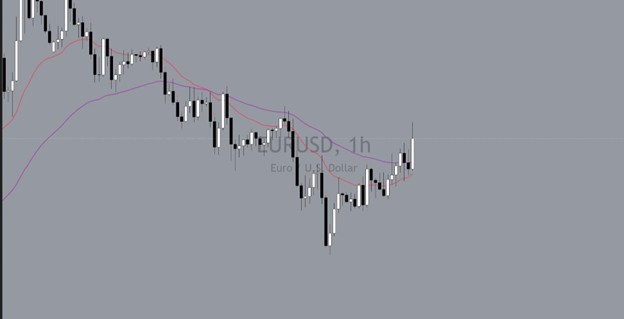
1️. Identify the Trend on the Higher Timeframe
📌 Check EMA alignment on your chosen higher timeframe:
✅ Uptrend: EMA 20 is above EMA 50 → Look for buy trades
✅ Downtrend: EMA 20 is below EMA 50 → Look for sell trades
💡 Avoid trading when EMAs are flat or entangled (range-bound market).
1-Hour Timeframe
2. Wait for a Consolidation Range on the Execution Timeframe
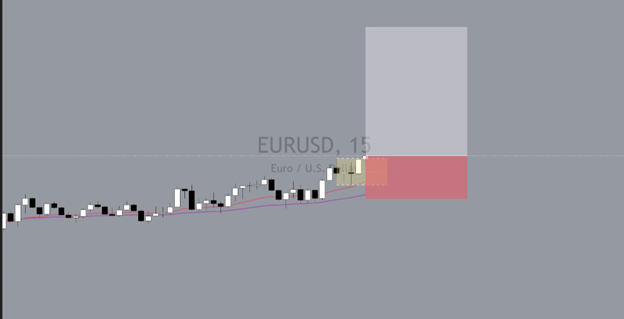
📌 Switch to your execution timeframe and mark a consolidation range:
✔ Price is moving sideways near EMA 20 or EMA 50
✔ The range should have at least two touches on both sides
✔ Wait for a clear breakout before entering
🚨 Avoid trading inside the range!
15-Minute
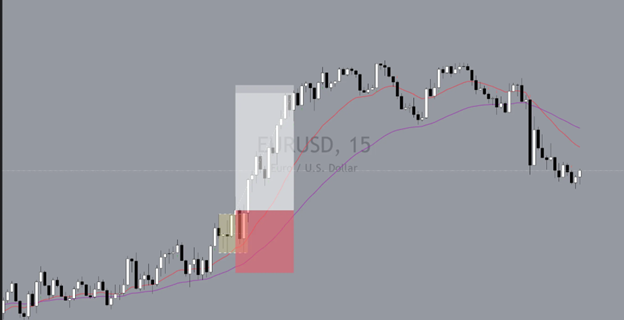
3. Enter Only When Price Breaks Out of the Range
📌 Buy Setup (Bullish Trend):
✔ EMA 20 is above EMA 50 on the higher timeframe
✔ Price consolidates near EMA 20/50 on the execution timeframe
✔ Price breaks above the range with strong momentum
✔ Enter at the close of the breakout candle
📌 Sell Setup (Bearish Trend):
✔ EMA 20 is below EMA 50 on the higher timeframe
✔ Price consolidates near EMA 20/50 on the execution timeframe
✔ Price breaks below the range with strong momentum
✔ Enter at the close of the breakout candle
💡 Pro Tip: The stronger the breakout candle, the better the trade.
4. Set Stop Loss & Take Gain
✅ Stop Loss (SL):
📌 Below the breakout range (for buys)
📌 Above the breakout range (for sells)
✅ Take Gain (TP):
📌 TP1: 2x the SL (risk-to-reward ratio of 1:2)
📌 TP2: Next key support/resistance level
5. Exit When the Trend Weakens
📌 Move SL to breakeven after price moves 1.5x risk in gain.
📌 Exit trade early if:
❌ Price closes back inside the range (false breakout)
❌ EMAs flatten or cross over
📊 Choosing Your Timeframe Combination
📌 Option 1: H1 (Trend) → M15 (Execution)
✔ Best for higher probability trades
✔ Good for 1-3 trades per session
✔ Works well in high-liquidity sessions (London & NY overlap)
📌 Option 2: M15 (Trend) → M5 (Execution)
✔ Best for faster entries & more trade opportunities
✔ Ideal for scalpers
✔ Works well in London session or NY open
🔥 Why This Strategy Works?
✔ Avoids Choppy Markets: No trades inside the range, only strong breakouts.
✔ High-Probability Entries: Confirms trend & momentum before execution.
✔ Simple & Effective: No unnecessary indicators, just price action & EMAs.
💡 Backtest at least 100 trades before using it live!
To provide realistic and data-driven statistics, we’ll look at the expected win rate, risk-to-reward ratio (RRR) based on backtested results and common market conditions.
🔍 Backtesting Results (General Performance)
📌 Sample Data: 100 Trades (Backtested on EUR/USD, GBP/USD, USD/JPY)
📌 Timeframe Tested: H1 (Trend) → M15 (Execution)
📌 Market Sessions: London & New York
1️. Win Rate 📊
✔ Win Rate: ~55% – 65% (varies based on market conditions)
✔ Higher win rates during strong trends & high volatility sessions
2️. Risk-to-Reward Ratio (RRR) 🎯
✔ RRR: 1:2 (Risking 1% per trade, aiming for 2%)
✔ Some trades may hit 1:3 RRR in trending markets
3️. Profitability 📈
📌 With a 55% win rate & 1:2 RRR:
✔ 10 Trades:
📌 With a 60% win rate & 1:2 RRR:
✔ 10 Trades:
📌 With a 65% win rate & 1:2 RRR:
✔ 10 Trades:
✅ Stronger trends = higher win rate (avoid ranging markets)
✅ Best in London & New York sessions (higher volatility)
✅ Best for breakout traders (avoids fake signals inside the range)
✅ Backtesting on multiple pairs increases confidence
📌 Tip: Track your own trades over 100+ samples to refine results!
⚠️ Caution: Mechanical Backtest vs. Real Trading Risks 🚨
This strategy was tested mechanically without considering real-world factors like:
❌ Emotional impact (fear & greed can affect decision-making)
❌ Live market conditions (news events, spreads, slippage)
❌ Execution speed (market orders vs. limit orders)
✅ Risk Warning: Always test on a demo account first or trade with small capital in a live account before fully committing.
🧪 Step-by-Step Guide to Backtesting Your Strategy 🔄
1️. Choose a Market Session ⏳
Decide which session fits your strategy (e.g., London for trends, New York for reversals).
2️. Select a Currency Pair 💹
Pick a pair with high liquidity during that session (EUR/USD for London, USD/JPY for Tokyo).
3️. Choose Timeframes for Analysis 📊
4️. Review Historical Data 📅
5. Apply Your Strategy ✅
6️. Track & Analyze Results 📖
📈 Step for Forward Testing (Live Market Validation) 🚀
One of the most crucial day trading tips is to protect your capital. Even the most profitable strategy will fail without proper risk management. The goal isn’t just to win trades but to stay in the game and maximise long-term gains.
📌 Golden Risk Management Rules
✅ Risk only 0.5-1% of your account per trade – This prevents a single loss from wiping out your capital. You can cap your risk per day to 1%.
✅ Always use a stop loss – Market reversals can be sudden and brutal. A stop loss protects you from excessive losses. Best to set your SL behind structures.
✅ Follow a 1:2 or 1:3 risk-to-reward ratio – If you risk $10, aim to make $20-$30. Higher reward ratios make up for losing trades. Key is the power of compounding.
✅ Never revenge trade – Emotional trading leads to poor decisions and deeper losses. Stick to your plan. Stick with your risk per day. Set your SL at a location that when price trades through to it, you will immediately know you are wrong. The problem with revenge trading is believing you are right when the market is already telling you otherwise.
✅ Keep a trading journal – Track mistakes, refine your strategy, and improve over time. This is best used to track your patterns and where you need to improve.
👉 Beginner Tip
If you lose three trades in a row, step away from the charts. Take a break, review your trades, and reset your mindset. Trading under emotional stress leads to bad decisions and unnecessary risks.
📈 Survive first, thrive later. Smart risk management is what separates successful traders from those who blow their accounts.
Professional traders don’t trade randomly—they follow a structured routine to maximise efficiency and minimize emotional decisions. A well-planned routine helps you stay disciplined, focused, and consistent in the market.
Before jumping into the market, set up your trading environment and analyse potential opportunities.
✔️ Check economic news and events – Use sites like https://www.finlogix.com/calendar to avoid high-impact news that can cause unpredictable volatility.
✔️ Identify key support & resistance levels – Mark major price zones where reversals or breakouts are likely.
✔️ Review market sentiment – Is the market trending or ranging? Align your trades with the dominant trend.
✔️ Set alerts for potential trade setups – Use price alerts to get notified when price reaches critical levels.
Now it's time to execute trades—but with precision and discipline.
🎯 Trade only high-probability setups – Stick to your predefined strategy. No impulsive trades!
🛑 Follow strict risk management – Always set a stop loss and take profit before entering a trade.
📊 Avoid overtrading – Quality over quantity. Taking fewer, high-confidence trades is better than chasing every small move.
⏳ Be patient – The best setups take time to form. Don’t force trades just because you're in front of the screen.
The work isn’t done when the market session ends—learning from your trades is key to improvement.
📝 Record every trade in a journal – Log your entry/exit, trade outcome, and your thought process.
🔍 Analyse mistakes & missed opportunities – Did you follow your plan? Were there emotional trades?
📅 Plan for the next day – Identify areas for improvement and set goals for tomorrow’s session.
👉 Beginner Tip: Consistency is Everything!
📌 Trade your plan, not your emotions. If a setup doesn’t match your rules, skip it.
📌 Stick to a structured daily routine – The best traders follow a system, not gut feelings.
📌 Keep learning and improving – The markets evolve, so should you!
🛠 A disciplined routine is what separates amateurs from professionals. Follow this structure, and you’ll be trading with clarity and confidence! 🚀
Many beginners rush into live trading and lose money quickly because they haven’t tested their strategy or risk management. A demo account allows you to practice in a risk-free environment while building confidence.
🔹 Why Forward Testing?
After a successful backtest, forward testing allows you to see how the strategy works in real market conditions before fully committing capital.
📌 Steps to Forward Test Effectively
1️. Use a Demo Account First 📝
2️. Trade Small Capital in a Live Account 💰
3️. Journal Every Trade 📊
4️. Adjust & Optimise ⚙️
🎯 What to Do in Demo Trading
✅ Practice your Forex day trading strategy – Trade as if it were real money, following your setup rules.
✅ Test your risk management – Stick to your stop loss, risk-to-reward ratio, and position sizing plan.
✅ Trade at the same time every day – Build consistency by trading during the same market session.
✅ Track and analyse your trades – Keep a journal to identify strengths and weaknesses in your approach.
✅ Treat it like a real account – Control emotions, avoid overtrading, and stay disciplined.
📌 Goal: Be consistently profitable for 3-6 months in demo mode before switching to real money.
👉 Beginner Tip: Transitioning from Demo to Live Trading
✔️ Start small with $100-$500 – Avoid risking big money early on.
✔️ Accept emotional differences – Real money brings emotions; manage them wisely.
✔️ Stick to the same strategy – If it worked in demo, don’t change it in live trading.
✔️ Increase capital only after proving consistency – Profitable demo trading should translate into profitable live trading.
📌 Success in demo doesn’t mean instant success in live trading. Start small, stay disciplined, and scale up as you gain confidence.
To practice effectively, you need a platform with real market conditions. ACY Securities is an excellent choice because of:
🔹 Tight Spreads & Low Commissions – Keeps costs low for both demo and live accounts.
🔹 Fast Execution Speed – No delays in order execution, crucial for day traders.
🔹 Advanced Trading Tools – Offers MetaTrader 4 & 5 with powerful charting features.
🔹 Multiple Account Types – Start small with a Standard account or go Pro for tighter spreads.
🔹 Free Educational Resources – Webinars, analysis, and market insights to improve your skills.
📌 Sign up for a free demo account with ACY Securities and practice risk-free before trading real capital here: https://acy.cloud/open-live-account
Day trading Forex requires more than just a strategy—it demands discipline, patience, and continuous learning. Many traders fail not because their strategy is flawed, but due to emotional reactions, overtrading, or poor risk management.
🚀 Key Takeaways from the Process:
✅ Trade in the right market conditions – London & New York sessions provide the best liquidity and volatility.
✅ Use a structured approach – The EMA 20 & 50 breakout method ensures clarity and avoids overcomplication.
✅ Test before going live – Backtesting and forward testing reduce unnecessary risks and improve confidence.
✅ Risk management is non-negotiable – Capital protection ensures longevity in the markets.
✅ Mindset matters – The best strategy won't work if emotions drive decision-making.
📌 Final Reminder: This strategy is based on mechanical backtesting and does not account for real-time emotions or execution challenges. Always forward test with a small capital live account before scaling up.
🔥 Consistency and discipline are what separate successful traders from the rest. Stick to your process, manage risk, and let the markets work in your favor! 🚀

Select the categories and companies you wish to follow directly to your person rss feed.
Create Custom RSS FeedSign up and join over 5,000 professional members who receive personalized news alerts, curated professional connections, and more for free!
Binance has launched Pre-IPO perpetual futures contracts, providing early market exposure to high-profile private companies like SpaceX, democratising access to pre-public listing trading opportunities for eligible users.
Cantor, a global investment bank, has received approval from the Financial Services Regulatory Authority (FSRA) of ADGM to conduct regulated financial activities in Abu Dhabi, marking a significant expansion in the Middle East.
Curious about the latest Bitcoin price action? Discover if BTC/USD will keep dropping using daily chart analysis and a proven crypto trading strategy.
Empire FX has appointed Sahil Patel as Chief Operating Officer to lead its global operations and accelerate expansion across Africa, the Middle East, and Asia. Patel brings extensive experience from Pepperstone and IG Group to strengthen infrastructure and enhance client experience.
WTI dropped below $100 after reports suggested a US-Iran agreement could be getting closer, with Arab media outlet Al Hadath reporting that Pakistan’s army chief Asim Munir may visit Iran to announce…

Sui has announced gasless stablecoin transfers, a new protocol-level feature enabling users and businesses to send supported stablecoins without gas fees. Fireblocks has already integrated the solution, marking a significant step towards simplifying digital asset payments for institutional and retail users.
Discover what reverse copy trading is, explore social trader tools and copy trading platforms for online trade copying. Optimize your strategy with professional insights on reverse trading techniques.…
NVDA enters tonight's $5.7T print with a stacked deck against it — the bear case needs only one leg to break, the bull case needs all three to clear elevated whispers.
dxFeed has integrated Kalshi, a CFTC-regulated prediction market exchange, into its Event-Based Contracts Market Data Feed, offering real-time data on binary outcome markets.
MEXC reports a sharp increase in traditional finance futures trading, with AI semiconductor assets leading the surge. The platform highlights how crypto exchanges are becoming a preferred route for users to gain exposure to TradFi markets, offering zero fees and stablecoin settlement.
Bitget Wallet has integrated xStocks, expanding its tokenised equities and RWA offering to over 300 assets for its 90 million users. The move provides self-custodial access to tokenised stocks, ETFs, and commodities, alongside cryptocurrencies, with low fees and gasless execution.
MARKET REPORT UK jobs data adds to GBP uncertainty ahead of tomorrow's CPI To talk to us about your next trade, call 020 7778 7500 or hit the button below Email us USD falls for the first time…

Market drivers and catalysts Equities: US stocks were mixed, Europe rose on energy and de-escalation hopes, while Asia struggled with oil and yields. Volatility: VIX eases, bond yields ele…

LiquidityMatch LLC, the parent company of FXSpotStream, has launched RateStream LLC, a dedicated streaming solution for the Fixed Income markets that applies the commercial model that transformed FX trading over the past decade to one of the largest and most actively traded markets in the world.
Yes, a cloud-based trade copier can be significantly more flexible than a traditional VPS-based setup, especially for traders or signal providers managing multiple accounts across different platforms.…

Market drivers and catalysts Equities: US and European stocks fell as yields and oil rose, Asia weakened, with Korea’s chip rally hitting a wall. Currencies: The US dollar rallies broadly…

MARKET REPORT Sterling suffers worst week since November 2024 as political crisis deepens To talk to us about your next trade, call 020 7778 7500 or hit the button below Email us USD delivers i…

🇸🇬 Singapore doesn't do noise. Finance Magnates Singapore Summit 2026 was exactly that — concentrated, serious, and the kind of room where every conversation counts. The APAC market is a different b…
For years, self-managed super funds (SMSFs) have been heavily invested in shares, property, and cash. However, that is now changing as a growing number of Australian retirement investors are adding Bi…

Upcomers, a fast-growing prop trading firm, has partnered with cTrader to bring its clients a premium trading platform shaped around the way traders of all experience levels think, act and grow. …