just now


Liquidity Finder Ltd is incorporated in England and Wales, company number 10610740, registered address 167-169 Great Portland Street, Fifth Floor, London W1W 5PF, United Kingdom.
Published: just now
This article is reviewed annually to reflect the latest market regulations and trends
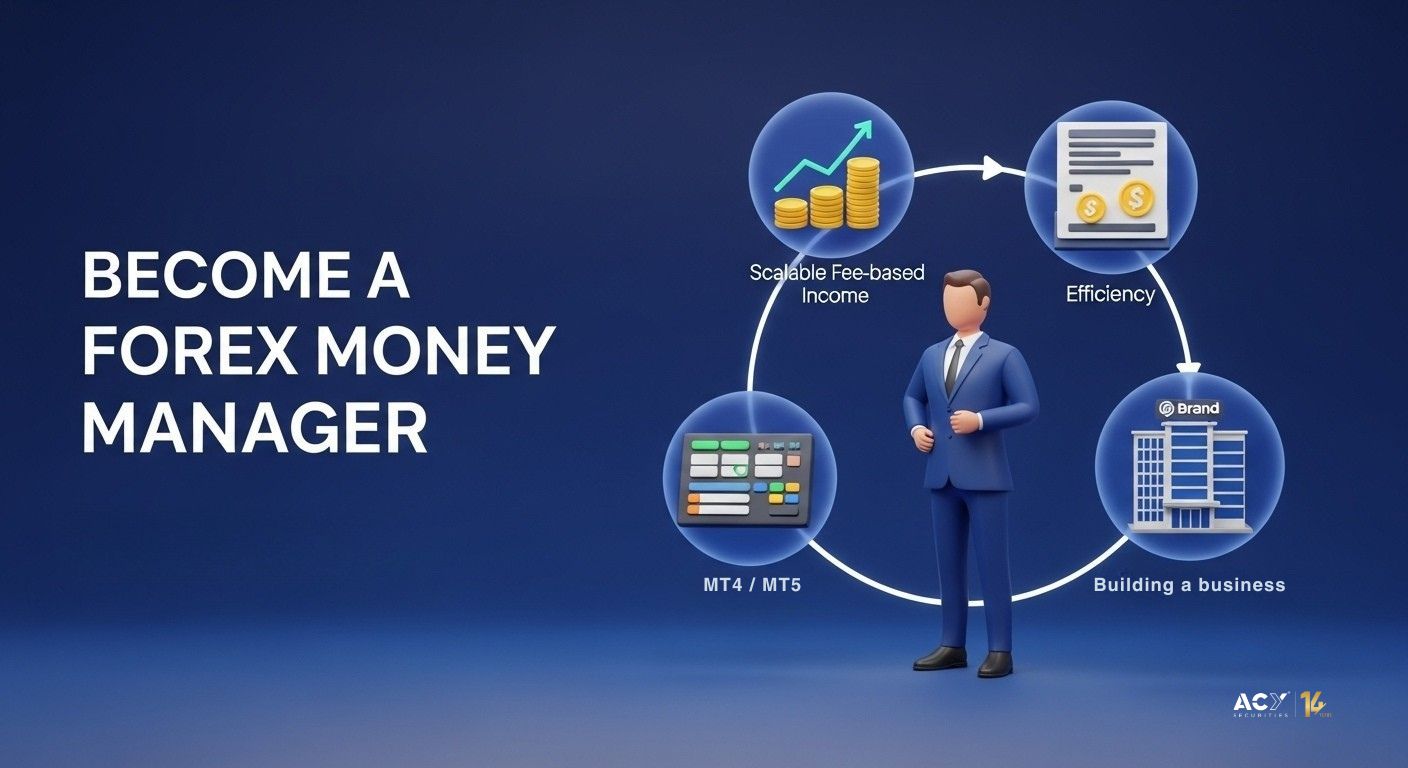
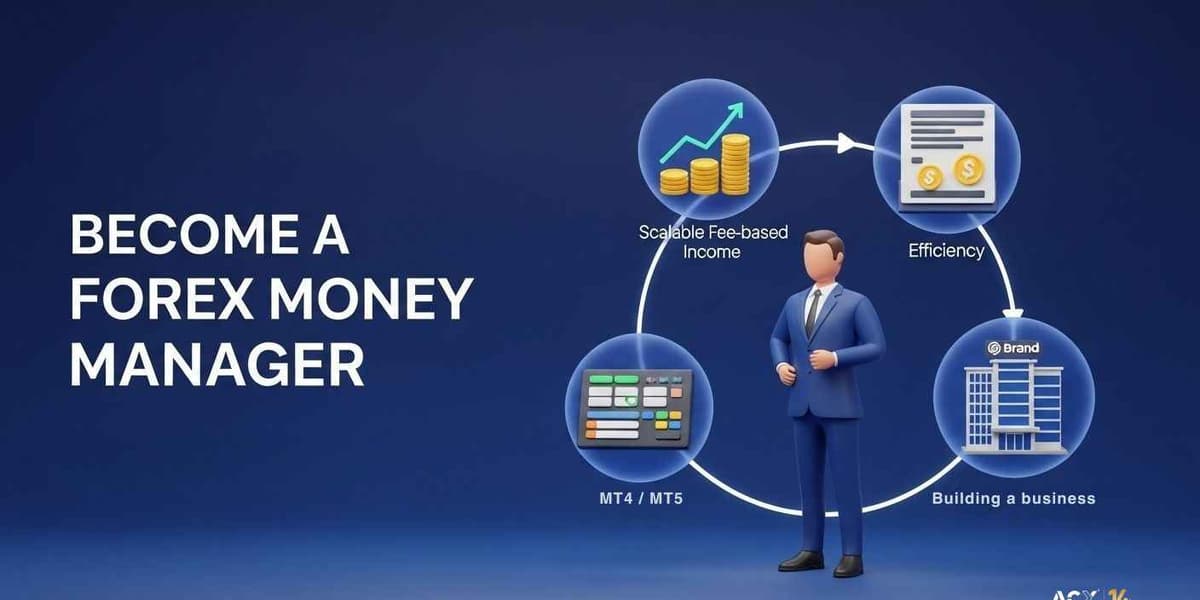
Scale Your Income: Move beyond the limits of your capital. As a Money/Fund Manager, you earn management and performance fees on your clients’ funds, creating a scalable revenue stream directly tied to your trading skill.
Trade with Maximum Efficiency: Stop juggling multiple accounts. Using MAM or PAMM software on platforms like MT4 and MT5, you can execute trades from a single master account that are automatically allocated across all your investors, saving time and eliminating errors.
Build a Professional Trading Business: Transition from a solo trader to the CEO of your own managed fund. This path allows you to build a reputable brand, attract significant capital, and create a lasting enterprise in the financial markets.
The Core Requirement: Success as a Forex Money Manager depends on having a proven strategy, understanding the right technology (MAM/PAMM), and partnering with a broker that provides the institutional-grade tools and support you need to grow.
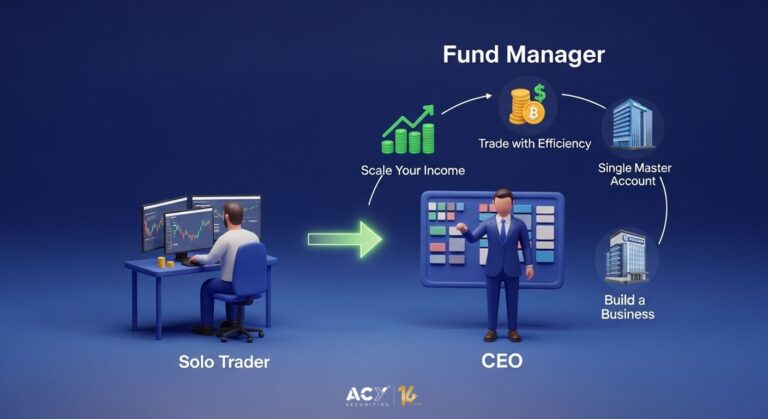
“A goal without a plan is just a wish.” – Antoine de Saint-Exupéry
You’ve honed your strategy. You can read the charts, manage risk, and consistently generate profits. But your growth is capped by a single, frustrating limitation: the size of your own trading account. You have the skill to manage a much larger portfolio, but your personal capital can only stretch so far.
What if you could decouple your income from the size of your bank account? What if you could apply your trading talent across a much larger pool of capital, transforming your solo operation into a full-fledged, scalable business?
Welcome to the world of the professional Forex Money Manager. This isn’t just a title; it’s the next evolutionary step for a successful trader. Using sophisticated technology and a strategic partnership, you can manage funds for multiple investors, streamline your trading, and build a career that truly reflects your expertise. Let’s explore the three transformative benefits of making this leap.
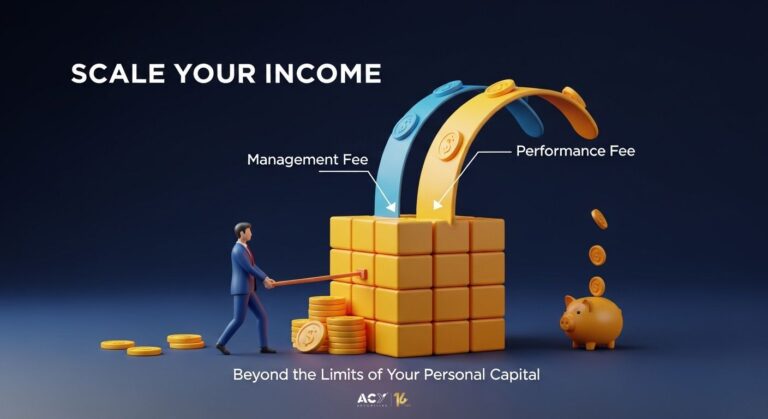
This is the most powerful and immediate benefit. As a solo trader, your profit is always a percentage of your own funds. A 10% gain is vastly different on a $5,000 account versus a $500,000 account. As a Money Manager, you break free from this constraint.
How does it work? You attract investors who entrust their capital to your strategy. Your income is then generated through a professional fee structure, which typically includes:
Management Fees: A small percentage of the total assets under management (AUM), paid to you regularly (e.g., annually) for your services. This provides a stable base income.
Performance Fees: A percentage of the profits you generate for your clients. This is where your skill is directly rewarded. The better you perform, the more you earn.
This model allows you to leverage your talent exponentially. Instead of making 10% on your own $10,000, you could be making a 20% performance fee on the profits from a combined $500,000 fund. Your understanding of the various MAM account allocation methods is crucial here, as it determines exactly how profits and fees are calculated and distributed, ensuring fairness and transparency for you and your clients.
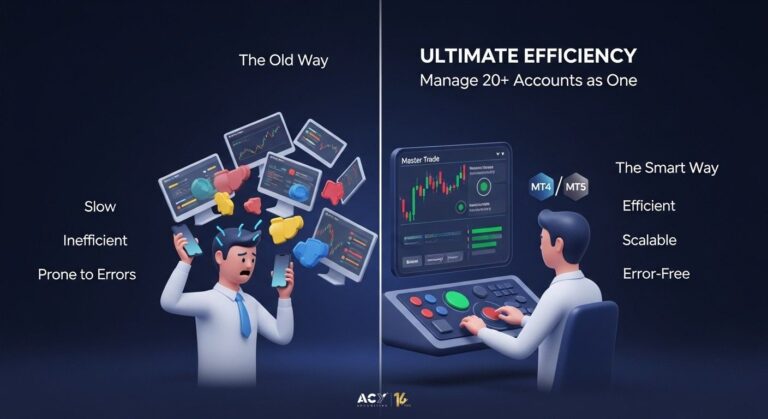
Imagine having 20 clients. As a solo trader, you would have to log into 20 different accounts, calculate position sizes for each one, and place 20 individual trades. The process would be slow, inefficient, and prone to costly errors. It’s simply not scalable.
This is the problem that professional Money Manager technology solves.
How does it work? By using a specialized software solution like a MAM (Multi-Account Manager) or PAMM (Percentage Allocation Management Module), you can manage all client funds from a single master account.
You log into one interface.
You execute one trade.
The software automatically allocates that trade across all your client sub-accounts instantly and based on your pre-set rules.
This is all made possible through powerful software integrated directly into leading platforms like MetaTrader 4 (MT4) and the more advanced MetaTrader 5 (MT5). Whether you need the flexible, customizable risk management of what a MAM account is or the straightforward pooled system of a PAMM, this technology is the engine of your business. Understanding the key differences outlined in a MAM vs. PAMM comparison will help you choose the perfect tool for your management style.

Becoming a Money Manager elevates you from a trader to an entrepreneur. You are no longer just trading the markets; you are building a brand, a reputation, and a legitimate business enterprise. You become the CEO of your own forex managed fund.
How do you build it?
1. Establish a Track Record: Your verified performance history on your master account becomes your most powerful marketing tool.
2. Attract Capital: With a proven record, you can attract more sophisticated investors and larger amounts of capital.
3. Market Your Brand: You can create a website, build a social media presence, and produce content that showcases your expertise. Many successful managers adopt principles from the ultimate forex affiliate marketing strategy blueprint to attract their first wave of clients and build momentum.
This transition from individual to business owner is profound. It allows you to build something with lasting value an asset that can grow far beyond your own ability to trade. Your partnership with a broker becomes critical, as they provide the institutional-grade infrastructure, regulatory trust, and support needed to operate a professional fund.
The journey to becoming a successful Money Manager is built on leveraging your trading skill with the right tools and strategy.
| Benefit | Key Advantage for the Manager | Implication for Your Investors |
| 1. Scalable Income | Earn performance and management fees on a large pool of capital. Your income is no longer limited by your personal funds. | Investors gain access to your expert strategies without needing to trade themselves. Their success is tied to yours. |
| 2. Trading Efficiency | Manage hundreds of accounts as easily as one, using MAM/PAMM technology on MT4/MT5 to save time and eliminate errors. | Investors receive swift and precise trade execution, ensuring they get performance that accurately reflects your master strategy. |
| 3. Business & Brand | Build a reputable enterprise, attract significant capital, and create a long-term asset. You are the CEO of your own fund. | Investors can confidently place capital with a professional, branded entity rather than just an individual, increasing trust and security. |
The transition to becoming a Forex Money Manager is a natural progression for any talented and ambitious trader. It’s a path that rewards expertise with scalability, efficiency, and the opportunity to build a real business.
It begins with a proven strategy, is powered by sophisticated technology like MAM and PAMM, and is supported by a broker who understands the needs of a professional fund manager. If you’re ready to break through your ceiling, this is your blueprint.
Q1: What qualifications do I need to become a Forex Money Manager?
While a formal financial degree isn’t always required, you absolutely need a verifiable and profitable trading track record. This is your primary qualification. Depending on your jurisdiction, you may also need to be licensed or regulated to legally manage funds for others.
Q2: How much can a Forex Money Manager make?
There is no upper limit. A manager’s income is determined by their performance and the amount of capital they manage (AUM). Successful managers overseeing large funds can earn six or seven-figure incomes annually through a combination of management and performance fees.
Q3: Is being a Money Manager the same as being an Introducing Broker (IB)?
No. An IB refers clients to a brokerage in exchange for a commission on their trading volume. A Money Manager directly trades on behalf of clients using MAM/PAMM technology and earns fees based on performance and assets under management. It is a more hands-on and involved role.
Q4: Which is better for a new Money Manager, MAM or PAMM?
PAMM is often simpler for new managers as the profit/loss distribution is straightforward (percentage-based). MAM offers more flexibility to set different risk parameters for different clients, which is powerful but more complex. The best choice depends on your business model and client base.
For more detailed insights on developing daily trading routines, risk management, and effective position sizing strategies, explore additional articles on ACYPartners. Our experts at ACY and FinLogix are also great resources to guide your journey towards trading excellence.
Launched in 2020, ACY Partners is a special division of ACY Securities that is dedicated to attracting and servicing partners.

Select the categories and companies you wish to follow directly to your person rss feed.
Create Custom RSS FeedSign up and join over 5,000 professional members who receive personalized news alerts, curated professional connections, and more for free!
Standard Chartered has signed definitive agreements to acquire 100% of Zodia Custody UK Limited, folding its regulated digital asset custody business into Securities Services. Zodia Solutions will be set up under SC Ventures with bank investors including Northern Trust, NAB Ventures, Emirates NBD and Investcorp.
Bybit Fintech FZE has secured a Virtual Asset Service Provider licence from Dubai’s Virtual Assets Regulatory Authority for Exchange Services, covering spot trading. Bybit’s Peter Loo said the firm hopes to add derivatives, subject to regulatory approvals. Its international Dubai headquarters opened in 2022.
ATFX Connect has released its Q4 2026 Institutional Edge, examining the geopolitical, monetary policy and fiscal pressures shaping global financial markets in the final quarter of the year.
The Nasdaq 100 is trading at 29,382. After reaching a recent high of 29,957, the index reversed sharply and has been recording a series of lower highs and lower lows.
propfunding.com's free-entry instant funding changes the order of prop funding. Start trading first. Its free-entry instant funding model offers two qualification attempts without an upfront activation fee.
FM Summit London returns to Old Billingsgate on 24 November 2026 for its 15th edition, with a curated one-day format aimed at senior executives. LMAX Group, Plus500, oneZero and MetaQuotes are among confirmed exhibitors, with Business Connect meetings, roundtables and an opening event at The Folly on 23 November.
GCEX has launched European-style, fiat-settled options on Bitcoin and Ethereum with monthly expiries for eligible professional and institutional clients. The service runs through the GCEX OTC desk, with pricing from Tier 1 liquidity providers and reporting on XplorPortal. GC Exchange Limited is authorised by the UK FCA
Wall Street closed mostly higher on Tuesday, led by a nearly 1% gain in the Dow. In Asia, South Korea’s Kospi rebounded 2.7% and Japan’s Nikkei gained 0.8%.
Brent crude is trading at $111.70. The latest price action show the recovery continuing toward $111.70, suggesting that demand has returned after the sharp correction.
FOREX.com has introduced weekend trading for US SP 500 and US Tech 100 CFDs in Japan, operated by StoneX Securities Co., Ltd., a StoneX Group Inc. subsidiary. Investors can manage positions seven days a week, including Saturday and Sunday sessions, without waiting for underlying markets to reopen on Monday.