just now

Liquidity Finder Ltd is incorporated in England and Wales, company number 10610740, registered address 167-169 Great Portland Street, Fifth Floor, London W1W 5PF, United Kingdom.
Published: just now


As tariff tensions grab headlines and markets brace for geopolitical shockwaves, a less dramatic but more strategic shift is taking shape: Several countries are signaling a willingness to cooperate with U.S. trade policies, rather than resist them outright.
This evolving global response — marked by bilateral talks, strategic silence, or even alignment — is reshaping how investors interpret the risks. It’s also playing a key role in why U.S. equities are holding firm, even as trade friction heats up.
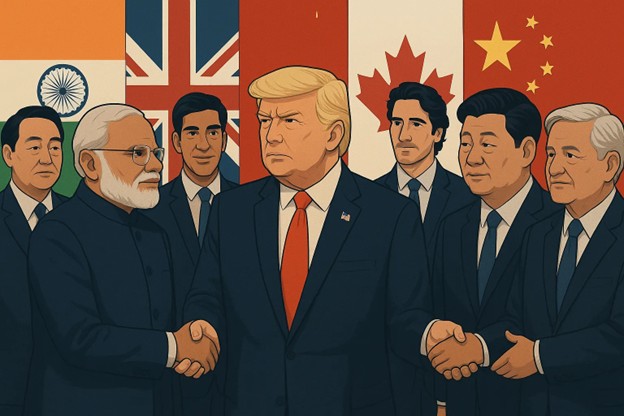
In contrast to threats of retaliation from China and the European Union, some U.S. allies are moving to negotiate, realign, or quietly comply with Washington’s tariff agenda.
Countries Engaging with the U.S. Constructively:
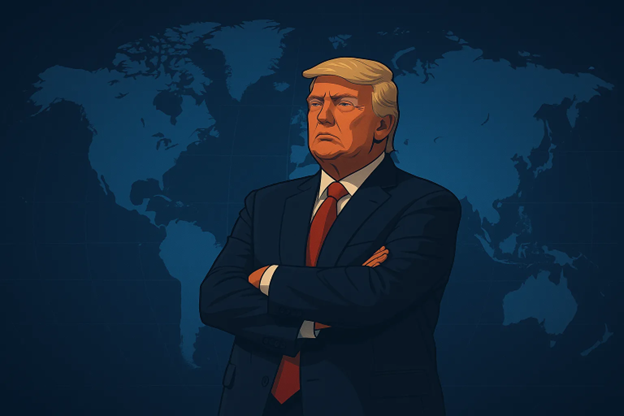
This willingness to cooperate sends three key signals to market participants:
1. The U.S. Still Holds the Upper Hand
Despite noise around de-dollarization and multipolarity, the U.S. remains the largest consumer economy, a tech powerhouse, and the issuer of the global reserve currency. Allies understand that access to U.S. markets and capital outweighs short-term political point-scoring.
2. Bilateralism Is the New Globalism
Instead of large multilateral deals, we are witnessing a pivot to targeted bilateral trade alignments. Nations want predictable access to markets — and bilateral deals with the U.S. are increasingly seen as the fastest, most pragmatic route.
3. Policy Over Populism
Many governments are choosing economic survival over political symbolism. They are acknowledging that alienating Washington could come at a greater cost than recalibrating trade terms.

Despite tariff threats and retaliatory talk, U.S. equities — particularly the Dow, Nasdaq 100, and S&P 500 — are showing remarkable composure. Here’s why:
1. Dow Jones (Industrials & Exporters)
2. Nasdaq 100 (Tech & Growth)
3. S&P 500 (Broad Index)
The market doesn’t need to trade peace — it needs predictability. When allies show willingness to engage with U.S. policies, it limits escalation risk, allowing equity markets to price in resilient earnings, favorable liquidity, and manageable geopolitical risk.
“In geopolitics, perception is everything. When the world shows it’s still willing to deal with Washington, markets interpret that as control — not chaos.”
Learn how to navigate yourself in times of turmoil. Check out my market education links:
Want to learn how to trade like the Smart Money? Check out my new contents:
https://acy.com/en/market-news/education/smc-playbook-series-beginners-guide-j-o-04032025-155530/
Follow me on LinkedIn: https://www.linkedin.com/in/jasperosita/
This content may have been written by a third party. ACY makes no representation or warranty and assumes no liability as to the accuracy or completeness of the information provided, nor any loss arising from any investment based on a recommendation, forecast or other information supplies by any third-party. This content is information only, and does not constitute financial, investment or other advice on which you can rely.
ACY Securities is one of Australia's fastest growing multi-asset online trading providers, offering ultra-low-cost trading, rock-solid execution, technologically superior account management and premium market analysis.

Select the categories and companies you wish to follow directly to your person rss feed.
Create Custom RSS FeedSign up and join over 5,000 professional members who receive personalized news alerts, curated professional connections, and more for free!
CMC Markets has retired the CMC Connect name and will now present its institutional business as CMC Markets Institutional.
The SEC has approved Cboe's binary options tied to key performance indicators reported by 23 companies, covering more than 100 metrics such as iPhone revenue. The cash-settled contracts pay a fixed $1, Robinhood plans to be the first retail broker to offer them, and trading awaits clearing registration.
Gold is trading around $4,150, recovering sharply after falling to a recent low of $4,073.

Global semiconductor and technology stocks sold off sharply on Thursday, with South Korea’s SK Hynix plunging over 10% and Samsung Electronics falling more than 8%.
Learn gold market structure to identify bullish, bearish and ranging XAUUSD trends using higher highs, higher lows, lower highs and lower lows, support and resistance.
Axi has launched an MCP integration connecting eligible MT5 accounts to Claude, allowing clients to access live market data, track positions, execute trades and update risk parameters through the AI assistant developed by Anthropic. Available to eligible Axi clients with an active MT5 account. Setup runs via Claude.ai.
Movantis has selected Integral to extend its FX liquidity offering for institutional clients including banks, payment networks and digital asset operators, adding an institutional trading platform, direct-to-client API trading and API connectivity into a third-party multi-dealer venue, supporting regional expansion.
Running a venue around the clock is the easy part. Pricing risk when the market underneath it is shut is not. Lars Holst, CEO of GCEX explains how to manage risk in 24/7 markets.
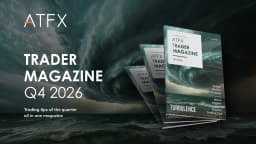
ATFX has released its Q4 2026 Trader Magazine, offering a closer look at the macroeconomic and market forces that could shape trading conditions in the final quarter of the year.
LSEG has announced a collaboration with NVIDIA that lets financial institutions analyse years of LSEG Tick History data in seconds using NVIDIA cuDF on GPUs, without creating another full copy of the dataset. Tick History holds 110 trillion rows across 100 million instruments and more than 580 venues and contributors.