just now


Liquidity Finder Ltd is incorporated in England and Wales, company number 10610740, registered address 167-169 Great Portland Street, Fifth Floor, London W1W 5PF, United Kingdom.
Published: just now
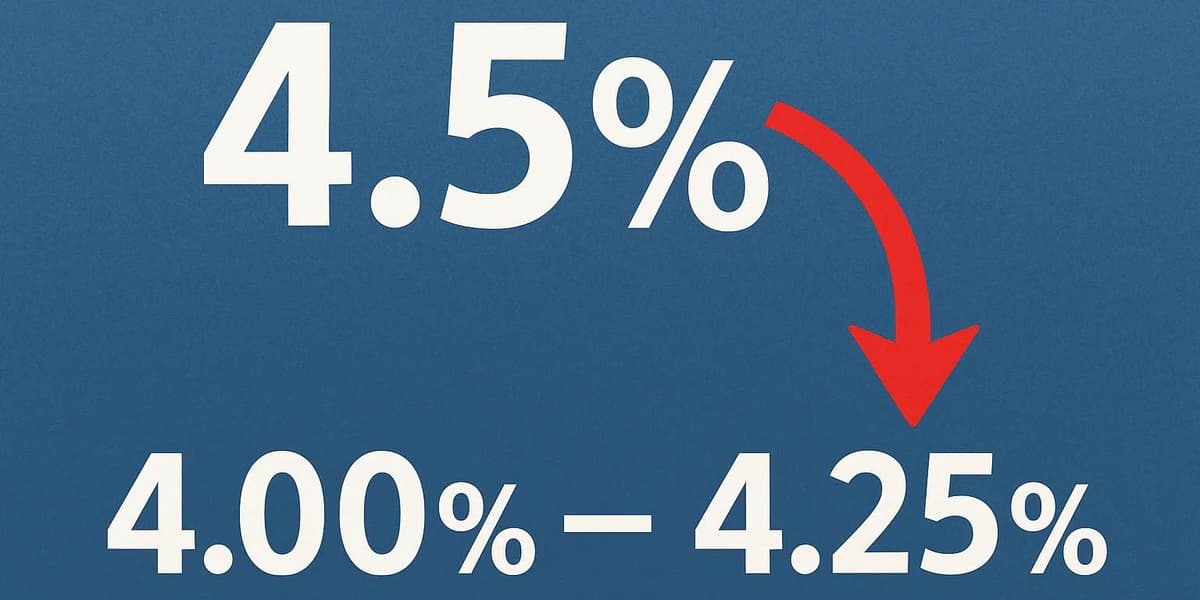
The Federal Reserve delivered its first rate cut since December 2024, lowering the federal funds target range by 25 basis points to 4.00% – 4.25%. Officials signalled two additional cuts this year, citing slowing job growth, a modest uptick in unemployment, and inflation that remains above target but is seen as more manageable. The vote was not unanimous, with Governor Miran dissenting in favor of a larger 50bps move.
From a policy perspective, this marks the beginning of an easing cycle. The Fed is effectively shifting its balance of risks away from runaway inflation and toward concerns about a softening labour market. The implication for markets: monetary conditions are turning more supportive, but for reasons tied to weaker growth.
At first glance, equities welcomed the cut — lower borrowing costs and a steeper yield curve tend to support risk assets. Tech and growth sectors benefit directly from lower discount rates, while banks gain if the curve steepens. Rate-sensitive segments such as REITs and utilities also find near-term support.
However, the second-order implication is more nuanced. The Fed is cutting because the labour market is weakening. If jobs slow materially, that translates into earnings downgrades in coming quarters. In other words, the equity market may initially rally on liquidity, but it must eventually reckon with weaker fundamentals.
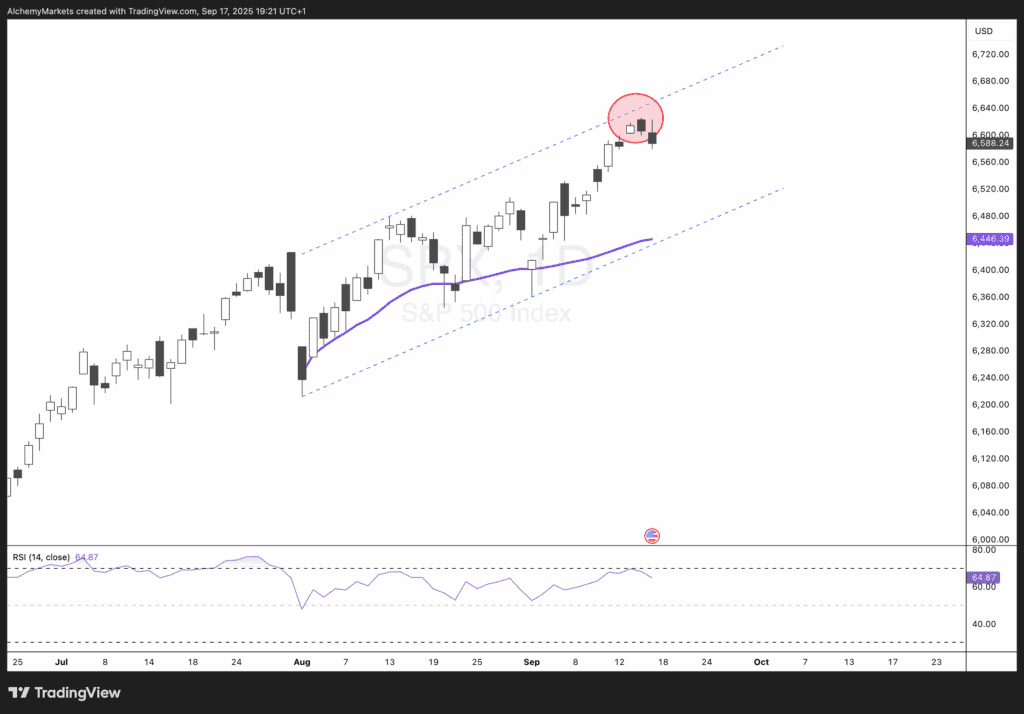
On the chart, the S&P 500 Index (SPX) has rallied sharply into the upper boundary of its rising channel. Price action is now pressing against resistance, highlighted by the recent cluster of candles near 6,600. This is a critical juncture:
The Fed has opened the door to easing, and equities are testing the upper bounds of optimism. The immediate direction of SPX hinges on whether liquidity flows dominate (Scenario B/C) or whether growth concerns take precedence (Scenario A).
Investors should respect the technical channel as a guide but remain aware that policy-driven markets often overshoot. In this environment, near-term rallies are tactical opportunities, not structural certainties. The sustainability of the move will ultimately depend on upcoming labor data, inflation prints, and how quickly earnings expectations adjust to the Fed’s new reality.
Alchemy Markets is a multi-asset brokerage providing retail traders with the same elite trading conditions, tools, and transparency typically reserved for institutions.

Select the categories and companies you wish to follow directly to your person rss feed.
Create Custom RSS FeedSign up and join over 5,000 professional members who receive personalized news alerts, curated professional connections, and more for free!
During Forex Expo Dubai 2026, Adnan Khan, CEO of 4XPORTAL, met with Sam Low, the founder of Liquidity Finder.
ATARIA CRM is a centralized platform designed for fintech teams to manage account operations, verification, fund management, and support in one place. With desktop and mobile access, it helps businesses stay connected, organized, and efficient.
EUR/AUD hits the 1.60500 target after rejecting 1.61715–1.62300 resistance. Review the bearish price action setup and why trade confirmation mattered.
Get an inside look at how rising Treasury yields and sector shifts into healthcare are impacting S&P 500 market dynamics, technical levels, and key economic drivers.
Understand XAUUSD support and resistance with simple gold chart examples. Learn to identify key zones, assess price reactions, and avoid beginner mistakes.
CMC Markets, a FTSE 250 multi-asset financial services firm, has launched a read-only ChatGPT integration for UK CFD clients, giving access to balances, positions, orders, pricing and historical market data through conversational prompts, as part of its ongoing investment in AI and cloud technology.
DXtrade, the multi-asset trading platform from Devexperts, has integrated Notofin's trading performance intelligence solution, adding behaviour-first analysis, structured journaling and pattern recognition tools. Brokers licensing DXtrade can now offer Notofin's services to clients as part of the platform's open integration framework.
KYC is essential for building trust, preventing fraud, and meeting regulatory requirements. A centralized system like ATARIA CRM helps compliance teams manage KYC requests, track pending documents, monitor approvals and rejections, and keep the entire verification process organized. By quickly identifying pending issues, businesses can reduce delays and provide customers with a smoother path from “Pending” to “Approved.”
Build better trading habits with a trading journal. Learn how a trading memory bank helps you review mistakes, manage emotions, and develop confidence.
GBP/USD has fallen to 3-month lows near 1.3200 due to strong US economic data and weakening UK consumer demand, though technical indicators like an RSI of 25.18 suggest the pair is now in oversold territory near key support at 1.3150.