just now


Liquidity Finder Ltd is incorporated in England and Wales, company number 10610740, registered address 167-169 Great Portland Street, Fifth Floor, London W1W 5PF, United Kingdom.
Published: just now

Goal of This Lesson:
To teach you exactly where liquidity hides on your chart, and how to distinguish between External Range Liquidity (ERL) and Internal Range Liquidity (IRL). These two zones work together like offense and defense in a game—you hunt in one, and you enter in the other.
By the End of This Lesson, You Should Be Able To:
Let’s Start With a Question:
Where do most traders put their stop-losses?
And where do most breakout traders enter?
That’s where liquidity pools form.
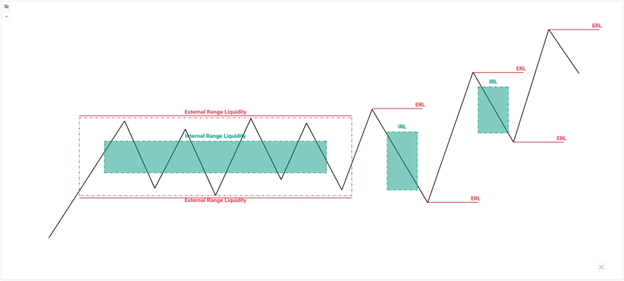
Think of ERL as the bait smart money uses to trap retail traders.
These are levels outside the current price range where:
ERL Levels:
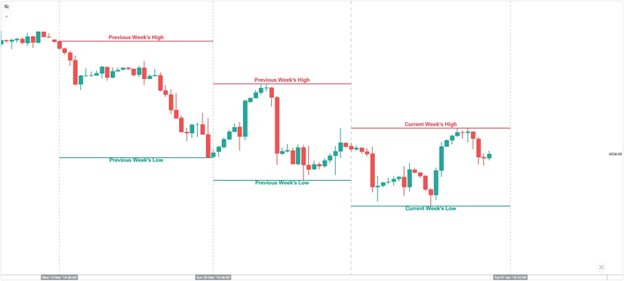
This is the highest high and lowest low that price traded to during the span of the week.
This is usually targeted to be reached at the end or during the week.
The key here is analyzing price and anticipating a draw on the previous highs / lows given that we have a direction in mind.
2. Previous Day High (PDH) / Previous Day Low (PDL)
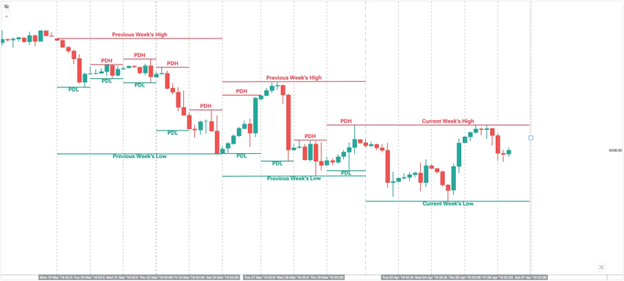
This is the highest high and lowest low that occurred during the day.
Unlike the weekly, the daily highs and lows are used by day traders or scalpers as target for the day and potential continuation to the direction of the previous day’s candle.
3. Previous Session High/Low
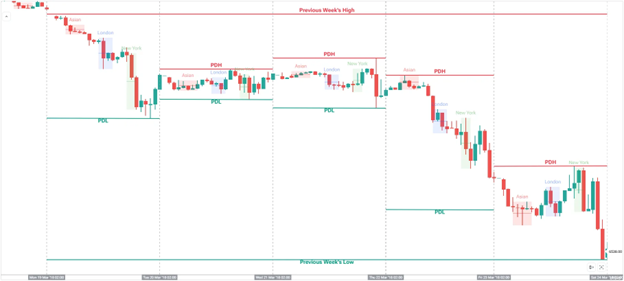
These levels are based on time:
Reversals often occur on these levels.
Smart money targets these levels to:
In short, smart money institutions target these levels for the sake of filling orders. Remember, institutions need a large number of resting orders so they could get in in the market.

Imagine a lion hunting a herd of deer. The lion doesn’t chase the deer into the open field. Instead, it waits near the waterhole—the predictable place where deer always gather.
ERL = The Waterhole.
That’s where stop-losses gather. That’s where price will be lured.
Price will always move to a level where there is a resting order, whether it is a high, a low, or even volume imbalances located inside those highs and lows.
Once price sweeps external liquidity, it doesn’t just drop endlessly or fly without pullback. Institutions often re-enter, add to their positions, close their hedges during the retrace. That retrace often targets Internal Range Liquidity.

When price breaks out of a range, this usually triggers buy orders with stop-loss orders just below the breakout level. Reversal traders also get involve and most of those traders, get into short positions blindly without understanding what the current trend is. We will also discuss this in Part 4 on how to determine the trend using market structures.
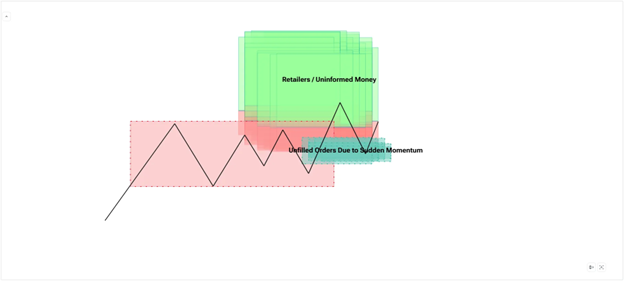
The sudden move outside of the range causes a rush for traders to get in with a “FOMO” mindset. The momentum also causes price to leave Gaps, often called Fair Value Gaps or Volume Balances, which we will discuss in a while, unfilled orders they COULD return to through a pullback or retracement to fill their positions.
Theories for the retracement:
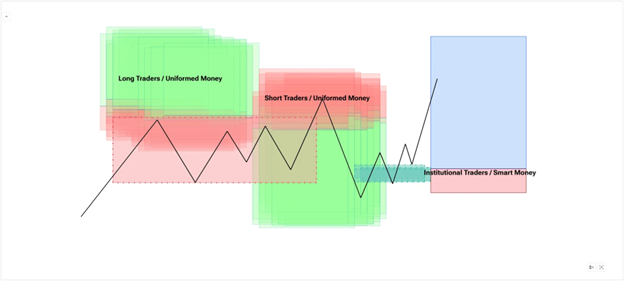
Institutions will fill as much as it can all the available or resting orders so they can get filled with all their positions.
IRL is inside the price leg. It forms as a result of displacement or a sudden move of price, and the most precise tool to spot it is the Fair Value Gap (FVG).
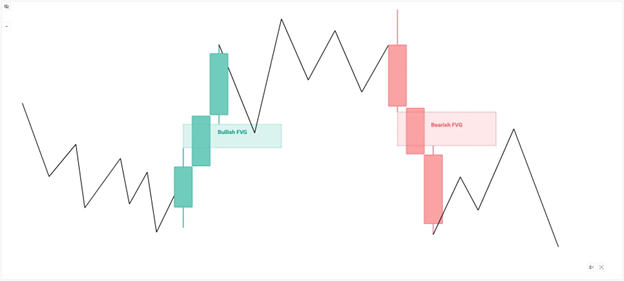
FVG Parameters:
No Fair Value Gap Below
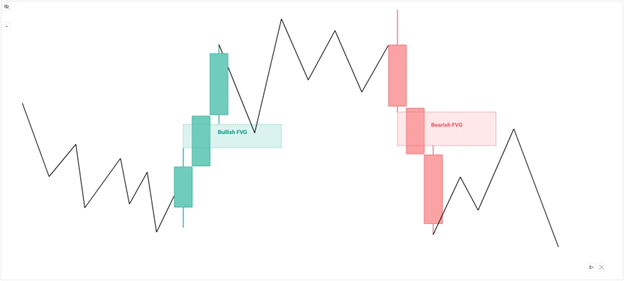
In this case, the middle candle is not considered as an FVG the momentum left no gaps for price to trade to.
The premise is, there are no more “un-filled orders”.
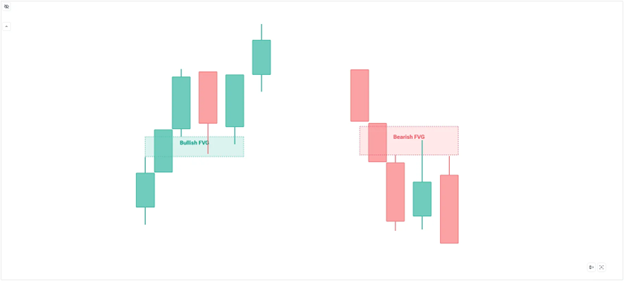
A good fair value gap is where price just touches it and moves away from it fast and going to the direction of the current trend.
Where IRL Shows Up:
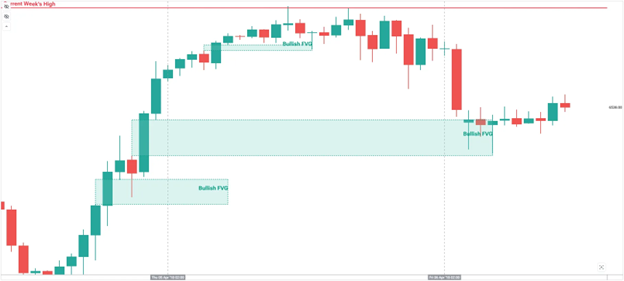
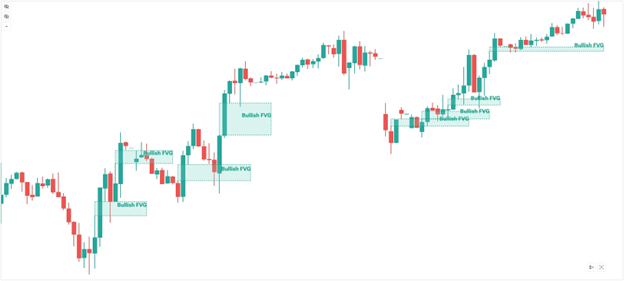
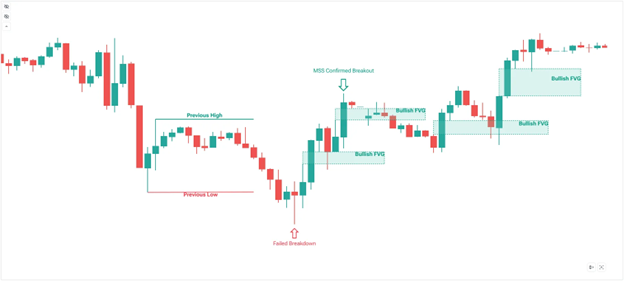
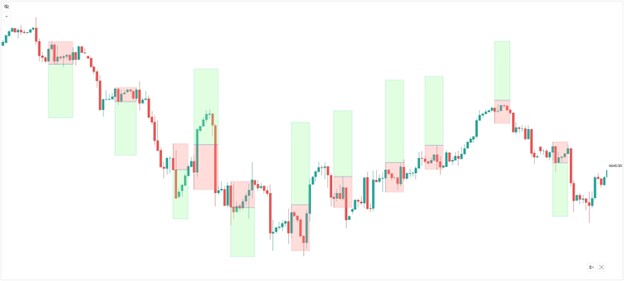
Here’s the institutional flow:
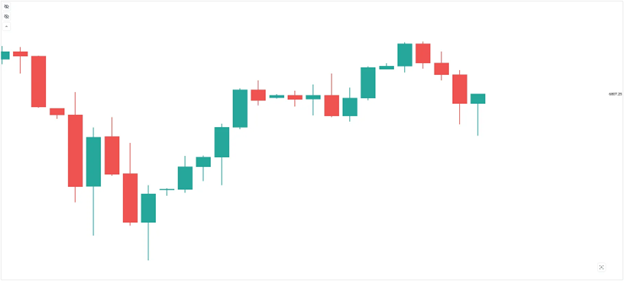
After coming from a downtrend, we are now on a bullish sequence.
We follow the higher timeframe trend at the lower timeframes which in this case is bullish.
2. Mark your ERL levels:
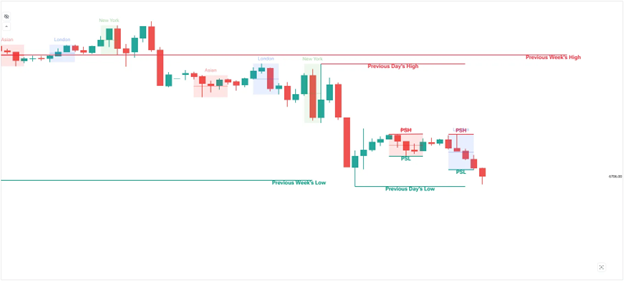
3. Wait for price to sweep that level → grab liquidity
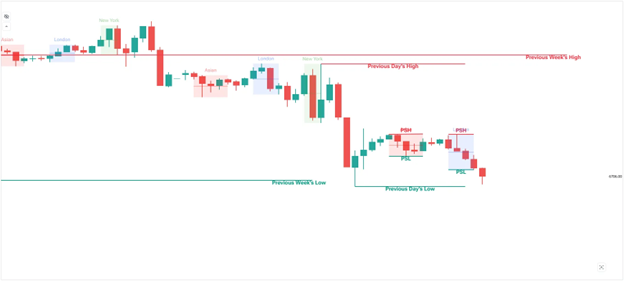
In this case, prior to our trading day, the Previous Week’s Low has already been tapped. And at the current day, the Previous Day’s Low has also been tested.
After touching the low, price reacted bullishly, taking out the sell orders, and potentially proceed to the upside.
To confirm this liquidity being grabbed:
4. Watch for MSS (intent confirmed)
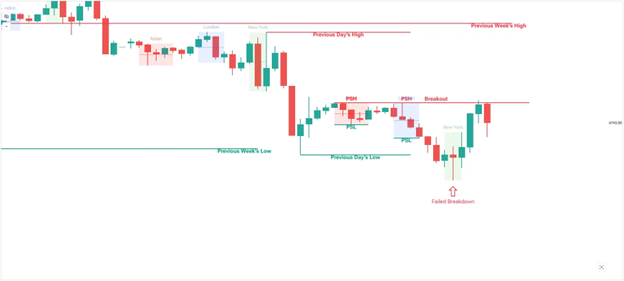
There must be a breakout on the opposing side to confirm the market has already shifted from a bearish stance to bullish.
5. Entry on IRL (FVG) during retrace with stops behind the:
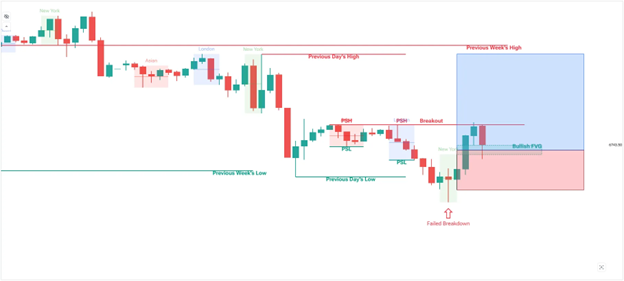
6. Target the next ERL
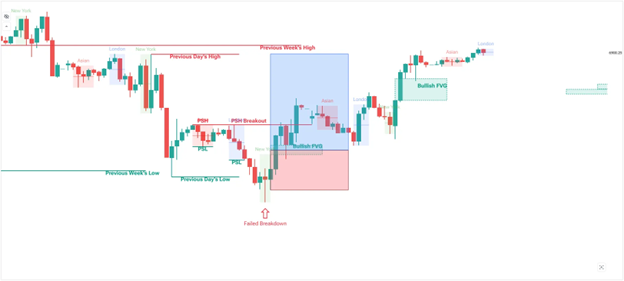
They work like magnets and entry points.
ERL is the target. IRL is the entry.
Beginner Trap to Avoid:

Many retail traders see price hit a previous high and immediately buy the breakout. That high is ERL—it’s not an invitation to enter, it’s a warning that liquidity is about to be collected.
Once you train your mind to say:
you’ve officially started thinking like smart money.
Pro Tip:
Before looking for a trade, wait first for key levels or ERLs to get taken out first and observe price on a lower timeframe like 1-Hour to confirm if that level is being taken out or not.
A good sweep is where price does not trade or close beyond the level then reverses with a new FVG to trade at.
Transition to Part 3: From Identifying Liquidity to Understanding Price Behavior
Now that you know where liquidity hides—External for targets, Internal for entries—you’re beginning to see how smart money maps out its traps and setups. But there’s more to this game than just marking levels.
Liquidity doesn’t just exist in a vacuum—it works hand-in-hand with how price moves. You’ve seen how price hunts ERL and retraces to IRL. But what tells you that the move is real? That the shift in direction is valid?
This is where displacement and intent come in—and that’s exactly what we’re diving into next.
In Part 3: Understanding Displacement and Confirming Market Intent
You’ll learn how to:
This content may have been written by a third party. ACY makes no representation or warranty and assumes no liability as to the accuracy or completeness of the information provided, nor any loss arising from any investment based on a recommendation, forecast or other information supplies by any third-party. This content is information only, and does not constitute financial, investment or other advice on which you can rely.
ACY Securities is one of Australia's fastest growing multi-asset online trading providers, offering ultra-low-cost trading, rock-solid execution, technologically superior account management and premium market analysis.

Select the categories and companies you wish to follow directly to your person rss feed.
Create Custom RSS FeedSign up and join over 5,000 professional members who receive personalized news alerts, curated professional connections, and more for free!
The AI trade has always been a supply chain story. For the past two years, the narrative has been simple: insatiable demand for compute infrastructure, constrained supply at every choke point, and the companies that own the bottlenecks collect the toll. NVIDIA on GPUs. ASML on lithography. Samsung, SK Hynix, and Micron on memory. The entire semiconductor complex has traded on scarcity, and scarcity has delivered historic margins.
Interactive Brokers reported customer equity of USD 964.7 billion at the end of the third quarter, up 27% year on year, as customer accounts increased 35% to 5.58 million.
Crypto exchange BingX has secured a Markets in Crypto-Assets Regulation (MiCA) licence for its European arm from Austria's Financial Market Authority (FMA).
CXM Group has agreed to acquire TD Markets (Pty) Ltd, a Johannesburg-headquartered broker authorised by South Africa’s FSCA. TD Markets keeps its brand, team and licence, and Amar Ramith stays as CEO. Financial terms were not disclosed. The deal gives CXM a regulated base in South Africa. Clients need take no action.
Global equities under pressure: Hotter than expected US inflation and rising yields weighed on stocks, particularly technology and semiconductor shares.
Understand trading psychology and learn how a clear strategy, risk management and a trading journal help build discipline and day trading consistency.
Ripple Prime has launched support for real-world asset perpetual swaps, giving institutional clients including Virtu exposure to more than 100 reference markets across equities, indices, ETFs, metals, energy and FX. The swaps reference Trade.xyz perpetual futures on Hyperliquid and trade and settle around the clock.
iSAM Securities Apex has integrated with Crossover Markets, connecting brokers to CROSSx, its institutional digital asset ECN, through Apex’s ultra-low-latency technology stack.
Your Bourse and 4XPORTAL highlight their existing partnership, combining client onboarding, CRM and payment solutions with liquidity, execution and risk-management infrastructure for brokers.
The partnership brings together 4XPORTAL’s brokerage technology capabilities with Your Bourse’s connectivity, liquidity aggregation, and risk-management infrastructure.