just now

Liquidity Finder Ltd is incorporated in England and Wales, company number 10610740, registered address 167-169 Great Portland Street, Fifth Floor, London W1W 5PF, United Kingdom.
Published: just now
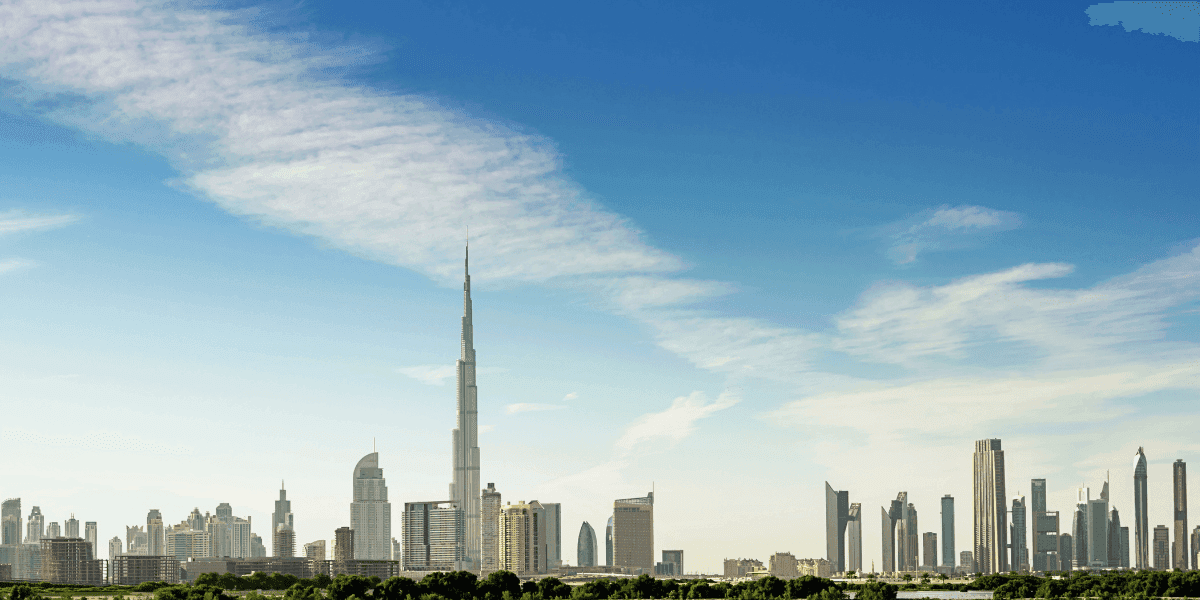
Dubai has spent the better part of the last decade positioning itself as one of the world's premier destinations for financial markets and fintech events. The combination of world-class venues, straightforward visa access, a genuinely international business community, great hotels and the ability to get senior people in a room from across Asia, Europe, Africa and the Americas has made it a world destination for events and conferences. For firms operating in institutional FX, digital assets, payments and trading technology, a trip to Dubai two or three times a year has become as routine as any other part of the business calendar.
That calendar has taken a significant hit in recent weeks.
Last week I received a note from the organisers of DAF Abu Dhabi, a digital assets forum originally scheduled for May, informing me the event has been postponed pending confirmation of new dates. It is far from alone. TOKEN2049 Dubai, one of the world's largest cryptocurrency conferences, has pushed its April 2026 edition all the way to April 2027, citing regional instability and safety concerns for international attendees. AIM Congress 2026, the largest event for buy-side investors, has shifted the date of its flagship event from April to September 2026. The World Economic Forum rescheduled its Global Collaboration and Growth Meeting, which had been planned for Jeddah. Formula 1 confirmed that the Bahrain and Saudi Arabian Grands Prix would not take place. The Affiliate World Dubai conference and ATP Challenger Tour tennis tournaments at Fujairah have also been affected.
Dubai International Airport is open and operating, but not at full capacity. Emirates is flying to 125 of its usual 140 destinations, while flydubai is running at around 40% of its pre-conflict schedule. European carriers are largely absent: British Airways and Lufthansa Group are suspended through the end of May, with BA confirming a return on July 1 at a single daily flight rather than the three it operated before. For anyone trying to bring several hundred international delegates to Dubai in April or May, it is clearly best to postpone.
In the events world, it is definitely not business as usual. But the pattern is consistent: events are being postponed, not cancelled. One can only imagine the stress that the organisers of these events are going through but by all accounts local authorities are doing their best to make the best of the situation and accommodating the revision of schedules, often very last minute. Most organisers have rescheduled to later in 2026 rather than pulling out altogether. The underlying confidence in the region as a destination for serious international gatherings appears intact, with the intention being that things will normalise at some point soon.
The business community on the ground in the UAE is being stress-tested right now. From what I'm hearing though, it's holding up very well.
With the omnipresent threat of further serious escalation we checked in with a few brokers in Dubai to understand their assessment of the current situation. There is a mood of almost defiant optimism. The brokers we spoke to see this as a stress test. One which is reinforcing confidence in the region's institutional strength, infrastructure depth, and long-term strategic positioning. Some brokers in the region are reaffirming their commitment to a market that has repeatedly demonstrated its ability to absorb shocks and will most likely emerge stronger when we come out the other side of this. One broker I spoke with last week confirmed that flights in and out of the country seem to be near normal capacity. The only change he has made is that when he meets up with friends in the evening, they choose less crowded places to socialise. How the rest of the world sees Dubai right now is important for business confidence, both for those on the ground there, and for those considering a move to the region.
Concerns about the impact of the current crisis have prompted firms to formalise contingency strategies. With operations potentially under threat and under stress, alternative solutions come to mind to secure operations and calm nerves. The tensions have also affected hiring plans for some firms, while others remain adamant on their long-term strategies and maintain their confidence in the UAE as the appropriate destination for their businesses.
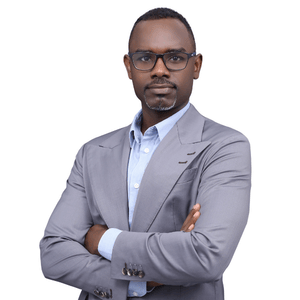
Hani Abuagla, Senior Market Analyst, XTB MENA
"Contingency planning is simply part of responsible management and helps navigate stress periods and swift changes in market conditions. However, we remain committed to the UAE and our plans here, and this confidence extends to a large number of firms and people. As a result, Dubai should be able to continue to attract high-calibre professionals and has proven itself to be a resilient hub before and during the current tensions. The reality is that most of us still want to be here."
Hani Abuagla
Senior Market Analyst, XTB MENA
While some firms have identified alternative locations, these are being considered as alternatives rather than replacements. Any decisions around potential relocation are driven by regulatory alignment, connectivity, and operational continuity. Several executives note that the attraction of Dubai's ecosystem continues to outweigh any short-term uncertainties in the eyes of both existing employees and prospective hires.
Questions of infrastructure resilience, power, water, and international travel connectivity, have moved up the agenda in recent weeks. On each count, the UAE has largely held the line. Airports have remained operational throughout, though at reduced capacity as disruptions have persisted.
"The UAE's infrastructure has been built with redundancy and scalability in mind over multiple years. The long-term and proactive approach of the authorities has enabled the resilience we are currently witnessing. From data centers to aviation links, the systems in place are among the most advanced globally. We've seen no material disruption to vital infrastructure even under stress, and this extends to client onboarding and travel."
Hani Abuagla
Senior Market Analyst, XTB MENA
Some firms report minor delays and a little more caution among international visitors but nothing that has meaningfully disrupted business, deals, or the movement of people. The UAE continues to plan alternative routes for its logistics and puts in place initiatives to support the economy, further reinforcing confidence in the system's ability to adapt under pressure. East-coast ports in the UAE, combined with regional land bridges, have collectively helped maintain trade flows, though these alternatives are more expensive and slower than the direct Hormuz corridor, and smaller ports cannot fully absorb the volume of the major Gulf terminals.
While the immediate geopolitical developments point to disruption risks, contingency planning, and various other issues, some firms in the UAE are squarely maintaining a focus on the long term. The UAE has bounced back from worse. And if the current tensions prove temporary, which remains a credible outcome, this period may ultimately be remembered as little more than a stress test it passed.
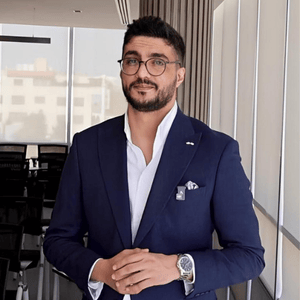
Mahmoud Mashal, Senior Market Analyst, VT Markets
"At this stage, VT Markets' approach remains tactical. We have introduced flexibility where needed, particularly around remote work, to ensure continuity and to support our teams in operating under the most stable conditions possible. But we are not operating without a longer-term lens; we have clearly defined internal trigger points, including regulatory changes, constraints on talent mobility, capital accessibility, and any disruption to core infrastructure."
"When it comes to structural decisions, we are very disciplined. We don't make those in response to temporary pressure. As of today, the UAE remains a strategically superior base. Not just in terms of infrastructure and regulations, but also in terms of stability. Under its leadership, the UAE has consistently demonstrated that the safety and well-being of everyone in the country is a top priority, and that gives us a high degree of confidence even during periods of uncertainty."
Mahmoud Mashal
Senior Market Analyst, VT Markets
We don't make structural decisions in response to temporary pressure. It is probably the most useful framing I have heard throughout these conversations.
The UAE has been here before. The closest comparison can be made with its response to the Covid pandemic, in which the response was swift and, by most measures, impressive. Field hospitals were built rapidly, drive-through PCR testing was rolled out at scale, and the number of tests conducted ultimately exceeded double the entire population by early 2021. A stimulus package equivalent to around $27 billion was deployed to support businesses, alongside interest rate cuts, reduced municipality fees, and reduced customs fees. The economy recovered quickly, and Dubai emerged from the pandemic in a stronger competitive position than many of its rivals.
That institutional memory counts for something. When the current situation eventually resolves, and most people I speak to believe it will and fairly soon, the UAE will likely emerge from this one in much the same position.
While the current environment presents a more complex challenge than previous episodes, it has also highlighted the depth of the UAE's crisis management capabilities. The country has offered exemplary security for its residents, helping build confidence in its ability to maintain its position as a global leader and attractive hub for companies and talent from all over the world.
Amid the current uncertainty, some firms are finding unexpected operational upsides. Reduced business travel, more remote work and quieter city streets have, in some cases, improved productivity. Residents of the UAE and its companies seem to be making the most of the situations they find themselves in.
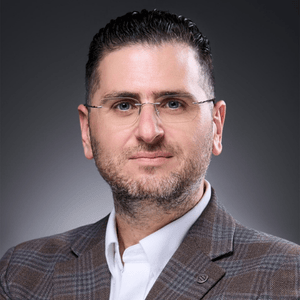
Wassim Anastasiou, Traze CEO MENA
"The quieter periods have shown how resilient Dubai is, with a secure and stable environment allowing business to continue seamlessly, especially with effective work-from-home flexibility. Internally, it has given us more focus and time to accelerate key initiatives and refine processes without disrupting the business-as-usual rhythm."
Wassim Anastasiou
CEO MENA, Traze
The tensions have been real, and nobody is pretending otherwise. But the picture emerging from the ground is of a business community that has adapted quickly and kept moving. If anything, the current period may accelerate certain trends already underway: more flexible working, leaner operations, a sharper focus on what actually matters. That is rarely a bad thing.
Ultimately, industry sentiment toward Dubai and the UAE remains firmly positive. If anything, the current environment is reinforcing the value of the country's regulatory clarity, infrastructure depth, and global connectivity. The appeal of the UAE could also be elevated by its capacity to remain unscathed amid geopolitical tensions that could have weighed more heavily on underprepared nations.
Wassim Anastasiou put it about as directly as anyone:
"Dubai and the whole UAE continue to offer a strong combination of safety, stability, and a pro-business environment. I'm more bullish than a year ago, particularly with the added flexibility of hybrid work alongside its consistent 'open for business' mindset. The way the ecosystem responds under pressure is what defines it. And so far, the UAE continues to deliver and should continue to provide the best conditions for future growth for all the parties involved."
Wassim Anastasiou
CEO MENA, Traze
More bullish than a year ago, under these conditions. For the firms that chose the UAE deliberately and built something real there, a period of geopolitical turbulence has, so far, reinforced rather than undermined that decision.
Found this interesting? Become a member of LiquidityFinder and get daily industry news direct to your inbox - join here.
What's your view?
Are you operating in the UAE right now? We'd like to hear how the current situation is affecting your business. Leave a comment below - we read every one.
Leave a CommentWe're the largest marketplace to connect with brokers, Fintech companies & digital asset firms. Want to partner? Let's get in touch.

Select the categories and companies you wish to follow directly to your person rss feed.
Create Custom RSS FeedSign up and join over 5,000 professional members who receive personalized news alerts, curated professional connections, and more for free!
Multi-asset trading broker AvaTrade has agreed to acquire the majority of FXCM Group’s business and brand, in a transaction that would bring a longstanding retail FX franchise into the AvaTrade Group.
LSEG and CMC Markets have signed a multi-year strategic data agreement expanding CMC's access to LSEG's real-time and delayed pricing, reference and corporate actions data, news and analytics, plus AI-ready content, to support new products, entry into new markets and the growth of CMC's institutional and B2B partnerships.
The Tel Aviv Stock Exchange is considering a bid for the Cyprus Stock Exchange, with Israeli media citing its EU licence, trading platform and clearing house. Euronext’s Athens exchange and India’s National Stock Exchange are also seen as contenders, and Cyprus aims to sign a sale agreement by the end of this year.
CME Group will launch baseball futures on 12 October, pending regulatory review, tracking CME FutureSports Performance Indexes built on Official League Data. Standard and micro contracts will start with the 2026 Postseason and the four clubs in the League Championship Series, trading around the clock.
ESMA has published an opinion stating that MiCA-authorised crypto-asset service providers should cease services tied to non-MiCA-compliant stablecoins for EU clients across MiCA crypto-asset services. National authorities should require remediation of existing exposures within three months, by early January 2027.
Nasdaq Ventures has made a strategic investment in Amsterdam-based derivatives and crypto exchange One Trading, with both firms to explore 24/7 trading of equity futures. The undisclosed investment follows Nasdaq's US$100 million investment in Payward, the parent of Kraken, and CME Group's move to 24/7 trading.
cTrader has opened multi-platform plugins to brokers and prop firms, which can pre-install their own tools for clients or list them in cTrader Store. The plugins run across Mobile, Web, Windows and Mac, and can be built and launched independently of core-platform releases, including trading journals and calculators.
Institutional brokerage and financial infrastructure provider Clear Street has joined TradingView’s broker network, allowing its clients to trade US stocks, exchange-traded funds and options directly through the charting and analysis platform.
Learn how to improve trading psychology, manage fear and greed, avoid revenge trading, and follow your trading strategy with discipline and a trading journal.
GTC Prime has announced a strategic partnership with Centroid Solutions to manage and distribute its liquidity through CS 360 Bridge, Centroid's multi-asset connectivity and execution engine, giving brokers and institutional clients access to tailor-made pricing, low-latency execution and real-time risk management.