just now

Liquidity Finder Ltd is incorporated in England and Wales, company number 10610740, registered address 167-169 Great Portland Street, Fifth Floor, London W1W 5PF, United Kingdom.
Published: just now

A liquidity bridge – also known as an execution bridge or liquidity aggregator – is one of the most critical pieces of infrastructure in a modern FX or CFD brokerage operation. It is the technology that sits between your trading platform and your liquidity providers, handling all communication between the two systems in real time. Without a correctly configured liquidity bridge, an A-book or hybrid broker cannot route client orders to the market, cannot stream real-time prices from their LP, and cannot manage their hedging and exposure effectively.
Despite its central importance, the liquidity bridge is one of the least understood components of brokerage infrastructure – particularly among brokers who are new to the industry or who have inherited a platform setup without a thorough understanding of how it was configured. This guide explains what a liquidity bridge does, how it works, and why its configuration is so critical to your brokerage’s execution quality and financial performance.
To understand what a liquidity bridge does, it helps to understand the basic architecture of a brokerage operation. A retail FX or CFD broker typically runs a trading platform – MetaTrader 4, MetaTrader 5, cTrader, or MatchTrader – that their clients use to place trades. The platform handles the client-facing functions – displaying prices, accepting orders, managing positions, and calculating profit and loss. But the platform itself does not have a direct connection to the real financial markets. That connection is provided by the liquidity bridge.
The bridge performs two core functions simultaneously. First it receives real-time price quotes from the liquidity provider and streams them to the trading platform – after applying any configured markup or spread adjustments – so that clients see live, tradeable prices. Second it routes outgoing client orders from the platform to the LP for execution in the real market – and returns the execution confirmation back to the platform so the client’s position is updated correctly.
In a hybrid execution model, the bridge also manages the separation between A-book and B-book flow – routing orders from clients who are designated for A-book execution to the LP, while allowing orders from B-book clients to be internalised without being sent to the market.
The bridge receives a continuous stream of bid and ask price quotes from the liquidity provider for each instrument. These raw prices – known as the LP’s top-of-book or last-look prices – are then processed by the bridge’s pricing engine before being streamed to the trading platform. Processing typically includes applying the broker’s configured spread markup, aggregating prices from multiple LPs if the broker has more than one liquidity relationship, and filtering out any price anomalies or stale quotes that could affect execution quality.
The speed and reliability of this price feed processing is critical to execution quality. Any delay in the bridge’s price processing creates a gap between the price the client sees on their platform and the price available in the real market – a gap that can be exploited by latency arbitrageurs and that creates reputational and financial risk for the broker.
When a client submits an order on the trading platform, the bridge receives it and determines how it should be processed based on the configured routing rules. For A-book orders, the bridge forwards the order to the LP using the FIX protocol – a standardised financial messaging format used across the industry for electronic trading. The LP processes the order and returns an execution report confirming the fill price, fill quantity, and any partial fills or rejections. The bridge then passes this confirmation back to the trading platform to update the client’s position.
For B-book orders in a hybrid model, the bridge internalises the order without forwarding it to the LP – the position is created on the platform’s internal book rather than being hedged in the real market.
The bridge’s execution rules define how orders are processed when the LP’s available price differs from the price at which the client requested execution. Key execution parameters include slippage tolerance – the maximum price difference between the requested price and the LP’s available price that the bridge will accept before rejecting the order – and partial fill handling – whether the bridge will accept partial fills from the LP or requires full fills for all orders. These settings directly affect the execution quality your clients experience and need to be carefully calibrated for your specific client base and LP relationship.
Trading platforms and liquidity providers often use different naming conventions for the same instrument. EURUSD on your MetaTrader platform might be called EUR/USD or EURUSD.lmax or any number of other variants at your LP. The bridge’s symbol mapping configuration defines the relationship between each instrument on your platform and the corresponding instrument at your LP – ensuring that price feeds and order routing are correctly matched. Incorrect symbol mapping is one of the most common and consequential configuration errors in bridge setup – it can result in clients receiving prices from the wrong instrument, orders being routed to the wrong LP instrument, or hedges being placed in the wrong instrument entirely.
In a hybrid execution model, the bridge’s routing rules determine which client groups and order types are sent to the LP for execution and which are internalised on the B-book. These rules can be configured at multiple levels – by client group, by instrument, by order size, or by a combination of these factors. A well-configured routing rule set allows the broker to implement a sophisticated hybrid model that maximises revenue while managing risk effectively. A poorly configured routing rule set can result in the wrong clients being on the wrong book – with significant financial consequences.
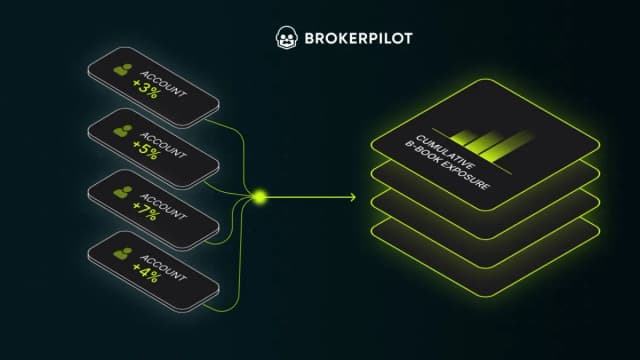
Advanced bridge solutions include built-in exposure management tools that monitor the broker’s aggregate net position across all instruments and trigger automatic hedging when exposure exceeds configured thresholds. This allows the broker to manage their B-book exposure dynamically – hedging excess risk with the LP when needed without requiring manual intervention from the dealing desk for every hedging decision.
There are several established liquidity bridge solutions used by MetaTrader brokers worldwide. The most widely deployed include:
For cTrader brokers, LP connectivity is handled natively through the cBroker back-office system rather than through a separate bridge application. MatchTrader uses a similar integrated approach. Each platform has its own connectivity architecture with different configuration requirements and capabilities.
The liquidity bridge is only as good as its configuration. A poorly configured bridge – even one using best-in-class software – will deliver poor execution quality, create exposure management problems, and generate financial losses that could have been avoided with correct setup.
The most common consequences of poor bridge configuration include:
Liquidity bridge management is not a set-and-forget function. Once the bridge is configured and live, it requires continuous monitoring and periodic adjustment to maintain optimal performance. Swap rates need to be updated when the LP changes their schedule. Symbol mapping needs to be reviewed when new instruments are added or LP instrument names change. Execution rules need to be recalibrated when execution quality metrics indicate that current settings are not delivering optimal results. Routing rules need to be adjusted as the client base evolves and new toxic flow patterns are identified.
Many brokers underestimate this ongoing management requirement when they first set up their bridge – and find that execution quality gradually deteriorates over time as the configuration drifts further from optimal settings. Professional ongoing bridge management is essential to maintaining the execution quality that keeps clients satisfied and regulators comfortable.
At Broktinger, our team has extensive hands-on experience configuring and managing liquidity bridges across all major bridge solutions – including oneZero, FXCubic, Centroid, and others – as well as native LP connectivity on cTrader and MatchTrader. We provide:
If you are setting up a new liquidity bridge, transitioning to a new LP, or looking to improve the performance of your existing bridge configuration, get in touch with our team for a free consultation.
Find out more: https://broktinger.com/
Industry leaders in outsourced dealing desk, risk management and platform development for FX and CFD brokers. Building MT4/MT5 tools, reporting solutions and API integration, plugins.
Select the categories and companies you wish to follow directly to your person rss feed.
Create Custom RSS FeedSign up and join over 5,000 professional members who receive personalized news alerts, curated professional connections, and more for free!
Multi-asset trading broker AvaTrade has agreed to acquire the majority of FXCM Group’s business and brand, in a transaction that would bring a longstanding retail FX franchise into the AvaTrade Group.
LSEG and CMC Markets have signed a multi-year strategic data agreement expanding CMC's access to LSEG's real-time and delayed pricing, reference and corporate actions data, news and analytics, plus AI-ready content, to support new products, entry into new markets and the growth of CMC's institutional and B2B partnerships.
The Tel Aviv Stock Exchange is considering a bid for the Cyprus Stock Exchange, with Israeli media citing its EU licence, trading platform and clearing house. Euronext’s Athens exchange and India’s National Stock Exchange are also seen as contenders, and Cyprus aims to sign a sale agreement by the end of this year.
CME Group will launch baseball futures on 12 October, pending regulatory review, tracking CME FutureSports Performance Indexes built on Official League Data. Standard and micro contracts will start with the 2026 Postseason and the four clubs in the League Championship Series, trading around the clock.
ESMA has published an opinion stating that MiCA-authorised crypto-asset service providers should cease services tied to non-MiCA-compliant stablecoins for EU clients across MiCA crypto-asset services. National authorities should require remediation of existing exposures within three months, by early January 2027.
Nasdaq Ventures has made a strategic investment in Amsterdam-based derivatives and crypto exchange One Trading, with both firms to explore 24/7 trading of equity futures. The undisclosed investment follows Nasdaq's US$100 million investment in Payward, the parent of Kraken, and CME Group's move to 24/7 trading.
cTrader has opened multi-platform plugins to brokers and prop firms, which can pre-install their own tools for clients or list them in cTrader Store. The plugins run across Mobile, Web, Windows and Mac, and can be built and launched independently of core-platform releases, including trading journals and calculators.
Institutional brokerage and financial infrastructure provider Clear Street has joined TradingView’s broker network, allowing its clients to trade US stocks, exchange-traded funds and options directly through the charting and analysis platform.
Learn how to improve trading psychology, manage fear and greed, avoid revenge trading, and follow your trading strategy with discipline and a trading journal.
GTC Prime has announced a strategic partnership with Centroid Solutions to manage and distribute its liquidity through CS 360 Bridge, Centroid's multi-asset connectivity and execution engine, giving brokers and institutional clients access to tailor-made pricing, low-latency execution and real-time risk management.