just now


Liquidity Finder Ltd is incorporated in England and Wales, company number 10610740, registered address 167-169 Great Portland Street, Fifth Floor, London W1W 5PF, United Kingdom.
Published: just now

Markets are shifting again, not in dramatic headlines, but in the underlying rhythm of currencies, yields, and central banks grappling with conflicting signals.
After weeks of rangebound price action, the yen and franc have given traders something to think about…
And it’s not just about rate differentials anymore, this is about structural risk, policy hesitations, and the political fuse that’s quietly burning in the background.
Let’s break down what’s happening and why it matters right now.
The Japanese yen has staged a sharp reversal, bouncing back as the best-performing G10 currency since last Thursday.
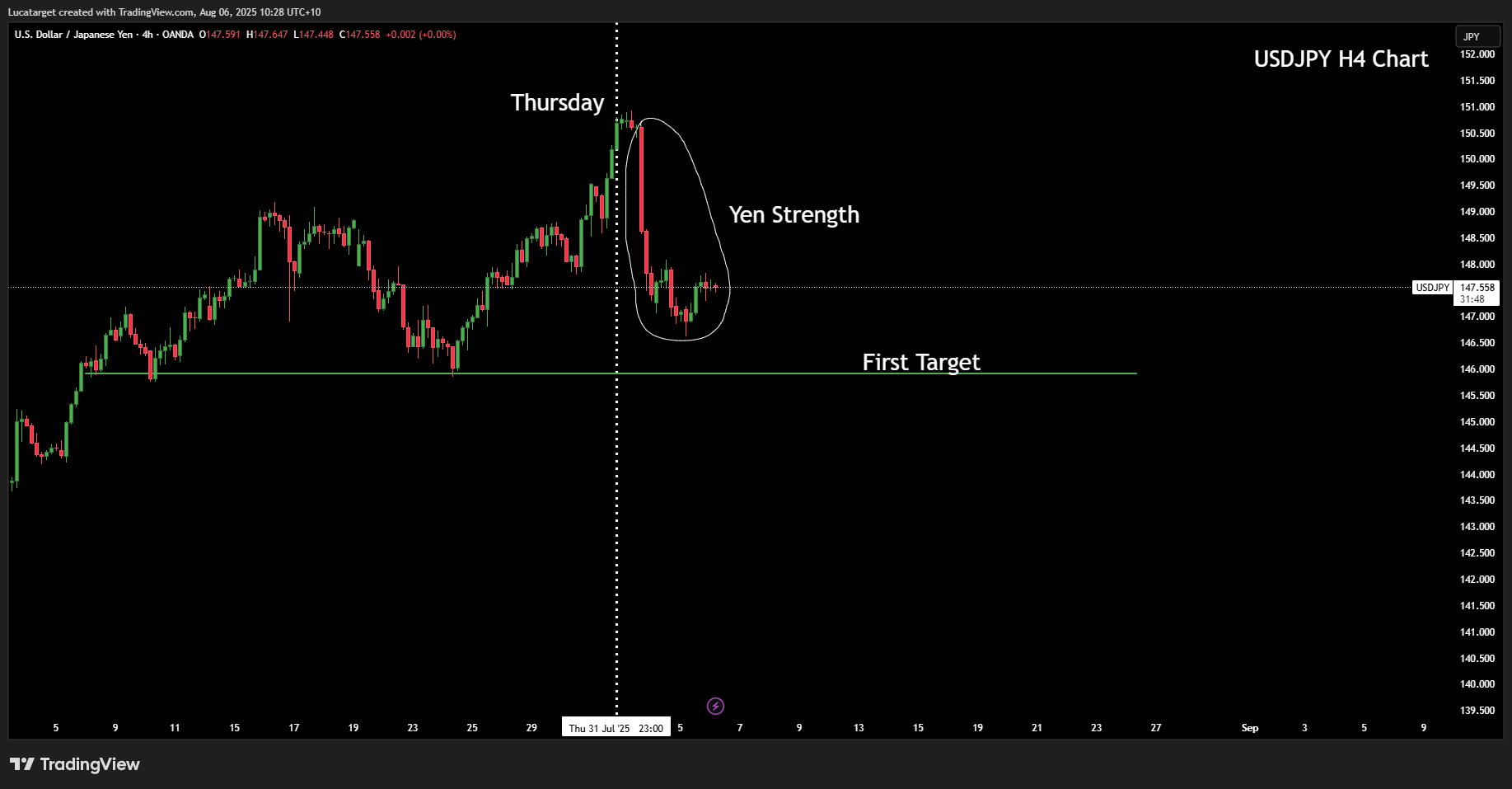
What sparked the move? A surprisingly soft U.S. jobs report that triggered a 28bp drop in 2-year Treasury yields, forcing markets to unwind short yen positions.
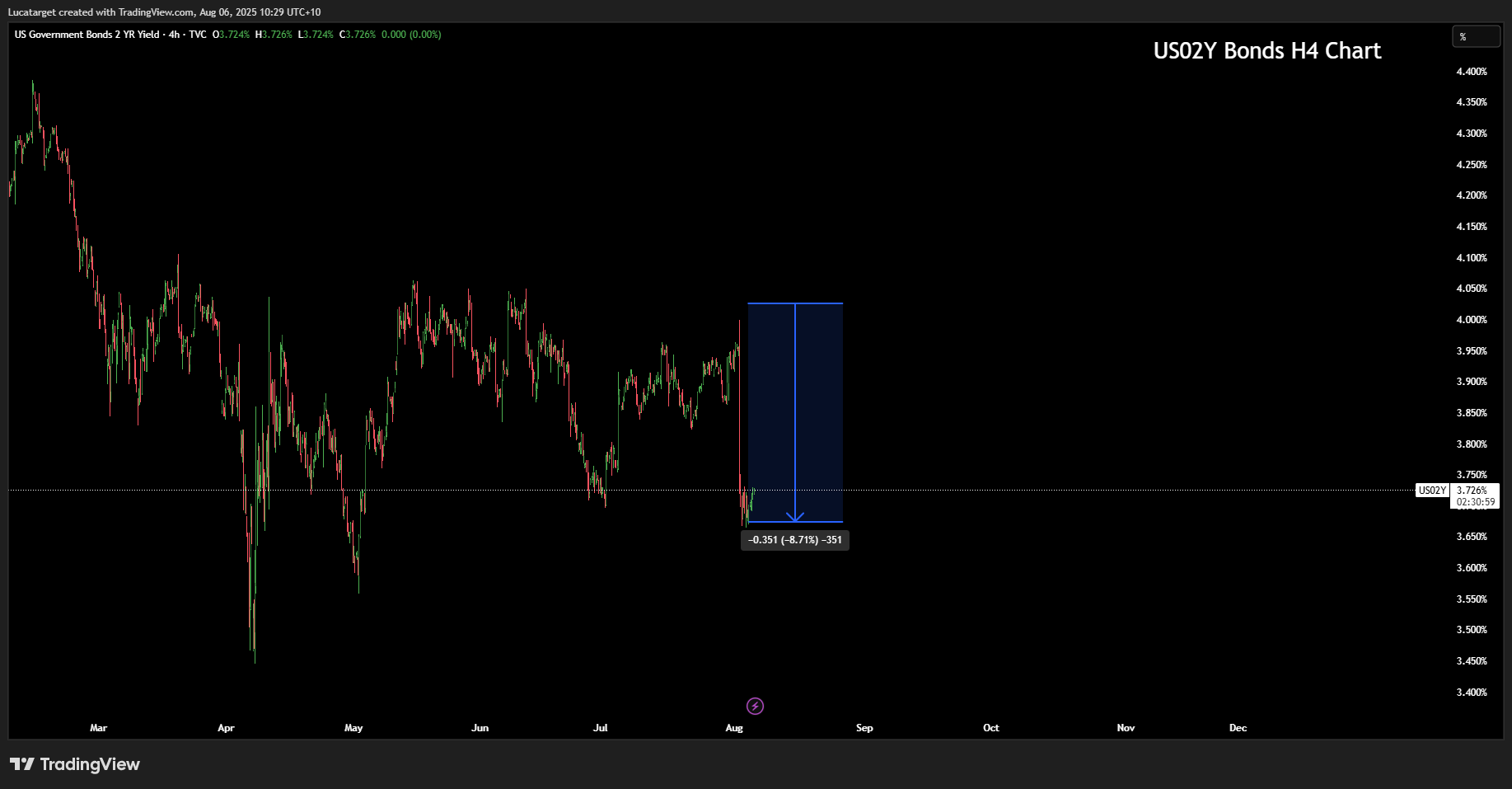
This type of reaction tells us how fragile positioning had become, but also how quickly sentiment can shift.
Still, let’s not confuse this rally with BoJ confidence. The Bank of Japan held rates steady last week and gave no clear signal about future tightening. In fact, Governor Ueda’s press conference leaned dovish, which initially sent the yen lower.
But with U.S. data showing cracks, traders shifted their focus back to Japan’s inflation outlook and bond market dynamics.
The bigger story here is that pressure on the BoJ is building from more than one angle. Inflation remains sticky, and the minutes from the June meeting show that rate hikes were at least discussed as a future option.
But what’s grabbing attention now is the weak demand seen in this week’s 10-year Japanese Government Bond (JGB) auction.
A declining bid-to-cover ratio and a wider tail indicate investor caution. That’s worrying, because if bond market stability deteriorates, the BoJ may be forced to respond not because it wants to control inflation, but because it has to manage market functioning.
In other words, the BoJ might be cornered into normalisation, even if it's reluctant.
To complicate matters further, political pressure is increasing at home. Prime Minister Ishiba has hinted at potential tax cuts and new fiscal stimulus to support households.
That’s in line with the opposition's platform and could become a reality post-election.
The issue? Fiscal spending requires funding, and that could lead to more bond issuance. Even if the BoJ continues to absorb some of the pressure through JGB purchases, fresh issuance risks destabilising yields especially if market participants start to price in a lack of coordination between monetary and fiscal policy.
This matters for the yen. A sudden expansion in fiscal spending, coupled with a central bank that’s already buying bonds aggressively, could lead to renewed JPY weakness even if inflation remains high.
That’s the tension we’re watching closely.
Meanwhile, the Swiss franc is facing a very different kind of risk, geopolitical, not monetary. The U.S. has imposed an eye-watering 39% tariff on imports from Switzerland, far higher than what’s been applied to other European economies.
Let’s be clear: Switzerland is deeply exposed. Exports account for around 40% of GDP, and roughly 16.5% of those exports go to the United States.
This means about 6.5% of Swiss GDP is tied directly to U.S. demand, one of the highest exposure levels in the G10.
The impact is already visible. Swiss inflation remains subdued, but the economy is flashing red lights. The Services PMI collapsed from 48.5 in June to just 41.8 in July, the steepest drop since 2020. Core inflation ticked up slightly, but if this trade shock persists, growth could slow sharply, putting further pressure on the SNB.
Even though the Swiss National Bank (SNB) recently cut rates to zero, the market is now pricing in a return to negative rates by early 2026.
That’s a dramatic shift, considering the SNB had previously signaled hesitation about going negative again. Without a trade deal or tariff relief, the franc is likely to stay under pressure, but don’t expect a full collapse.
The real effective exchange rate remains elevated, and the franc could find support if global risks flare up.
Based on the above, here’s where I see tactical opportunities:
Short CHFJPY on rallies
With JPY gaining strength on bond market risks and CHF vulnerable to trade shocks, this cross has room to fall if momentum continues. Watch for entries near resistance.
USDJPY neutral-to-bearish near 147.50–148
After a strong drop, I’m cautious about chasing the yen higher. But if we get another dovish surprise out of the Fed or more signs of JGB stress, we could revisit 146 and then 140 quickly.
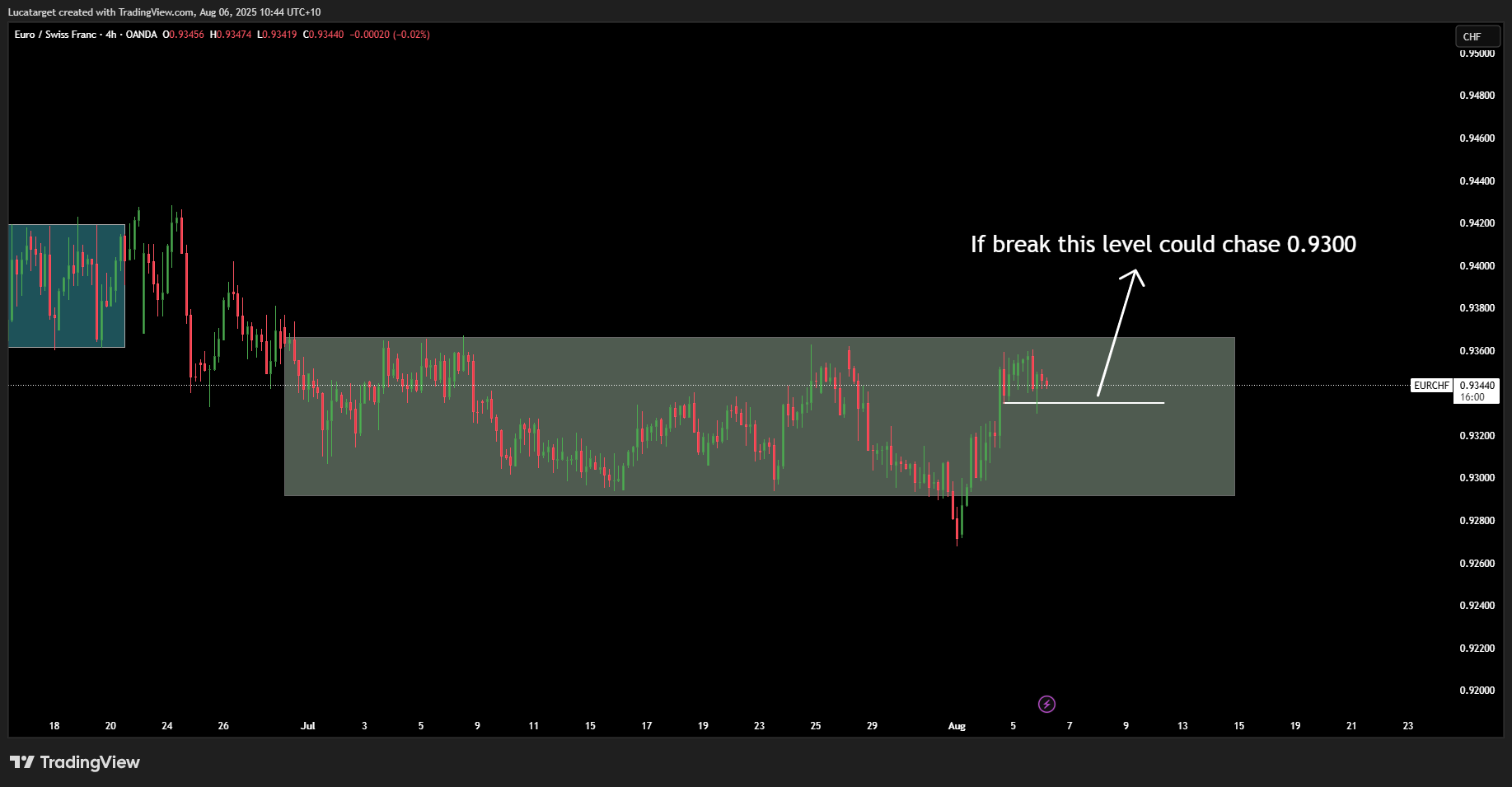
EURCHF: leaning short, but not aggressive
Political risks in Switzerland are serious, but the SNB is unlikely to let EURCHF spiral. If we break below 0.934, the SNB could step in, so tight risk management is key.
This week isn’t about dramatic news. It’s about slow shifts that accumulate and then suddenly matter. Japan is inching toward a policy shift not because it wants to, but because the bond market might force its hand.
Switzerland, usually a bystander, is now in the middle of a geopolitical trade crossfire. The U.S. economy is slowing but just how much, and how fast, is still up for debate.
For traders, this is the time to zoom in. Watch the data. Watch the auctions. Watch the politics. There are moves brewing under the surface, and when the breakout comes, it will reward those who were already positioned.
Stay nimble out there.
1. Why did the Japanese yen strengthen despite the Bank of Japan holding rates?
The yen surged due to weaker-than-expected U.S. jobs data, which triggered a sharp drop in U.S. Treasury yields and led to a broad unwinding of short-yen positions. This reaction occurred even though the BoJ maintained a dovish stance, showing how sensitive markets are to global rate expectations.
2. What risks are emerging in the Japanese bond (JGB) market?
A weak 10-year JGB auction revealed declining demand, raising concerns about market stability. If fiscal stimulus requires more bond issuance, the BoJ may face pressure to adjust its policies, not to curb inflation, but to restore confidence in the bond market.
3. How does the 39% U.S. tariff impact Switzerland’s economy?
The unusually high tariff significantly threatens Swiss exports, particularly pharmaceuticals, watches, and medical equipment, which make up a large share of GDP. This could lead to slower growth, a return to negative interest rates, and further franc weakness if no resolution is reached.
4. What’s the outlook for the Swiss franc (CHF) in the short term?
Despite economic headwinds, the CHF remains supported by its high real effective exchange rate. However, if trade tensions persist and growth falters, the SNB may be forced to ease policy further, putting renewed downside pressure on the franc.
5. What are the key economic events to watch this week?
Traders should monitor PMI data from Europe and the UK, U.S. ISM Non-Manufacturing Index, and trade balance figures. These releases will guide rate expectations and currency positioning, especially in a market sensitive to marginal surprises.
This content may have been written by a third party. ACY makes no representation or warranty and assumes no liability as to the accuracy or completeness of the information provided, nor any loss arising from any investment based on a recommendation, forecast or other information supplies by any third-party. This content is information only, and does not constitute financial, investment or other advice on which you can rely.
ACY Securities is one of Australia's fastest growing multi-asset online trading providers, offering ultra-low-cost trading, rock-solid execution, technologically superior account management and premium market analysis.

Select the categories and companies you wish to follow directly to your person rss feed.
Create Custom RSS Feed
just now
Sign up and join over 5,000 professional members who receive personalized news alerts, curated professional connections, and more for free!
Multi-asset trading broker AvaTrade has agreed to acquire the majority of FXCM Group’s business and brand, in a transaction that would bring a longstanding retail FX franchise into the AvaTrade Group.
LSEG and CMC Markets have signed a multi-year strategic data agreement expanding CMC's access to LSEG's real-time and delayed pricing, reference and corporate actions data, news and analytics, plus AI-ready content, to support new products, entry into new markets and the growth of CMC's institutional and B2B partnerships.
The Tel Aviv Stock Exchange is considering a bid for the Cyprus Stock Exchange, with Israeli media citing its EU licence, trading platform and clearing house. Euronext’s Athens exchange and India’s National Stock Exchange are also seen as contenders, and Cyprus aims to sign a sale agreement by the end of this year.
CME Group will launch baseball futures on 12 October, pending regulatory review, tracking CME FutureSports Performance Indexes built on Official League Data. Standard and micro contracts will start with the 2026 Postseason and the four clubs in the League Championship Series, trading around the clock.
ESMA has published an opinion stating that MiCA-authorised crypto-asset service providers should cease services tied to non-MiCA-compliant stablecoins for EU clients across MiCA crypto-asset services. National authorities should require remediation of existing exposures within three months, by early January 2027.
Nasdaq Ventures has made a strategic investment in Amsterdam-based derivatives and crypto exchange One Trading, with both firms to explore 24/7 trading of equity futures. The undisclosed investment follows Nasdaq's US$100 million investment in Payward, the parent of Kraken, and CME Group's move to 24/7 trading.
cTrader has opened multi-platform plugins to brokers and prop firms, which can pre-install their own tools for clients or list them in cTrader Store. The plugins run across Mobile, Web, Windows and Mac, and can be built and launched independently of core-platform releases, including trading journals and calculators.
Institutional brokerage and financial infrastructure provider Clear Street has joined TradingView’s broker network, allowing its clients to trade US stocks, exchange-traded funds and options directly through the charting and analysis platform.
Learn how to improve trading psychology, manage fear and greed, avoid revenge trading, and follow your trading strategy with discipline and a trading journal.
GTC Prime has announced a strategic partnership with Centroid Solutions to manage and distribute its liquidity through CS 360 Bridge, Centroid's multi-asset connectivity and execution engine, giving brokers and institutional clients access to tailor-made pricing, low-latency execution and real-time risk management.