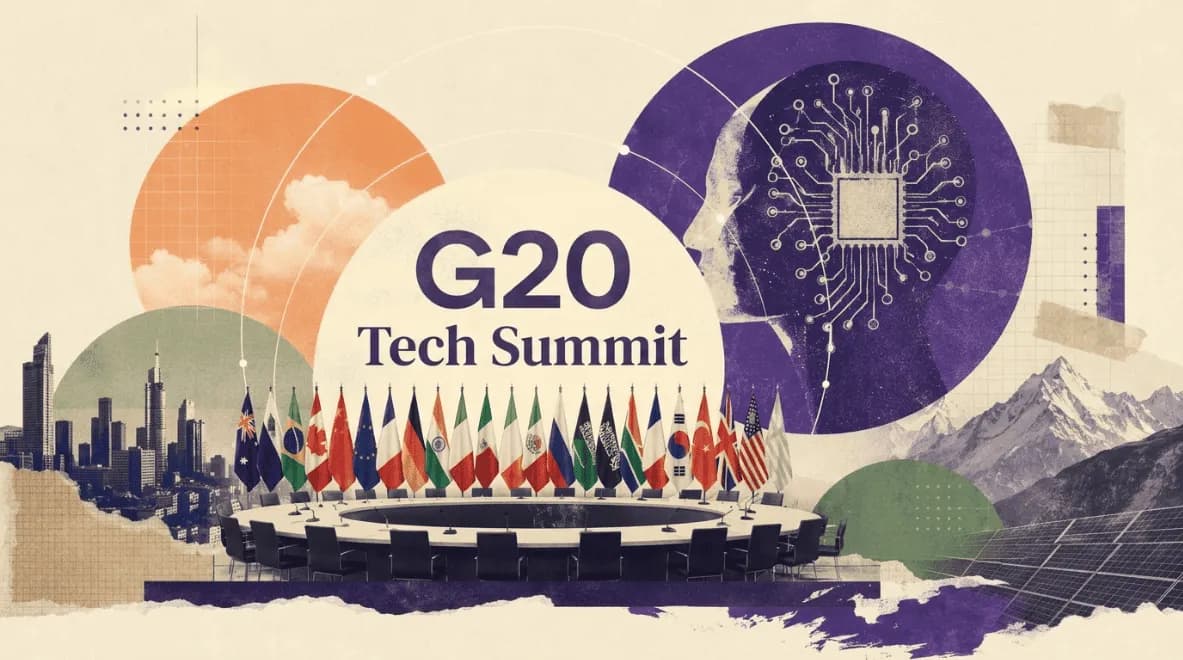
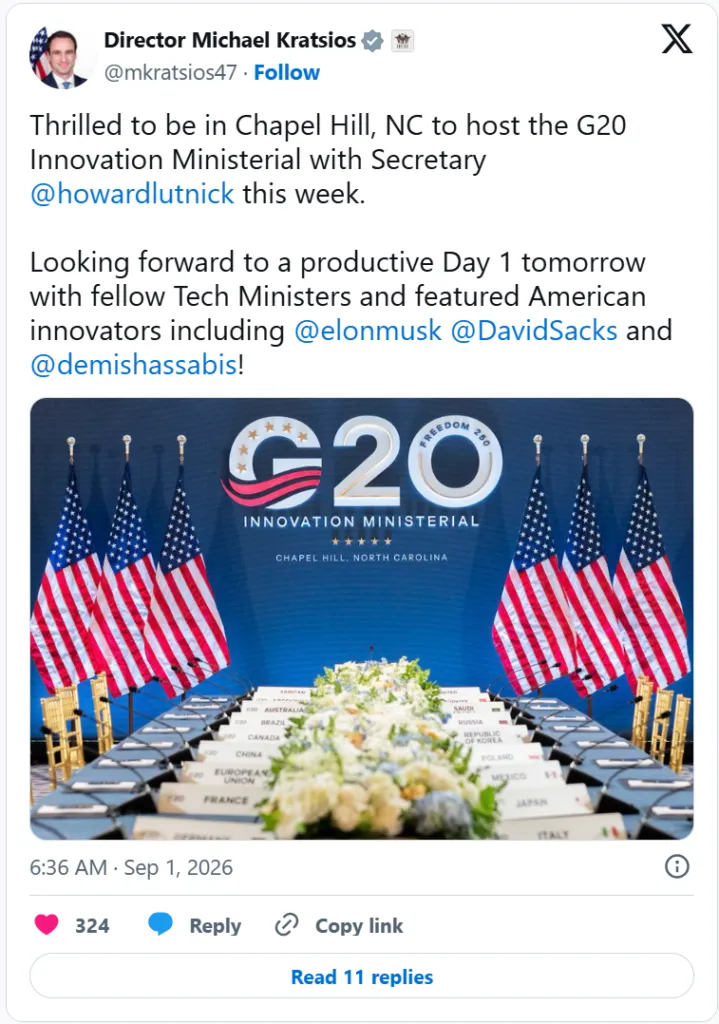
At the G20 tech summit in Chapel Hill, the United States pitched the “Carolina Principles” as a starting point for how countries could regulate AI.
The idea is simple: no blanket rulebook over AI as a whole. Rely on existing sector rules where they already work, then step in case by case basis when a specific AI tool creates a genuinely new risk.
China backed those principles as well. And that makes two of the world’s largest AI powers agreeing on the same page that the first move should be to leave room for innovation, not regulate the industry into a corner.
| Less regulation = Less paperwork to worry about = More potential breakthroughs |
AI’s Bottleneck is Energy, Says Musk
Elon Musk used the same meeting to warn about a coming “crisis of power” as AI and robotics consume more electricity.
For example, a newly announced Anthropic data-centre in Texas is expected to support around 350 MW of operational capacity. That is equal to powering around 300,000 standard American households.
Beyond that, AI projects on a large scale require grid connections, transformers, cooling and a huge amount of electricity. The question is how can they get access to these infrastructures, which are limited in quantity and expensive to build.
This brings up an interesting idea to pay attention to - how leadership may change within the AI space.
For now, the major ETFs of AIQ, ARTY, CHAT and BOTZ are still broadly moving together, so there is no clean rotation between broad AI, infrastructure, generative AI and robotics yet.
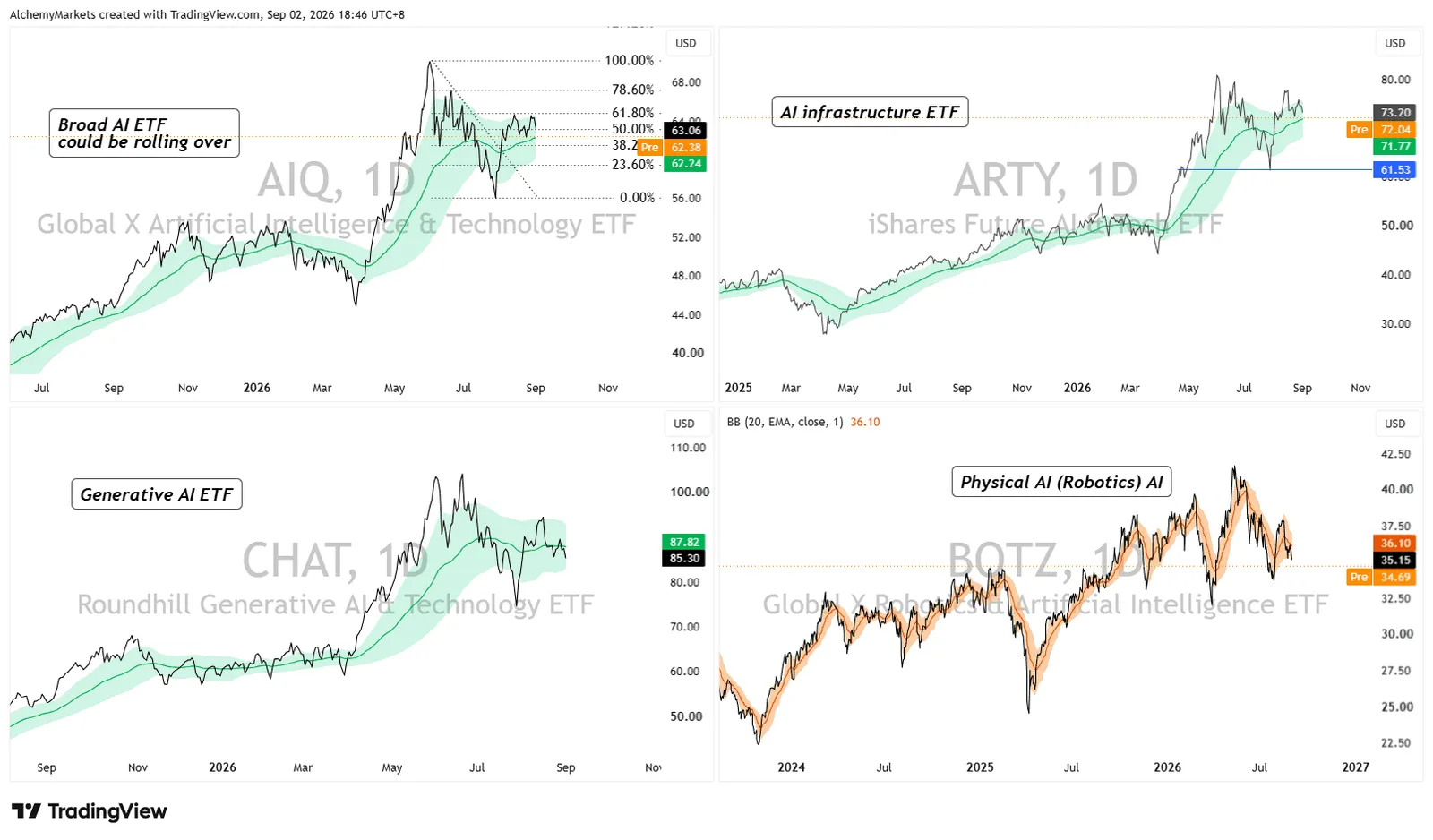
Nevertheless, this could be an interesting development to watch as AI continues to mature as an industry.
Currently, each subsector looks like they are cooling off, but ARTY may have a clearer Bull Flag Pattern in development, and that lines up well with where Musk said the biggest bottleneck could be in the future.
So, Is Energy the Next AI Play?
Musk’s warning naturally puts energy stocks under the spotlight.
Nuclear is the obvious long-term candidate. If AI needs far more electricity, nuclear power offers reliable baseload power without the intermittency problem of wind and solar.
But that is not where the market is showing the most strength right now.
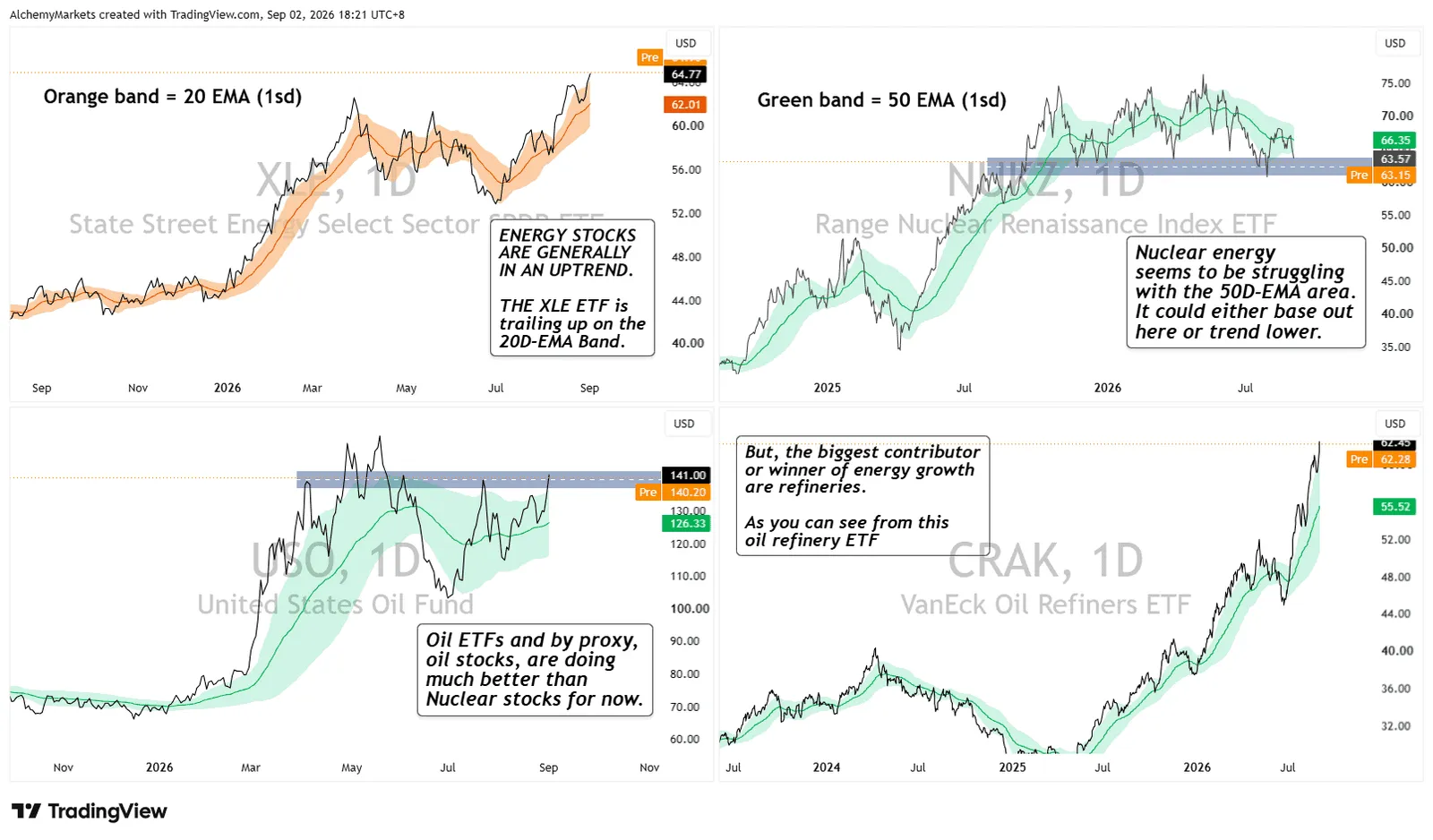
Look beneath the energy rally and the clear winners are oil and refiners.
NUKZ, by comparison, is still moving sideways around support and remains capped by its 50-day EMA band.
That doesn't kill AI’s long-term demand for nuclear power. It just shows that for now, markets are rewarding today’s energy shortage much more aggressively.