
Google tests major support near $337–$349 after an AI-led selloff. Can strong fundamentals spark a relief rally?

Alphabet shares have returned to a major decision zone after Monday’s selloff wiped roughly 5% from the stock and dragged the wider Nasdaq lower.
The immediate trigger was renewed concern over Google’s ability to retain top artificial-intelligence talent after senior DeepMind researcher John Jumper reportedly left for Anthropic.
Google is still growing quickly. Investors are simply becoming less willing to accept massive spending without clearer evidence of future returns; rather than accept unlimited AI spending based on faith.
Technically, Alphabet has fallen into the $337.47–$349.00 region, which previously acted as resistance around the February high before becoming support. Buyers also defended this area earlier in June, producing a rebound towards $370.
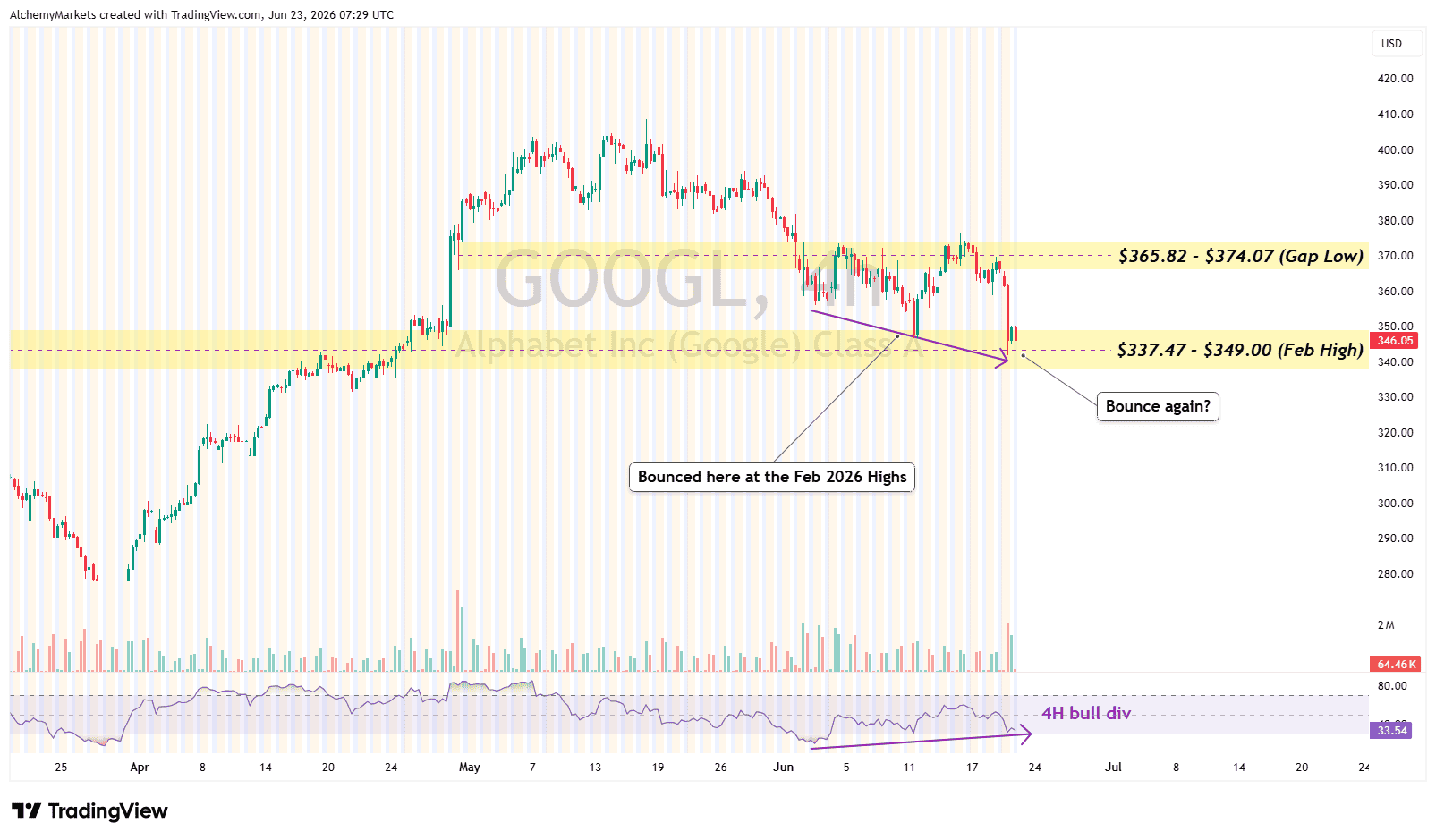
For Google bulls, the good news is that a four-hour bullish divergence is developing. Price has formed a lower low while RSI has produced a higher low, suggesting that bearish momentum is beginning to fade as the stock enters support.
The divergence strengthens the case for a temporary pause or relief rally, but it is not a standalone buy signal. Alphabet must first reclaim the upper edge of the support zone around $349–$352 and break above its latest four-hour lower high.
If buyers achieve that, the $365.82–$374.07 gap zone becomes the main recovery target. A decisive break below $337.47, however, would invalidate the divergence setup and leave the lower $320 region exposed.
Strong Business, Expensive Strategy
Alphabet’s first-quarter results show why investors may still defend the stock.
Revenue rose around 22% year-on-year to $109.9 billion, while operating income increased nearly 30% to $39.7 billion. Search revenue grew 19%, suggesting that AI Overviews and AI Mode have not yet damaged Google’s main advertising engine.
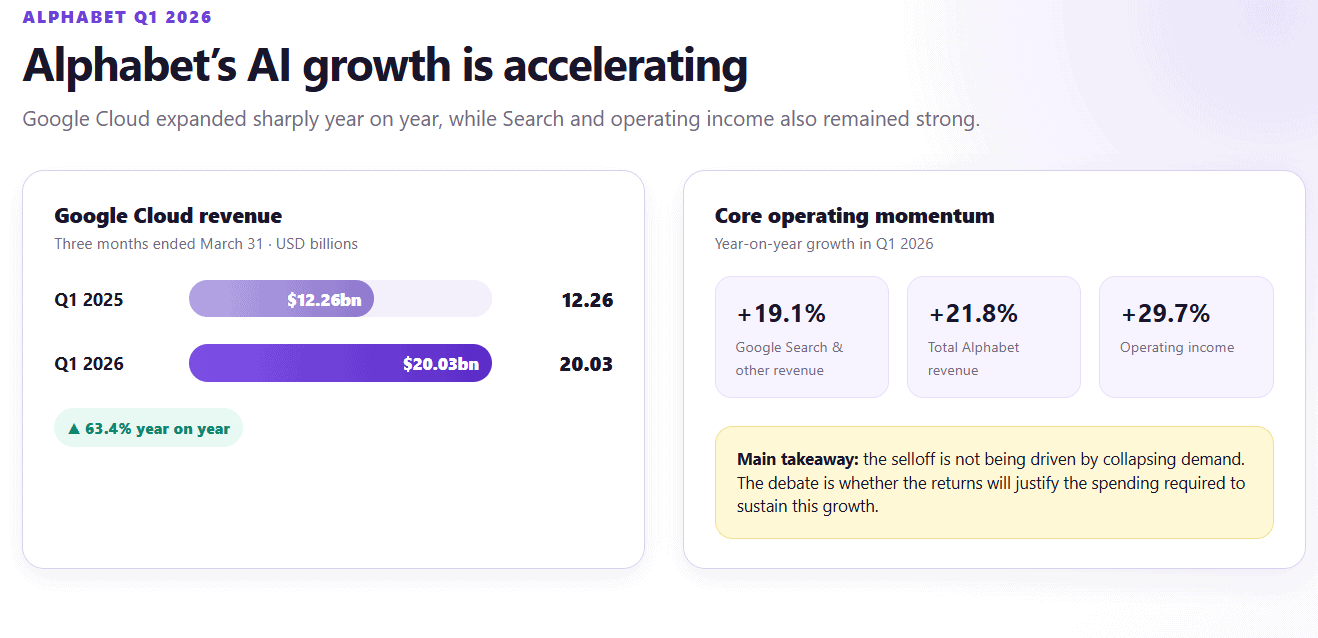
Google Cloud was even stronger, with revenue rising 63% to more than $20 billion.
Cloud backlog also climbed above $460 billion, while management said demand for AI products and infrastructure continued to exceed available supply.
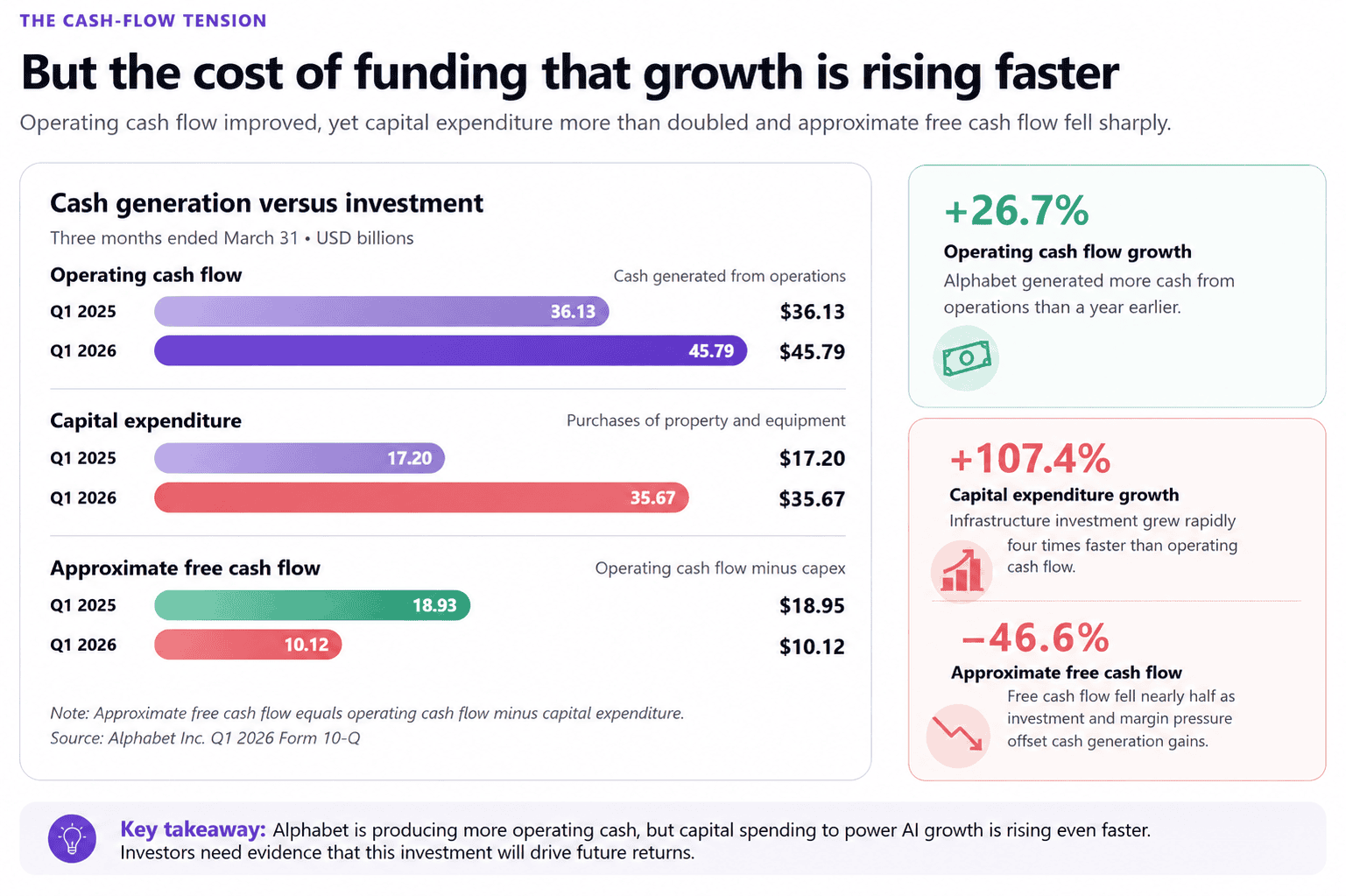
The concern is not demand. It is the cost of meeting it. Alphabet expects capital expenditure of $180–$190 billion in 2026 and has warned that spending should rise significantly again in 2027.