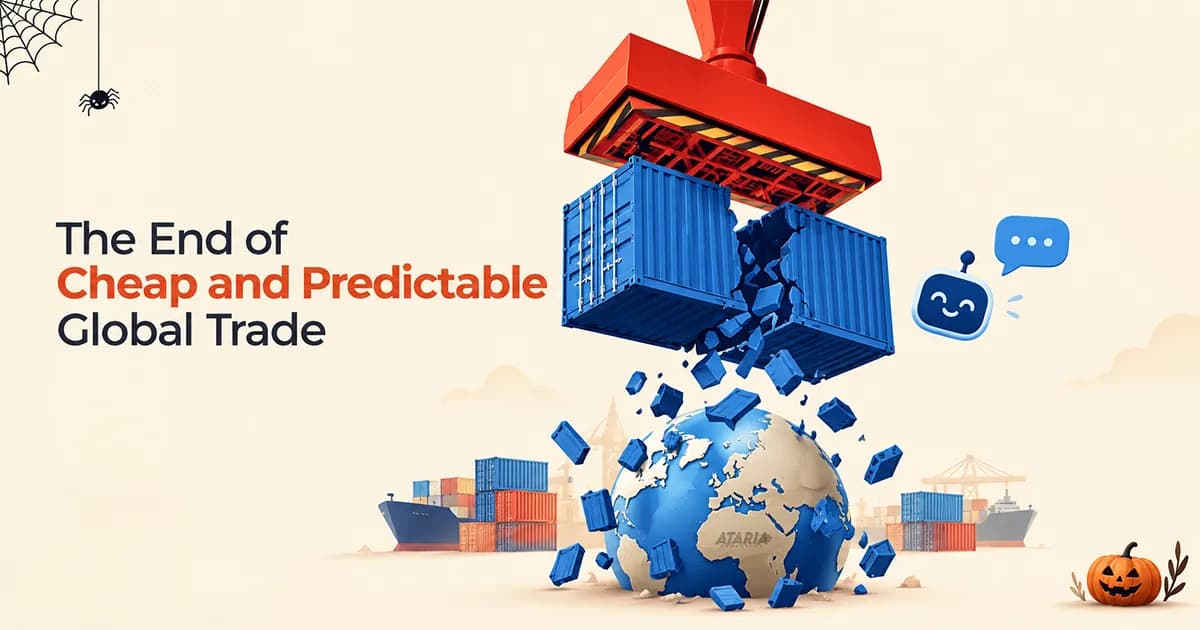

Remember the good old days when global trade felt like a well-oiled machine? Products flowed seamlessly across borders; costs stayed low and businesses could count on stable supply chains.
Those days are rapidly fading. Today’s global trade is anything but predictable and it’s getting more expensive by the day.
Let’s break down what’s changing, why it matters, and how businesses can stay ahead in this new reality.
Why Was Global Trade Once Cheap and Predictable?
For decades, globalization has worked like clockwork. Countries specialized, supply chains stretched across continents, and companies squeezed every penny. Low labor costs abroad, cheap shipping and relative political stability made goods affordable and delivery times reliable.
But this predictability was more fragile than it seemed. Hidden risks lurked under the surface; overdependence on single suppliers, volatile geopolitical climates, and environmental concerns were quietly brewing.
Key Factors that Shake Up Global Trade Today
- Geopolitical Tensions: Trade wars, sanctions and diplomatic conflicts add layers of unpredictability.
- Supply Chain Disruptions: The pandemic showed us how quickly bottlenecks can bring everything to a halt.
- Rising Costs: Labor shortages, soaring transportation expenses and tariffs inflate prices.
- Environmental Push: Stricter regulations and sustainable practices force businesses to rethink logistics.
These forces combine to raise costs and throw a wrench into the once-smooth operation of global trade.
Navigating the New Normal: What Can Businesses Do?
Success today requires smart adaptation. Here are some proven approaches:
- Diversify supply chains: Avoid putting all eggs in one basket by sourcing from multiple regions.
- Adopt technology: Use AI, data analytics, and automation to gain visibility and optimize operations.
- Focus on sustainability: Plan logistics with environmental impact in mind.
- Build local resilience: Shorten supply chains by bringing manufacturing or sourcing closer to home.
These moves help companies stay agile and ready for whatever comes next.
Act Now
Businesses that ignore these shifts risk falling behind or losing market share. The days of cheap, predictable global trade are over. Those who move early will secure a competitive edge, while others might scramble to catch up.