just now


Liquidity Finder Ltd is incorporated in England and Wales, company number 10610740, registered address 167-169 Great Portland Street, Fifth Floor, London W1W 5PF, United Kingdom.
Published: just now

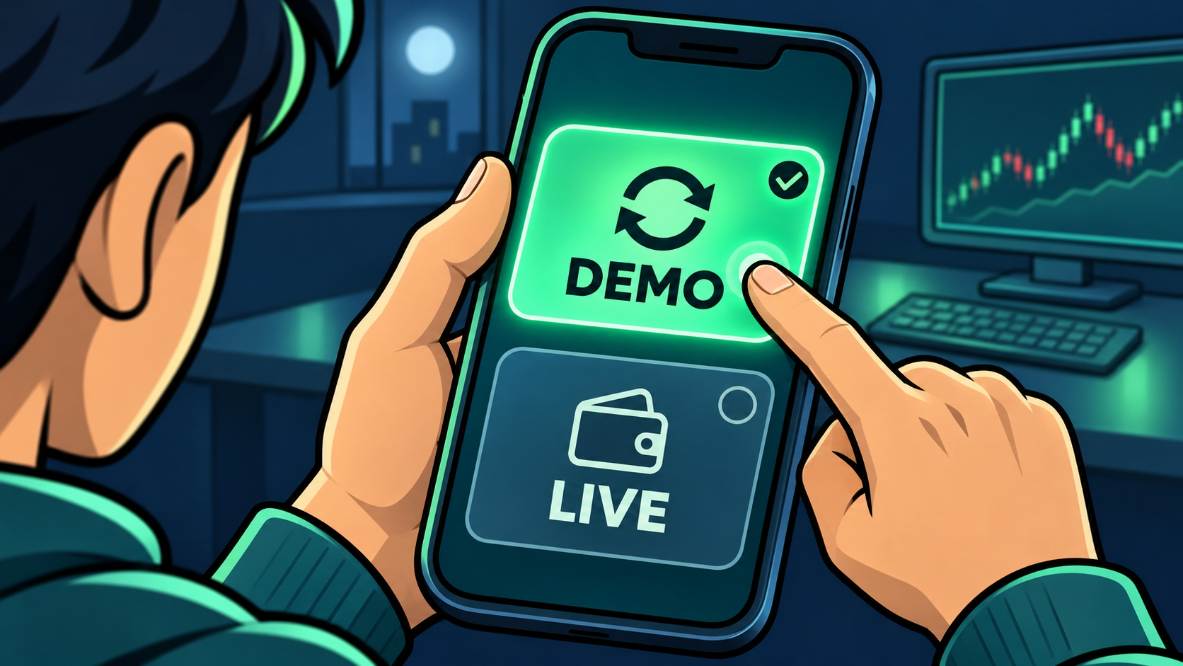
On a demo account, you wait for gold to return to support, an area where buyers stepped in before. A candle closes back above that level, just as you planned, and you buy. On a live account, the same signal appears. This time you think, “What if I lose?” You wait one more candle. By then, gold is halfway to your target.
You may trade better on demo because it’s easier to follow your plan with virtual money. As The Calm Trader explains in Why You Trade Better on Demo Than Live, real money can change what you do even when you know exactly what you’re looking for.
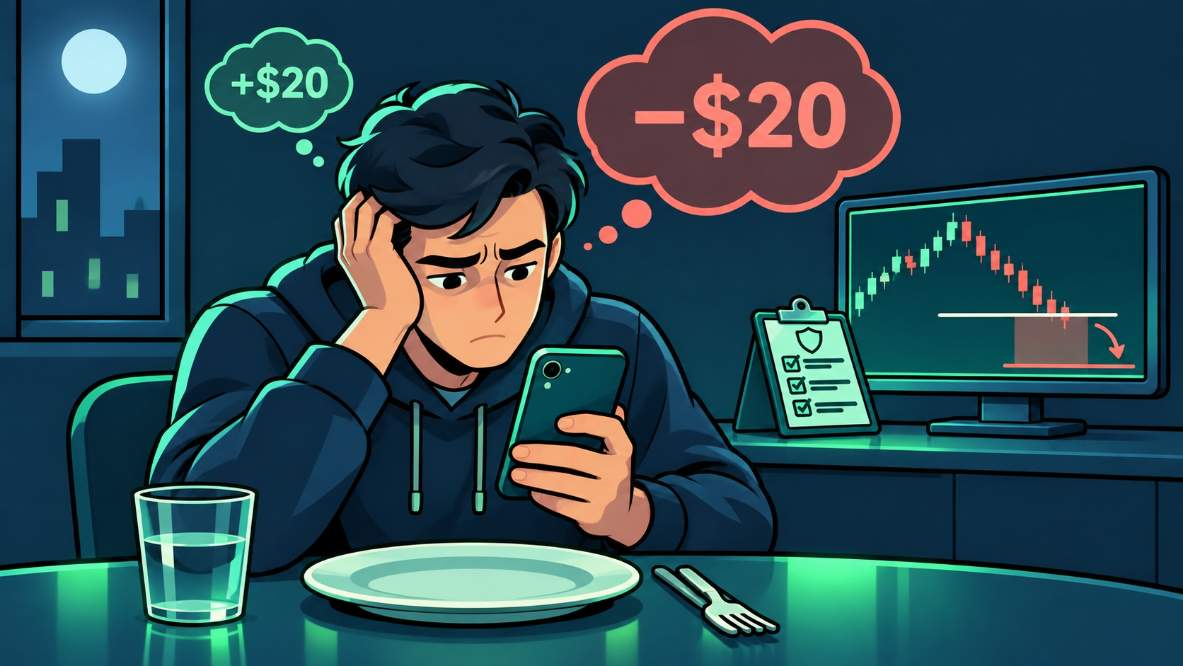
Imagine making $20 in one session and losing $20 in the next. Which session are you still thinking about over dinner? If the loss weighs more heavily, you may recognize loss aversion in trading. Losing $20 can hurt more than gaining $20 feels good.
Now picture gold approaching your stop loss below support. On demo, you let the position close as planned. On live, you lower the stop because you want to give gold “a little more breathing room.” At the same trade size, that extra room means a larger potential loss.
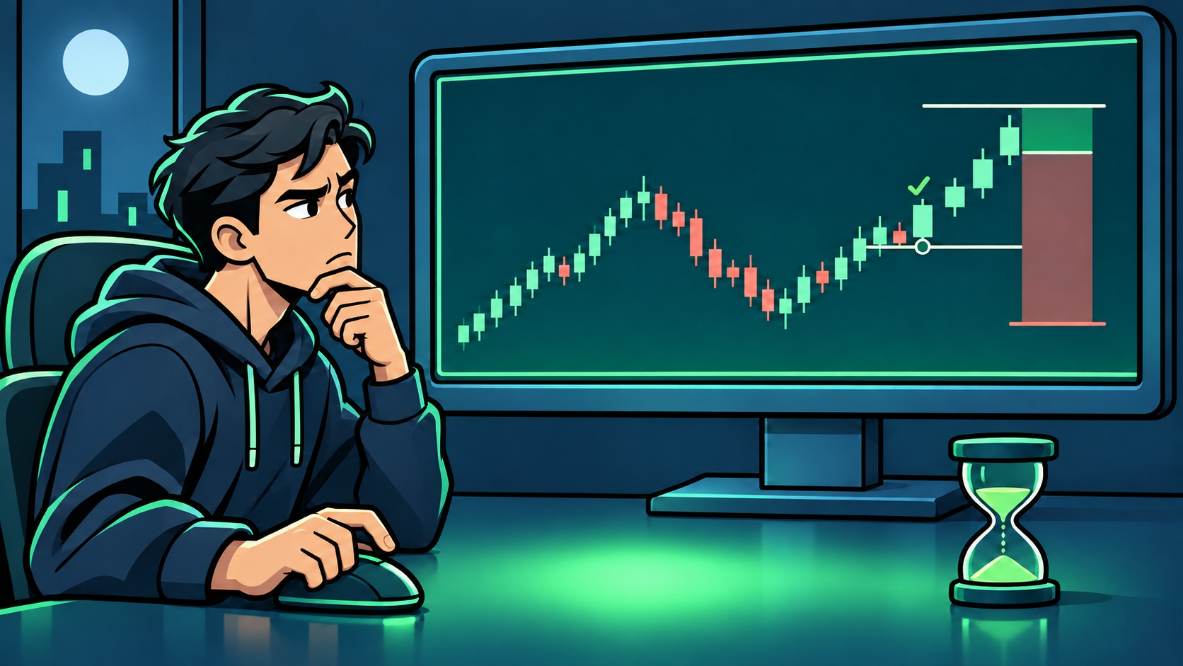
Suppose your plan calls for a buy at $4,000 after gold retests a support and resistance level. Your stop loss is $3,990 and your target is $4,020. You wait for another green candle and buy at $4,010. With the same stop and target, the numbers now look different.
| Hypothetical gold entryDistance to stop loss per ouncePotential gain to target per ounce | ||
| Planned entry at $4,000 | $10 | $20 |
| Later entry at $4,010 | $20 | $10 |
Before trading costs, waiting doubled the distance to your stop and cut the potential gain in half. Confirmation tells you when your entry rules are met. The outcome is still uncertain. If the later price falls outside your plan, you can let the trade go.
For better trade planning, learn how to calculate risk and reward using take-profit targets.

After a live loss, “I need to make that $20 back” can become the reason you take your next trade. You might buy before gold returns to support simply because you want to finish the day even.
A more useful journal entry describes what happened on the chart. “I waited for gold to retest support, used my planned size, and let the stop close the trade.” If all three are true, you followed your plan through a loss. The next trade still needs its own setup.
Understanding trading psychology and emotional discipline can help you recognize these behaviors and improve your decision-making.

Think about reversing a car into a tight parking space in a video game. You can try it, mess up, and restart without losing anything.
Now imagine doing the same thing with your actual car, inches away from a concrete pillar. Suddenly, you're checking your mirrors twice, watching every movement, because one mistake could cost you money.
Trading is no different. When you're back testing or trading on a demo, making a mistake is easy to shrug off. But when real money is on the line, every decision carries consequences.
| Decision | What you might do on demo | What pressure can look like on live |
| Entering at support | Enter once the retest and candle close meet your rules. | Wait for extra confirmation, then chase a higher entry. |
| Managing an open gain | Hold while your exit conditions remain valid. | Close at the first pullback because you’ve already pictured keeping the profit. |
| Taking a planned loss | Let the stop close the position. | Move the stop farther away to postpone the loss. |
| Choosing the next trade | Wait for another qualifying setup. | Increase your size to try to recover before the session ends. |
For your next session, pick the first decision you changed under pressure and turn it into one rule you can practice. If you closed gold on a small dip, try this: “When gold pulls back, I’ll check my exit rule before I touch the order.”

Pick one recent live trade and pull up the chart. Find the first moment you acted differently from how you practiced on demo. Was it the extra candle you waited for, the early exit, or the stop you moved?
Write one sentence for your next session. “If gold pulls back after my entry, I'll check whether my exit condition has triggered before I touch the order.” That gives you something you can practice and review, even on a losing day.
Building trading discipline and consistency takes time, but reviewing your decisions can help you develop better trading habits.
______________________________________________________________________________________
On demo, a losing trade costs virtual funds. With real money at risk, you may want extra reassurance after your signal appears. Write down what confirmation looks like and calculate the possible loss before the signal arrives.
Demo profits alone can’t answer that. Review whether you followed your rules across both winning and losing trades, used a realistic position size, and understood the costs you could face live. Learn how a demo trading account works.
Check the timing. If you hesitated and the quote had moved before you clicked, your decision changed the available entry. If you sent the order on time and received a different price, check the fill. Both can happen on the same trade.
Put these lessons into practice with a demo trading account. Test your strategies, build confidence, and develop consistent trading habits in a simulated market environment before risking real capital.
Start Practicing with a Demo Account
______________________________________________________________________________________
Use your demo sessions to practice the skills covered in these guides:
Start with the skill you need most, apply it in your next practice session, and review what you learned before moving on.
______________________________________________________________________________________
If you decide to move beyond demo practice, first review the provider’s account terms, trading costs, execution conditions, and risk disclosures.
Make sure you understand the financial exposure involved and use only capital you can afford to lose. Demo experience can help you learn the process, but it cannot guarantee live results.
Explore an ACY Live Trading Account
______________________________________________________________________________________
Follow Ruffy Grant B. Capacio for Gold analysis, Forex trading ideas, price action education, trading psychology, and market insights: LinkedIn
ACY Securities: Join the Discord Server
Risk Disclaimer:
Trading leveraged financial instruments involves significant risk and may not be suitable for everyone. This content is for general education and information only and is not financial advice or a recommendation to trade. Past performance, demo results, and price targets do not guarantee future outcomes. Consider your objectives, experience, and risk tolerance, and seek independent advice where appropriate. Only trade with capital you can afford to lose. November 23, 2026
ACY Securities is one of Australia's fastest growing multi-asset online trading providers, offering ultra-low-cost trading, rock-solid execution, technologically superior account management and premium market analysis.

Select the categories and companies you wish to follow directly to your person rss feed.
Create Custom RSS FeedSign up and join over 5,000 professional members who receive personalized news alerts, curated professional connections, and more for free!
Demo trading feels easier, but live trading changes your decisions. Learn how fear, loss aversion, hesitation, and risk affect your entries, exits, and trading discipline.
FX Dealer Academy, an educational initiative by Your Bourse, has launched the FXDA Content Hub, a free online platform offering educational videos for FX and CFD brokerage professionals. The platform features expert Q&A sessions, webinars, industry panel discussions and practical walkthroughs covering dealing desk operations, risk management, liquidity and trading technology. To celebrate the launch, participating industry experts are also offering 50% off the FXDA Online Course until 1 January 2027.
trademakers, under SGT Markets, is creating a new generation of digital asset-allocation infrastructure designed to connect professional investment managers with eligible investors.
Gold is showing a strong short term recovery after falling to $3,502 last week, with price now around 3,634. The 1-hour chart has shifted decisively bullish: price is above the 5-, 10- and 20-hour moving averages, while the 5-hour MA has crossed above the longer averages, confirming improving short term momentum.
DORA has completed its integration with FXCubic, allowing brokers that use the FXCubic bridge to stream fractional bond prices into MetaTrader 5 (MT5).
U.S. equity futures rebounded sharply Monday, with Dow futures up 1.5%, S&P 500 futures 2% and Nasdaq-100 futures 3%, after last week’s severe sell-off pushed all three major indexes into correction territory.
Why did gold keep falling after reaching $3,880? See how a failed 4-hour retest confirmed weakness in XAUUSD and why $3,400 is the next weekly support to watch.
Reality television personality Aaron Chalmers and finfluencer Jason Agbodza have been fined after pleading guilty to illegally promoting an unauthorised foreign exchange trading scheme on social media.
UK retail sales rose a stronger-than-expected 0.7% in October, giving sterling some support, while a deepening tech sell-off pushed the dollar lower overnight against all major currencies. Thanim Islam, Head of FX Analysis at Equals, says the dollar remains in charge as the week ends, with the Fed expected to raise rates more than both the Bank of England and the ECB.
Nvidia beats expectations, reporting $115.8bn in revenue and raising its long-term growth outlook, but the stock still struggled to sustain its gains. AI remains fundamentally strong, but investor expectations are becoming more demanding, particularly around capex and profitability. Wall Street suffered a major sell-off, with the S&P 500 entering a six-session losing streak as rate concerns intensified.