just now


Liquidity Finder Ltd is incorporated in England and Wales, company number 10610740, registered address 167-169 Great Portland Street, Fifth Floor, London W1W 5PF, United Kingdom.
Published: just now


The German economy is entering a transformative phase with the recent approval of a major fiscal reform package. This substantial shift in policy, cantered on debt-financed investment, is expected to reinvigorate growth prospects, although challenges remain.
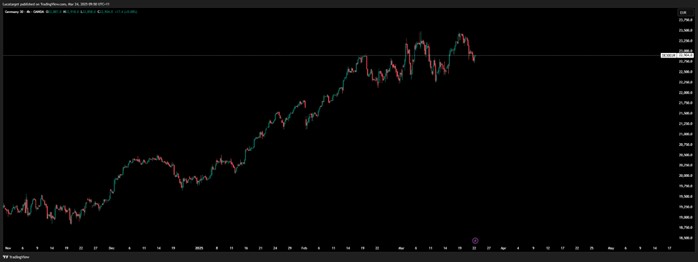
The newly approved 500 billion EUR infrastructure fund marks a historic shift in Germany’s economic policy. For years, the country has operated under stringent fiscal constraints, but this package will allow for significant public investment. A substantial portion of these funds 100 billion EUR will be directed toward the Climate Transition Fund (KTF), while the remaining allocations will bolster federal and state-level projects, emphasizing infrastructure, defence, and digitalization.
Additionally, a major revision to Germany’s debt rules will exempt defence spending above 1% of GDP from the constitutional debt brake. This effectively removes the cap on military expenditures, enabling the government to pursue a more ambitious defence strategy. However, key details, such as the timeframe and specific budgetary allocations, remain uncertain.
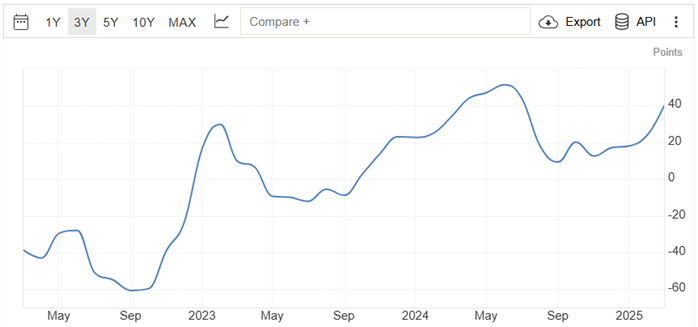
The shift in fiscal strategy has already bolstered business confidence, with indicators like the ZEW expectations index reaching a three-year high. Initial projections suggest that German GDP growth could rise to 1.7% in 2026, a notable improvement from the earlier forecast of 1.1%.
However, growth risks remain skewed to the downside. One immediate concern is the looming introduction of new U.S. tariffs on European goods, expected on April 2. The policy, which aims to match foreign trade barriers with reciprocal tariffs, could strain EU-U.S. trade relations, particularly given the bloc’s significant trade surplus with the U.S. If these measures escalate into a broader trade dispute, Germany’s export-driven economy could face renewed headwinds.
Another factor to watch is the health of the U.S. economy itself. Weakening consumer demand and ongoing inflationary pressures in the U.S. could dampen European export prospects, even in the absence of a trade war. Additionally, Germany’s labour market dynamics pose a unique risk: many firms have avoided layoffs despite stagnation, banking on a future recovery. Should demand conditions worsen, a wave of delayed job cuts could materialize, further challenging growth momentum.
Germany’s fiscal shift undoubtedly represents a pivotal moment for the European economy. The injection of public investment could provide much-needed stimulus, especially in infrastructure and digitalization. However, the success of this initiative will depend on how swiftly and effectively funds are deployed.
Looking ahead, the balance between fiscal stimulus and external risks will define Germany’s economic trajectory. If the government moves decisively in implementing its spending plans while mitigating trade-related risks, the country could be positioned for a stronger-than-expected recovery. Conversely, delays in execution or escalating trade tensions could temper the anticipated benefits of the fiscal expansion.
In the coming months, all eyes will be on Berlin not just for budget allocations but for signs of how quickly this policy shift translates into tangible economic gains.
This content may have been written by a third party. ACY makes no representation or warranty and assumes no liability as to the accuracy or completeness of the information provided, nor any loss arising from any investment based on a recommendation, forecast or other information supplies by any third-party. This content is information only, and does not constitute financial, investment or other advice on which you can rely.
ACY Securities is one of Australia's fastest growing multi-asset online trading providers, offering ultra-low-cost trading, rock-solid execution, technologically superior account management and premium market analysis.

Select the categories and companies you wish to follow directly to your person rss feed.
Create Custom RSS FeedSign up and join over 5,000 professional members who receive personalized news alerts, curated professional connections, and more for free!
Multi-asset trading broker AvaTrade has agreed to acquire the majority of FXCM Group’s business and brand, in a transaction that would bring a longstanding retail FX franchise into the AvaTrade Group.
LSEG and CMC Markets have signed a multi-year strategic data agreement expanding CMC's access to LSEG's real-time and delayed pricing, reference and corporate actions data, news and analytics, plus AI-ready content, to support new products, entry into new markets and the growth of CMC's institutional and B2B partnerships.
The Tel Aviv Stock Exchange is considering a bid for the Cyprus Stock Exchange, with Israeli media citing its EU licence, trading platform and clearing house. Euronext’s Athens exchange and India’s National Stock Exchange are also seen as contenders, and Cyprus aims to sign a sale agreement by the end of this year.
CME Group will launch baseball futures on 12 October, pending regulatory review, tracking CME FutureSports Performance Indexes built on Official League Data. Standard and micro contracts will start with the 2026 Postseason and the four clubs in the League Championship Series, trading around the clock.
ESMA has published an opinion stating that MiCA-authorised crypto-asset service providers should cease services tied to non-MiCA-compliant stablecoins for EU clients across MiCA crypto-asset services. National authorities should require remediation of existing exposures within three months, by early January 2027.
Nasdaq Ventures has made a strategic investment in Amsterdam-based derivatives and crypto exchange One Trading, with both firms to explore 24/7 trading of equity futures. The undisclosed investment follows Nasdaq's US$100 million investment in Payward, the parent of Kraken, and CME Group's move to 24/7 trading.
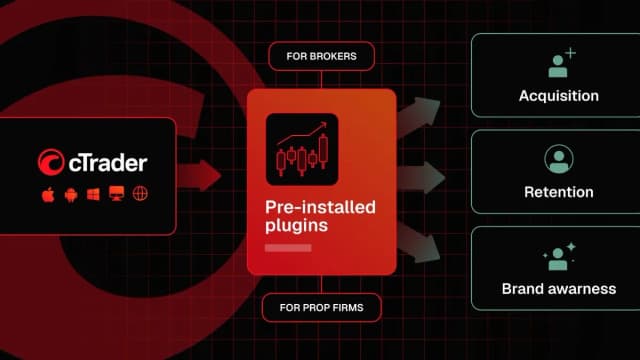
cTrader has opened multi-platform plugins to brokers and prop firms, which can pre-install their own tools for clients or list them in cTrader Store. The plugins run across Mobile, Web, Windows and Mac, and can be built and launched independently of core-platform releases, including trading journals and calculators.
Institutional brokerage and financial infrastructure provider Clear Street has joined TradingView’s broker network, allowing its clients to trade US stocks, exchange-traded funds and options directly through the charting and analysis platform.
Learn how to improve trading psychology, manage fear and greed, avoid revenge trading, and follow your trading strategy with discipline and a trading journal.
GTC Prime has announced a strategic partnership with Centroid Solutions to manage and distribute its liquidity through CS 360 Bridge, Centroid's multi-asset connectivity and execution engine, giving brokers and institutional clients access to tailor-made pricing, low-latency execution and real-time risk management.