
just now


Liquidity Finder Ltd is incorporated in England and Wales, company number 10610740, registered address 167-169 Great Portland Street, Fifth Floor, London W1W 5PF, United Kingdom.
Published: just now


The Australian dollar has recently emerged as one of the weakest performers among the G10 currencies, reflecting broader shifts in market sentiment that extend beyond Australia’s borders. A key driver behind this underperformance has been the disappointing updates from China’s National Development and Reform Commission (NDRC). Despite reaffirming their commitment to accelerate fiscal spending, the Chinese authorities’ announcements lacked the bold measures anticipated by the markets. This has resulted in a ripple effect across Asian and commodity-linked currencies, reinforcing the view that economic momentum in the region remains fragile.
AUDUSD H1
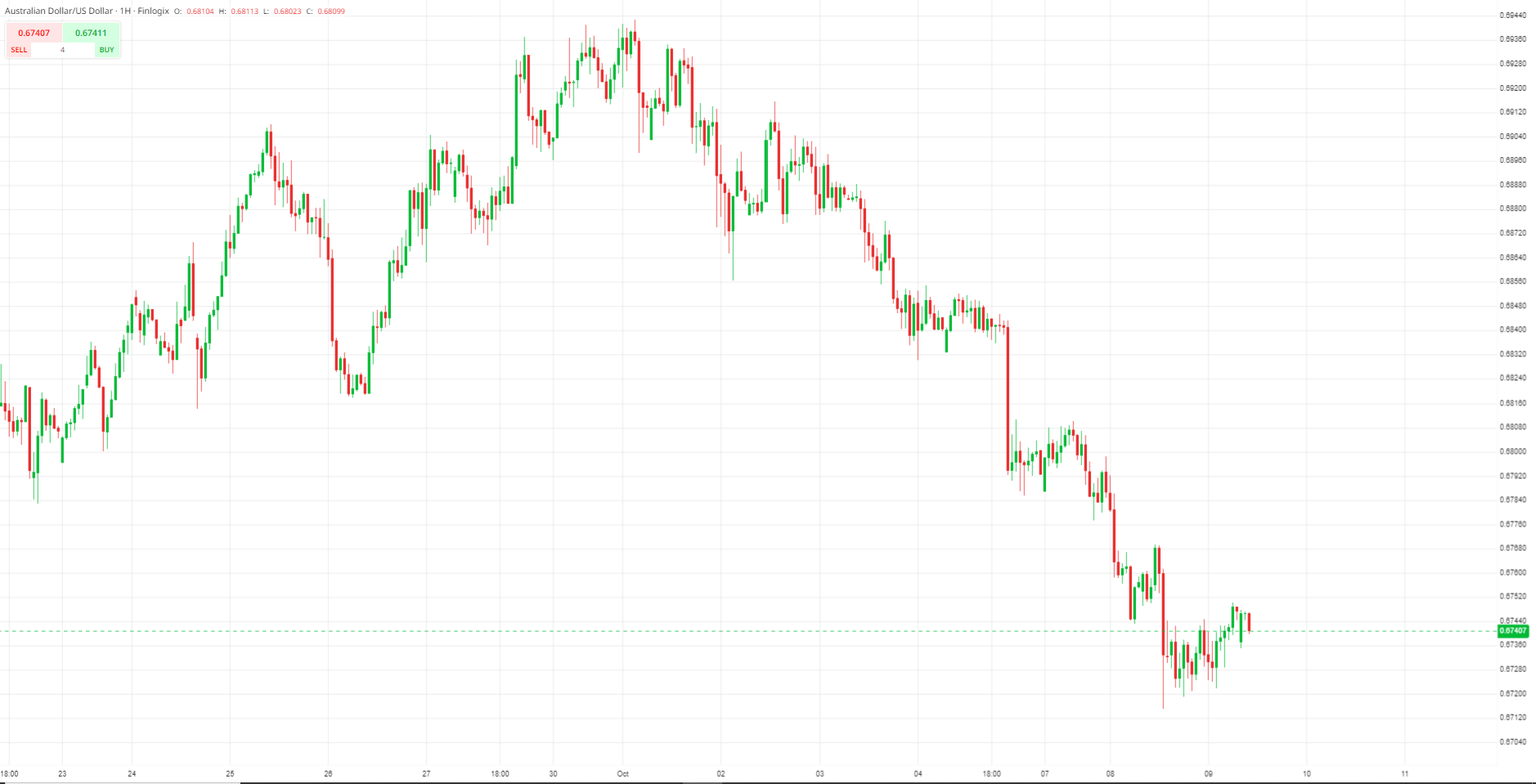
China's Fiscal Policy Updates and Their Implications
In its most recent update, the NDRC outlined several initiatives aimed at stabilizing China’s economic landscape, focusing primarily on fiscal injections and infrastructural support. The key components included:
While these steps are indicative of Beijing’s intention to meet its 5% growth target for 2024, they fell short of the scale of fiscal expansion—rumoured to be up to CNY3 trillion—that many market participants were hoping for. This has kept broader sentiment muted, as structural challenges like high corporate debt and softening domestic demand suggest that these measures alone may not be sufficient to reinvigorate economic growth. The cautious market reaction is also a reminder of China’s complex balancing act between supporting short-term growth and avoiding long-term financial instability.
Australian Dollar Impacted by RBA’s Policy Shifts
Australian dollar has faced additional headwinds due to evolving domestic monetary policy. The Reserve Bank of Australia’s (RBA) September meeting minutes revealed a potential pivot towards a more dovish stance, dropping previous indications that further rate hikes were off the table. This shift has fuelled speculation that a rate reduction could occur before the end of the year, reflecting growing concerns over weaker domestic economic data and global uncertainties. Futures markets are now pricing in a nearly 50% probability of a 25-basis point cut by December, a stark reversal from the earlier tightening narrative.
This dovish tilt by the RBA has further weakened the AUD, exacerbating its sensitivity to external shocks, particularly given the currency’s traditional reliance on global risk appetite and commodity price dynamics. With China being Australia’s largest trading partner, the lacklustre fiscal response from Beijing only adds to the AUD’s vulnerability.
Emerging Market Currencies Face Renewed Pressure
Emerging market currencies have not been immune to the recent volatility. The resurgence of the U.S. dollar, driven by both geopolitical concerns and shifting expectations around U.S. monetary policy, has reversed some of the gains these currencies achieved earlier in the year. The currencies most affected include:
In contrast, the Mexican peso (MXN) has bucked the trend, appreciating 2% over the past week. Its resilience is underpinned by robust economic fundamentals and relatively high interest rates, which continue to attract foreign capital despite global headwinds.
US Dollar Rallies on Geopolitical and Policy Shifts
The U.S. dollar’s recent strength can be attributed to a confluence of factors, including geopolitical uncertainties and evolving monetary policy expectations. Rising tensions in the Middle East have sparked fears of disruptions in global energy supplies, pushing Brent crude prices close to USD 80 per barrel. This has heightened risk aversion, leading investors to seek safety in the USD. Additionally, the upcoming U.S. presidential election adds another layer of uncertainty, making the dollar a favoured asset in times of heightened geopolitical risk.
From a policy perspective, a stronger-than-expected September nonfarm payroll report has prompted speculation that the Federal Reserve may slow its rate-cutting pace, with a smaller 25 basis point reduction anticipated following the elections. This has further bolstered the dollar’s upward trajectory, particularly against a backdrop of dovish signals from other major central banks, including the European Central Bank (ECB) and the Bank of England (BoE).
Pressures Mount on European and Central European Currencies
European currencies, too, have struggled under the weight of slowing growth and a soft inflation outlook. This has put pressure on regional central banks to consider additional monetary easing, which in turn has weighed on Central European currencies. The most notable impacts have been seen in:
The outlook for these currencies remains challenging, particularly as the ECB contemplates a slower pace of policy normalization, which could prolong the relative weakness of the euro and its regional counterparts.
Looking Ahead
As we move forward, the interplay between fiscal policies, geopolitical developments, and central bank decisions will be pivotal in shaping the FX landscape. Key themes to watch include:
These factors will likely fuel further volatility across global currency markets, with a high potential for unexpected shifts as economic and political uncertainties evolve.
This content may have been written by a third party. ACY makes no representation or warranty and assumes no liability as to the accuracy or completeness of the information provided, nor any loss arising from any investment based on a recommendation, forecast or other information supplies by any third-party. This content is information only, and does not constitute financial, investment or other advice on which you can rely.
ACY Securities is one of Australia's fastest growing multi-asset online trading providers, offering ultra-low-cost trading, rock-solid execution, technologically superior account management and premium market analysis.

Select the categories and companies you wish to follow directly to your person rss feed.
Create Custom RSS Feed
just now
Sign up and join over 5,000 professional members who receive personalized news alerts, curated professional connections, and more for free!
Multi-asset trading broker AvaTrade has agreed to acquire the majority of FXCM Group’s business and brand, in a transaction that would bring a longstanding retail FX franchise into the AvaTrade Group.
LSEG and CMC Markets have signed a multi-year strategic data agreement expanding CMC's access to LSEG's real-time and delayed pricing, reference and corporate actions data, news and analytics, plus AI-ready content, to support new products, entry into new markets and the growth of CMC's institutional and B2B partnerships.
The Tel Aviv Stock Exchange is considering a bid for the Cyprus Stock Exchange, with Israeli media citing its EU licence, trading platform and clearing house. Euronext’s Athens exchange and India’s National Stock Exchange are also seen as contenders, and Cyprus aims to sign a sale agreement by the end of this year.
CME Group will launch baseball futures on 12 October, pending regulatory review, tracking CME FutureSports Performance Indexes built on Official League Data. Standard and micro contracts will start with the 2026 Postseason and the four clubs in the League Championship Series, trading around the clock.
ESMA has published an opinion stating that MiCA-authorised crypto-asset service providers should cease services tied to non-MiCA-compliant stablecoins for EU clients across MiCA crypto-asset services. National authorities should require remediation of existing exposures within three months, by early January 2027.
Nasdaq Ventures has made a strategic investment in Amsterdam-based derivatives and crypto exchange One Trading, with both firms to explore 24/7 trading of equity futures. The undisclosed investment follows Nasdaq's US$100 million investment in Payward, the parent of Kraken, and CME Group's move to 24/7 trading.
cTrader has opened multi-platform plugins to brokers and prop firms, which can pre-install their own tools for clients or list them in cTrader Store. The plugins run across Mobile, Web, Windows and Mac, and can be built and launched independently of core-platform releases, including trading journals and calculators.
Institutional brokerage and financial infrastructure provider Clear Street has joined TradingView’s broker network, allowing its clients to trade US stocks, exchange-traded funds and options directly through the charting and analysis platform.
Learn how to improve trading psychology, manage fear and greed, avoid revenge trading, and follow your trading strategy with discipline and a trading journal.
GTC Prime has announced a strategic partnership with Centroid Solutions to manage and distribute its liquidity through CS 360 Bridge, Centroid's multi-asset connectivity and execution engine, giving brokers and institutional clients access to tailor-made pricing, low-latency execution and real-time risk management.