just now


Liquidity Finder Ltd is incorporated in England and Wales, company number 10610740, registered address 167-169 Great Portland Street, Fifth Floor, London W1W 5PF, United Kingdom.
Published: just now
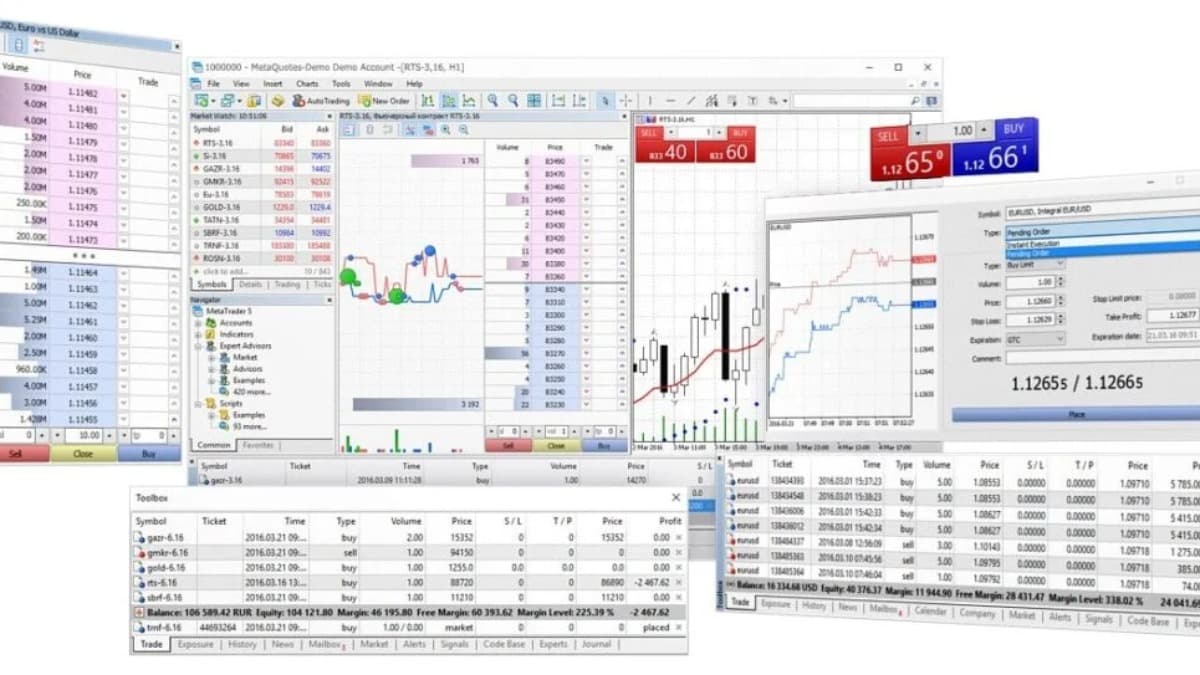
Launching a forex or CFD brokerage on MetaTrader 4 or MetaTrader 5 is significantly more complex than simply acquiring a platform licence. The way your MetaTrader environment is configured from day one determines your execution quality, your risk management effectiveness, your clients’ trading experience, and ultimately your brokerage’s profitability. A poorly configured platform creates problems that are difficult and costly to fix after launch – from execution issues and pricing discrepancies to risk gaps that expose your business to unexpected losses.
In this guide we walk through the key components of a professional MetaTrader platform setup – what needs to be configured, why each element matters, and what the most common mistakes are that brokers make when setting up their trading infrastructure.
Before any platform configuration begins, you need a stable, reliable server environment to host your MetaTrader infrastructure. This is the foundation everything else is built on – and compromising on server quality at this stage creates problems that no amount of configuration can fix.
MetaTrader servers have specific hardware and connectivity requirements that must be met to ensure stable operation under live trading conditions. Key considerations include:
A standard MetaTrader deployment consists of multiple server components that need to be correctly installed and configured to work together. These include the trade server, the data centre server for client connectivity, and various gateway components that handle connections to liquidity providers and external systems. Each component needs to be correctly sized and configured for your expected load.
Your instrument configuration is one of the most complex and consequential aspects of your MetaTrader setup. Every symbol you offer to clients needs to be correctly configured across a large number of parameters – and errors in symbol configuration are one of the most common sources of execution issues, pricing discrepancies, and client complaints.
For each instrument on your platform, you need to correctly configure:
The most common symbol configuration errors we encounter when auditing broker platforms include incorrect tick values that cause profit and loss calculation errors, swap rates that have not been updated following LP changes, trading sessions that do not match actual market hours, and margin requirements that do not reflect the broker’s intended risk parameters. Any of these errors can result in client disputes, financial losses, or regulatory issues.
Client groups are one of the most powerful and most misunderstood features of the MetaTrader platform. Groups allow you to apply different trading conditions to different segments of your client base – giving you precise control over the trading environment each client type experiences.
A well-designed group structure allows you to:
Most brokers launch with a basic group structure and add complexity over time as their business evolves. However getting the foundational group architecture right from the start avoids costly restructuring later.
For brokers operating an A-book or hybrid execution model, the liquidity bridge is the critical infrastructure that connects your MetaTrader platform to your liquidity providers. The bridge handles order routing, pricing aggregation, execution rules, and exposure management in real time. A poorly configured bridge leads to execution failures, pricing gaps, and exposure mismatches that directly impact your brokerage’s financial performance.
Your risk parameters define the boundaries within which your clients can trade and the controls that protect your brokerage from excessive exposure. Getting these right from launch is one of the most important things you can do to protect your business.
Most professional MetaTrader deployments include one or more plugins that extend the platform’s functionality – from risk management tools and reporting systems to PAMM solutions and bonus management systems. Each plugin needs to be correctly installed, configured, and tested before go-live to ensure it operates as intended without affecting platform stability.
Plugin conflicts and misconfiguration are a common source of platform instability and execution issues. Any plugin installation should be followed by thorough testing in a demo environment before being applied to live trading infrastructure.
Trading sessions and market holidays need to be correctly configured for every instrument on your platform. When sessions are incorrectly set, trading may be available when the underlying market is closed – resulting in stale pricing, execution failures, and client complaints. Market holidays need to be pre-configured in advance to prevent trading during scheduled market closures.
For brokers with large instrument ranges covering multiple asset classes – forex, indices, commodities, equities, and crypto – managing sessions and holidays across hundreds of symbols is a significant ongoing operational task. Tools like our Holiday Setter automate this process, allowing brokers to configure holidays across all symbols simultaneously using a simple CSV upload.
Before going live with client funds, your MetaTrader platform needs to be thoroughly tested across all its configured components. This includes:
It is important to understand that MetaTrader platform setup is not a one-time task. Once your platform is live, it requires continuous ongoing attention to remain correctly configured. Swap rates need to be updated weekly. Market holidays need to be pre-configured monthly. Margin requirements shift. New instruments need to be onboarded. Daylight Saving Time changes need to be managed twice a year. Symbol sessions need to be adjusted as market hours evolve.
Many brokers underestimate this ongoing operational burden when they launch – and find themselves spending significant time and resources on routine platform maintenance that distracts from their core business activities. This is one of the primary reasons brokers choose to outsource their platform management to a specialist team.
At Broktinger, our team has spent 15+ years setting up and managing MetaTrader 4 and MetaTrader 5 platforms for brokers of all sizes. We offer a range of services and tools designed to make platform setup and ongoing management faster, more accurate, and less operationally demanding:
Once your MetaTrader platform is set up and running, many brokers look to connect third-party applications – whether a custom web trading terminal, a mobile app, or an analytics tool – directly to their MT4 or MT5 server. Read our guide on how to connect a third-party platform or build your own front-end on MetaTrader to understand how this works and what it requires.
Whether you are setting up a new MetaTrader platform from scratch or looking to audit and optimise an existing setup, get in touch with our team for a free consultation. We will assess your requirements and show you exactly how we can help you build and maintain a professional, high-performance MetaTrader environment.
Learn more: https://broktinger.com/
Industry leaders in outsourced dealing desk, risk management and platform development for FX and CFD brokers. Building MT4/MT5 tools, reporting solutions and API integration, plugins.
Select the categories and companies you wish to follow directly to your person rss feed.
Create Custom RSS FeedSign up and join over 5,000 professional members who receive personalized news alerts, curated professional connections, and more for free!
Exchange FZE (GCEX) has appointed Alya Marrakchi as Managing Director, following approval from Dubai's Virtual Assets Regulatory Authority (VARA). Marrakchi joined GCEX in June 2025, building institutional relationships across the UAE and GCC. Her promotion follows Mohammed A. Mulla's appointment as a GCEX Dubai board member.
XS.com has appointed Kasem Hekal as Senior Business Development Manager in Dubai, UAE. He brings over 15 years of financial services experience, including a decade in FX and derivatives sales, and previously held roles at Accuindex MENA, ATFX, MultiBank Group, GKFX and FXOpen.
ATFX Connect has supplied institutional multi-asset liquidity to a new South African FX and CFD brokerage, supported by white-label infrastructure from strategic partner L7 Prime. Founded on an existing IB network across Southern Africa, the brokerage launched in under four weeks and generated recurring revenue within 90 days.
MarketsVox has introduced 24/7 trading on Gold, Silver, WTI and Brent crude CFDs, giving clients round-the-clock access to key commodity markets. The launch is part of the broker's 2026 roadmap, alongside Client Area and Partner Area updates. CEO Joe Roeder says clients "should not have to wait for a trading session to open."
Bybit has launched Perp Options, described as the first options contracts built on TradFi perpetuals, giving traders round-the-clock access to US equity options. SpaceX and Nvidia are the first underlying assets, with USDT settlement and integration into Bybit's Unified Trading Account.
Use this trading preparation checklist to plan your session, define entry rules, manage risk, and build a disciplined trading routine in seven steps.
Your Bourse expands its crypto liquidity ecosystem with Caladan, giving brokers access to broader market coverage, institutional execution capacity and streamlined settlement.
Scope Markets, the retail brokerage part of Rostro Group, has appointed Ibrahim Hossny as Head of Research and Marketing for the Middle East and North Africa.
Hantec Prime, the institutional division of Hantec Markets, has reported trading volume up more than 300% year-to-date, alongside the addition of 42 new institutional clients since December, capping one of its strongest years of growth to date.
Learn how to refine XAUUSD support and resistance on the daily chart using candle bodies, market structure and weekly gold levels for swing trading. A slug alone cannot guarantee a top Google ranking. Keep it focused rather than adding every supporting keyword.