
Explore Companies BySectors & Categories
Explore Companies ByUse Cases
Explore Companies ByProducts & Services
Explore Companies ByRankings & Reviews
Featured NewsCompaniesMarketsCryptoTechRegulatoryCommentaryUKUSWorldMore

    Latest Wires

      Daily Newsletter

      LF Daily News

      Daily industry focused newsletter giving you an overview for the financial & finTech industry.

      See All Newsletters
      By clicking "Sign Up" you are agreeing to our Terms of Service and Privacy Policy

      Trump Tariffs Explained – Everything Global Businesses Need to Know | Equals Money

      Published: just now

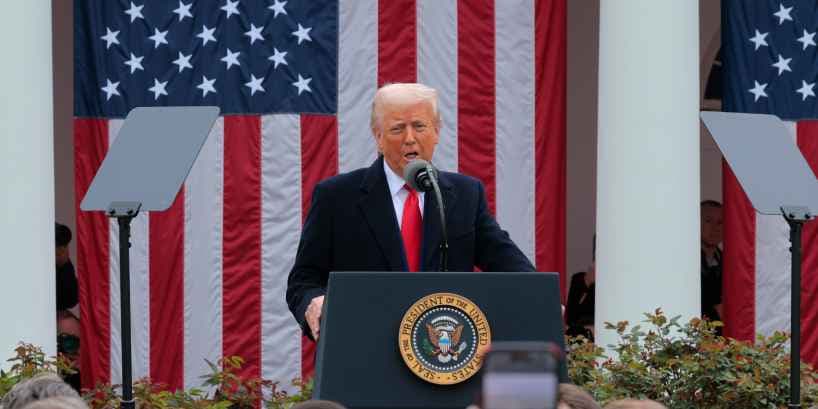
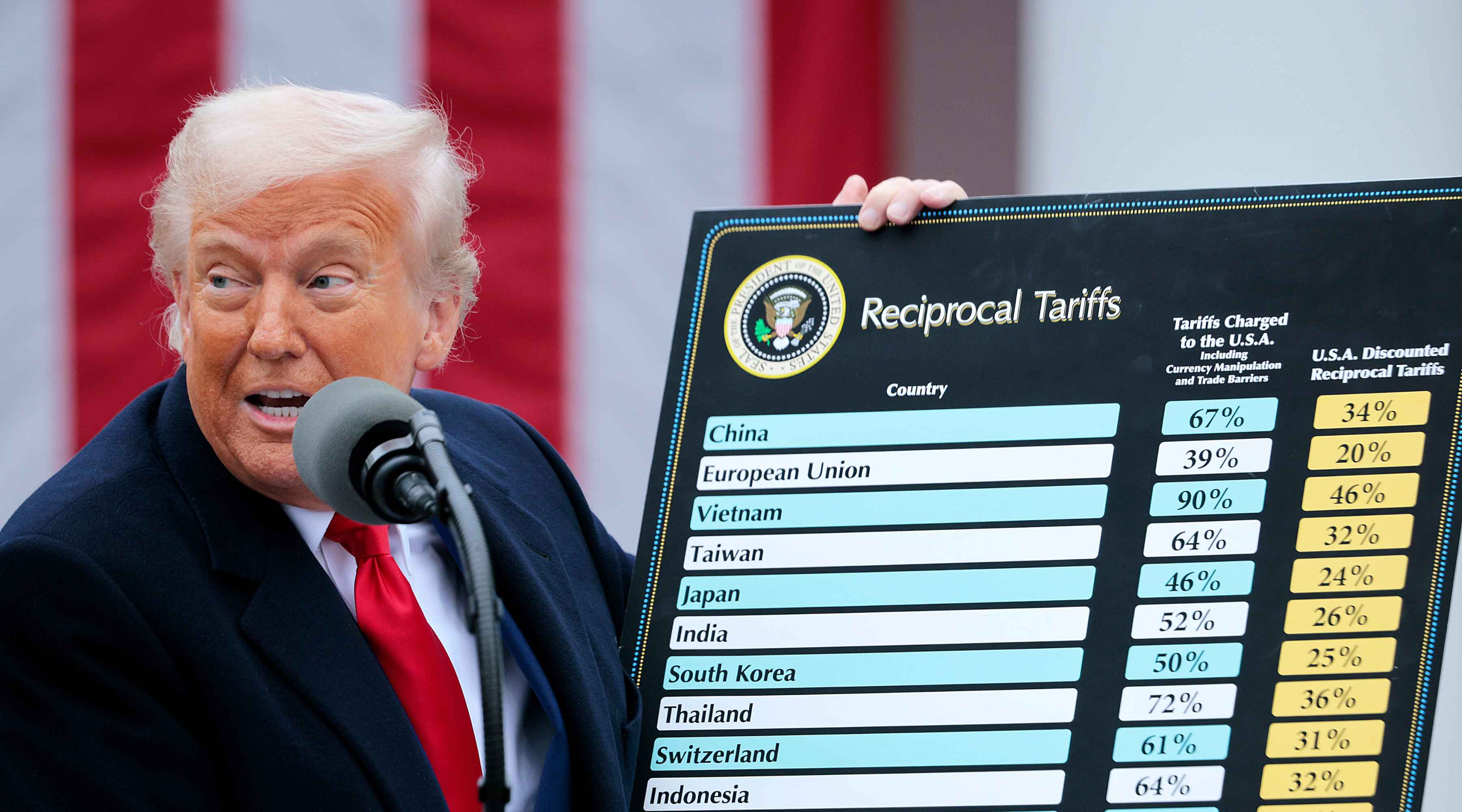
      Trump addressing the press, discussing his "Liberation Day" tariffs.

      Key Takeaways:


      • On April 2, 2025, President Donald Trump declared a 10% universal tariff on all U.S. imports, alongside additional country-specific tariffs, marking a major shift in U.S. trade policy.
      • Countries like China (54% effective tariff), Vietnam (46%), and the EU (20%) face steep new tariffs, while Canada and Mexico were excluded from further increases.
         
      • Supporters applauded the move as long overdue, but critics warned of global retaliation, rising inflation, supply chain disruptions, and potential WTO challenges. U.S. stock markets dipped sharply following the announcement.
      • Following the introduction of his tariffs, Donald Trump said he was open to negotiations with other countries—provided they offered something “phenomenal” in return.
      • On April 9, 2025, Trump paused planned “reciprocal” tariffs for 90 days, keeping a 10% baseline, but raised Chinese import tariffs to 125%, easing short-term market fears while deepening long-term economic uncertainty amid an escalating trade war with China.

      Please note: This article covers a developing story. Information included is current at the time of publication but may change as new details emerge. For the most up-to-date version, read on our website: Trump Tariffs Explained – Everything Global Businesses Need to Know

      For the latest expert insights on worldwide currency movements and their impact on FX, global businesses, and more, subscribe to our Daily Currency News reports.
       

      ​On April 2, 2025, United States President Donald Trump announced a series of sweeping tariffs, collectively referred to as the "Liberation Day" tariffs. These tariff announcements, while expected, are set to significantly impact global trade relations and have profound implications for international businesses.

      This article breaks down what these tariffs are all about, their specifics, and what they could mean for businesses with a global footprint.
      Visual content

      ‍‍

      What Are Tariffs and Why Are They Used?

      Tariffs are taxes imposed by a government on imported goods. These tariffs on imports are duties typically paid by the importer and can vary in rate depending on the product type, country of origin, or geopolitical context.

      ‍ 

      The Purpose of Tariffs

      Governments can use and implement import tariffs for several reasons:
       

      • Protect domestic industries: By making foreign goods more expensive, tariffs encourage consumers to buy local and domestic products. This can remove foreign competition, which is often beneficial for domestic producers.
      • Generate revenue: In some countries (especially developing economies), tariffs, import fees, and import taxes can serve as a major source of government income.
      • Address trade imbalances: Tariffs can be used to reduce imports and improve the trade deficit.
      • Leverage in negotiations: Tariffs are often used as a bargaining chip in trade deal negotiations, as seen in the 2025 "Liberation Day" tariffs.

      Overview of the "Liberation Day" Tariffs

      What was Liberation Day?

      Liberation Day, observed on April 2, 2025, marked the day President Donald Trump announced a sweeping set of economic measures aimed at what he called “reclaiming America’s economic sovereignty.”

      The name “Liberation Day” was coined by Trump himself during a live broadcast from the White House, positioning the event as a symbolic reset of America’s global trade posture.

      According to the Trump administration, Liberation Day signifies:

      • The beginning of a new trade era in which the U.S. will no longer tolerate what it views as unfair trade deficits and foreign subsidies.
      • The enforcement of “reciprocal tariffs”, aimed at mirroring or exceeding the trade barriers imposed by other nations on U.S. goods.
      • A declaration of economic independence, similar in tone to historical patriotic milestones like Independence Day or the end of World War II.

      Trump supporters hailed the day as a necessary stand against globalisation and outsourcing, while critics labeled it a dangerous escalation that could trigger widespread trade wars and harm global supply chains.

      Either way, Liberation Day is poised to become a major milestone in U.S. trade policy, and its effects are already being felt across international markets.

      Trump's Import Tariffs

      In his announcement, President Trump declared a national economic emergency, citing a substantial U.S. trade deficit as the impetus for these tariffs.1 He introduced a two-tier tariff structure:

      1. Universal Tariff: A baseline tariff of 10% on all imported goods into the United States, effective April 5, 2025.​2
      2. Country-Specific Tariffs: Additional tariffs on imports from specific countries, deemed necessary to address unfair trade practices. These tariffs are scheduled to take effect on April 9, 2025.​

      The rationale behind these reciprocal tariff rates provided by the administration is to rectify what it perceives as long-standing imbalances and unfair practices in international trade.

      President Trump framed this initiative as a "Declaration of Economic Independence," aiming to bolster domestic manufacturing and reduce trade deficits.3
      Visual content

      Specific Tariff Rates by Country

      The individual country-specific tariffs vary significantly, reflecting the administration's assessment of each nation's trade practices.4 Notable examples include:​

      • China 🇨🇳 : An additional 34% tariff (bringing the total effective tariff rate to 54% on Chinese imports).
      • European Union 🇪🇺 : A 20% tariff on EU goods.
      • Vietnam 🇻🇳 : A 46% tariff.
      • Japan 🇯🇵 : A 24% tariff.
      • India 🇮🇳 : A 27% tariff.

      However, no additional tariffs have been announced for Canada or Mexico. Both countries were already subject to tariffs introduced in February, although these have since been partially reversed.

      China, meanwhile, will now face a combined effective tariff rate of 54%, with the newly introduced 34% rate added to the existing 20%.

      Market Reaction and Criticism

      These tariffs have drawn swift market reaction and intense criticism from economists, trade groups, foreign governments, and even some U.S. business leaders.

      While supporters praise the policy as a long-overdue correction to global trade imbalances, critics argue that the tariffs could spark a trade war, increase consumer prices, and ultimately weaken the American market and economy.

      Key criticisms include:

      • Risk of global trade retaliation: Economists warn that high tariffs often invite tit-for-tat countermeasures. The European Union and China have already signalled that retaliatory tariffs are under consideration, which could hurt American industry exporters (particularly in agriculture, automotive, and technology sectors).5
      • Volatility in financial markets: U.S. stock markets responded with sharp declines following the Liberation Day announcement, with both the S&P 500 and Dow Jones both dropped by over 2% on April 3, as investors braced for economic uncertainty and global instability.6
      • Impact on inflation: With a blanket 10% tariff on all imports (and higher rates on select countries) analysts fear that prices for everyday goods and U.S. domestic products will rise. This could further fuel inflation, which remains a persistent concern for U.S. households.7
      • Pushback from domestic producers and U.S. businesses: Industry groups such as the U.S. Chamber of Commerce and the National Retail Federation have issued statements urging the administration to reconsider the tariff on imports, citing concerns over supply chain disruptions and increased costs for American companies.8
      • Legal and Trade Agreement Concerns: Trade lawyers have raised questions over whether the new tariffs comply with existing World Trade Organization (WTO) obligations. Some analysts predict an uptick in trade disputes filed against the U.S. in international courts.9
         

      Impact on Global Businesses

      The introduction of these tariffs is set to have far-reaching effects on global businesses.

      Companies importing goods from a foreign country or foreign producer into the U.S. (especially from targeted countries) face increased costs, which may be passed on to consumers through higher prices.

      Businesses with complex international supply chains could be forced to reassess their operations, potentially seeking new suppliers, trading partners, or relocating production.

      The announcement has already triggered volatility in global financial markets, fuelled by investor concerns over a possible trade war and tariff responses. Additionally, the risk of retaliatory tariffs from other nations for American imports threatens to further strain international trade and impact export-reliant industries.
      Visual content

      Steps for Businesses to Consider

      In light of these developments, global businesses should consider the following actions:

      1. Evaluate supply chains: Assess current supply chains to identify vulnerabilities and explore alternative sourcing options to mitigate tariff impacts.​
      2. Financial planning: Incorporate potential tariff-related costs into financial forecasts and pricing strategies to maintain profitability.​
      3. Stay informed: Keep up to date on ongoing trade negotiations and potential policy changes to anticipate and respond to further developments.​
      4. Engage with Trade Associations: Collaborate with industry groups to advocate for favourable trade policies and gain insights into collective strategies for navigating the new tariff landscape.​
      5. Currency hedging: Consider implementing or adjusting currency hedging strategies to manage potential exchange rate volatility triggered by shifting trade dynamics and market uncertainty.

      The "Liberation Day" tariffs represent a significant shift in U.S. trade policy with far-reaching implications for global commerce. Businesses must proactively assess and adapt to these changes to navigate the evolving international trade environment effectively.
      ‍‍

      Tariff Revisions: Trump Signals Flexibility

      Following the introduction of his tariffs, Donald Trump said he was open to negotiations with other countries—provided they offered something “phenomenal” in return.

      Speaking to reporters aboard Air Force One, Trump reiterated his belief that other nations have taken advantage of the United States for years, and that he intends to put a stop to it.

      “The tariffs give us great power to negotiate,” he said, noting that “every country has called us.”

      When asked what might prompt him to ease the tariffs, Trump replied: "If somebody said that we're going to give you something that's so phenomenal, as long as they're giving us something that's good."10

      This softening of tone suggests that the administration views the Liberation Day tariffs as a negotiation tool rather than a permanent policy fixture.
       

      Tariff Updates: A 90-Day Pause on Reciprocal Tariffs

      On April 9, 2025, President Donald Trump announced a 90-day suspension of the planned country-by-country “reciprocal” tariffs, maintaining a 10% baseline tariff. However, Trump also stated that tariffs on Chinese imports would rise to 125%, as retaliation in an escalating trade war.

      Trump’s sudden U-turn on a key policy aimed at undoing decades of globalisation temporarily eased a week of market turmoil and calmed fears among U.S. investors over the impact of unilateral import tariffs on key allies.

      Despite this temporary relief, the intensified trade conflict with China and the remaining tariffs continue to contribute to economic uncertainty and concerns over a potential recession.11


      Please note: This article covers a developing story. Information included is current at the time of publication but may change as new details emerge. For the most up-to-date version, read on our website: Trump Tariffs Explained – Everything Global Businesses Need to Know

      For the latest expert insights on worldwide currency movements and their impact on FX, global businesses, and more, subscribe to our Daily Currency News reports.


      Sources used in this article:
       

      1. The Guardian – Trump announces tariffs in ‘Liberation Day’ live coverage
      2. NPR – Trump calls tariff plan ‘Liberation Day’ for U.S. industry
      3. New York Post – Trump says ‘Liberation Day’ and reciprocal tariffs will be a declaration of economic independence
      4. BBC News – Trump’s trade plans spark global reaction
      5. AP News – World reacts to Trump’s sweeping new tariffs
      6. The Washington Post – Trump tariffs shake U.S. stock market
      7. TIME – Are Trump’s tariffs pushing the U.S. toward recession?
      8. Thomson Reuters Tax & Accounting – What Trump’s global tariff announcement means for trade professionals
      9. Pinsent Masons – Trump's ‘Liberation Day’ tariffs could reshape future trade deals
      10. Sky News – Trump’s third-term hints, tariffs, and global market response: Live updates
      11. The Independent – Trump pauses China tariffs rollout, but markets remain jittery


      This publication is intended for general information purposes only and should not be construed as financial, legal, tax, or other professional advice from Equals Money PLC or its subsidiaries and affiliates.

      It is recommended to seek advice from a financial advisor, expert, or other professional. We do not make any representations, warranties, or guarantees, whether expressed or implied, regarding the accuracy, or completeness of the content in the publication.

      Power your brokerage with Equals Money's named accounts and multi-currency IBANs—configured for CFD trading.

      This content may have been written by a third party. LiquidityFinder makes no representation or warranty and assumes no liability as to the accuracy or completeness of the information provided, nor any loss arising from any investment based on a recommendation, forecast or other information supplies by any third-party. This content is information only, and does not constitute financial, investment or other advice on which you can rely.
      Comments
      Most Recent
      Written By
      Daily Newsletter

      LF Daily News

      Daily industry focused newsletter giving you an overview for the financial & finTech industry.

      See All Newsletters
      By clicking "Sign Up" you are agreeing to our Terms of Service and Privacy Policy
      RSS Feeds

      Create a custom RSS Feed

      Select the categories and companies you wish to follow directly to your person rss feed.

      Create Custom RSS Feed

      Related Categories:

      Related Tags:

      #TrumpTariffs#TradePolicy#LiberationDay#ImportDuties#ChinaTariffs#GlobalTrade#SupplyChain

      Related Articles:

      Find The Right Partners for
      Your Trading Business

      Sign up and join over 5,000 professional members who receive personalized news alerts, curated professional connections, and more for free!

      Sign Up with LinkedIn
      Create Your FREE Account
      Get access to latest news, updates, real-time data, brokerage and trading firm insights and customized information feeds.

      Binance has launched Pre-IPO perpetual futures contracts, providing early market exposure to high-profile private companies like SpaceX, democratising access to pre-public listing trading opportunities for eligible users.

      just now

      Cantor, a global investment bank, has received approval from the Financial Services Regulatory Authority (FSRA) of ADGM to conduct regulated financial activities in Abu Dhabi, marking a significant expansion in the Middle East.

      just now

      Curious about the latest Bitcoin price action? Discover if BTC/USD will keep dropping using daily chart analysis and a proven crypto trading strategy.

      just now

      Empire FX has appointed Sahil Patel as Chief Operating Officer to lead its global operations and accelerate expansion across Africa, the Middle East, and Asia. Patel brings extensive experience from Pepperstone and IG Group to strengthen infrastructure and enhance client experience.

      just now

      WTI dropped below $100 after reports suggested a US-Iran agreement could be getting closer, with Arab media outlet Al Hadath reporting that Pakistan’s army chief Asim Munir may visit Iran to announce…

      Image for Oil Slips as Trump Signals US-Iran Talks in “Final Stages”
      just now

      Sui has announced gasless stablecoin transfers, a new protocol-level feature enabling users and businesses to send supported stablecoins without gas fees. Fireblocks has already integrated the solution, marking a significant step towards simplifying digital asset payments for institutional and retail users.

      just now

      Discover what reverse copy trading is, explore social trader tools and copy trading platforms for online trade copying. Optimize your strategy with professional insights on reverse trading techniques.…

      just now

      NVDA enters tonight's $5.7T print with a stacked deck against it — the bear case needs only one leg to break, the bull case needs all three to clear elevated whispers.

      just now

      dxFeed has integrated Kalshi, a CFTC-regulated prediction market exchange, into its Event-Based Contracts Market Data Feed, offering real-time data on binary outcome markets.

      just now

      MEXC reports a sharp increase in traditional finance futures trading, with AI semiconductor assets leading the surge. The platform highlights how crypto exchanges are becoming a preferred route for users to gain exposure to TradFi markets, offering zero fees and stablecoin settlement.

      just now

      Bitget Wallet has integrated xStocks, expanding its tokenised equities and RWA offering to over 300 assets for its 90 million users. The move provides self-custodial access to tokenised stocks, ETFs, and commodities, alongside cryptocurrencies, with low fees and gasless execution.

      just now

      MARKET REPORT UK jobs data adds to GBP uncertainty ahead of tomorrow's CPI To talk to us about your next trade, call 020 7778 7500 or hit the button below Email us   USD falls for the first time…

      Image for UK jobs data adds to GBP uncertainty ahead of tomorrow's CPI
      just now

      Market drivers and catalysts Equities:  US stocks were mixed, Europe rose on energy and de-escalation hopes, while Asia struggled with oil and yields. Volatility:  VIX eases, bond yields ele…

      Image for Market Quick Take – 19 May 2026
      just now

      LiquidityMatch LLC, the parent company of FXSpotStream, has launched RateStream LLC, a dedicated streaming solution for the Fixed Income markets that applies the commercial model that transformed FX trading over the past decade to one of the largest and most actively traded markets in the world.

      just now

      Yes, a cloud-based trade copier can be significantly more flexible than a traditional VPS-based setup, especially for traders or signal providers managing multiple accounts across different platforms.…

      Image for How does a modern, cloud-based trade copier differ from traditional VPS-based trade copiers?
      just now

      Market drivers and catalysts Equities:  US and European stocks fell as yields and oil rose, Asia weakened, with Korea’s chip rally hitting a wall. Currencies:  The US dollar rallies broadly…

      Image for Market Quick Take – 18 May 2026
      just now

      MARKET REPORT Sterling suffers worst week since November 2024 as political crisis deepens To talk to us about your next trade, call 020 7778 7500 or hit the button below Email us   USD delivers i…

      Image for Sterling suffers worst week since November 2024 as political crisis deepens
      just now

      🇸🇬 Singapore doesn't do noise. Finance Magnates Singapore Summit 2026 was exactly that — concentrated, serious, and the kind of room where every conversation counts. The APAC market is a different b…

      just now

      For years, self-managed super funds (SMSFs) have been heavily invested in shares, property, and cash. However, that is now changing as a growing number of Australian retirement investors are adding Bi…

      Image for Bitcoin in SMSFs: Why Australian Retirement Investors Are Allocating to Crypto in 2026
      just now

      Upcomers, a fast-growing prop trading firm, has partnered with cTrader to bring its clients a premium trading platform shaped around the way traders of all experience levels think, act and grow. …

      Image for Upcomers adds cTrader to foster a transparent trading environment and help traders succeed
      just now
      Feed