
just now


Liquidity Finder Ltd is incorporated in England and Wales, company number 10610740, registered address 167-169 Great Portland Street, Fifth Floor, London W1W 5PF, United Kingdom.
Published: just now

The 2024 US presidential elections, scheduled for November, could be a close one. Incumbent President Joe Biden and former President Donald Trump are the favourites, while the US has gone through nothing short of an economic rollercoaster ride and has a difficult road ahead. Yet, 12 months is a long time in politics and voter sentiment is most affected by the events in the few weeks just before the polls. The impact on markets, however, comes down to the policy of the leaders in the running. And, more importantly, how far they control the White House and Congress, which represents the resistance they may face in implementing their policies.
Bidenomics has successfully brought inflation down. Although the inflation rate continues to be higher than the central bank’s target of 2%, it has eased by around 60 percentage points from the 2022 peak. The labour market is strong, with unemployment rates remaining below 4% for 20 months to November 2023. GDP growth accelerated at an annualised rate of 4.9% in Q3, from 2.1% in Q2.
Even then, soaring inflation seems to have created chronic wounds that no amount of Biden’s speeches emphasizing gains can possibly heal. A survey released earlier this month by The New York Times and Siena College showed more than 80% voters believed the economy is doing fairly or poorly under the current president. If this sentiment persists, we could see Donald Trump at the helm again.
Here's a look at whether his policies can ‘Make America Great Again’ again!
Many benefits set up under Trump's Tax Cuts and Jobs Acts will reach expiry by 2025. America’s largest overhaul of the tax code in three decades is on the agenda. Being a nationalist and a populist, Trump will likely sustain tax cuts for longer, at least till 2027. That’s great news for businesses and consumers. But, what about inflation? Tax cuts fuel inflationary pressures.
While lower taxes trigger inflation, Trump has vowed to lower interest rates. Around this time last year, the US dollar had hit a 20-year high. Since then, the US dollar index has declined to around 104 and market sentiment remains neutral, as can be seen on Acuity’s AssetIQ widget.
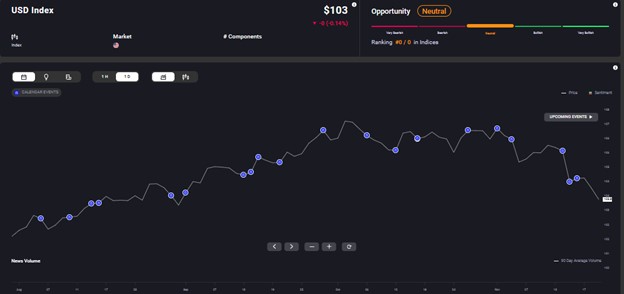
Trump lowering interest rates could result in significant pressure on the greenback. This will impact all currency pairs, as the US dollar is involved in more than 80% of all trades in the forex market.
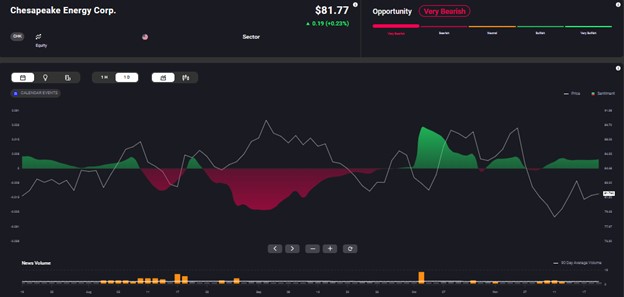
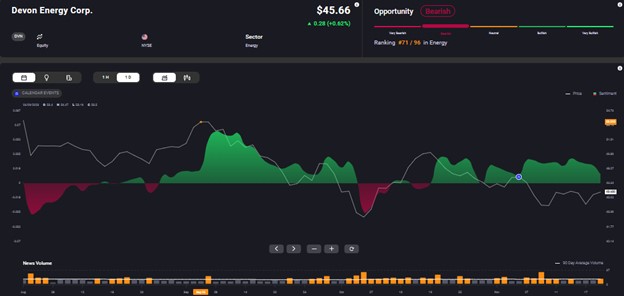
Trump does have an answer to inflation. He believes he can get inflation under control by drilling for oil. The current negative sentiment for energy stocks could reverse if Trump wins the presidential elections. Is drilling for oil enough to control inflation?
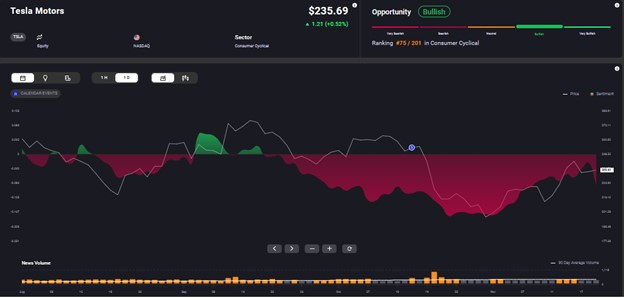
With significant clean-energy tax credits and Medicare drug price negotiations, IRA spurred an investment of $132 billion across over 250 green projects in the country. If Trump takes the Presidential seat, he could stifle the climate law. He has already voiced his concerns regarding the government "pouring out" money for the initiative. This will directly break the US dream of becoming a world leader in undoing climate change. Although existing initiatives will continue, there could be a decline in fresh investments in EVs and offshore wind sectors, reversing the current bullish sentiment.
Trump imposed more tariffs than any other US president in almost 100 years. The self-proclaimed "Tariff Man" plans to levy about 10% of taxes across the board tripling the American tariff in a single swoop and increasing penalties for those who adopt unfair practices. The direct costs will hurt consumers and producers. Protected industries in the US, such as steelmakers, textiles, and apparel, may expand, but they will get away with lower standards than their global counterparts. Reportedly, every job created by Trump's tariffs in his previous tenure cost steel-using businesses $650,000.
The 10% levy may cost American households $2,000 annually. This could have a direct impact on retail and consumer durables stocks.
The former US President plans to launch the biggest deportation effort in the history of the US and end the automatic citizenship of children of immigrants born in the country. A working paper from the National Bureau of Economic Research suggests that illegal immigrants are expected to contribute $5 trillion to the US economy in next the 10 years. With an unemployment rate under 5%, massive deportation is bound to leave agriculture and construction devoid of workers, as there is little evidence to show that the existing workforce is willing or adequate to fill vacated posts.
In the long term, increasing automation may lessen the requirement of manual labour, although in the near term, labour-intensive sectors may need to pay higher wages. In recent years, immigrants in America have become more educated and skilled, driving innovation and economic growth with a higher rate of patents. Trump’s policy may have far-reaching consequences and impact the country's ability to attract skilled immigrants.
The bottom-line is that people are overwhelmed with the current state of the economy and Trump promises the world to them. Trump winning the 2024 elections could give a fillip to market sentiment. US stock markets had reached record-breaking highs when Trump won the previous elections and history tends to repeat itself. This could be followed by heightened volatility as Trump rolls out his policies, which could again trigger geopolitical tensions.
 |
By Andrew Lane CEO and Founder, Acuity Trading
|
For over 10 years our focus has been to revolutionise the trading experience for investors around the world with powerful, alternative data that promotes better understanding of the financial markets.

Select the categories and companies you wish to follow directly to your person rss feed.
Create Custom RSS FeedSign up and join over 5,000 professional members who receive personalized news alerts, curated professional connections, and more for free!
CMC Markets has retired the CMC Connect name and will now present its institutional business as CMC Markets Institutional.
The SEC has approved Cboe's binary options tied to key performance indicators reported by 23 companies, covering more than 100 metrics such as iPhone revenue. The cash-settled contracts pay a fixed $1, Robinhood plans to be the first retail broker to offer them, and trading awaits clearing registration.
Gold is trading around $4,150, recovering sharply after falling to a recent low of $4,073.

Global semiconductor and technology stocks sold off sharply on Thursday, with South Korea’s SK Hynix plunging over 10% and Samsung Electronics falling more than 8%.
Learn gold market structure to identify bullish, bearish and ranging XAUUSD trends using higher highs, higher lows, lower highs and lower lows, support and resistance.
Axi has launched an MCP integration connecting eligible MT5 accounts to Claude, allowing clients to access live market data, track positions, execute trades and update risk parameters through the AI assistant developed by Anthropic. Available to eligible Axi clients with an active MT5 account. Setup runs via Claude.ai.
Movantis has selected Integral to extend its FX liquidity offering for institutional clients including banks, payment networks and digital asset operators, adding an institutional trading platform, direct-to-client API trading and API connectivity into a third-party multi-dealer venue, supporting regional expansion.
Running a venue around the clock is the easy part. Pricing risk when the market underneath it is shut is not. Lars Holst, CEO of GCEX explains how to manage risk in 24/7 markets.
ATFX has released its Q4 2026 Trader Magazine, offering a closer look at the macroeconomic and market forces that could shape trading conditions in the final quarter of the year.
LSEG has announced a collaboration with NVIDIA that lets financial institutions analyse years of LSEG Tick History data in seconds using NVIDIA cuDF on GPUs, without creating another full copy of the dataset. Tick History holds 110 trillion rows across 100 million instruments and more than 580 venues and contributors.