just now


Liquidity Finder Ltd is incorporated in England and Wales, company number 10610740, registered address 167-169 Great Portland Street, Fifth Floor, London W1W 5PF, United Kingdom.
Published: just now

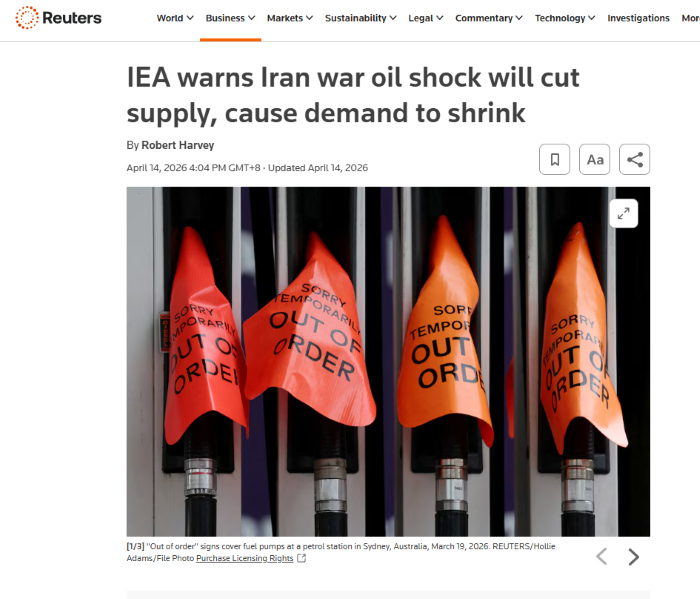
After a series of volatility, WTI (West Texas Intermediate) has stabilized between 89.00 and 90.00. The successful blockade of the Strait of Hormuz and strains in the ceasefire between Israel and Lebanon have cut off millions of barrels of Middle Eastern output. The inconsistency between forecasting agencies is rising. OPEC or Organization of the Petroleum Exporting Countries has dropped its second quarter demand prediction by 500,000 barrels per day to 105.07 million barrels per day, specifying a momentary lapse. However, projections from the U.S. Energy Information Administration or EIA and the International Energy Agency or IEA have been slashed, shows more sharp decline in global demand.
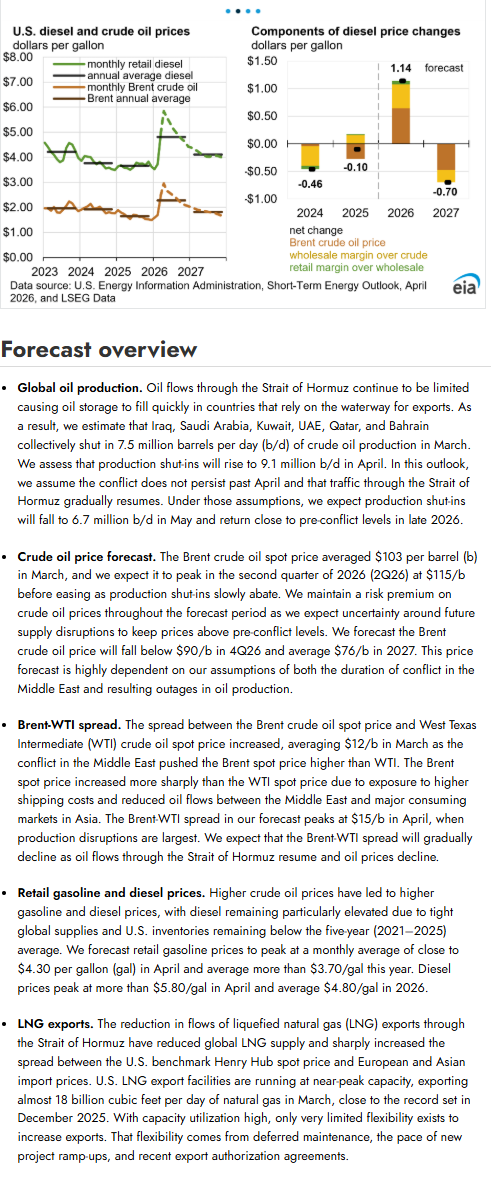
U.S. inventories are dropping rapidly than expected signals increase in prices. Since oil is priced in USD, a strong dollar makes it more expensive for the rest of the world resulting in decrease in demand. With the IEA (International Energy Administration) and EIA's (U.S. Energy Information Administration) outlook that we'll have too much oil by the end of the year, it creates a ceiling that prevents prices from breaking out.
To date, the OPEC basket price dropped by 104.56 from previous week’s 107.19. This is a signal the cooling of war premium.
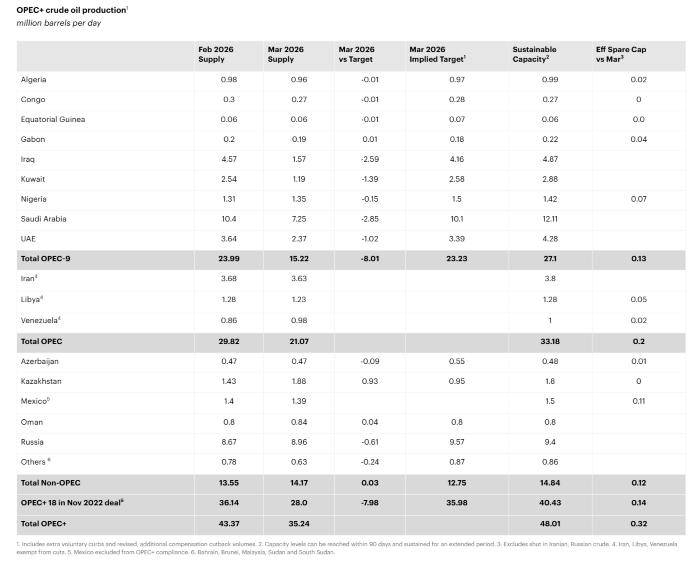
Table shows how OPEC supply declining for months February and March due to involuntary supply disruptions in KSA (Kingdom of Saudi Arabia) and Iraq oil fields rooted from the blockades and infrastructure damages. Despite deep reserves, the alliance is effectively maxed out by regional conflict, keeping global supply in a chokehold that naturally inflates the price floor.
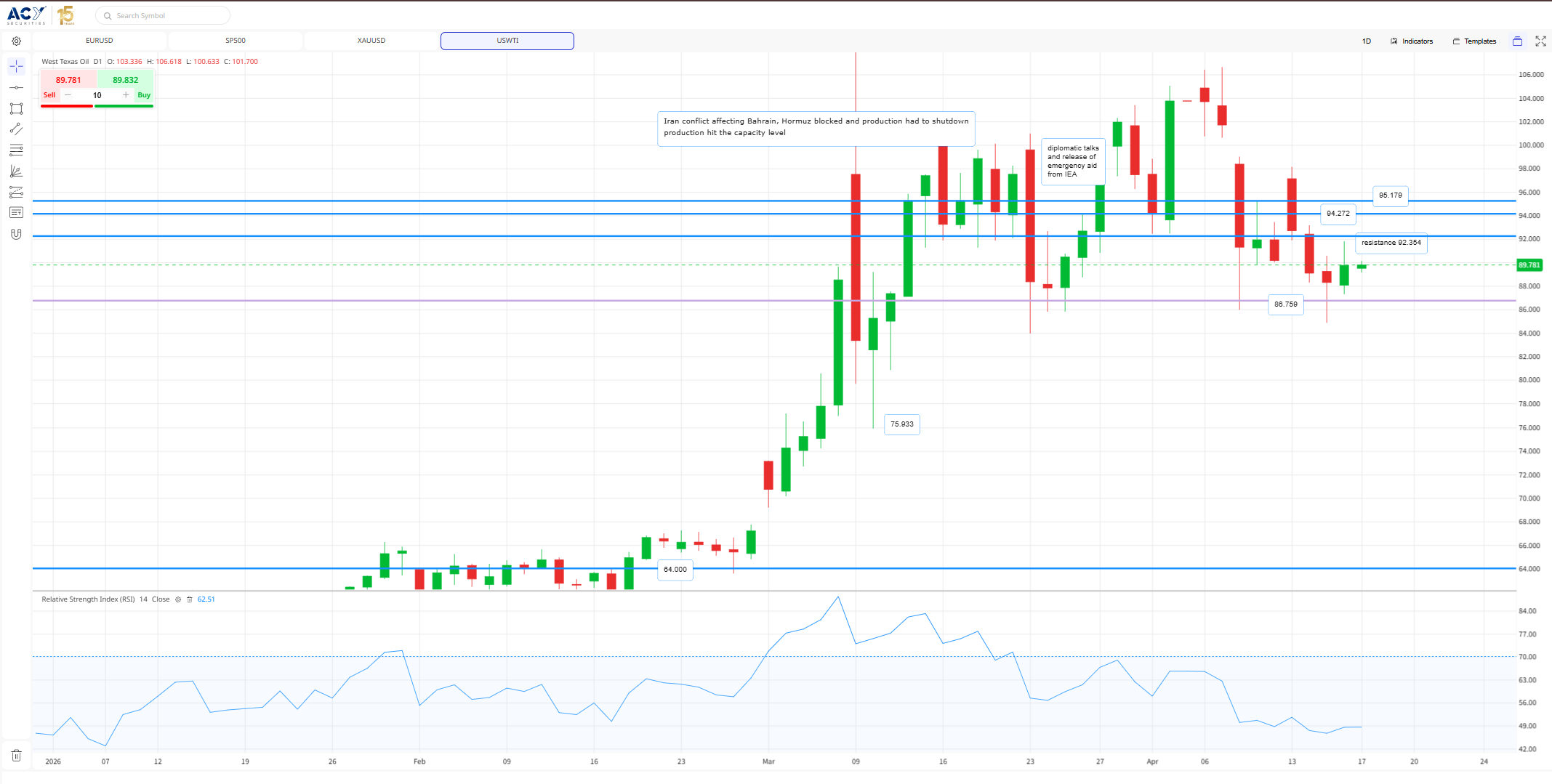
Daily chart
We expect bearish consolidation for the WTI (West Texas Intermediate) since the level is grappling to maintain the 89.00 level providing bearish momentum from the RSI (Relative Strength Index).
WTI is in a stalemate near $89.50. While the 10-day Israel-Lebanon ceasefire is cooling the fear-based price premium, a massive supply shortage is preventing a crash. Even as tensions gradually ease, the 12.77 million barrels per day deficit in OPEC output means physical oil is still in short supply from the market. WTI remains confined in a battle, peace talks are making the prices drop yet the shortage sustains high price floor.
Disclaimer: This content may have been written by a third party. ACY makes no representation or warranty and assumes no liability as to the accuracy or completeness of the information provided, nor any loss arising from any investment based on a recommendation, forecast or other information supplies by any third-party. This content is information only, and does not constitute financial, investment or other advice on which you can rely.
ACY Securities is one of Australia's fastest growing multi-asset online trading providers, offering ultra-low-cost trading, rock-solid execution, technologically superior account management and premium market analysis.

Select the categories and companies you wish to follow directly to your person rss feed.
Create Custom RSS FeedSign up and join over 5,000 professional members who receive personalized news alerts, curated professional connections, and more for free!
Why did gold keep falling after reaching $3,880? See how a failed 4-hour retest confirmed weakness in XAUUSD and why $3,400 is the next weekly support to watch.
Reality television personality Aaron Chalmers and finfluencer Jason Agbodza have been fined after pleading guilty to illegally promoting an unauthorised foreign exchange trading scheme on social media.
UK retail sales rose a stronger-than-expected 0.7% in October, giving sterling some support, while a deepening tech sell-off pushed the dollar lower overnight against all major currencies. Thanim Islam, Head of FX Analysis at Equals, says the dollar remains in charge as the week ends, with the Fed expected to raise rates more than both the Bank of England and the ECB.
Nvidia beats expectations, reporting $115.8bn in revenue and raising its long-term growth outlook, but the stock still struggled to sustain its gains. AI remains fundamentally strong, but investor expectations are becoming more demanding, particularly around capex and profitability. Wall Street suffered a major sell-off, with the S&P 500 entering a six-session losing streak as rate concerns intensified.
iSAM Securities reviews the ris of weekend gold trading
Webull Corporation reported record third quarter 2026 revenue of $218.7 million, up 39% year-on-year, with customer assets reaching $32.4 billion and options contracts volume up 79%. Net income attributable to the company was $31.2 million, while margin debit balances passed $1 billion for the first time.
Anthropic, the company behind the Claude family of AI models, begins trading on the Nasdaq today under the ticker ANT. It priced its shares at $83 last night, above its marketed range of $70 to $78, and raised about $81.3 billion. That makes it the largest initial public offering on record, ahead of the roughly $75 billion SpaceX raised in June. This note covers what investors need to know: the terms, the business, how the company is governed, and what to watch.
Nvidia's first results without Jensen Huang answered the question that has hung over the AI trade since October. Revenue of $115.8 billion beat consensus by about $7 billion, fourth-quarter guidance of $130 billion came in roughly $5 billion above expectations, and the company raised its outlook for next fiscal year to around 75% growth. All of this assumes no data-centre sales to China.
Marex has entered the football financing market through a partnership with specialist sports investment and advisory firm Pinto Capital, targeting clubs in the Premier League and EFL Championship.
Around 110,000 UK retail investors have secured $300 million worth of Anthropic shares in its record-breaking $81 billion IPO. The heavily oversubscribed offer, coordinated by RetailBook, saw smaller investors prioritised, with 63% of applicants receiving their full allocation.