Every first Friday of the month, there’s one event that I never miss: the Non-Farm Payroll (NFP) report. If you’ve been trading for a while, you already know that this release can shake up the markets in ways that few other reports can. If you’re new to trading, let me tell you—this is where you can find some of the best opportunities, but only if you approach it the right way.
Over the years, I’ve developed a simple yet highly effective strategy for trading NFP using EUR/USD. I don’t like to overcomplicate things, and I certainly don’t gamble on the outcome before the release. Instead, I focus on understanding expectations, preparing for volatility, and reacting with a clear trading plan. Today, I’ll break down my step-by-step approach to trading NFP the way I do it—real, practical, and backed by experience.
Why is NFP So Important for Traders and for the Market?
Before we jump into the strategy, let’s quickly cover why the Non-Farm Payroll report is such a big deal in the market.
The NFP measures how many new jobs were added (or lost) in the U.S. economy, excluding farm workers, government employees, and non-profit workers. It’s one of the strongest indicators of economic health. If the job market is strong, it means people are working, spending, and driving economic growth. If it’s weak, it signals potential economic trouble ahead.
But here’s the key part: the NFP doesn’t just move the U.S. dollar—it moves everything. It affects forex pairs, stock indices, commodities like gold, and even bond yields. That’s why traders all over the world are glued to their screens when the numbers drop. Want to see how traders take advantage of NFP volatility? Watch our "How to Trade the Non-Farm Payroll" video below:
How I Prepare for NFP Trading
One mistake many traders make is going in blind, hoping to make a quick profit just by reacting to the number. That’s a dangerous game. Instead, I prepare ahead of time so that when the release happens, I already have a good idea of what might come next.
1. Checking Market Expectations & Central Bank Sentiment
A few days before NFP, I start by checking what the market is expecting. Finlogix Economic Calander will show the forecasted NFP number. This is the key to understanding market sentiment.
Here is an example from Finlogix Economic Calendar

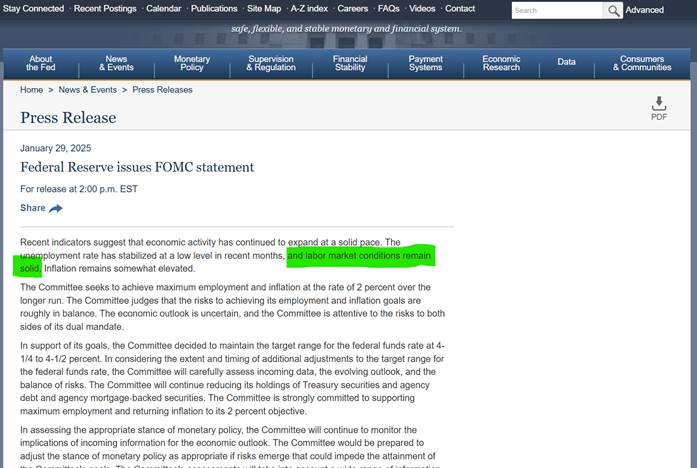
But I don’t stop there. I also look at what the Federal Reserve has been saying recently. If the Fed is already signalling that the labour market is strong, a better-than-expected NFP might not be a huge surprise—so the reaction could be smaller. But if the Fed is uncertain or expecting weakness, then a strong NFP could shock the market and cause a big USD rally. You can find those releases on HERE at the official website.
FOMC Rate Statement
This is why I always check the minutes from the last Fed meeting or recent speeches from key policymakers. It helps me gauge whether the market is overestimating or underestimating the potential impact of the NFP report.
2. Understanding the Expectation vs. Reality Factor
Here’s something that trips up a lot of traders: it’s not just about whether the NFP number is good or bad—it’s about how it compares to expectations.
Let’s say analysts expect 200,000 new jobs to be added. If the actual report comes out at 210,000, you’d think that’s good news, right? But if the market was already pricing in a strong number, then the reaction might be muted.
Now, let’s flip it—if the report comes out way below expectations, say 120,000, that’s a big disappointment. The market wasn’t prepared for that, so the reaction could be a much stronger move as traders scramble to adjust.
This is where volatility comes in. When expectations are completely off, the market has to re-price everything quickly, leading to those huge, sharp moves that can either make or break your trade.
My NFP Trading Strategy: The EUR/USD Play
Now, let’s talk about how I trade NFP. I focus on EUR/USD because it’s the most liquid forex pair, meaning it usually has the lowest spreads, even during volatile events.
Step 1: Waiting for the Release – No Early Entries
I never enter a trade before the NFP report comes out. Why? Because trying to guess the number is gambling, and I don’t trade on luck—I trade on information.
At exactly 8:30 AM ET, the NFP numbers drop, and the market reacts instantly. This is where I sit back and watch for the first few minutes.
Step 2: Reading the First Move & Confirming the Direction
The first thing I look for is the initial spike—does EUR/USD shoot up or drop sharply? This first move often happens within seconds, but I don’t trade it yet. Instead, I wait for a possible pullback or continuation signal.
- If the NFP number is stronger than expected, the U.S. dollar strengthens, which usually means EUR/USD drops.
- If the NFP number is weaker than expected, the U.S. dollar weakens, which usually means EUR/USD rises.
Step 3: Entering the Trade on the Retest
Once the initial move happens, the market sometimes pulls back before continuing in the same direction. This is where I enter.
For example, if NFP is stronger than expected, and EUR/USD drops, I wait for a small retracement up before entering a short trade. My stop-loss goes just above the recent high, and my target is the nearest support level.
If the NFP number is weaker than expected, and EUR/USD spikes up, I wait for a small pullback before entering a long trade, with my stop-loss below the recent low.
Step 4: Taking Profits & Avoiding Overtrading
My first profit target is usually the nearest support or resistance level. If the price reaches that level and shows signs of slowing down, I close part of my position and move my stop-loss to break even to protect myself.
I never overtrade NFP. Once I get a solid trade and lock in profits, I step away. Volatility can be crazy after the release, and trying to chase multiple trades often leads to unnecessary losses.