just now


Liquidity Finder Ltd is incorporated in England and Wales, company number 10610740, registered address 167-169 Great Portland Street, Fifth Floor, London W1W 5PF, United Kingdom.
Published: just now
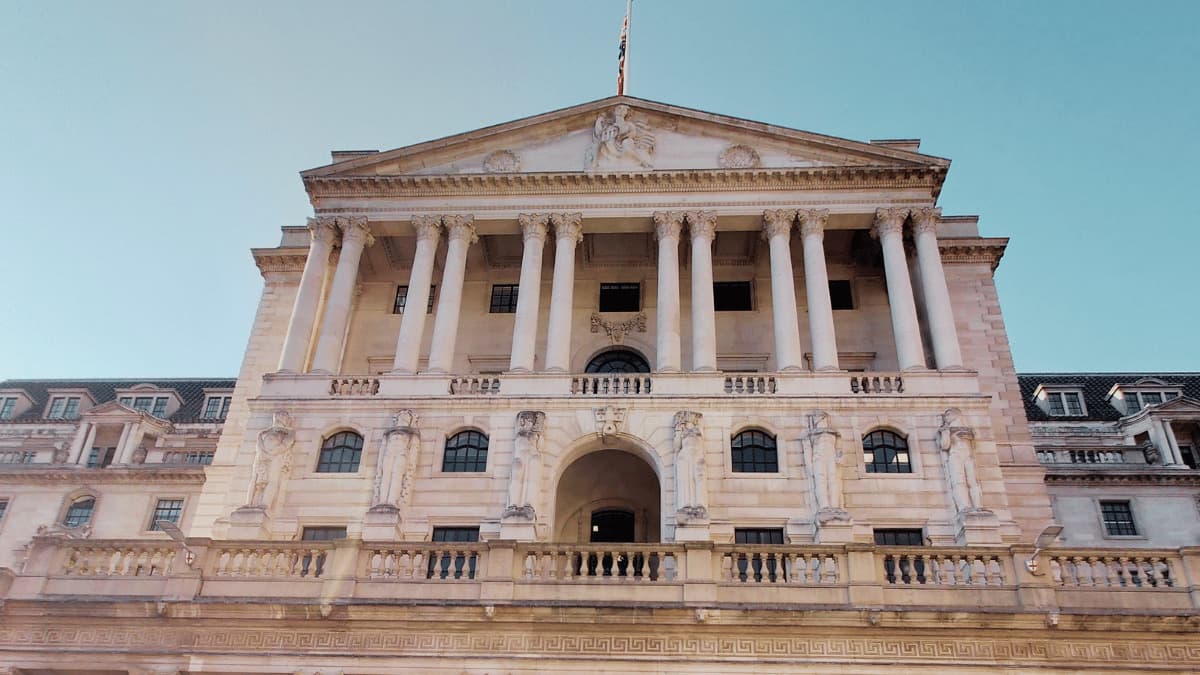
The Bank of England has published its policy statement and draft Code of Practice for systemic stablecoin issuers, setting out the rules that will govern sterling-denominated stablecoins large enough to matter to the UK financial system. Published on 22 June 2026, the package marks a key milestone in building the UK's stablecoin regime and clears a path for regulated stablecoins to operate from 2027.
The framework is designed to let UK-issued stablecoins develop as trusted forms of digital money while preserving confidence and stability across the wider payments system. The Bank says stablecoins could support faster, cheaper and more flexible services, including cross-border payments and programmable functionality, provided they are held to standards comparable to other forms of money.
The proposals published this week soften several of the more contentious measures the Bank consulted on in November 2025, following extensive feedback from issuers, fintech firms and trade bodies that warned the original design risked making a sterling stablecoin market uncompetitive before it began.
The headline change concerns what can back a coin. Under the revised rules, issuers may hold up to 70% of their backing assets in short-term UK government debt, up from the 60% the Bank proposed last year. The remaining 30% must sit in unremunerated deposits at the Bank of England, down from the 40% originally proposed, available to meet redemption requests promptly.
The shift matters because central bank deposits pay no interest, so the gilt allocation is what makes a stablecoin business commercially viable. Raising the ceiling from 60% to 70% was the single biggest concession to industry feedback, improving potential yields while still requiring enough cash-like reserves to absorb outflows during stress. The Bank declined to go further by allowing reserves in commercial bank deposits or money market funds, arguing those assets would increase contagion risk between stablecoins and the banking sector.
The second major revision removes the proposed caps on how much any one holder could own. The November 2025 consultation had floated limits of £20,000 per individual and £10 million per business, a feature that drew the loudest criticism on the grounds that it would make many real-world use cases impractical.
Those caps are gone. In their place, the Bank will apply a temporary issuance guardrail to each systemic stablecoin, initially set at £40 billion, roughly $53 billion. The Bank says this achieves the same financial-stability objective as holding limits, while being cheaper and easier to implement and allowing unrestricted use by households and businesses. The guardrail will be reviewed regularly and removed once risks to the supply of credit have been addressed.
The concern behind the cap is that rapid, large-scale migration of money out of bank deposits and into stablecoins could shrink banks' funding base and limit their ability to lend. The Bank framed the £40 billion ceiling as a transitional measure to protect the flow of credit rather than a brake on everyday users.
To gauge the scale, the Bank pointed to average daily volumes in Faster Payments and card schemes of around £1.4 billion to £2.2 billion, noting that a £40 billion issuance ceiling equates to roughly 10% of the average daily value processed through CHAPS. At that level, it argues, a systemic Sterling coin could support daily transaction volumes comparable to other major UK payment systems and serve as the cash leg of settlements in the Digital Securities Sandbox.
The number nonetheless sits well below the dollar incumbents. As the Financial Times reported, dollar stablecoins dominate a global market of around $315 billion, with Sterling tokens currently making up less than 0.5% of the total. That gap begs the question: whether a capped Sterling coin can build the working balances and network effects that USDT and USDC already enjoy, or whether it remains a largely domestic instrument.
Alongside the loosened reserve and issuance rules, the Bank is holding firm on consumer protection:
• Systemic stablecoins must remain redeemable at par within 24 hours
• Issuers cannot suspend redemptions even in periods of stress
• There is no minimum redemption amount
• Backing assets must be held in a statutory trust
• Issuers must keep enough capital and liquidity in a separate trust to fund an orderly wind-down.
The Bank also signalled a central bank liquidity facility that would let eligible issuers access funding during stress by pledging gilts as collateral.
On returns, the Bank will prohibit interest payments on systemic stablecoins but permit credit card-style rewards tied to transactions, a distinction that echoes concerns in the United States about stablecoins competing with bank deposits for savers. Commercial banks will be able to issue, but only through a ring-fenced, separately branded entity that does not take deposits.
The systemic regime is only one half of the UK's approach. The Bank's rules cover stablecoins used widely enough in payments to pose financial-stability risks, and HM Treasury, not the Bank, formally designates a coin as systemic under the Banking Act 2009. Coins used mainly to buy and sell cryptoassets, which remain the bulk of the market today, sit with the Financial Conduct Authority (FCA). The two regulators are coordinating an end-to-end regime, including a managed transition as a firm grows from non-systemic FCA supervision into joint Bank and FCA oversight. The FCA's gateway for authorisation applications opens on 30 September 2026, with its final rules expected shortly and the wider cryptoasset regime due to commence in October 2027.
In an interview with the Financial Times last month, Sarah Breeden, Deputy Governor for Financial Stability, at The Bank of England, had signalled that some of the Bank's proposals might be too restrictive and that it was open to different ways of addressing the risks, a direction confirmed by Monday's package.
City reaction has been broadly positive. Advocacy group Stand with Crypto UK called the removal of holding limits a significant step towards a more competitive framework, noting that more than 84,000 individuals had signed a petition calling for a proportionate approach. Fintech trade body Innovate Finance described the changes as an improvement while cautioning that the UK still maintains one of the more conservative frameworks globally, pointing to the requirement that 30% of reserves remain in non-interest-bearing deposits.
Some of the sharpest caveats came on backing assets and bank issuance. As reported by the Financial Times, clearing bank ClearBank welcomed the direction while warning that the backing-asset requirements still constrain sustainable business models, with Head of ClearBank Mark Fairless saying the rules would make it "near impossible" for commercial banks to issue stablecoins. The FT also reported reservations from US cryptocurrency exchange Coinbase, whose Head of Policy in Europe, Katie Harries, questioned how temporary the per-coin issuance cap would prove and observed that the UK is the only country to cap issuance of stablecoins in its own currency. She added that the country's wider tokenisation ambitions depend on whether stablecoins can be used for settlement in core wholesale markets.
A Financial Services Regulation Committee report on 3 June 2026 warned that the UK risked falling behind the United States and the European Union, and urged the Bank to reconsider holding limits and unremunerated backing requirements. Digital bank Revolut is among the firms preparing to test a pound stablecoin in the regulatory sandbox.
The Bank is seeking feedback on the draft Code of Practice until 22 September 2026 and intends to finalise it by the end of the year, with further joint material to follow alongside the FCA's final rules. If the timeline holds, regulated sterling stablecoins could begin operating in the UK from 2027.
"This is a major milestone in delivering greater choice and innovation in UK payments. Innovation thrives on trust. And today we've set out the foundations of that trust for a new form of money - with prompt redemption, strong protections and central bank support. This is truly a world leading regime." - Sarah Breeden, Deputy Governor for Financial Stability, Bank of England.
Found this interesting? Become a member of LiquidityFinder, join the community and join the discussion - join here.
We're the largest marketplace to connect with brokers, Fintech companies & digital asset firms. Want to partner? Let's get in touch.

Select the categories and companies you wish to follow directly to your person rss feed.
Create Custom RSS FeedSign up and join over 5,000 professional members who receive personalized news alerts, curated professional connections, and more for free!
Multi-asset trading broker AvaTrade has agreed to acquire the majority of FXCM Group’s business and brand, in a transaction that would bring a longstanding retail FX franchise into the AvaTrade Group.
LSEG and CMC Markets have signed a multi-year strategic data agreement expanding CMC's access to LSEG's real-time and delayed pricing, reference and corporate actions data, news and analytics, plus AI-ready content, to support new products, entry into new markets and the growth of CMC's institutional and B2B partnerships.
The Tel Aviv Stock Exchange is considering a bid for the Cyprus Stock Exchange, with Israeli media citing its EU licence, trading platform and clearing house. Euronext’s Athens exchange and India’s National Stock Exchange are also seen as contenders, and Cyprus aims to sign a sale agreement by the end of this year.
CME Group will launch baseball futures on 12 October, pending regulatory review, tracking CME FutureSports Performance Indexes built on Official League Data. Standard and micro contracts will start with the 2026 Postseason and the four clubs in the League Championship Series, trading around the clock.
ESMA has published an opinion stating that MiCA-authorised crypto-asset service providers should cease services tied to non-MiCA-compliant stablecoins for EU clients across MiCA crypto-asset services. National authorities should require remediation of existing exposures within three months, by early January 2027.
Nasdaq Ventures has made a strategic investment in Amsterdam-based derivatives and crypto exchange One Trading, with both firms to explore 24/7 trading of equity futures. The undisclosed investment follows Nasdaq's US$100 million investment in Payward, the parent of Kraken, and CME Group's move to 24/7 trading.
cTrader has opened multi-platform plugins to brokers and prop firms, which can pre-install their own tools for clients or list them in cTrader Store. The plugins run across Mobile, Web, Windows and Mac, and can be built and launched independently of core-platform releases, including trading journals and calculators.
Institutional brokerage and financial infrastructure provider Clear Street has joined TradingView’s broker network, allowing its clients to trade US stocks, exchange-traded funds and options directly through the charting and analysis platform.
Learn how to improve trading psychology, manage fear and greed, avoid revenge trading, and follow your trading strategy with discipline and a trading journal.
GTC Prime has announced a strategic partnership with Centroid Solutions to manage and distribute its liquidity through CS 360 Bridge, Centroid's multi-asset connectivity and execution engine, giving brokers and institutional clients access to tailor-made pricing, low-latency execution and real-time risk management.