just now


Liquidity Finder Ltd is incorporated in England and Wales, company number 10610740, registered address 167-169 Great Portland Street, Fifth Floor, London W1W 5PF, United Kingdom.
Published: just now

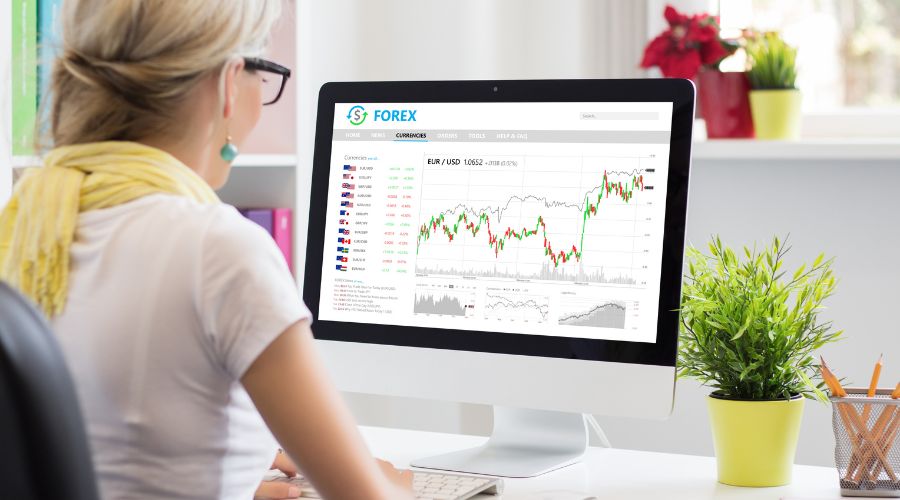

To dismantle the widespread belief that day trading means spending all day in front of charts or taking constant trades to make a profit.
This lesson will teach you how professional traders operate in specific sessions, using focused time blocks, clear setups, and precise execution — not endless screen time.
By the End of This Lesson, You Should Be Able To:

A sniper plans ahead. He scouts the terrain, locks onto one high-value target, and waits patiently to take the shot — one bullet, one mission.
Now picture a machine gunner. He sprays rounds everywhere, hoping to hit something. It's reactive, loud, and exhausting. There’s no precision — only pressure.
This is the difference between a skilled trader and an emotional one:
Most losing traders are machine gunners.
But consistency belongs to snipers.
One clean trade during peak session hours is worth more than a dozen impulsive entries scattered throughout the day.
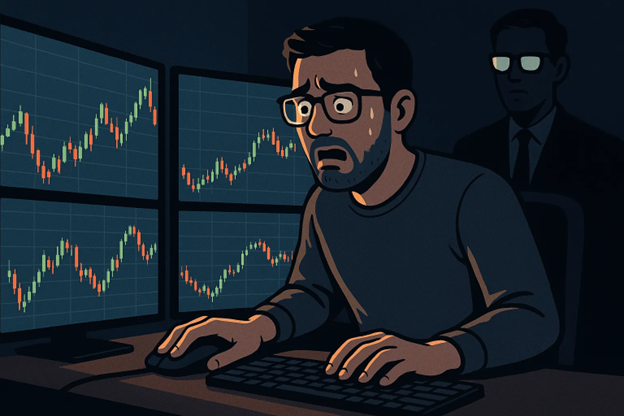
This myth is what keeps many traders from pursuing day trading altogether. They’ve been told:
But here’s the truth:
Day trading is not about frequency — it's about focus.
It’s not about being busy — it’s about being ready.
When approached correctly, day trading can be simpler, sharper, and less time-consuming than other styles. But only if you shift your mindset from activity to accuracy.
The Myth vs. The Reality
| The Myth | The Reality |
|---|---|
| Day trading means sitting in front of charts all day. | Day traders operate in specific sessions, not all day. |
| The more trades you take, the more you make. | Overtrading dilutes edge and increases mistakes. |
| You have to be "on" all the time to succeed. | The best trades come from waiting, not watching. |
Overtrading is not just a strategy flaw — it's a psychological spiral. It erodes discipline, leads to revenge trades, and blinds you to your edge.
(Built around market session timing — not emotion.)


Every session gives data — even the ones you don’t trade. Reflection builds edge.
| Market | Best Sessions | Notes |
|---|---|---|
| Forex (EUR/USD, GBP/USD) | London & NY Overlap | High liquidity, clean structure |
| Indices (NAS100, SPX500) | NYSE Open | Fast moves, institutional flows |
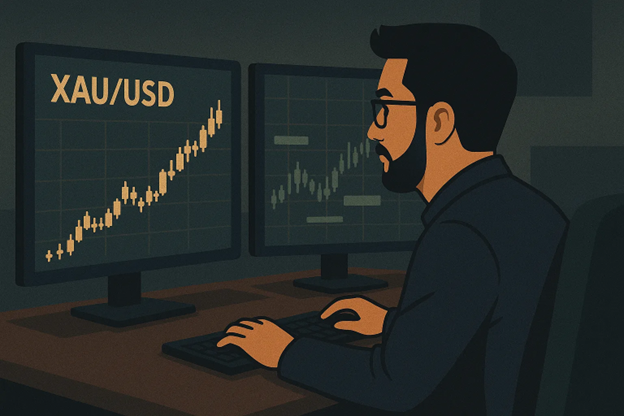
| Gold (XAU/USD) | NY Session or News Events | Reacts sharply to CPI, NFP, Fed tone |
| Crypto | NY or London Overlap | More volume when legacy markets open |
Don’t just watch all day — watch when it matters. See how NAS100 behaves at 9:30AM UTC -4 time: the volume spikes, price expands, setups appear. That's your window.
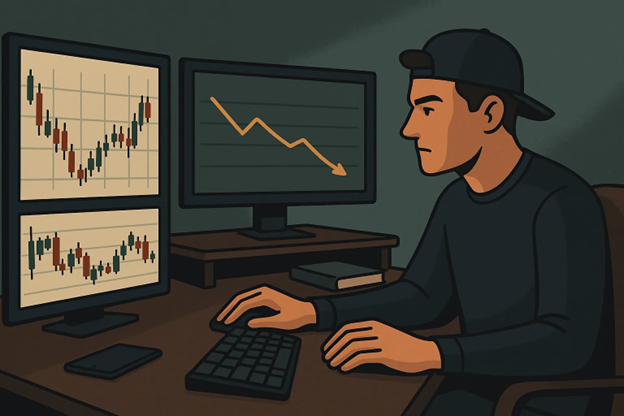
Day trading is not about being more active — it’s about being more precise.
You don’t need 20 trades.
You don’t need 8 hours of screen time.
You don’t need to constantly chase price.
You need the right setup, during the right session, executed with the right mindset.
Let go of the grind.
Adopt the sniper mindset.
Trade less. Earn more. Walk away clean.
How to Start Day Trading:
5 Steps to Start Day Trading: A Strategic Guide for Beginners
8 Steps How to Start Forex Day Trading in 2025: A Beginner’s Step-by-Step Guide
3 Steps to Build a Trading Routine for Consistency and Discipline - Day Trading Edition
Learn how to navigate yourself in times of turmoil:
How to Identify Risk-On and Risk-Off Market Sentiment: A Complete Trader’s Guide
How to Trade Risk-On and Risk-Off Sentiment — With Technical Confirmation
The Ultimate Guide to Understanding Market Trends and Price Action
Want to learn how to trade like the Smart Money?
Mastering the Market with Smart Money Concepts: 5 Strategic Approaches
Mastering Candlestick Pattern Analysis with the SMC Strategy for Day Trading
Understanding Liquidity Sweep: How Smart Money Trades Liquidity Zones in Forex, Gold, US Indices
The SMC Playbook Series Part 4: How to Confirm Trend Reversal & Direction using SMC
The SMC Playbook Series Part 5: The Power of Multi-Timeframe Analysis in Smart Money Concepts (SMC)
Trading Psychology and Continuous Improvement Contents:
The Mental Game of Execution - Debunking the Common Trading Psychology
5 Steps to Backtest a Trading Strategy with AI: A Step-by-Step Guide
Managing Trading Losses: Why You Can Be Wrong and Still Win Big in Trading
Follow me on LinkedIn: Jasper Osita
Join me in Discord: The Analyst Guild
This content may have been written by a third party. ACY makes no representation or warranty and assumes no liability as to the accuracy or completeness of the information provided, nor any loss arising from any investment based on a recommendation, forecast or other information supplies by any third-party. This content is information only, and does not constitute financial, investment or other advice on which you can rely.
ACY Securities is one of Australia's fastest growing multi-asset online trading providers, offering ultra-low-cost trading, rock-solid execution, technologically superior account management and premium market analysis.

Select the categories and companies you wish to follow directly to your person rss feed.
Create Custom RSS FeedSign up and join over 5,000 professional members who receive personalized news alerts, curated professional connections, and more for free!
Bybit has launched Perp Options, described as the first options contracts built on TradFi perpetuals, giving traders round-the-clock access to US equity options. SpaceX and Nvidia are the first underlying assets, with USDT settlement and integration into Bybit's Unified Trading Account.
Use this trading preparation checklist to plan your session, define entry rules, manage risk, and build a disciplined trading routine in seven steps.
Your Bourse expands its crypto liquidity ecosystem with Caladan, giving brokers access to broader market coverage, institutional execution capacity and streamlined settlement.
Scope Markets, the retail brokerage part of Rostro Group, has appointed Ibrahim Hossny as Head of Research and Marketing for the Middle East and North Africa.
Hantec Prime, the institutional division of Hantec Markets, has reported trading volume up more than 300% year-to-date, alongside the addition of 42 new institutional clients since December, capping one of its strongest years of growth to date.
Learn how to refine XAUUSD support and resistance on the daily chart using candle bodies, market structure and weekly gold levels for swing trading. A slug alone cannot guarantee a top Google ranking. Keep it focused rather than adding every supporting keyword.
The week in Dubai will be focused on connecting directly with the industry and discussing how technology can help modern brokerages simplify operations, automate workflows, strengthen operational control, and scale efficiently.
Devexperts has launched a turnkey solution giving brokers in South Korea access to US equity markets, combining its DXtrade trading platform, dxFeed market data, and execution services. The offering targets South Korea's growing retail demand for US stocks, worth several billion USD monthly.
Assess why WTI crude oil surged past $105 per barrel amid Saudi pipeline disruptions, record tanker charter rates, and escalating geopolitical tensions.
Bitcoin price forecast: BTC/USD retests $78,460–$80,215 resistance. Watch bearish confirmation toward $72,480 or a bullish breakout toward $86,150.