just now


Liquidity Finder Ltd is incorporated in England and Wales, company number 10610740, registered address 167-169 Great Portland Street, Fifth Floor, London W1W 5PF, United Kingdom.
Published: just now

I had a chat with some execs this week who put it bluntly: fixed, rigid platforms that can’t be customized and don’t allow third‑party or native front ends will become the BlackBerry of trading.
The threat is not theoretical. Companies locked into rigid, legacy back‑ and front‑ends are already finding it hard to adapt.
Over the last eight or nine years the center of focus has shifted into digital assets, first centralized exchanges, now a wave of fully on‑chain venues like Hyperliquid, Lighter, Aster, DeraBit and others. Brokerages with a comprehensive core trading platform are now connecting to them.
These are a different world. Hyperliquid, for example, lets you trade CME‑type products 24/7 and has grown in two or three years from nothing to a multi‑billion‑dollar venue. Hidden Road Partners went from its startup period by two ex‑brokerage sales executives to a valuation north of $150billion in a similar timeframe. If traditional markets tell themselves there's no threat here, they're simply wrong.
Layer AI on top and the pace accelerates again. The perspective from within the dev world is that software engineers are effectively product managers, directing AI tools to build faster, better and at higher quality than anyone could a few years ago. The ask from brokers is changing too. It's no longer just "I want to open an account"; it's "give me your API, I'll bring my customers and my own front end". Soon there will be thousands of custom front ends plugged into a handful of robust backends.
Standards like the MCP server are becoming the connective tissue here – a self‑describing API that allows any AI agent to interact with trading infrastructure consistently and safely. Even smaller firms that act now can outmanoeuvre larger, slower incumbents, if they choose the right infrastructure.
Something worth noting for every platform vendor and broker still betting everything on an AI badge on their homepage. Przemyslaw Wojtyna of Match‑Trade Technologies who has a lot of expertise having worked at Dukascopy, Conotoxia and many other known firms, made an extremely important point in his notes on FinanceFeeds: users, especially the next generation of traders, will dictate what they want from platforms.
Everyone is talking about AI. Przemyslaw expects AI to matter, but does not see it as the defining contest. The real battleground is generational. Established trader demographics are being replaced by younger audiences with different expectations: less time, shorter attention spans, less capital to commit, but not less knowledge or ability. They are used to customised, mobile‑first user experiences and digital communities, and they will not tolerate clunky, one‑size‑fits‑all platforms designed for a different era.
Imagine being 20 years old and being shown a generic, inflexible platform that is older than you and cannot perform any of the tasks you want from it. Przemyslaw’s perspective reinforces what the market is already showing. The generational shift is not coming. It is already here.
If anyone still needs proof that DeFi and crypto‑native firms are moving directly into the territory of traditional finance, here is another very clear example. MEXC launched a global markets education programme aimed squarely at helping crypto‑native users understand stocks, ETFs, commodities and the wider financial system, not just digital assets.
The numbers behind it are telling. Research by MEXC and CoinGecko found that trading volumes in traditional financial assets on crypto exchanges reached $1.45 trillion in the first half of 2026 which is almost ten times the total recorded throughout 2025. More than half of MEXC's surveyed users, 53.7%, have already invested in stocks. In other words, the crypto client base is not sitting neatly in a separate digital‑asset silo; it is moving across markets, products and asset classes at speed.
The more interesting part is the knowledge gap. Of users who have not used stock products, 43.1% cited insufficient investment knowledge as a barrier. Among those who tried stocks and stopped, 48.3% said limited understanding was one of the reasons. That is why MEXC is not merely adding another tradable product to an app; it is trying to build an education layer. Access is expanding faster than understanding.
This matters to traditional brokers. Crypto-native firms are not waiting for traditional brokers to make markets more accessible. They are bringing their users into traditional asset classes through the mobile-first, intuitive ecosystem those users already know and trust. The question for established brokers is whether they can meet that audience on its own terms.
It is becoming increasingly hard to ignore the expansion of stablecoin settlement beyond crypto trading and into payments, commercial activity and physical delivery.
Visa recently reported that more than 160 stablecoin‑linked card programmes were live worldwide in its fiscal second quarter of this year, with payment volumes up almost 200% year on year. Its stablecoin settlement volume has now passed a $20 billion annualised run rate, more than 15 times where it was a year earlier.
That matters to trading as much as it matters to card payments. The legacy model of counterparty credit from tier‑one banks was built for a world of banking hours, slow settlement cycles and large, established borrowers. It is not designed for markets that run 24/7, require intraday liquidity and need capital to move instantly across venues. The issue is not simply technology; it is the working‑capital and credit gap between when a transaction settles and when funds are collected.
Tokenized collateral and real‑time margin exchange are beginning to address exactly this gap. As seen on PrimeOne, firms can now reduce counterparty exposure and automatically manage risk continuously, rather than around a legacy settlement timetable. For trading infrastructure, it is increasingly the way forward and as Visa’s figures confirm, stablecoin is becoming huge everywhere.
A conversation this week with the directors of a Cyprus-based retail brokerage, one that has recently added prop trading, prediction markets and a crypto exchange to its offering, provided a clear signal of where the industry is heading.
They made a simple but important point: prediction markets are popular because the subjects people are trading are already personal interests such as politics, sport, major events, unlike currency trading, where the underlying asset is just a vehicle for their trading efforts. When you trade a prediction, you are already engaged with the topic; the market is just a way to put a score on what you care about. That is why these products resonate so strongly with a new generation of traders.
This also changes the acquisition model. Engaging traders through communities, content and conversation puts brokers on the same level as the trader. It is no longer the old dynamic of the trader seeing the broker as a faceless entity that is only after their money, where members of the public are made weary by sales calls and retention calls. In prop and prediction markets, the broker is part of the community, not just a counterparty.
We're the largest marketplace to connect with brokers, Fintech companies & digital asset firms. Want to partner? Let's get in touch.

Select the categories and companies you wish to follow directly to your person rss feed.
Create Custom RSS FeedSign up and join over 5,000 professional members who receive personalized news alerts, curated professional connections, and more for free!
Institutional brokerage and financial infrastructure provider Clear Street has joined TradingView’s broker network, allowing its clients to trade US stocks, exchange-traded funds and options directly through the charting and analysis platform.
AUDJPY price forecast: Watch resistance at 110.045–110.403 for bearish rejection toward 109.283 or a bullish breakout targeting 111.550.
GER40 price forecast: DAX 40 tests 25,285–25,390 resistance. Explore bearish rejection, the neckline retest and bullish breakout confirmation.
NAS100 price forecast: Nasdaq 100 breaks above 30,750 after bullish weekly support rejection. Explore key levels, retest confirmation and downside risks.
XTB Institutional is heading to iFX EXPO Asia 2026 in Hong Kong. Meet the team at Booth #95 to discuss institutional liquidity, 24/7 market access and the latest trading conditions.
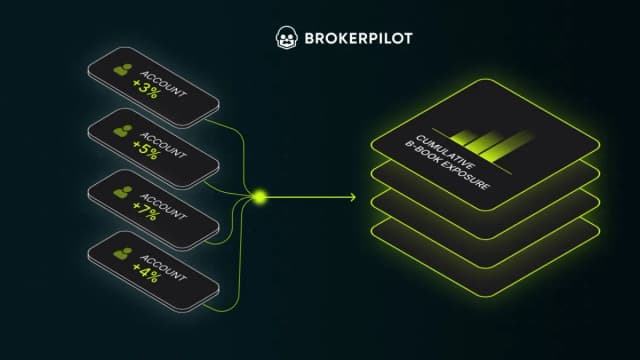
Profitable traders improve retention and brand credibility. They also break B-book distributions silently, over quarters. Most brokers find out too late.
Ondo Finance, a blockchain technology company focused on tokenising real-world assets, has announced Ondo Private Markets, a product offering tokenised exposure to privately held companies, beginning with an unnamed pre-IPO artificial intelligence company.
STARTRADER has launched 20 new Stock and ETF CFDs on MT5, tradable Monday to Sunday, with half listed in Seoul or Hong Kong. The additions focus on AI's physical infrastructure, covering HBM and DRAM supply chain names such as SK hynix and Hanmi Semiconductor, plus data-centre exposure through Cloudflare and Vistra.
IG Group has cut its 2026 revenue growth outlook after weaker revenue retention in its over-the-counter derivatives business outweighed growth in customer activity, putting the economics of its revised market-making approach in focus.
CME Group has withdrawn its filing to launch a 10-Barrel WTI Crude Oil futures contract that would have traded 24 hours a day, seven days a week. The exchange said industry participants were concerned that 24/7 energy trading could create unintended consequences without further due diligence.