just now


Liquidity Finder Ltd is incorporated in England and Wales, company number 10610740, registered address 167-169 Great Portland Street, Fifth Floor, London W1W 5PF, United Kingdom.
Published: just now
Few concepts excite traders more than divergence. It feels like insider knowledge - price making new highs while momentum weakens, a secret warning that only the “trained eye” can see. That excitement is also why MACD divergence is one of the most misused tools in trading.
Most traders treat divergence as an entry signal. They spot it, anticipate a reversal, and try to catch the top or bottom. Sometimes it works. Often, it doesn’t. And when it fails, it fails violently.
The problem isn’t divergence itself. The problem is how it’s used.
In this part of the MACD series, we’ll reset expectations. You’ll learn the difference between regular and hidden divergence, why both are commonly misapplied, how to filter false signals using market structure, and when divergence should be ignored entirely.
Because divergence doesn’t tell you when to trade.
It tells you when to pay attention.
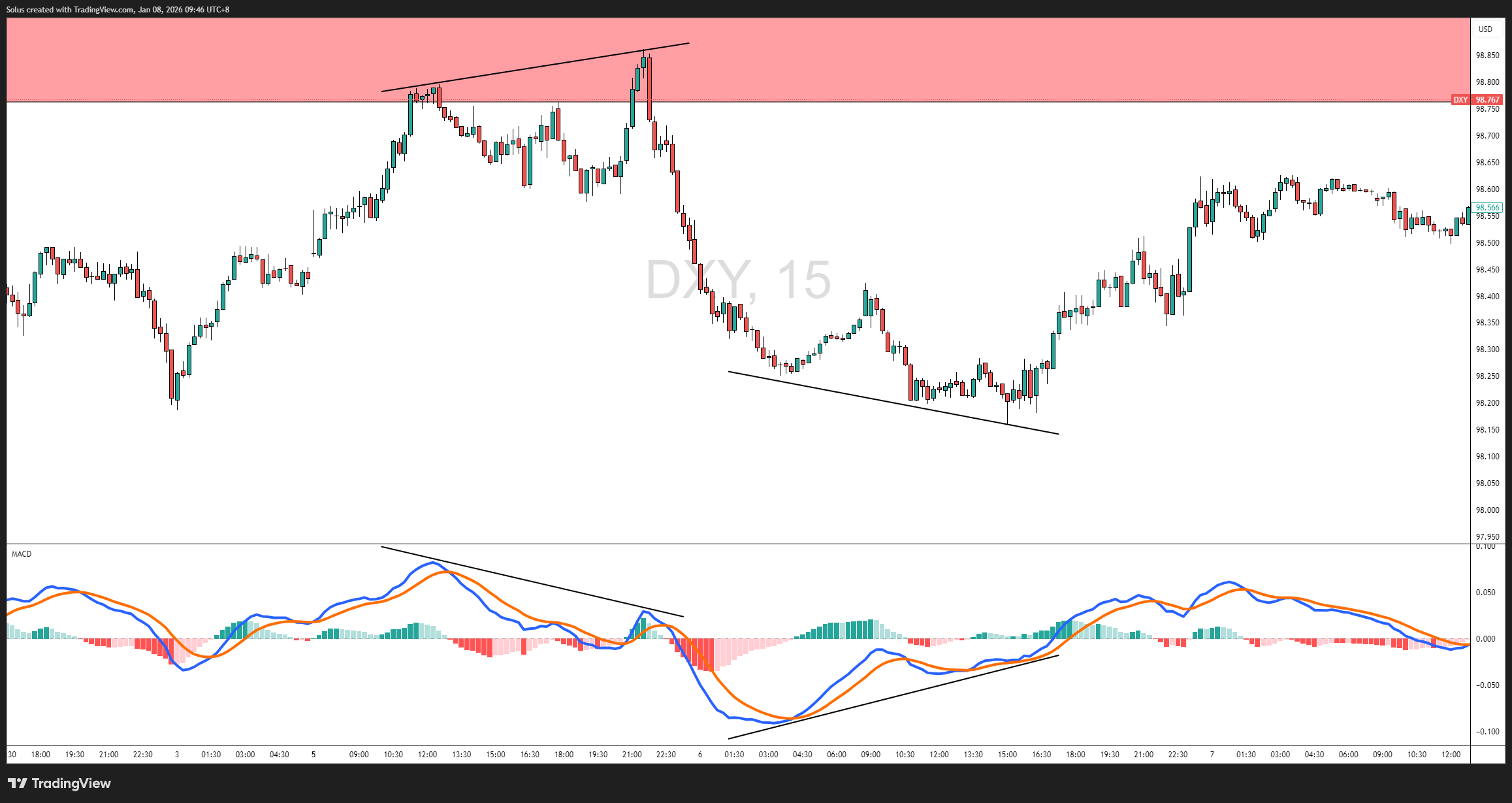
Divergence appears when price and momentum stop agreeing.
Price may continue pushing higher or lower, but the MACD histogram or MACD line fails to confirm that strength. This tells you that participation is changing beneath the surface.
Importantly, divergence measures momentum disagreement, not reversal certainty.
That distinction alone separates patient traders from frustrated ones.
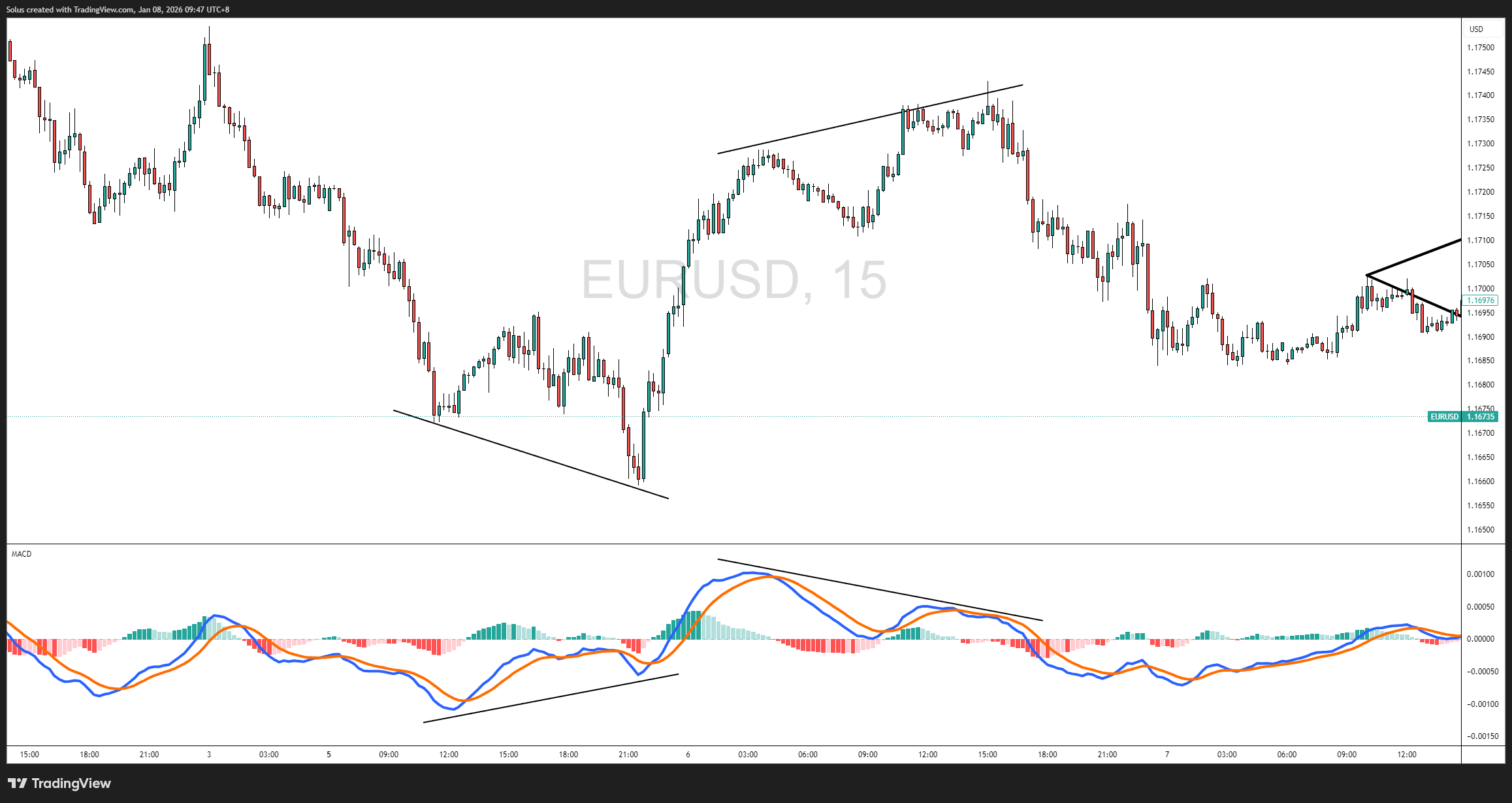
Regular divergence occurs when:
Or:
This signals potential exhaustion, not immediate reversal.
The mistake most traders make is treating regular divergence like a green light to fade the trend. In strong trends, regular divergence can appear multiple times before price actually turns.
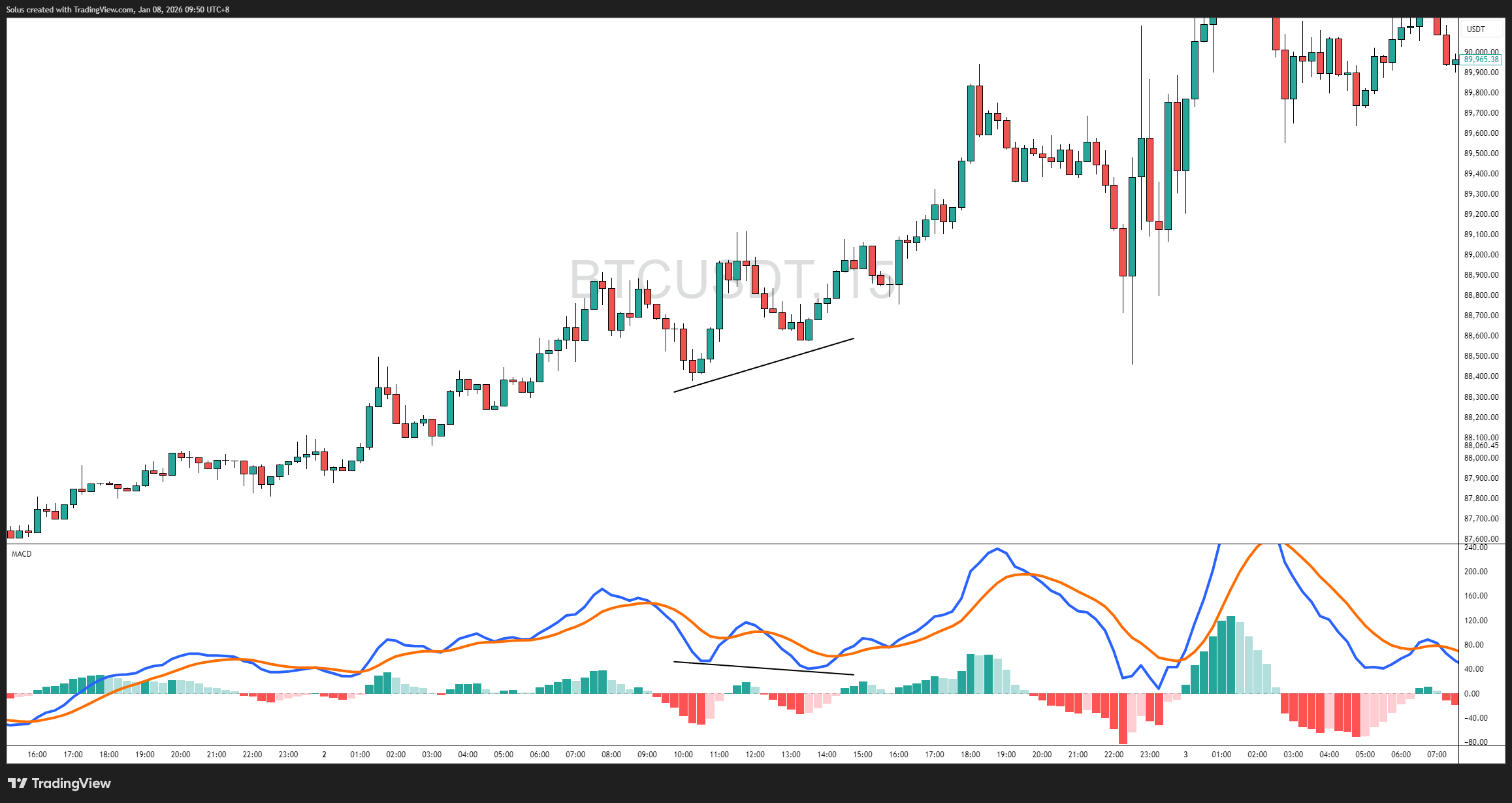
Hidden divergence appears when:
This is often taught as a continuation signal.
The misuse comes from assuming it guarantees trend continuation. In reality, hidden divergence only works when structure already supports the trend. Without structure, it’s just noise dressed up as confirmation.
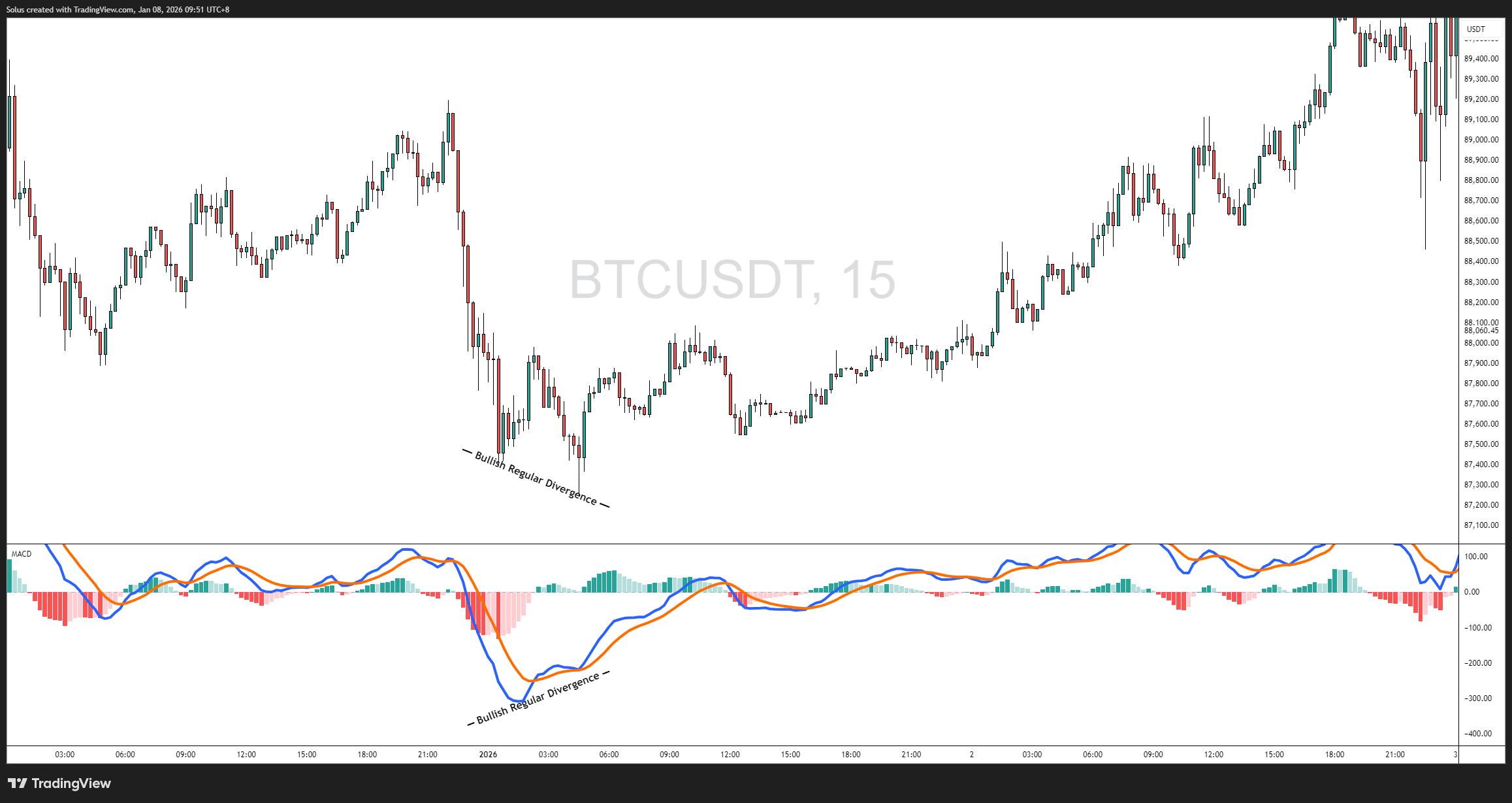
Divergence is an alert system.
It tells you:
What it does not tell you:
This is why traders who enter purely on divergence experience:
Divergence prepares you mentally. It does not give you permission to trade.
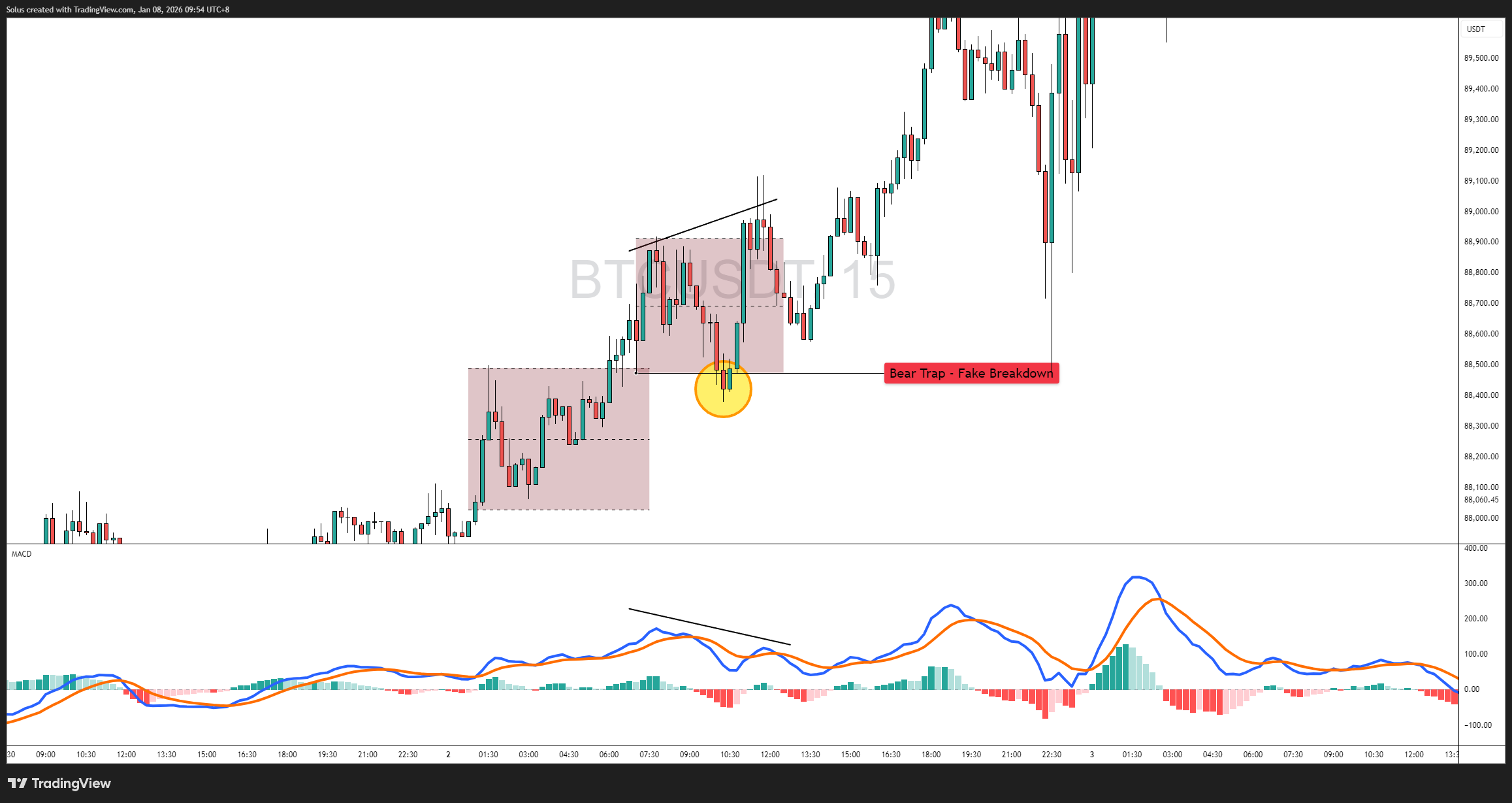
Structure is the gatekeeper.
Before divergence matters, ask:
Divergence inside:
…should usually be ignored.
Divergence near:
…deserves attention - not action, attention.
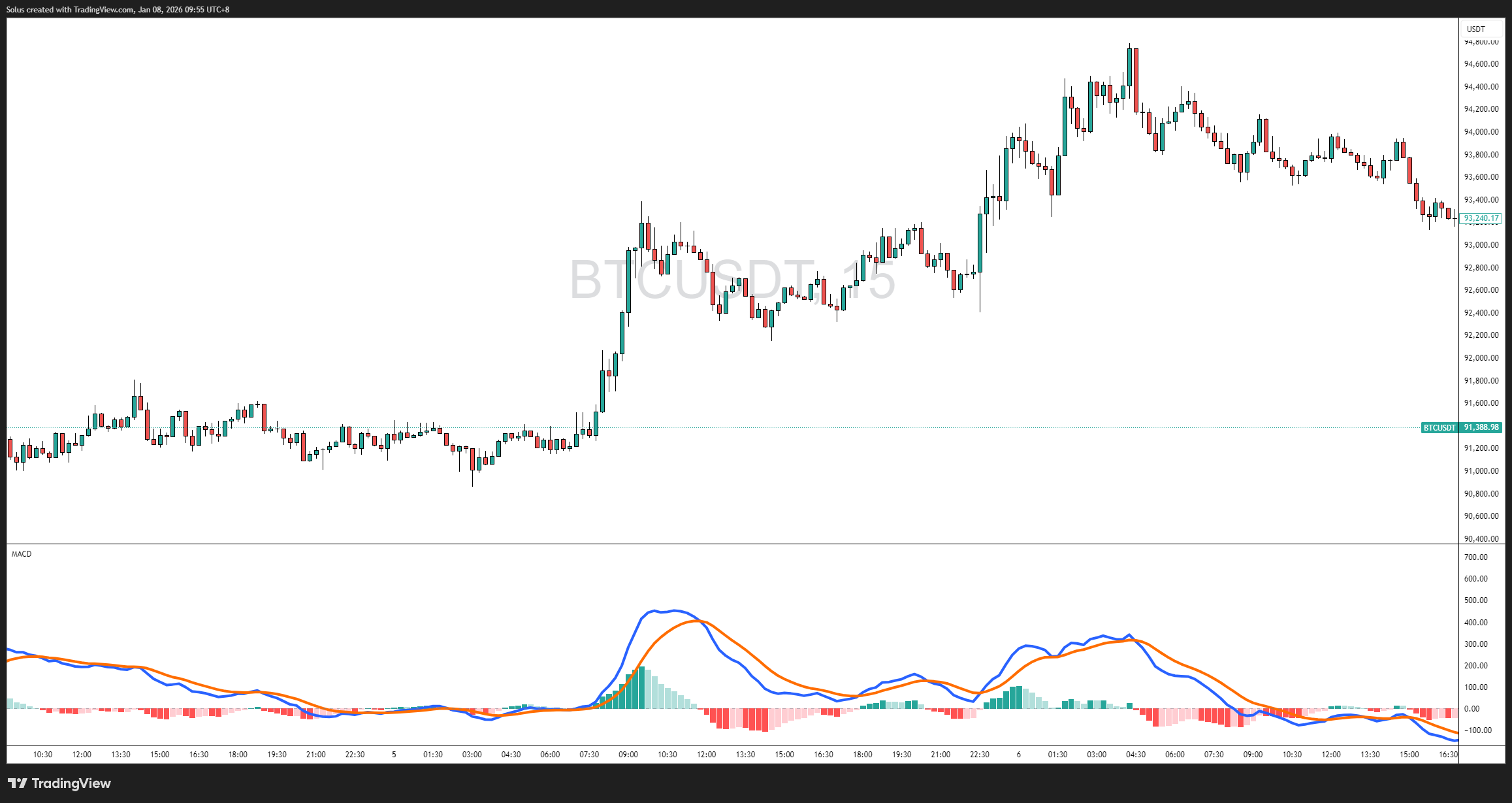
There are environments where divergence is practically useless:
In these conditions, momentum pauses do not mean reversals. They mean repositioning.
Trying to fade these moves using divergence is how traders repeatedly step in front of momentum trains.
Remember: strong trends don’t end because momentum weakens once. They end when structure breaks.
Momentum is engine noise.
Price direction is the car’s movement.
A quieter engine doesn’t mean the car is braking. It might just be cruising.
Divergence tells you the engine is no longer revving aggressively. It does not tell you the brakes are on.
Only structure confirms braking.
Experienced traders use divergence to:
They don’t reverse positions just because divergence appears.
They adjust expectations.
That’s the difference between trading with information and trading on impulse.
Divergence tells you when to pay attention, not when to trade.
It’s a warning system, not a signal generator.
Used correctly, MACD divergence keeps you alert and adaptive. Used incorrectly, it turns patience into pain.
No. MACD divergence is a warning tool. It should be combined with structure and context, not used as a standalone signal.
Because traders try to trade it too early, especially against strong trends where momentum pauses are normal.
Neither is “better.” Both depend entirely on market structure and trend context.
Yes. Divergence is excellent for managing risk, tightening stops, and avoiding late entries.
It’s time to go from theory to execution!
Create an Account. Start Your Live Trading Now!
Looking for step-by-step approaches you can plug straight into the charts? Start here:
Sharpen your edge with proven tools and frameworks:
News moves markets fast. Learn how to keep pace with SMC-based playbooks:
From NASDAQ opens to DAX trends, here’s how to approach indices like a pro:
Gold remains one of the most traded assets - here’s how to approach it with confidence:
Candlesticks are the building blocks of price action. Master the most powerful ones:
Ready to go intraday? Here’s how to build consistency step by step:
Markets swing between calm and chaos. Learn to read risk-on vs risk-off like a pro:
Step inside the playbook of institutional traders with SMC concepts explained:
Forex pairs aren’t created equal - some are stable, some are volatile, others tied to commodities or sessions.
If you’ve ever been stopped out right before the market reverses - this is why:
Mindset is the deciding factor between growth and blowups. Explore these essentials:
The real edge in trading isn’t strategy - it’s how you protect your capital:
If you’re not sure where to start, follow this roadmap:
This way, you’ll grow from foundation → application → mastery, instead of jumping around randomly.
Follow me for more daily market insights!
Jasper Osita - LinkedIn - FXStreet - YouTube
This content may have been written by a third party. ACY makes no representation or warranty and assumes no liability as to the accuracy or completeness of the information provided, nor any loss arising from any investment based on a recommendation, forecast or other information supplies by any third-party. This content is information only, and does not constitute financial, investment or other advice on which you can rely.
ACY Securities is one of Australia's fastest growing multi-asset online trading providers, offering ultra-low-cost trading, rock-solid execution, technologically superior account management and premium market analysis.

Select the categories and companies you wish to follow directly to your person rss feed.
Create Custom RSS FeedSign up and join over 5,000 professional members who receive personalized news alerts, curated professional connections, and more for free!
Bybit has launched Perp Options, described as the first options contracts built on TradFi perpetuals, giving traders round-the-clock access to US equity options. SpaceX and Nvidia are the first underlying assets, with USDT settlement and integration into Bybit's Unified Trading Account.
Use this trading preparation checklist to plan your session, define entry rules, manage risk, and build a disciplined trading routine in seven steps.
Your Bourse expands its crypto liquidity ecosystem with Caladan, giving brokers access to broader market coverage, institutional execution capacity and streamlined settlement.
Scope Markets, the retail brokerage part of Rostro Group, has appointed Ibrahim Hossny as Head of Research and Marketing for the Middle East and North Africa.
Hantec Prime, the institutional division of Hantec Markets, has reported trading volume up more than 300% year-to-date, alongside the addition of 42 new institutional clients since December, capping one of its strongest years of growth to date.
Learn how to refine XAUUSD support and resistance on the daily chart using candle bodies, market structure and weekly gold levels for swing trading. A slug alone cannot guarantee a top Google ranking. Keep it focused rather than adding every supporting keyword.
The week in Dubai will be focused on connecting directly with the industry and discussing how technology can help modern brokerages simplify operations, automate workflows, strengthen operational control, and scale efficiently.
Devexperts has launched a turnkey solution giving brokers in South Korea access to US equity markets, combining its DXtrade trading platform, dxFeed market data, and execution services. The offering targets South Korea's growing retail demand for US stocks, worth several billion USD monthly.
Assess why WTI crude oil surged past $105 per barrel amid Saudi pipeline disruptions, record tanker charter rates, and escalating geopolitical tensions.
Bitcoin price forecast: BTC/USD retests $78,460–$80,215 resistance. Watch bearish confirmation toward $72,480 or a bullish breakout toward $86,150.