just now

Liquidity Finder Ltd is incorporated in England and Wales, company number 10610740, registered address 167-169 Great Portland Street, Fifth Floor, London W1W 5PF, United Kingdom.
Published: just now

Every trader eventually hits a wall where intuition and “feel” aren’t enough. You can memorize every candlestick pattern, watch order flow all day, and even sense momentum shifts - but until you’ve proven your strategy through testing, you’re still driving blind. If you have ever wondered why consistency stays elusive even after learning setups, start by exploring the hidden mental game in Why Most Traders Fail and then build your proof with rigorous testing.
Backtesting is supposed to be the safety net, but here’s the catch: most traders sabotage it without realizing. They unconsciously bake bias into the process, bending rules, cherry-picking trades, and calling it an “edge.” It feels good in the moment, but the illusion shatters the first time live markets slap them in the face. If that sounds familiar, align your process with simple risk rules first using Why Risk Management Is the Only Edge That Lasts so your test reflects survival math, not wishful thinking.
So how do you build a test that actually proves your edge? The answer isn’t just running numbers - it’s about designing a process free from bias, one that reflects the chaos of real markets instead of the comfort of hindsight. Pair this mindset with a clean, rules-first playbook like How to Think Like a Price Action Trader so your criteria are objective before you press replay.
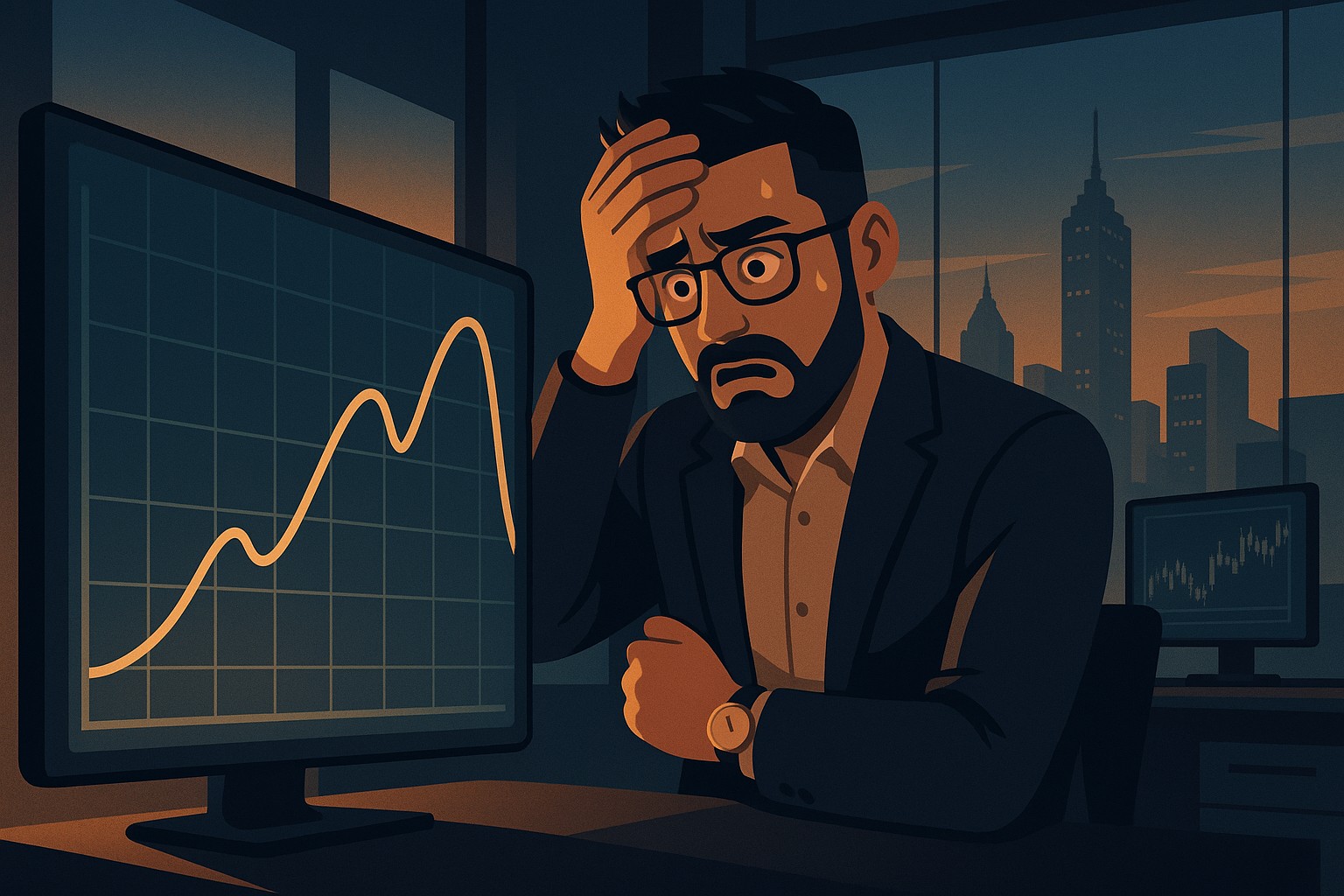
If you’ve ever adjusted rules mid-test just to “catch that missed trade,” congratulations - you’ve curve-fit your system. Curve fitting is when your rules are tailored so tightly to past data that they no longer breathe in real-time. It’s like training a boxer who only knows how to fight one opponent. The moment a new challenger steps in, they’re useless.
Then comes hindsight bias - the belief that you “would have seen it” in the moment because the pattern is obvious now. But the market doesn’t play in slow motion. In live trading, candles form one tick at a time, spreads widen, and news shocks hit without warning. If your test relies on after-the-fact clarity, you’re not validating an edge - you’re fooling yourself. A better safeguard is to codify what counts as confirmation, for example using structures from Fair Value Gaps Explained or liquidity logic from Understanding Liquidity Sweep and never moving the goalposts mid-test.
Together, these two biases convince traders their system is bulletproof, only to leave them bleeding capital when reality doesn’t match the script.

Think of a scientist running clinical trials for a new medicine. If they cherry-pick patients or only report successful cases, their drug would never survive FDA approval. In trading, you’re both the scientist and the regulator. Your job isn’t to make results look pretty; it’s to make them honest.
This means sticking to rules - even when they make the equity curve look worse. It means logging losing trades with the same detail as winners. It means refusing to shift take-profit levels after the fact “because price obviously would’ve run there.” A practical structure for this discipline is here: Trading Journal and Reflection, which shows what to log and how to reflect so your dataset stays clean. Wrap it with guardrails from Mastering Risk Management: Stop Loss, Take Profit, and Position Sizing to remove subjective tweaks after the fact.
Bias-free testing demands uncomfortable honesty. But in that discomfort, you find truth - and truth is what makes an edge tradable.
Markets are living organisms. They trend, range, expand, and contract. They cycle through fear, greed, and apathy. A strategy that thrives in one environment may suffocate in another.
That’s why a real edge must prove itself across multiple years, regimes, and shocks:
If your system only looks good in 2020’s Covid crash or only works during FOMC weeks, then it’s not robust - it’s conditional. Build scenarios that cover data events with guides like How to Trade CPI Like Smart Money and How to Trade NFP Using SMC so your test survives both calm and chaos.
Durability is the benchmark. If your strategy survived multiple market seasons in testing, you can face live conditions with real confidence.
You don’t need fancy hedge-fund software to validate your ideas. Three simple tools can carry most of the weight if used with discipline:
Remember: the tool doesn’t guarantee objectivity - you do. If you bend the rules, the spreadsheet will still smile back with fake profits.

Imagine a car company that never runs crash tests. They release the car, boast about its speed, its sleek design, and its fuel efficiency - but they never slam it into a wall at 60 mph.
Would you trust it? Of course not. Customers need proof that the car won’t fold like paper when real impact hits.
Your trading edge is no different. Backtesting is your crash test. If your system can survive years of volatility, unexpected shocks, and trend shifts, then - and only then - can you drive it safely in live markets. Without that, you’re selling yourself a fantasy car destined to crash at the first red light. If fear of impact is holding you back, learn to harness it with Mastering Fear in Trading so you test with courage and clarity.
Bias doesn’t just sneak in during testing - it hides in how you frame the entire process. Some of the most dangerous traps include:
Counter these traps with a market-structure lens in The Ultimate Guide to Understanding Market Trends and Price Action so you know exactly which conditions your setup is built for, and which conditions to avoid.
Bias is everywhere. The only cure is brutal honesty and structured rules that prevent you from cutting corners.
Backtesting without bias isn’t about getting a perfect system. It’s about cultivating the one thing that separates pros from amateurs: confidence under fire.
When you’ve seen your edge survive 5 years of data, 3 different market regimes, and hundreds of trades, you don’t panic at the first losing streak. You know the math is on your side. You stop second-guessing every candle. Reinforce that composure with daily structure from The Daily Habits of Profitable Traders so execution stays steady while variance plays out.
Bias-free proof doesn’t just validate your system. It validates your mindset.

Most traders chase shortcuts, trying to find the magical rule set that makes every chart look like profit. But those shortcuts lead straight into curve fitting, hindsight illusions, and broken confidence. If you need one final guardrail, revisit the math in Risk of Ruin in Trading and set your parameters so the mission survives even when the market disagrees.
Bias-free backtesting is slower, harder, and less glamorous. But it’s also the only path to real proof. Think of it like crash-testing your car: the process is brutal, but the peace of mind is priceless.
Once you’ve built that kind of proof, you no longer wonder if your edge works - you know it does. And that knowing changes everything.
It’s time to go from theory to execution - risk-free.
Create an Account. Start Your Free Demo!
Looking for step-by-step approaches you can plug straight into the charts? Start here:
Sharpen your edge with proven tools and frameworks:
News moves markets fast. Learn how to keep pace with SMC-based playbooks:
From NASDAQ opens to DAX trends, here’s how to approach indices like a pro:
Gold remains one of the most traded assets - - here’s how to approach it with confidence:
Candlesticks are the building blocks of price action. Master the most powerful ones:
Ready to go intraday? Here’s how to build consistency step by step:
Markets swing between calm and chaos. Learn to read risk-on vs risk-off like a pro:
Step inside the playbook of institutional traders with SMC concepts explained:
Forex pairs aren’t created equal - - some are stable, some are volatile, others tied to commodities or sessions.
If you’ve ever been stopped out right before the market reverses - - this is why:
Mindset is the deciding factor between growth and blowups. Explore these essentials:
The real edge in trading isn’t strategy - it’s how you protect your capital:
If you’re not sure where to start, follow this roadmap:
This way, you’ll grow from foundation → application → mastery, instead of jumping around randomly.
Follow me for more daily market insights!
Jasper Osita - LinkedIn - FXStreet - YouTube
This content may have been written by a third party. ACY makes no representation or warranty and assumes no liability as to the accuracy or completeness of the information provided, nor any loss arising from any investment based on a recommendation, forecast or other information supplies by any third-party. This content is information only, and does not constitute financial, investment or other advice on which you can rely.
ACY Securities is one of Australia's fastest growing multi-asset online trading providers, offering ultra-low-cost trading, rock-solid execution, technologically superior account management and premium market analysis.

Select the categories and companies you wish to follow directly to your person rss feed.
Create Custom RSS FeedSign up and join over 5,000 professional members who receive personalized news alerts, curated professional connections, and more for free!
Bybit has launched Perp Options, described as the first options contracts built on TradFi perpetuals, giving traders round-the-clock access to US equity options. SpaceX and Nvidia are the first underlying assets, with USDT settlement and integration into Bybit's Unified Trading Account.
Use this trading preparation checklist to plan your session, define entry rules, manage risk, and build a disciplined trading routine in seven steps.
Your Bourse expands its crypto liquidity ecosystem with Caladan, giving brokers access to broader market coverage, institutional execution capacity and streamlined settlement.
Scope Markets, the retail brokerage part of Rostro Group, has appointed Ibrahim Hossny as Head of Research and Marketing for the Middle East and North Africa.
Hantec Prime, the institutional division of Hantec Markets, has reported trading volume up more than 300% year-to-date, alongside the addition of 42 new institutional clients since December, capping one of its strongest years of growth to date.
Learn how to refine XAUUSD support and resistance on the daily chart using candle bodies, market structure and weekly gold levels for swing trading. A slug alone cannot guarantee a top Google ranking. Keep it focused rather than adding every supporting keyword.
The week in Dubai will be focused on connecting directly with the industry and discussing how technology can help modern brokerages simplify operations, automate workflows, strengthen operational control, and scale efficiently.
Devexperts has launched a turnkey solution giving brokers in South Korea access to US equity markets, combining its DXtrade trading platform, dxFeed market data, and execution services. The offering targets South Korea's growing retail demand for US stocks, worth several billion USD monthly.
Assess why WTI crude oil surged past $105 per barrel amid Saudi pipeline disruptions, record tanker charter rates, and escalating geopolitical tensions.
Bitcoin price forecast: BTC/USD retests $78,460–$80,215 resistance. Watch bearish confirmation toward $72,480 or a bullish breakout toward $86,150.