just now


Liquidity Finder Ltd is incorporated in England and Wales, company number 10610740, registered address 167-169 Great Portland Street, Fifth Floor, London W1W 5PF, United Kingdom.
Published: just now

The dealing desk is one of the most important and least understood functions in a forex or CFD brokerage. For brokers running a B-book or hybrid execution model, the dealing desk is the operational nerve centre of the business – the team and infrastructure responsible for managing execution quality, monitoring risk exposure, detecting toxic flow, and ensuring the trading environment remains stable, fair, and profitable for the brokerage.
Despite its importance, many brokers – particularly those launching for the first time – underestimate what a dealing desk actually does, what expertise it requires, and what the consequences are of running a brokerage without adequate dealing coverage. This guide explains the dealing desk function clearly, from its core responsibilities to the technology it uses and the decisions it makes on a daily basis.
The term dealing desk originates from the interbank foreign exchange market, where banks employed teams of dealers to manage the bank’s currency positions, make prices to clients, and hedge exposures in the wholesale market. In the retail forex brokerage context, the dealing desk function evolved to describe the team responsible for managing the broker’s trading operations – a function that became increasingly important as retail brokers began operating B-book and hybrid execution models that required active management of client flow and market exposure.
Today, the dealing desk function in a retail brokerage encompasses a much broader range of responsibilities than simple price-making – covering everything from platform configuration and execution monitoring to risk management and corporate actions processing.
One of the dealing desk’s primary responsibilities is monitoring the quality of trade execution across all instruments and client groups in real time. This means continuously checking that orders are being filled at the correct prices, that execution speeds are within acceptable parameters, that slippage is occurring within expected ranges, and that no systematic execution issues are developing that could generate client complaints or regulatory scrutiny.
When execution issues are identified – whether caused by LP connectivity problems, bridge configuration issues, or platform instability – the dealing desk is responsible for diagnosing the cause and implementing a resolution as quickly as possible.
For brokers operating a B-book or hybrid model, managing net exposure is one of the dealing desk’s most critical functions. The dealing desk monitors the brokerage’s aggregate open position across all instruments and client groups – tracking whether the book is net long or net short, what the notional value of that exposure is, and whether it exceeds the risk thresholds defined by the broker’s risk management framework.
When exposure approaches or exceeds defined limits, the dealing desk takes action to reduce that exposure – either by routing new orders A-book to the LP rather than internalising them, or by placing hedging trades directly with the LP to offset the net position on the B-book.
Not all client flow is equal from a B-book perspective. Some trading strategies and client types generate flow that is consistently profitable for the client and therefore costly for the broker when internalised. The dealing desk is responsible for identifying these patterns – commonly referred to as toxic flow – and taking appropriate action to manage the associated risk.
Common sources of toxic flow that dealing desks monitor for include:
Latency arbitrage – traders exploiting delays between the broker’s displayed prices and the real market to systematically trade on stale quotes
News trading – strategies that exploit the price movements immediately following major economic data releases
Scalping with high win rates – consistently profitable short-term strategies that generate losses for the B-book if internalised
Organised group trading – coordinated trading by groups of accounts working together to exploit platform vulnerabilities or bonus programmes
High-frequency trading patterns – automated strategies designed to exploit specific characteristics of the broker’s execution environment
When toxic flow is identified, the dealing desk’s response typically involves moving the relevant client or client group from B-book to A-book routing – ensuring that their trades are hedged with the LP rather than internalised, eliminating the broker’s exposure to their profitable flow.
In a hybrid execution model, the dealing desk manages the ongoing allocation of client flow between A-book and B-book routing. This is not a set-and-forget configuration – it requires continuous monitoring and adjustment as client behaviour evolves, market conditions change, and the broker’s risk appetite shifts.
The dealing desk reviews client performance data regularly, identifies accounts whose trading profile has changed, and makes routing adjustments accordingly. A previously unprofitable client who begins generating consistent profits needs to be moved to A-book routing before their B-book position creates significant losses for the broker.
Beyond risk and execution management, the dealing desk is responsible for a wide range of routine platform configuration tasks that keep the trading environment correctly configured and up to date. These include:
-Weekly swap rate updates across all instruments following LP schedule changes
-Monthly market holiday configuration to prevent trading during scheduled market closures
-Periodic margin requirement adjustments in response to market volatility or regulatory changes
-Daylight Saving Time adjustments twice per year to maintain correct session timing
-Onboarding new instruments, client groups, and pricing feeds as the broker’s product range evolves
-Ad hoc configuration changes in response to LP changes, market events, or business decisions
Certain market events carry elevated risk for brokers – particularly those operating B-book positions. Major economic data releases, central bank decisions, geopolitical events, and market open and close periods can all generate sudden, large price movements that create significant P&L impact on an unhedged B-book position. The dealing desk monitors the economic calendar and takes proactive measures around high-risk events – adjusting margins, tightening exposure limits, increasing A-book routing, or placing pre-emptive hedges to reduce the broker’s vulnerability to sudden market moves.
The dealing desk produces regular performance reports that give the broker’s management team visibility into the brokerage’s financial results, execution quality, and risk profile. These reports typically cover broker profit and loss by instrument and client group, execution statistics, exposure snapshots, and summaries of any significant events or interventions during the reporting period. Tools like our Revenue Report provide structured daily performance data that dealing teams use as a core operational monitoring tool.
Running an effective dealing desk requires a combination of technical platform knowledge, financial market understanding, and risk management expertise that is genuinely difficult to find and expensive to retain. Specifically, dealing desk professionals need:
-Deep knowledge of MetaTrader 4, MetaTrader 5, cTrader, or whichever platforms the broker operates – including administrator-level configuration expertise
-Understanding of forex and CFD market mechanics including pricing, execution, and settlement
-Risk management knowledge including exposure calculation, hedging mechanics, and position management
-Familiarity with liquidity bridge infrastructure and LP relationship management
Ability to identify and respond to toxic flow patterns and abusive trading strategies
-Experience with corporate actions processing for equity CFD instruments
-Analytical capability to interpret performance data and identify trends requiring action
This is a demanding combination of skills that commands competitive compensation and is in short supply in the employment market. It is one of the primary reasons that many brokers – particularly those in the growth phase – choose to access dealing expertise through an outsourced provider rather than building an in-house team.
The short answer is that any broker operating a B-book or hybrid execution model needs dealing desk coverage of some form. The complexity and intensity of that coverage depends on the broker’s size, instrument range, client volume, and risk appetite – but the fundamental need for professional oversight of execution quality and risk exposure is universal among non-pure-A-book brokers.
Pure A-book brokers have simpler dealing requirements – their primary concern is execution quality and LP connectivity rather than internal risk management – but even STP brokers benefit from professional monitoring of their platform’s execution performance and bridge configuration.
At Broktinger, our Dealing Desk service gives FX and CFD brokers access to a professional, experienced dealing team on a fully outsourced basis. Our dealers bring over 15 years of hands-on experience managing dealing operations across MetaTrader 4, MetaTrader 5, cTrader, and MatchTrader – providing 24/5 coverage that includes all the core dealing desk functions described in this guide.
We also offer complementary services and tools that support effective dealing operations:
-Risk Management – dedicated risk parameter optimisation and strategic exposure management
-MetaTrader Support – full platform setup and maintenance alongside dealing operations
-Liquidity Bridge Support – expert bridge configuration to support your execution strategy
-Revenue Report – daily broker performance data used by our dealing team for operational monitoring
-Swap Changer – automated weekly swap rate management across all instruments
-Margin Changer – instant margin adjustments across all symbols and groups
Reporting is a core function of any well-run dealing desk operation – covering everything from daily P&L and exposure monitoring to client performance analysis and regulatory submissions. Accurate reporting requires the same depth of platform knowledge as dealing itself. Learn more about our professional reporting services for FX and CFD brokers.
If you want to understand more about how a professional dealing desk can support your brokerage – or if you are looking for dealing desk coverage for your own operation – get in touch with our team for a free consultation.
Learn more: https://broktinger.com
Industry leaders in outsourced dealing desk, risk management and platform development for FX and CFD brokers. Building MT4/MT5 tools, reporting solutions and API integration, plugins.
Select the categories and companies you wish to follow directly to your person rss feed.
Create Custom RSS FeedSign up and join over 5,000 professional members who receive personalized news alerts, curated professional connections, and more for free!
WTI crude oil price forecast: A confirmed breakout above $94.765 could open the way toward $100.305, while weekly support remains at $87.360–$90.830.
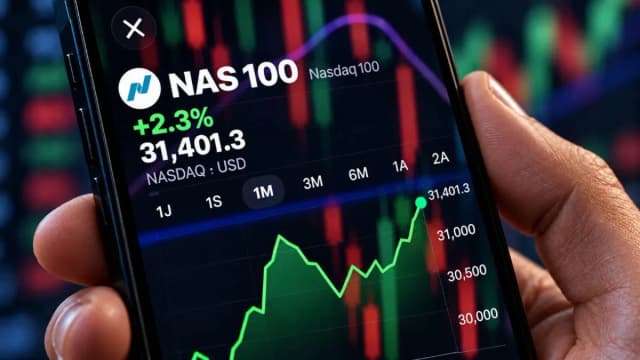
NAS100 price forecast recap: Explore the Nasdaq 100 rally to 31,401.3, with technical analysis of the breakout and key support and resistance levels.
Learn how to identify, draw and trade XAUUSD supply and demand zones using Gold market structure, price action confirmation and clear risk management.
cTrader has been named Best Trading Platform at UF Awards APAC 2026 during iFX EXPO Asia in Hong Kong.
AUD/CHF reached last week’s 0.57732 bearish target. Learn how resistance, market structure and a neckline retest shaped the original price action forecast.
Businesses eventually reach a point where basic tools are not enough basic tools.
Multi-asset trading broker AvaTrade has agreed to acquire the majority of FXCM Group’s business and brand, in a transaction that would bring a longstanding retail FX franchise into the AvaTrade Group.
LSEG and CMC Markets have signed a multi-year strategic data agreement expanding CMC's access to LSEG's real-time and delayed pricing, reference and corporate actions data, news and analytics, plus AI-ready content, to support new products, entry into new markets and the growth of CMC's institutional and B2B partnerships.
The Tel Aviv Stock Exchange is considering a bid for the Cyprus Stock Exchange, with Israeli media citing its EU licence, trading platform and clearing house. Euronext’s Athens exchange and India’s National Stock Exchange are also seen as contenders, and Cyprus aims to sign a sale agreement by the end of this year.
CME Group will launch baseball futures on 12 October, pending regulatory review, tracking CME FutureSports Performance Indexes built on Official League Data. Standard and micro contracts will start with the 2026 Postseason and the four clubs in the League Championship Series, trading around the clock.