just now


Liquidity Finder Ltd is incorporated in England and Wales, company number 10610740, registered address 167-169 Great Portland Street, Fifth Floor, London W1W 5PF, United Kingdom.
Published: just now

For STP (Straight Through Processing) brokers, the fundamental promise to clients is simple – every trade placed on the platform is passed directly to a liquidity provider without broker intervention. No dealing desk, no manual execution, no conflict of interest. Clean, transparent, automated execution.
But what happens when that automated process breaks down? What happens when a trade executes on the MetaTrader server but the corresponding hedge order fails to reach the liquidity provider? Or when a connectivity issue between the liquidity bridge and the LP causes a position to go unmatched? In those moments – which are more common than most brokers would like to admit – the broker is left with unhedged market exposure it never intended to carry.
This is precisely why real-time exposure monitoring is not a nice-to-have for STP brokers. It is a fundamental operational requirement.
Exposure monitoring is the continuous comparison of net positions held on a broker’s trading platform – typically MetaTrader 4 or MetaTrader 5 – against the corresponding positions held at the connected liquidity providers. In a perfectly functioning STP environment, these two sides should always match. Every open client position should have an equal and opposite hedge position sitting at the LP.
When they do not match, the broker has uncovered exposure. That uncovered exposure is unintended market risk – the broker is effectively trading its own book without having made a deliberate decision to do so.
Non-flat exposure is not uncommon in live brokerage environments. There are several well-documented causes:
The liquidity bridge sits between the MT4/MT5 server and the liquidity provider. When bridge connectivity is interrupted – even briefly – orders can execute on the platform side without the corresponding hedge being placed. The client’s trade is confirmed. The LP hedge is missing.
LP rejection of orders – due to price requotes, size limits or connectivity timeouts – can leave positions partially or fully unhedged. In fast markets, these rejections can accumulate quickly before the dealing desk or risk team is even aware they are happening.
Platform restarts, server migrations or scheduled maintenance windows can all introduce temporary discrepancies between platform positions and LP positions. If reconciliation is not performed immediately after.
To learn more, contact @alexanderh29acf
Industry leaders in outsourced dealing desk, risk management and platform development for FX and CFD brokers. Building MT4/MT5 tools, reporting solutions and API integration, plugins.
Select the categories and companies you wish to follow directly to your person rss feed.
Create Custom RSS FeedSign up and join over 5,000 professional members who receive personalized news alerts, curated professional connections, and more for free!
WTI crude oil price forecast: A confirmed breakout above $94.765 could open the way toward $100.305, while weekly support remains at $87.360–$90.830.
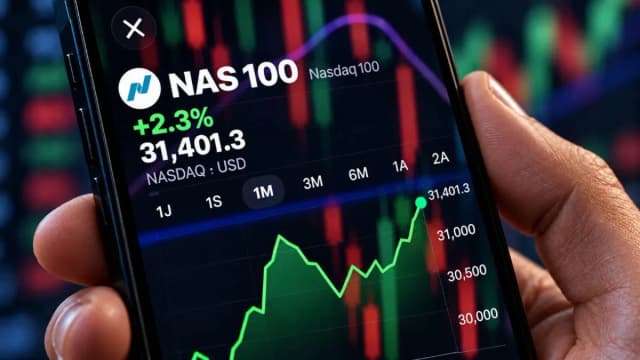
NAS100 price forecast recap: Explore the Nasdaq 100 rally to 31,401.3, with technical analysis of the breakout and key support and resistance levels.
Learn how to identify, draw and trade XAUUSD supply and demand zones using Gold market structure, price action confirmation and clear risk management.
cTrader has been named Best Trading Platform at UF Awards APAC 2026 during iFX EXPO Asia in Hong Kong.
AUD/CHF reached last week’s 0.57732 bearish target. Learn how resistance, market structure and a neckline retest shaped the original price action forecast.
Businesses eventually reach a point where basic tools are not enough basic tools.
Multi-asset trading broker AvaTrade has agreed to acquire the majority of FXCM Group’s business and brand, in a transaction that would bring a longstanding retail FX franchise into the AvaTrade Group.
LSEG and CMC Markets have signed a multi-year strategic data agreement expanding CMC's access to LSEG's real-time and delayed pricing, reference and corporate actions data, news and analytics, plus AI-ready content, to support new products, entry into new markets and the growth of CMC's institutional and B2B partnerships.
The Tel Aviv Stock Exchange is considering a bid for the Cyprus Stock Exchange, with Israeli media citing its EU licence, trading platform and clearing house. Euronext’s Athens exchange and India’s National Stock Exchange are also seen as contenders, and Cyprus aims to sign a sale agreement by the end of this year.
CME Group will launch baseball futures on 12 October, pending regulatory review, tracking CME FutureSports Performance Indexes built on Official League Data. Standard and micro contracts will start with the 2026 Postseason and the four clubs in the League Championship Series, trading around the clock.