
Daily Fundamental Analysis: Global stocks under pressure following hot inflation reading from the US
just now

Liquidity Finder Ltd is incorporated in England and Wales, company number 10610740, registered address 167-169 Great Portland Street, Fifth Floor, London W1W 5PF, United Kingdom.
Published: just now
This past week in financial markets was nothing short of a rollercoaster ride. US 10-year Treasury yields soared by over 40 basis points – a move we haven’t seen since the early 2000s. The dollar weakened nearly 4% against the euro, and the S&P 500 surged almost 4%. On paper, it was one of the wildest weeks in recent memory. Yet, for all the noise and movement, the broader economic outlook remains almost exactly where it was seven days ago.
The standout drama was the 90-day tariff reprieve granted to several key US trading partners. While this created an initial sense of relief, it was quickly balanced out by a staggering escalation in tariffs on China. The effective average US tariff rate still stands at 28% – unchanged from the level before this week’s developments. For context, that’s the highest it’s been since the early 20th century.
Tariff Tensions: More Smoke Than Fire?
Despite the sharp change in direction, the actual impact of this week’s trade policy shakeup may be less meaningful than it first appeared. While some countries, especially in Europe and Southeast Asia, benefitted from a reduction to a 10% tariff rate, China saw its tariffs spike to 145%.
In practice, this won’t shift much for importers. Most businesses that could avoid Chinese goods have already done so. Those that can't will have to absorb the cost or pass it along to consumers, raising inflationary pressure.
Inflation Pressure Is Building
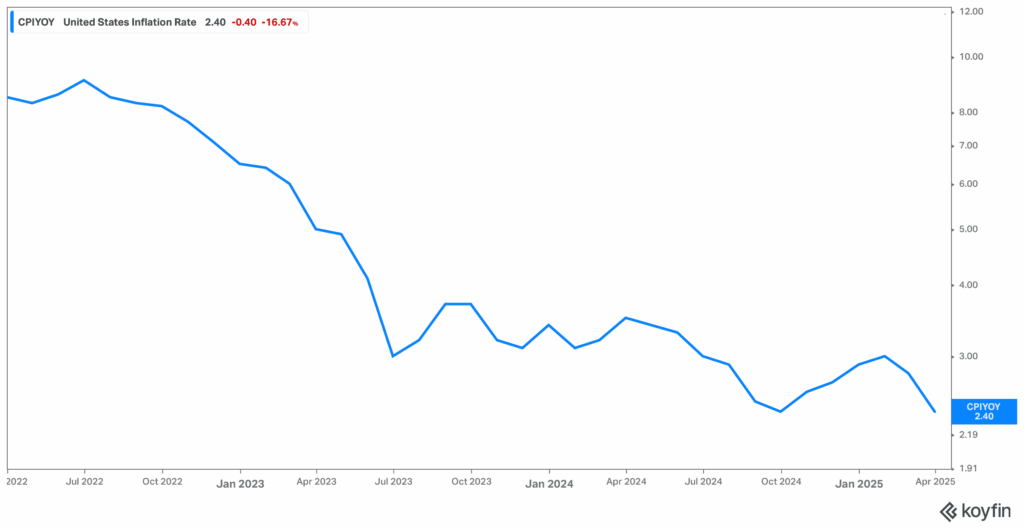
US inflation is expected to rise despite the latest softer-than-expected consumer price data. The lag effect of tariffs means the impact on inflation could be felt within months. With consumers likely to front-load spending to avoid price hikes, a short-term retail boost is likely, but a subsequent slowdown remains a strong possibility.
Expect monetary policy to respond. The market is currently pricing in three to four rate cuts in the second half of the year – a shift from earlier expectations. The Federal Reserve’s focus will stay on inflation for now, but attention could turn toward growth risks by summer.
Europe Eyes Rate Cuts Amid US Uncertainty
The European Central Bank is still on course for a rate cut next week. Despite receiving a better-than-expected deal on US tariffs, Europe’s economic trajectory remains closely tied to the US. If the American economy starts to falter, export-heavy EU nations will feel the strain.
Though there’s long-term optimism about major fiscal spending across the eurozone, this won’t materialise until at least 2026. In the meantime, monetary policy will need to do the heavy lifting.
Markets Looking for Stability
Financial markets remain highly sensitive to signs of policy shifts. This week’s bounce in risk assets following the tariff reprieve highlights how jittery sentiment is. However, that initial rally faded quickly – a signal that investors remain wary of the uncertainty and abrupt policy changes still hanging over global markets.
Bond yields could push even higher in the near term, potentially approaching 4.75% on the US 10-year Treasury. In currency markets, the dollar’s decline may not yet have found a floor.
What to Watch for Next Week (April 14-20)
United States
Canada
United Kingdom
Dollar at the Edge: Approaching the Lower Bound of the Channel
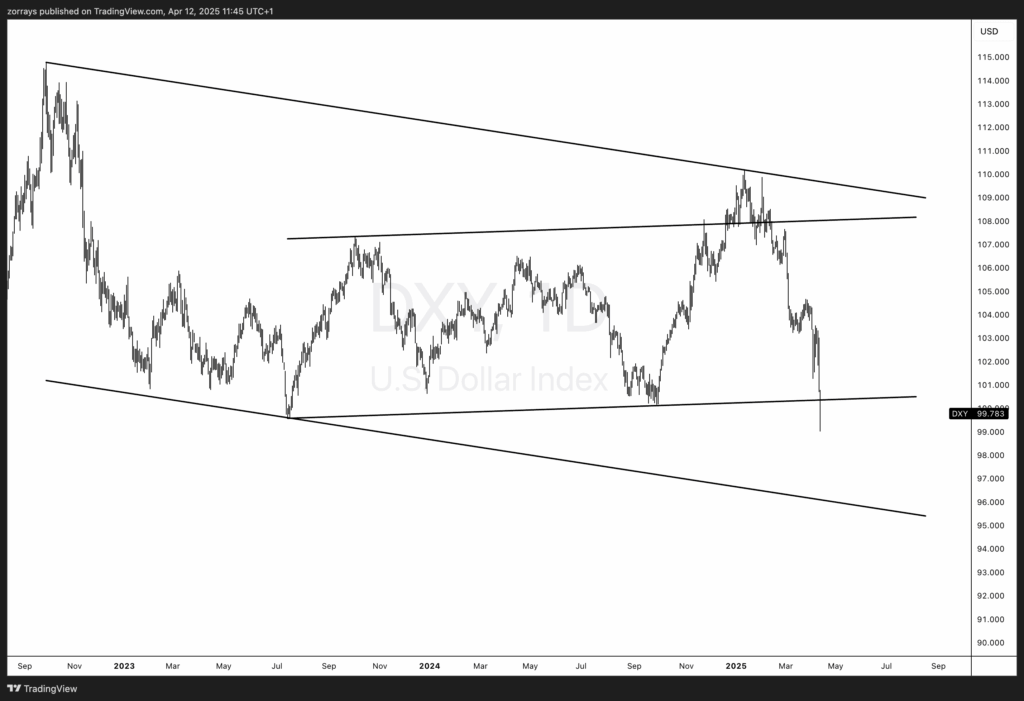
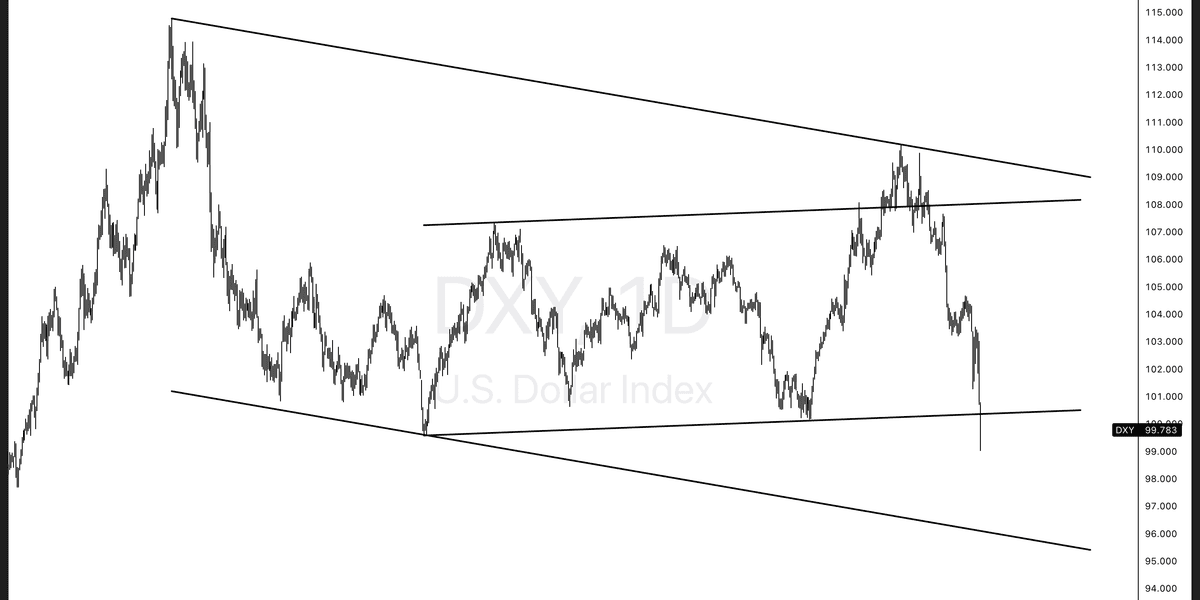
The US Dollar Index (DXY) has seen a dramatic slide over the past week, aligning with heightened volatility across global financial markets. As shown in the chart, the DXY has broken below the key 101 level and is now trading around 99.78, approaching the lower boundary of a long-term descending channel that has been intact since late 2022.
This move comes amid rapidly shifting sentiment around US trade policy and interest rate expectations. While US tariffs on some allies were reduced, China saw a sharp increase, keeping the average US tariff rate elevated at 28%. At the same time, markets have begun to price in aggressive rate cuts later in the year, putting additional downward pressure on the dollar.
Technically, the DXY is testing a significant support zone. A clean break below the lower bound of this channel could signal further downside for the greenback, potentially pushing it toward the mid-90s. However, a bounce from this support could also occur if market sentiment shifts again – especially if the Fed changes tone or geopolitical dynamics evolve.
Key Takeaway
This was the week where everything changed – and yet nothing really did. Tariff chaos, wild market swings, and surprising resilience all defined the past few days. But the outlook for the global economy remains largely the same: inflation risks are rising, central banks are preparing to pivot, and uncertainty is keeping markets on edge.
As we move into a new week, investors, businesses, and policymakers alike will need to stay buckled in. The ride is far from over.
For educational purposes only. Trading comes with substantial risk, leading to possible loss of your capital. Traders are advised to do their own due diligence before investing.
Alchemy Markets is a multi-asset brokerage providing retail traders with the same elite trading conditions, tools, and transparency typically reserved for institutions.

Select the categories and companies you wish to follow directly to your person rss feed.
Create Custom RSS FeedSign up and join over 5,000 professional members who receive personalized news alerts, curated professional connections, and more for free!
The AI trade has always been a supply chain story. For the past two years, the narrative has been simple: insatiable demand for compute infrastructure, constrained supply at every choke point, and the companies that own the bottlenecks collect the toll. NVIDIA on GPUs. ASML on lithography. Samsung, SK Hynix, and Micron on memory. The entire semiconductor complex has traded on scarcity, and scarcity has delivered historic margins.
Interactive Brokers reported customer equity of USD 964.7 billion at the end of the third quarter, up 27% year on year, as customer accounts increased 35% to 5.58 million.
Crypto exchange BingX has secured a Markets in Crypto-Assets Regulation (MiCA) licence for its European arm from Austria's Financial Market Authority (FMA).
CXM Group has agreed to acquire TD Markets (Pty) Ltd, a Johannesburg-headquartered broker authorised by South Africa’s FSCA. TD Markets keeps its brand, team and licence, and Amar Ramith stays as CEO. Financial terms were not disclosed. The deal gives CXM a regulated base in South Africa. Clients need take no action.
Global equities under pressure: Hotter than expected US inflation and rising yields weighed on stocks, particularly technology and semiconductor shares.
Understand trading psychology and learn how a clear strategy, risk management and a trading journal help build discipline and day trading consistency.
Ripple Prime has launched support for real-world asset perpetual swaps, giving institutional clients including Virtu exposure to more than 100 reference markets across equities, indices, ETFs, metals, energy and FX. The swaps reference Trade.xyz perpetual futures on Hyperliquid and trade and settle around the clock.
iSAM Securities Apex has integrated with Crossover Markets, connecting brokers to CROSSx, its institutional digital asset ECN, through Apex’s ultra-low-latency technology stack.
Your Bourse and 4XPORTAL highlight their existing partnership, combining client onboarding, CRM and payment solutions with liquidity, execution and risk-management infrastructure for brokers.
The partnership brings together 4XPORTAL’s brokerage technology capabilities with Your Bourse’s connectivity, liquidity aggregation, and risk-management infrastructure.