just now


Liquidity Finder Ltd is incorporated in England and Wales, company number 10610740, registered address 167-169 Great Portland Street, Fifth Floor, London W1W 5PF, United Kingdom.
Published: just now

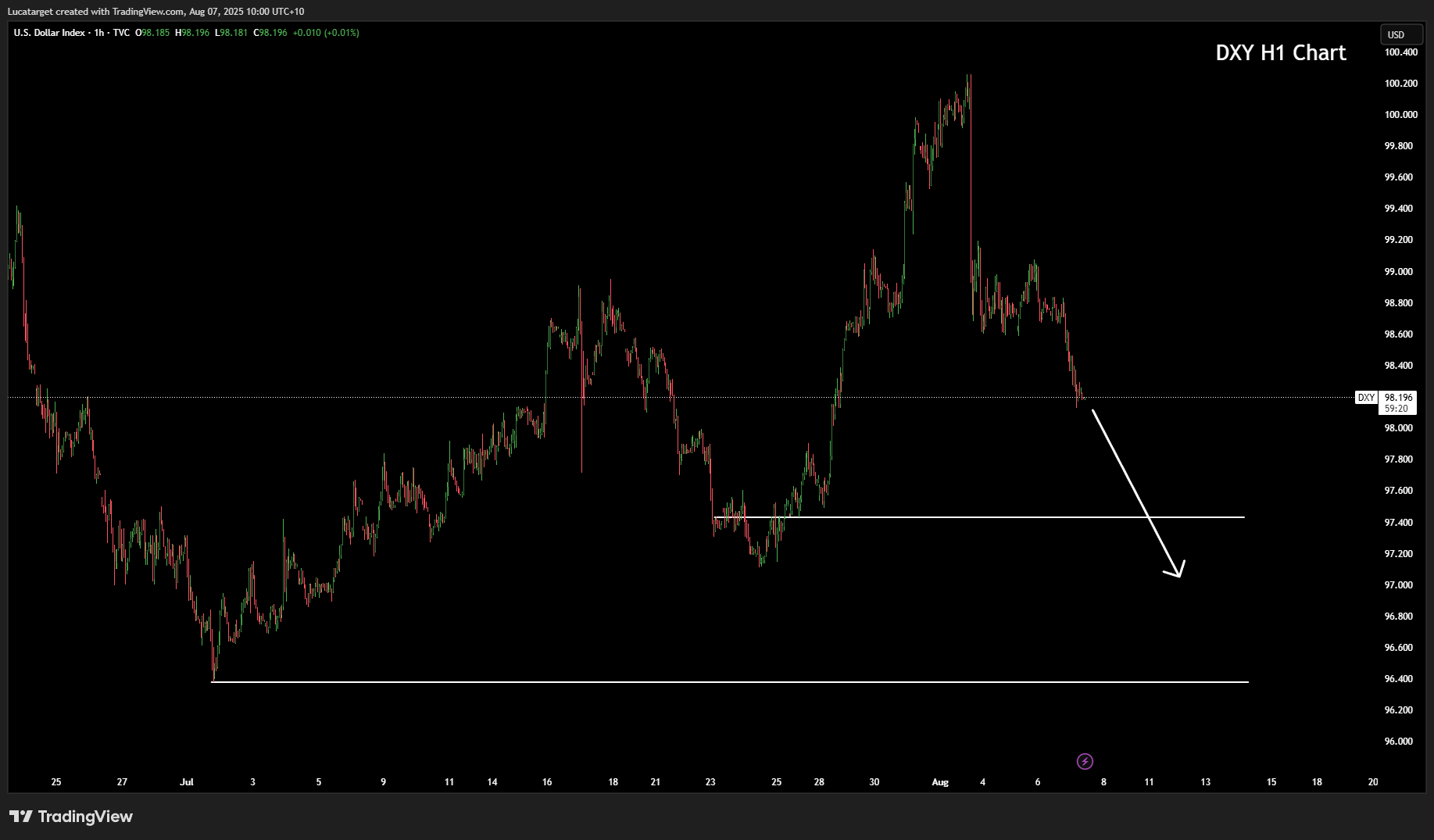
Over the past few weeks, I’ve been closely following the mounting pressure on the US dollar, and what I'm seeing now feels eerily familiar to the early warning signs we had at the start of the year.
While the headlines may seem calm on the surface, there’s a subtle storm building underneath, and I believe we’re about to see a shift in market sentiment that many aren't fully prepared for.
Let me break down what I’m seeing, and what it could mean for the FX market in the coming weeks.
At first, it looked like the US administration was dialing things back. Some trade deals were announced, certain tariffs were revised or delayed, and the dollar clawed back some ground. But that relief seems temporary.
More recently, chatter about new tariffs, particularly on critical sectors like pharmaceuticals and semiconductors, is picking up again.
Markets hate uncertainty, and tariffs inject a very specific kind of economic drag that’s hard to quantify in advance.
What worries me most is that we’re now seeing political messaging that these tariff increases could scale sharply over the next 12 to 18 months.
If that plays out, I expect capital to shift more defensively, putting further downward pressure on the dollar.
The US jobs market had been a source of resilience earlier this year, I was watching the Non-Farm Payrolls (NFPs) closely and saw decent prints in the second quarter.
But that trend may have ended. We’ve now had three consecutive NFP reports coming in below 100k, historically, that kind of pattern tends to precede recessions. That’s not just a blip. It’s a pattern.
Couple that with falling service sector employment and rising signs of political interference in key economic institutions, and you have a very fragile backdrop.
Investor confidence in the integrity of the US economic data process is not something we often question, but if that begins to erode, volatility will spike, and USD sentiment will suffer.
If the dollar’s trajectory is downward, where could we see relative strength? Right now, my eyes are on the Japanese yen.
After the last payrolls release, the yen rallied sharply. It’s been one of the top performers in August so far, and the momentum could continue, especially if the Bank of Japan bows to political pressure and adopts a more hawkish stance.
Of course, there are still risks: political uncertainty in Japan and yield curve volatility could limit gains in the short term.
But structurally, with core inflation remaining high and real wages still negative, I believe the domestic political push for a stronger yen will only grow louder. That’s a medium-term theme I’ll be watching.
Here’s how I’m thinking about positioning right now:
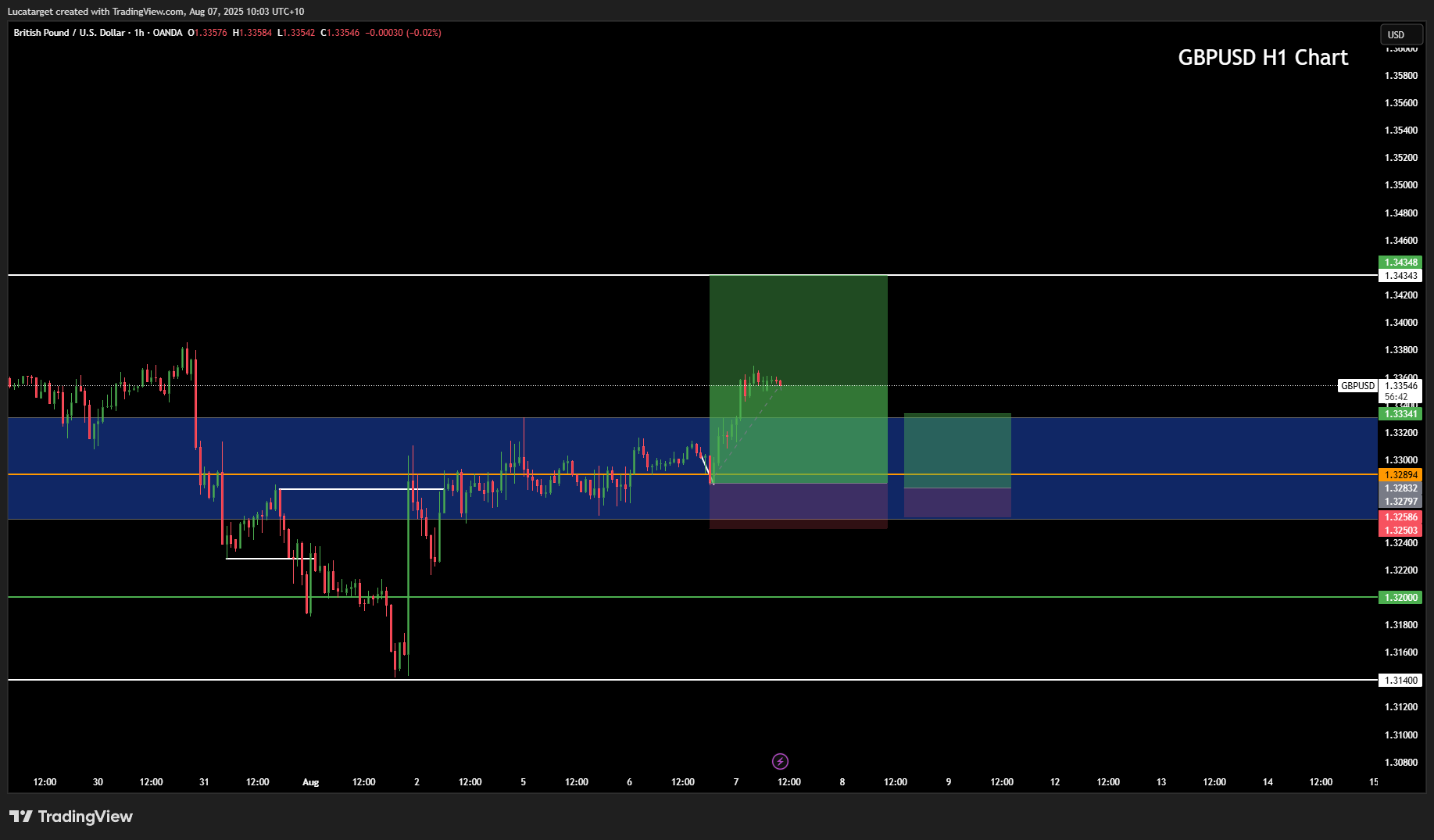
Short USD exposure still makes sense, especially if we continue to see softness in US employment data and renewed tariff escalation. Just like long GBPUSD that we got on the webinar live yesterday and is already over 76pips.
Long JPY has potential, not just as a safe haven, but as a fundamental play if the BoJ starts to tighten faster than markets expect.
Stay tactical, I’m focused on the upcoming US inflation releases, 10Y auctions, and key Fed speeches this week. Any dovish tilt or surprise weakness could reinforce the move away from USD.
There’s a saying I’ve always liked: “Markets don’t wait for confirmation, they move on expectations.” Right now, I see expectations quietly shifting.
Tariff risks, labour market softness, and rising political interference are creating a new narrative, and it’s one that could bring the dollar back under pressure.
Let’s see how the next data prints unfold, but I’m ready to adapt fast.
1. What impact do tariffs have on the US dollar?
Tariffs create uncertainty and often weaken the US dollar by slowing global trade, increasing costs for American businesses, and potentially reducing economic growth. When new or higher tariffs are expected, investors tend to reduce exposure to USD in anticipation of slower momentum and risk-off sentiment.
2. Why are three consecutive weak NFP prints concerning for traders?
Historically, three monthly Non-Farm Payroll reports below 100k signal a potential economic downturn. This pattern reflects a weakening labor market and often precedes broader slowdowns, making it a key early warning for recession risks and dollar weakness.
3. Why is the Japanese yen strengthening lately?
The yen is gaining strength due to a combination of factors: softening US data, potential Bank of Japan tightening, and political pressure in Japan to strengthen the currency to combat inflation. Its role as a traditional safe haven also plays a role during risk-off periods.
4. Is the market underestimating the return of tariff risks?
Yes, in many ways. While some deals were signed earlier in the year, fresh rhetoric and upcoming tariffs on key sectors like semiconductors and pharma suggest that trade tensions are far from over. The market may need to reprice those risks quickly.
5. What’s the best FX setup in this current environment?
From my view, long JPY vs. USD is a strong contender. It offers both fundamental and macro tailwinds: resilient Japanese political pressure for yen appreciation, plus signs of slowing momentum in the US. However, staying nimble and data-driven is key.
This content may have been written by a third party. ACY makes no representation or warranty and assumes no liability as to the accuracy or completeness of the information provided, nor any loss arising from any investment based on a recommendation, forecast or other information supplies by any third-party. This content is information only, and does not constitute financial, investment or other advice on which you can rely.
ACY Securities is one of Australia's fastest growing multi-asset online trading providers, offering ultra-low-cost trading, rock-solid execution, technologically superior account management and premium market analysis.

Select the categories and companies you wish to follow directly to your person rss feed.
Create Custom RSS Feed
just now
Sign up and join over 5,000 professional members who receive personalized news alerts, curated professional connections, and more for free!
Multi-asset trading broker AvaTrade has agreed to acquire the majority of FXCM Group’s business and brand, in a transaction that would bring a longstanding retail FX franchise into the AvaTrade Group.
LSEG and CMC Markets have signed a multi-year strategic data agreement expanding CMC's access to LSEG's real-time and delayed pricing, reference and corporate actions data, news and analytics, plus AI-ready content, to support new products, entry into new markets and the growth of CMC's institutional and B2B partnerships.
The Tel Aviv Stock Exchange is considering a bid for the Cyprus Stock Exchange, with Israeli media citing its EU licence, trading platform and clearing house. Euronext’s Athens exchange and India’s National Stock Exchange are also seen as contenders, and Cyprus aims to sign a sale agreement by the end of this year.
CME Group will launch baseball futures on 12 October, pending regulatory review, tracking CME FutureSports Performance Indexes built on Official League Data. Standard and micro contracts will start with the 2026 Postseason and the four clubs in the League Championship Series, trading around the clock.
ESMA has published an opinion stating that MiCA-authorised crypto-asset service providers should cease services tied to non-MiCA-compliant stablecoins for EU clients across MiCA crypto-asset services. National authorities should require remediation of existing exposures within three months, by early January 2027.
Nasdaq Ventures has made a strategic investment in Amsterdam-based derivatives and crypto exchange One Trading, with both firms to explore 24/7 trading of equity futures. The undisclosed investment follows Nasdaq's US$100 million investment in Payward, the parent of Kraken, and CME Group's move to 24/7 trading.
cTrader has opened multi-platform plugins to brokers and prop firms, which can pre-install their own tools for clients or list them in cTrader Store. The plugins run across Mobile, Web, Windows and Mac, and can be built and launched independently of core-platform releases, including trading journals and calculators.
Institutional brokerage and financial infrastructure provider Clear Street has joined TradingView’s broker network, allowing its clients to trade US stocks, exchange-traded funds and options directly through the charting and analysis platform.
Learn how to improve trading psychology, manage fear and greed, avoid revenge trading, and follow your trading strategy with discipline and a trading journal.
GTC Prime has announced a strategic partnership with Centroid Solutions to manage and distribute its liquidity through CS 360 Bridge, Centroid's multi-asset connectivity and execution engine, giving brokers and institutional clients access to tailor-made pricing, low-latency execution and real-time risk management.