just now

Liquidity Finder Ltd is incorporated in England and Wales, company number 10610740, registered address 167-169 Great Portland Street, Fifth Floor, London W1W 5PF, United Kingdom.
Published: just now

April 2026 is not a quiet month for dealing desks.
The US dollar has posted its worst first-half performance since 1980. EUR/USD moved through a 400-pip range inside a single week after Liberation Day tariff announcements. Gold crossed $3,000 and kept going. USDJPY became the most-watched pair in the industry as carry unwind risk resurfaced. And the Federal Reserve's independence — previously taken as given — is now an active market debate, with political pressure on the Fed chair introducing a new category of macro uncertainty that no model had previously priced.
For traders, this is opportunity. For broker dealing desks, it is something else entirely.
When markets move fast, three things happen simultaneously on a dealing desk — and they all compound each other.
Exposure spikes faster than manual controls can respond. A broker carrying net long Gold exposure through a quiet Tuesday morning faces a completely different risk profile by Friday afternoon. The position that looked fine at 09:00 UTC becomes uncomfortable at 14:00 UTC when a macro release drops 80 pips in 90 seconds. If spread rules and hedge triggers are not automated, the reaction comes after the damage.
Toxic flow concentrates around exactly these moments. Latency arbitrageurs and organised trading groups do not operate during calm markets — they operate during quote gaps, news spikes, and liquidity thin periods. In 2026, the majority of all trading activity in the forex market is algorithmic and especially high-frequency, which heavily relies on volatility. The traders who exploit broker infrastructure are waiting for precisely the conditions that April 2026 is delivering.
Manual dealing capacity is overwhelmed. No Chief Dealer can monitor seven MT4 Manager windows, cross-reference correlated accounts, and manage spread rules simultaneously when EUR/USD is moving 60 pips in three minutes. The decision speed required exceeds what human reaction time can deliver.
Scenario 1: The tariff spike
Trump's whipsawing tariff policies created a perfect storm for foreign exchange options dealers, as hedge funds rushed to short US dollar positions. For retail brokers, this translated directly into asymmetric flow — a large number of retail clients all positioning the same direction at the same time, creating concentrated B-book exposure precisely when liquidity was thinnest.
Brokers without real-time exposure monitoring and automated hedge triggers faced a choice between absorbing the directional risk or hedging late into a wide spread. Neither outcome was good.
Scenario 2: The gold run
J.P. Morgan's 2026 forecast puts gold at $4,753/oz — a level that would have seemed implausible two years ago. Gold has become the instrument of choice for the exact type of momentum retail trader that creates the most challenging flow for a B-book. High win rates, short durations, concentrated entries around macro events. This is the profile that most directly damages a broker's position.
Without automated client scoring that distinguishes momentum exploiters from normal gold retail flow, a broker either over-hedges (expensive) or under-hedges (dangerous).
Scenario 3: The Friday close
Q4 2025 saw the lowest realised volatility in EUR/USD since 2021 — which meant brokers entered positions into weekends during a period of false calm. Then Liberation Day arrived. The brokers who had weekend risk properly modelled — gap scenarios, swap exposure, reduced liquidity — were positioned to absorb it. The ones who had not lost money on "two days offline."
In 2026, reactive risk management is no longer sufficient. Brokers must adopt proactive, data-driven strategies to maintain stability and profitability.
That is not marketing language. It is a description of the operational gap that volatile markets expose. The dealing desks that managed Q1 2026 well shared a common characteristic: they had automated controls that did not require a human to be watching at the exact right moment.
This means threshold-based hedge triggers that fire without manual approval. Spread widening rules that activate pre-scheduled around known news events. Real-time client scoring that flags correlated accounts and latency-sensitive behaviour before it costs money. And session reporting that tells the risk manager what actually happened — not what they think happened based on a morning review of manual logs.
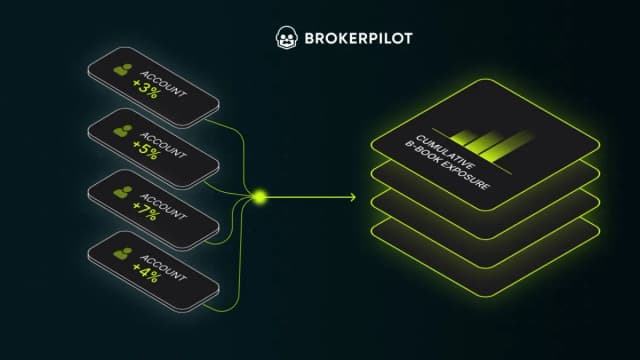
BrokerPilot is a real-time risk management and dealing automation platform built specifically for FX and CFD brokers operating on MT4, MT5, and cTrader. It functions as what the platform's developers call "a Chief Dealer that never sleeps" — and in a market environment like April 2026, that framing is not hyperbole.
The platform provides live exposure monitoring across all symbols and sessions, with configurable threshold alerts that trigger before positions become problems. Toxic flow detection identifies latency arbitrage, organised group behaviour, and coordinated account activity in real time — not at the end of the day. Automated dealing operations — spread rules, leverage controls, hedge scheduling — execute without requiring manual input during high-volatility moments. And post-session reporting delivers a structured picture of what happened, what was flagged, and what was actioned.
Clients report an average PnL improvement of over 20% following implementation. In the current market environment, that number reflects something specific: the cost of not having visibility during the moments that matter most.
The dealing desks that are navigating 2026 well are not necessarily smarter or more experienced. They are better equipped.
If you want to understand how BrokerPilot supports dealing operations in volatile market conditions, our team offers a 30-minute walkthrough of the platform against your specific setup.
Published on LiquidityFinder.com | BrokerPilot Company Page
Brokerpilot is a SaaS risk management platform for multi-asset brokers. It helps monitor trade servers, detect fraud, and automate reporting to enhance dealing transparency and operational control.

Select the categories and companies you wish to follow directly to your person rss feed.
Create Custom RSS FeedSign up and join over 5,000 professional members who receive personalized news alerts, curated professional connections, and more for free!
Multi-asset trading broker AvaTrade has agreed to acquire the majority of FXCM Group’s business and brand, in a transaction that would bring a longstanding retail FX franchise into the AvaTrade Group.
LSEG and CMC Markets have signed a multi-year strategic data agreement expanding CMC's access to LSEG's real-time and delayed pricing, reference and corporate actions data, news and analytics, plus AI-ready content, to support new products, entry into new markets and the growth of CMC's institutional and B2B partnerships.
The Tel Aviv Stock Exchange is considering a bid for the Cyprus Stock Exchange, with Israeli media citing its EU licence, trading platform and clearing house. Euronext’s Athens exchange and India’s National Stock Exchange are also seen as contenders, and Cyprus aims to sign a sale agreement by the end of this year.
CME Group will launch baseball futures on 12 October, pending regulatory review, tracking CME FutureSports Performance Indexes built on Official League Data. Standard and micro contracts will start with the 2026 Postseason and the four clubs in the League Championship Series, trading around the clock.
ESMA has published an opinion stating that MiCA-authorised crypto-asset service providers should cease services tied to non-MiCA-compliant stablecoins for EU clients across MiCA crypto-asset services. National authorities should require remediation of existing exposures within three months, by early January 2027.
Nasdaq Ventures has made a strategic investment in Amsterdam-based derivatives and crypto exchange One Trading, with both firms to explore 24/7 trading of equity futures. The undisclosed investment follows Nasdaq's US$100 million investment in Payward, the parent of Kraken, and CME Group's move to 24/7 trading.
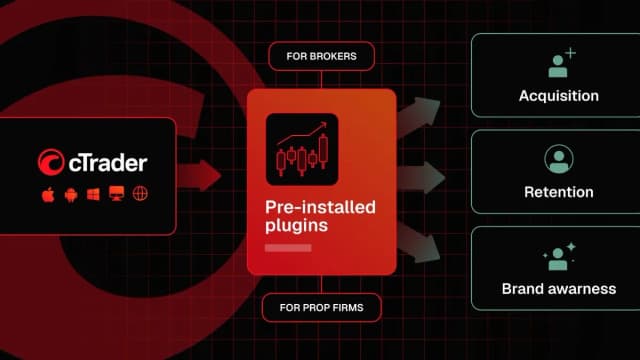
cTrader has opened multi-platform plugins to brokers and prop firms, which can pre-install their own tools for clients or list them in cTrader Store. The plugins run across Mobile, Web, Windows and Mac, and can be built and launched independently of core-platform releases, including trading journals and calculators.
Institutional brokerage and financial infrastructure provider Clear Street has joined TradingView’s broker network, allowing its clients to trade US stocks, exchange-traded funds and options directly through the charting and analysis platform.
Learn how to improve trading psychology, manage fear and greed, avoid revenge trading, and follow your trading strategy with discipline and a trading journal.
GTC Prime has announced a strategic partnership with Centroid Solutions to manage and distribute its liquidity through CS 360 Bridge, Centroid's multi-asset connectivity and execution engine, giving brokers and institutional clients access to tailor-made pricing, low-latency execution and real-time risk management.