just now


Liquidity Finder Ltd is incorporated in England and Wales, company number 10610740, registered address 167-169 Great Portland Street, Fifth Floor, London W1W 5PF, United Kingdom.
Published: just now

If you are running a forex or CFD brokerage – or thinking about launching one – understanding the difference between the A-book and B-book model is one of the most fundamental business decisions you will face. Your choice of model, or combination of models, determines how your brokerage makes money, how you manage risk, and how you relate to your clients’ trading activity. Getting this right is critical to building a sustainable, profitable brokerage operation.
In this guide we explain both models clearly, explore the hybrid approach that most professional brokers use, and outline what each model means for your risk management, technology infrastructure, and operational requirements.
In the A-book model, every client trade is passed directly to a liquidity provider for execution in the real market. The broker acts purely as an intermediary – routing orders from clients to the market and earning revenue through the spread markup or commission charged on each trade. The broker takes no market risk because every client position is hedged one-for-one with the LP.
This model is also referred to as Straight Through Processing or STP, and in its purest form it means the broker’s revenue is completely independent of whether clients win or lose. A client who makes consistent profits is just as valuable to an A-book broker as one who loses consistently – because the broker earns the same spread or commission regardless of the outcome.
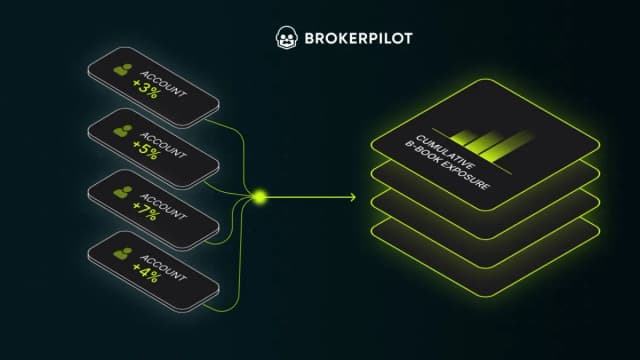
In the B-book model, the broker takes the other side of client trades internally rather than passing them to a liquidity provider. When a client buys, the broker sells to them directly – and vice versa. This means the broker is effectively making a market for its clients and carrying the resulting exposure on its own book.
The financial consequence of this model is straightforward – when clients lose money, the broker profits directly. When clients make money, the broker pays out from its own funds. This creates a direct financial alignment between client losses and broker profits that is the defining characteristic of the B-book model.
In practice, the vast majority of professional FX and CFD brokers operate a hybrid model that combines elements of both A-book and B-book execution. Rather than routing all trades to the market or internalising all trades, a hybrid broker analyses its client flow and makes routing decisions based on the risk profile of each client and each trade.
The core principle of hybrid execution is client segmentation. Clients who demonstrate consistent profitability – and therefore represent a financial risk to the broker if internalised – are routed A-book to the market. Clients who are consistently unprofitable – and therefore represent a revenue opportunity if internalised – are routed B-book. This allows the broker to capture the revenue benefits of B-book execution while managing its exposure to profitable traders through A-book hedging.
Effective hybrid routing requires continuous analysis of client trading behaviour and performance. The factors typically used to make routing decisions include:
Your choice of execution model has profound implications for every aspect of your brokerage’s operational requirements – from your technology infrastructure to your risk management framework and your staffing needs.
A-book brokers need robust liquidity bridge infrastructure to route trades to LPs efficiently and with minimal latency. The quality of your bridge configuration directly determines the execution quality your clients experience. B-book and hybrid brokers need additional internal risk management tools to monitor their net exposure and identify when hedging is required.
Pure A-book brokers have relatively simple risk management requirements – the LP carries the market risk. B-book and hybrid brokers require sophisticated, continuous exposure monitoring to ensure their net position does not exceed acceptable risk thresholds. This includes monitoring exposure by instrument, by client group, and in aggregate – and having clear procedures for when and how to hedge excess exposure.
B-book and hybrid brokers typically need a dedicated dealing desk – or access to dealing expertise – to manage their book effectively. This means monitoring client activity for toxic flow, managing exposure around high-risk market events, making routing decisions, and ensuring the platform’s execution quality remains consistent and fair. Without professional dealing oversight, B-book operations can quickly generate unexpected losses from profitable client flow that was not identified and hedged in time.
In our 15+ years of working with FX and CFD brokers, we have seen the same mistakes made repeatedly across both models:
Whether you operate a pure A-book, pure B-book, or hybrid model, Broktinger’s team of experienced dealers and platform specialists can help you manage your execution infrastructure and risk framework effectively.
Accurate client performance reporting is the foundation of any effective A-book and B-book routing strategy – without reliable data on which clients are profitable and which are not, routing decisions are based on guesswork rather than evidence. Our professional reporting service provides the detailed client performance analysis brokers need to make informed routing decisions.
If you are evaluating your execution model or looking to improve the management of your existing book, get in touch with our team for a free consultation.
Learn more:https://broktinger.com/a-book-vs-b-book-forex-broker/
Industry leaders in outsourced dealing desk, risk management and platform development for FX and CFD brokers. Building MT4/MT5 tools, reporting solutions and API integration, plugins.
Select the categories and companies you wish to follow directly to your person rss feed.
Create Custom RSS FeedSign up and join over 5,000 professional members who receive personalized news alerts, curated professional connections, and more for free!
Multi-asset trading broker AvaTrade has agreed to acquire the majority of FXCM Group’s business and brand, in a transaction that would bring a longstanding retail FX franchise into the AvaTrade Group.
LSEG and CMC Markets have signed a multi-year strategic data agreement expanding CMC's access to LSEG's real-time and delayed pricing, reference and corporate actions data, news and analytics, plus AI-ready content, to support new products, entry into new markets and the growth of CMC's institutional and B2B partnerships.
The Tel Aviv Stock Exchange is considering a bid for the Cyprus Stock Exchange, with Israeli media citing its EU licence, trading platform and clearing house. Euronext’s Athens exchange and India’s National Stock Exchange are also seen as contenders, and Cyprus aims to sign a sale agreement by the end of this year.
CME Group will launch baseball futures on 12 October, pending regulatory review, tracking CME FutureSports Performance Indexes built on Official League Data. Standard and micro contracts will start with the 2026 Postseason and the four clubs in the League Championship Series, trading around the clock.
ESMA has published an opinion stating that MiCA-authorised crypto-asset service providers should cease services tied to non-MiCA-compliant stablecoins for EU clients across MiCA crypto-asset services. National authorities should require remediation of existing exposures within three months, by early January 2027.
Nasdaq Ventures has made a strategic investment in Amsterdam-based derivatives and crypto exchange One Trading, with both firms to explore 24/7 trading of equity futures. The undisclosed investment follows Nasdaq's US$100 million investment in Payward, the parent of Kraken, and CME Group's move to 24/7 trading.
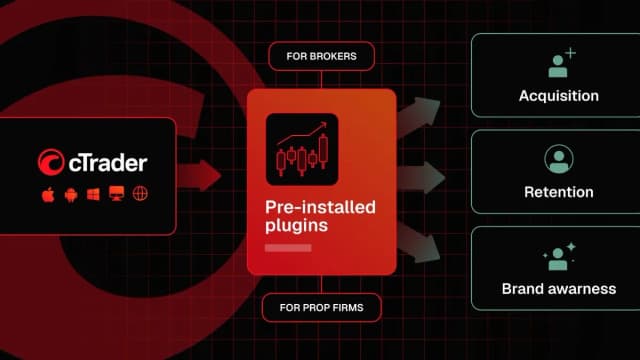
cTrader has opened multi-platform plugins to brokers and prop firms, which can pre-install their own tools for clients or list them in cTrader Store. The plugins run across Mobile, Web, Windows and Mac, and can be built and launched independently of core-platform releases, including trading journals and calculators.
Institutional brokerage and financial infrastructure provider Clear Street has joined TradingView’s broker network, allowing its clients to trade US stocks, exchange-traded funds and options directly through the charting and analysis platform.
Learn how to improve trading psychology, manage fear and greed, avoid revenge trading, and follow your trading strategy with discipline and a trading journal.
GTC Prime has announced a strategic partnership with Centroid Solutions to manage and distribute its liquidity through CS 360 Bridge, Centroid's multi-asset connectivity and execution engine, giving brokers and institutional clients access to tailor-made pricing, low-latency execution and real-time risk management.