just now

Liquidity Finder Ltd is incorporated in England and Wales, company number 10610740, registered address 167-169 Great Portland Street, Fifth Floor, London W1W 5PF, United Kingdom.
Published: just now
Trading Technologies International, Inc. (TT), a global capital markets technology provider, and FairXchange, part of United Fintech and a data science firm specialising in independent microstructural FX analytics, have announced the integration of FairXchange Horizon into TT's institutional foreign exchange (FX) offering.
With FairXchange Horizon's analytics embedded directly into the TT® platform, clients trading FX through TT will be able to access independent execution analytics across spot FX, forwards, non-deliverable forwards (NDFs) and swaps. FairXchange Horizon's liquidity and algo analytics allow clients to measure execution quality, analyse flow and liquidity-provider performance, and optimise counterparty relationships.
The partnership is aimed at institutional FX participants seeking greater execution transparency and liquidity optimisation, combining TT's execution capabilities with FairXchange's independent analytics to provide an FX trading workflow.

Tom Robinson, Partner, United Fintech
Tom Robinson, Partner, United Fintech said:
"This partnership addresses a clear need within institutional FX trading for best-in-class analytics to manage liquidity relationships and execution quality. Horizon delivers this by providing independent insight into flow, pricing and counterparty activity across the full FX execution workflow."
Tomo Tokuyama, EVP, Managing Director, FX, Trading Technologies commented:
"We will give clients access to best-in-class technology across every aspect of the trading workflow. FairXchange Horizon complements TT's institutional FX execution capabilities by providing independent, data-driven analytics that help clients evaluate execution quality, strengthen liquidity relationships and make more informed trading decisions. It's another example of TT delivering an open, multi-asset platform built around our clients' needs."
TT FX unifies OTC and listed markets within a single workflow, with liquidity from bank and non-bank liquidity providers alongside primary FX venues and electronic communication networks (ECNs). Clients can trade FX alongside futures and precious metals through a single interface within TT's execution management system (EMS), either directly or via bank algorithms.
Found this interesting? Become a member of LiquidityFinder and get daily industry news direct to your inbox — join here.
We're the largest marketplace to connect with brokers, Fintech companies & digital asset firms. Want to partner? Let's get in touch.

Select the categories and companies you wish to follow directly to your person rss feed.
Create Custom RSS FeedSign up and join over 5,000 professional members who receive personalized news alerts, curated professional connections, and more for free!
smartTrade Technologies SAS has acquired Celoxica, a provider of ultra-low latency execution infrastructure for listed markets across 80+ venues worldwide. The deal extends the smartTrade Group’s reach from OTC to listed markets, and Celoxica General Manager Jean-Marc Bouhelier joins the smartTrade Executive Committee.
The collaboration adds outsourced dealing, real-time risk intelligence and trading-flow surveillance to STARPRIME's institutional liquidity offering.
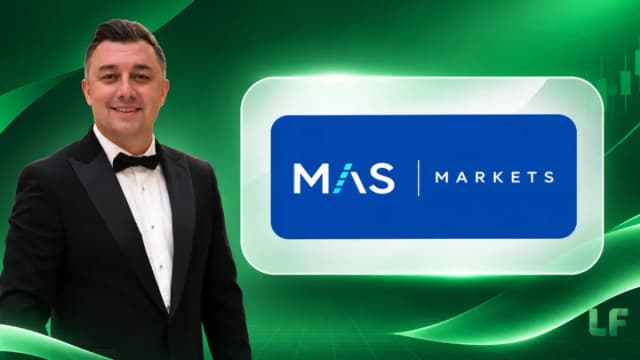
MAS Markets has appointed Gareth Palmer as eFX Sales, bringing more than 20 years of financial services experience to develop the FCA-regulated liquidity provider’s electronic FX sales capabilities, strengthen institutional client relationships and expand its electronic trading offering across global markets.
Usio has reported third quarter 2026 revenue of $23.8 million, up 12%, with Adjusted EBITDA up 222% to $1.2 million, total payment dollars processed up 25% to $2.73 billion and a sixth consecutive quarterly record in ACH transactions, and has reiterated its guidance of 14% to 16% revenue growth for 2026.
Macquarie Bank has admitted failures in how it promoted its Welcome Rate offer for new savings account customers, with ASIC and Macquarie jointly proposing a $14 million penalty to the NSW Supreme Court, on top of $8.8 million in remediation that Macquarie has already paid to nearly 40,000 customers.
Alta, a new blockchain designed for banks and payment firms, has raised a $47.5 million Series A led by Index Ventures, with GV joining, taking total funding to $80 million. What caught my eye is that Airwallex CEO Jack Zhang is a co-founder and Airwallex is an early design partner, giving Alta access to fiat rails in around 200 countries from day one. Privacy and compliance built into the chain itself is exactly what institutions have been asking for.
DriveWealth, the embedded brokerage engine behind a long list of fintech apps, has secured MiCA authorisation from the Bank of Lithuania. Its EU entity already held a MiFID II licence, so one Vilnius-based firm can now offer partners securities and crypto-assets under a single regulatory roof, with crypto services due in the new year. Add the recent Ripple tie-up for RLUSD settlement and the direction is obvious: stocks, stablecoins and tokenised assets through one API. A shot across the bows for white-label brokerage rivals in Europe.
Revolut has been handed a conditional banking licence by the Bank of Israel, only the third new bank licence there since 2019 in a market long dominated by Hapoalim and Leumi. It cannot take customers yet, but with former Leumi chairman Muli Ben Zvi and ex-Pepper CEO Uri Nathan running the show, it clearly means business. Israel is a sophisticated, internationally minded market where FX and cross-border payments matter, so Revolut's multi-currency proposition should land well. Another notch on a remarkable 2026 licence tally.
Two weeks after launching round-the-clock RFQ trading in DAX 40 shares on 360X, Deutsche Börse has gone further: all 40 DAX constituents are now available as tokenised xStocks, built with Kraken parent Payward and within reach of investors in more than 110 markets. When an exchange group of this calibre distributes its own blue chips on-chain, tokenised equities stop being a crypto-native experiment. Brokers offering German stock CFDs to Asian and LatAm clients should be paying close attention.
eToro's Q3 numbers made for uncomfortable reading. Net income fell 74% to $15 million and net contribution slipped 13% to $186 million as crypto activity cooled, and the shares touched an all-time low. Yet funded accounts grew 18% to 4.39 million, so the client franchise is intact; this is a revenue mix problem, not a growth problem. The $250 million buyback tells you management thinks the market has it wrong. My take: the multi-asset story only works if capital markets can carry the quarters when crypto goes quiet.